

.svg)
Today, the most interesting developments come from Africa.
Throughout 2025, Russia has intensified its presence in Africa, attempting to spread its influence on the continent to rebalance its increasing isolation. However, this strategy presents major flaws, as it is based on unreliable short-term gains, which do not compensate for the loss of former partnerships.
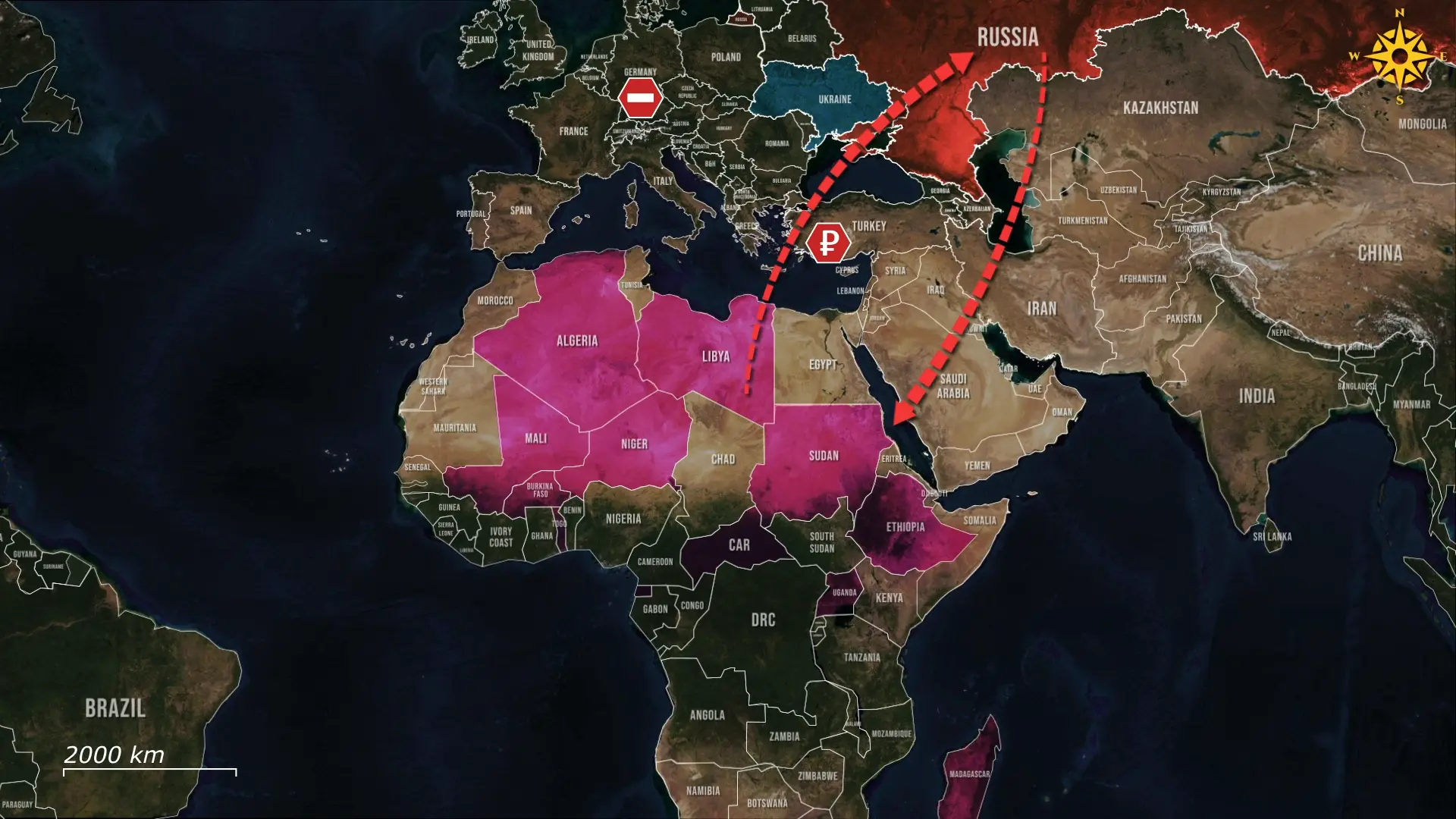
Russia has ratified military cooperation agreements with several African nations, centering its engagement on military collaboration with both state leadership and various paramilitary actors. In line with its established model, Russia provides military hardware, trainers, and advisors to influence local governments and gain strategic concessions.

Weapons sales are the most visible part of this strategy, which, in addition to small arms, often include armored vehicles, SU-30 fighter jets, and S-300 air defense systems. For governments facing internal conflict or threats to regime stability, these deliveries offer quick support. For Russia, they create long-term dependence, as local forces need Russian ammunition, spare parts, and technical support to keep the weapons operational.

Training and advisory missions reinforce this dependence. Russian personnel work directly with local armed forces, helping with training and operations. These advisors often operate close to the front lines while officially remaining outside direct combat roles, allowing Russia to influence military decisions and internal security policies while limiting its formal responsibility.

This expansion is a direct consequence of Russia’s growing isolation on the European and global stages. With the invasion of Ukraine entering its fourth year, Russia has faced severe international sanctions and been cut off from major energy markets in Europe. Even if the war in Ukraine ends, scars will remain, undermining Russia’s credibility in Europe for years to come. Furthermore, Russian overstretch in Ukraine has contributed to the fall of long-standing allies, including Assad in Syria and Maduro in Venezuela.

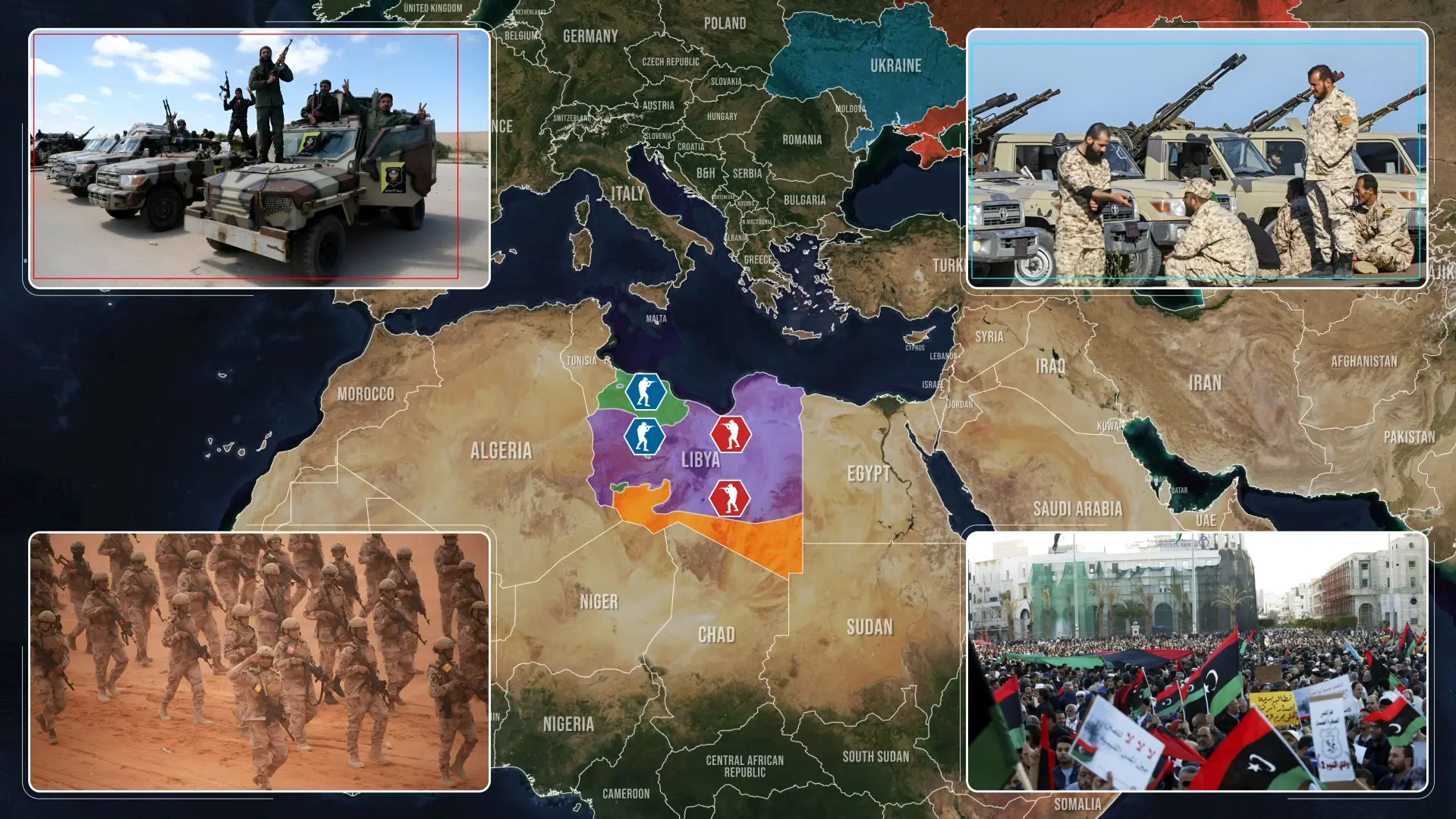
To compensate for diminished geopolitical reach, Russia has intensified its influence efforts in Africa. The continent offers raw materials to bypass sanctions, alternative markets for its defense industry, and a block of diplomatic support within the United Nations. Lacking the capital to compete with China’s infrastructure projects or Western aid, Moscow relies on paramilitary structures such as the Africa corps, to seize opportunities instead. In countries like Sudan and the Central African Republic, these forces secure mining sites for gold, diamonds, and lithium, revenues that sustain the declining Russian economy and allow it access to rare earth minerals critical for weapons production, among other things. Russia also seeks to establish military structures and naval bases, predominantly in Libya and Sudan, and increasingly in Madagascar, seeking to replace its lost foothold outside of its coastal areas in Syria and projecting power over the Mediterranean, Red Sea, and the Indian Ocean.

In Europe, Russia has lost stability, legitimacy, and predictable influence. In Africa, it seeks compensation through military presence, access to natural resources, and the ability to challenge Western influence. This does not restore Russia’s former status but provides leverage in regions where institutional constraints are weaker and political stability is more fragile.


While Russia has gained rapid influence through force, its strategy lacks the depth required for long-term success. The Russian model focuses exclusively on hard security and elite protection, neglecting the social and economic development necessary for genuine state stability. Consequently, the presence of Russian forces often correlates with an increase in local violence and a deterioration of the humanitarian situation. Arms deliveries and contractor deployments may strengthen regimes in the short term, but at the cost of inability to achieve long-term stability, rapidly eroding institutional capacity, social cohesion, and durable state building. That increased instability in turn heightens reliance on Russia for external security assistance, deepening dependency, and therefore introducing a self-destructive cycle meant for Russia to maintain its short-term leverage.

This sustains influence temporarily, but outside players intervene through genuine nation-building, the dependent state is left exposed, damaging the value of the relationship for Russia. A sustainable alliance requires investment in institutions and governance. Russia’s current model prioritises leverage over development, limiting durable and long-term profitable partnerships.

Overall, Russia’s expanding role in Africa reflects an effort to offset declining influence elsewhere through military leverage, but developments on the ground expose the fragility of this approach. For instance, in Mali, insurgent violence continues to spread nationwide despite extensive Russian support. In Sudan and Madagascar, competing external actors, such as Saudi Arabia and China, increasingly challenge Russia’s position, demonstrating how easily its influence can be displaced. Over time, this model risks leaving Russia overextended, replaceable, and unable to convert influence into lasting strategic alignment.


.jpg)

Comments