

.svg)
Over the past several weeks, Yemen’s Houthi group, has launched a series of major attacks against key military and energy facilities in Saudi Arabia. Recently, the Houthis used ballistic missiles and kamikaze drones to strike the Jizan oil refinery in southern Saudi Arabia. The refinery is one of the country’s largest, with a daily processing capacity of around four hundred thousand barrels of oil. The attack forced the facility to suspend operations for several weeks. At the same time, the Houthis also targeted several Saudi Aramco facilities in southern Saudi Arabia, temporarily disrupting operations at multiple sites.
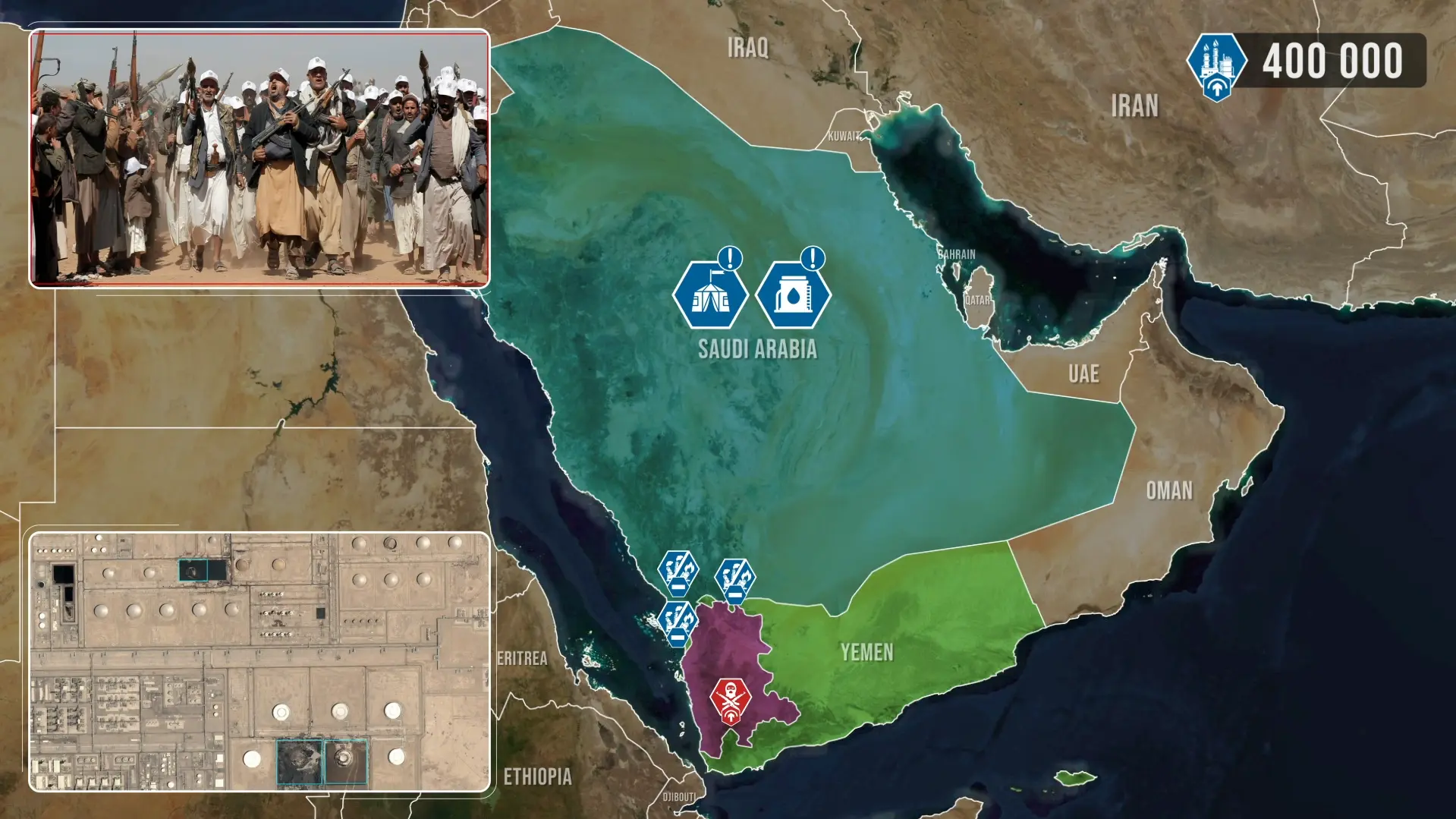
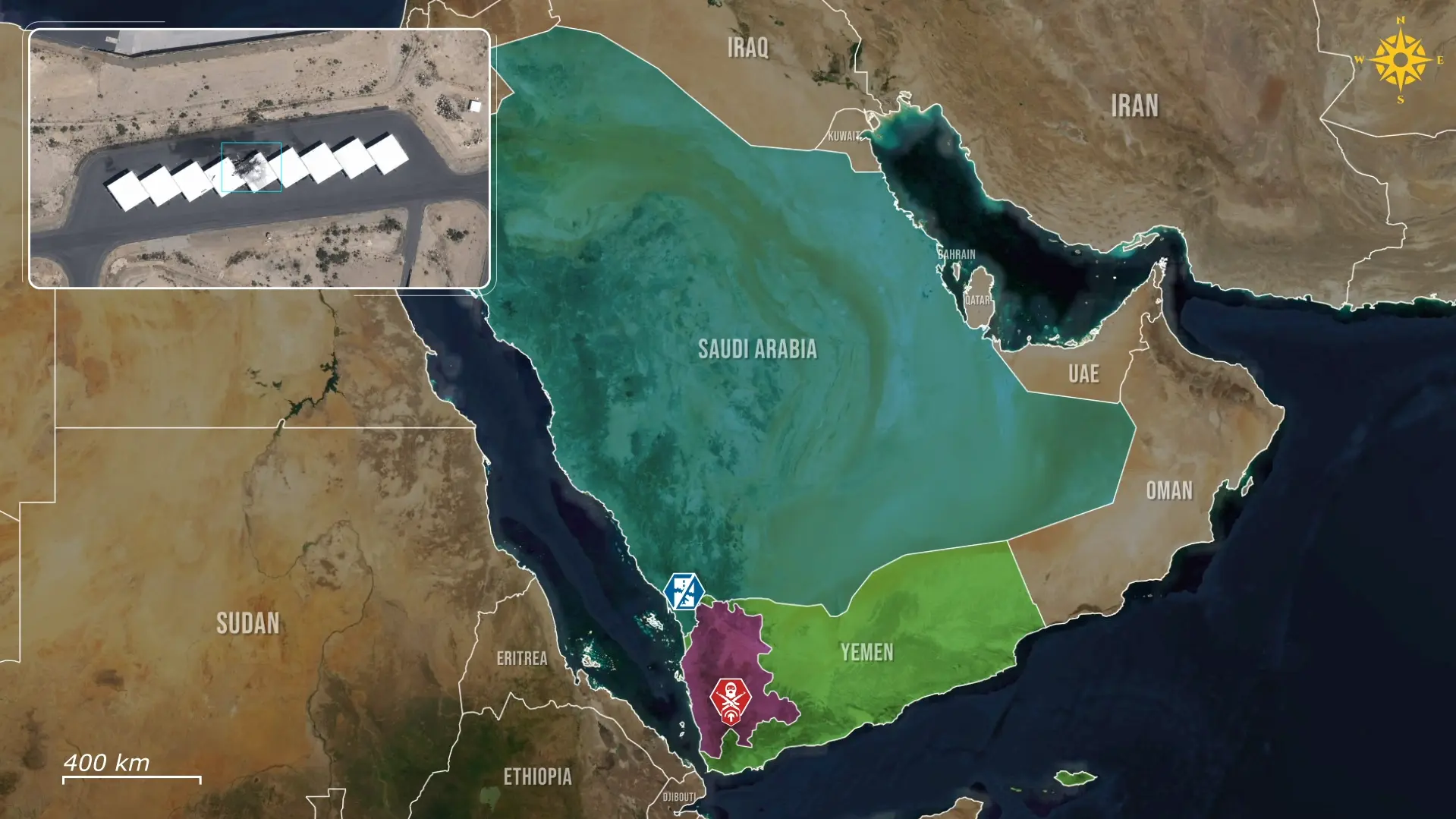
These attacks alone pushed global oil prices up by over one full percent, with Brent as the global oil benchmark rising above one hundred dollars a barrel for the first time since July. In addition, the Yemeni rebel group attacked King Khalid Air Base in Khamis Mushait, which Saudi Arabia used as a base for airstrikes in Yemen. Satellite imagery shows that the attack damaged several hangars and aircraft, as well as facilities used for maintenance and training at the base.
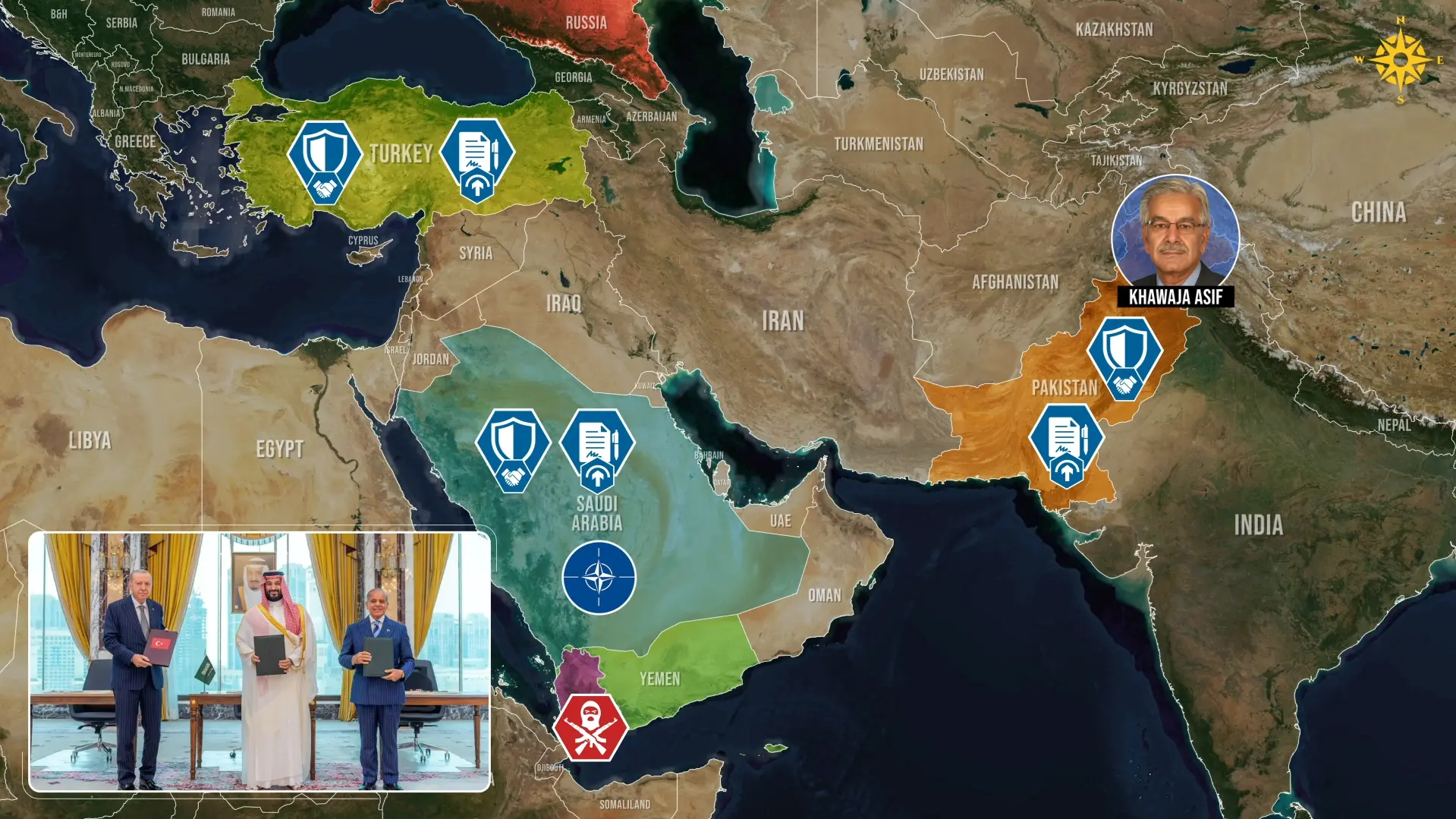
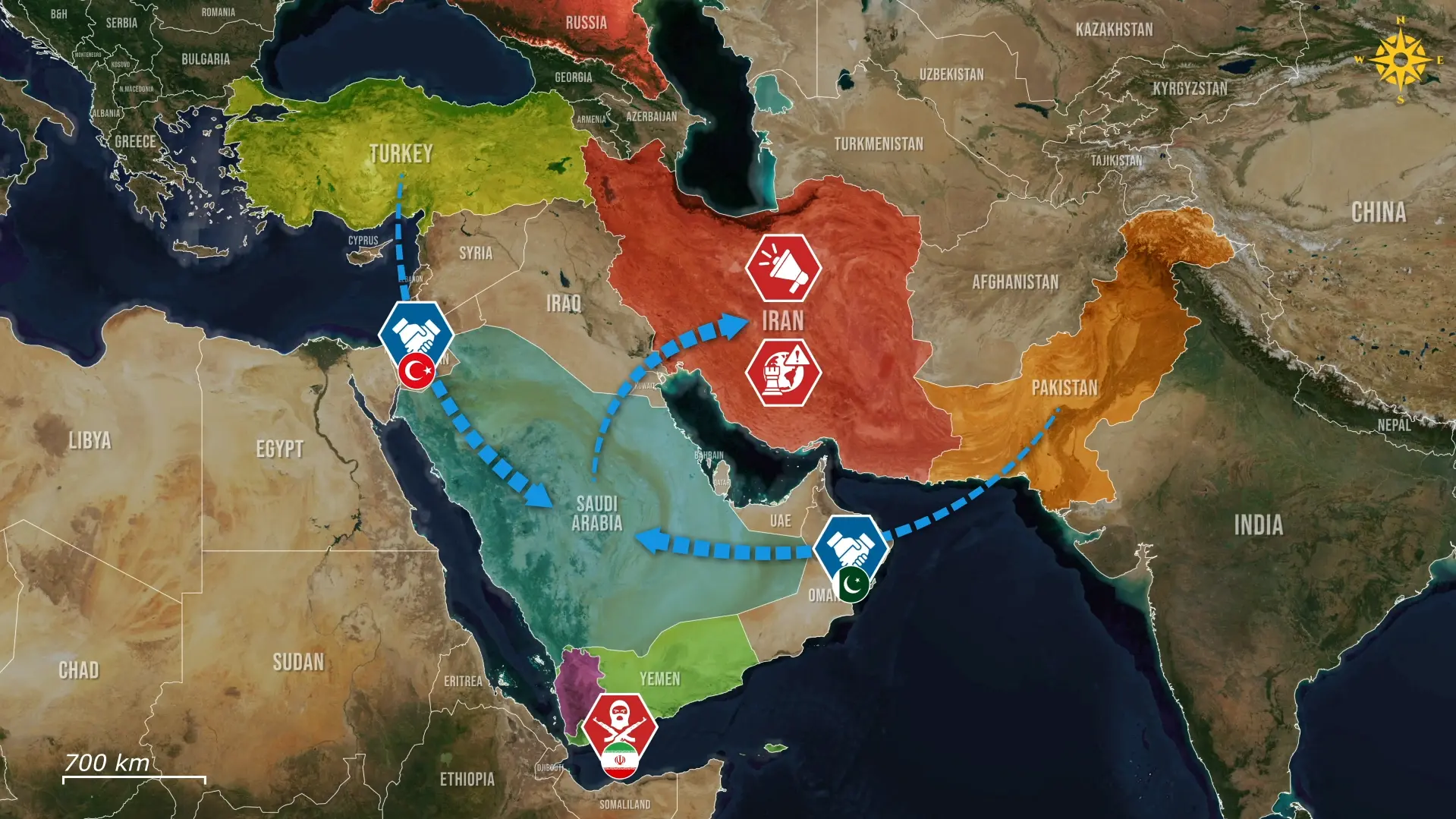
Houthi attacks on Saudi Arabia could activate the recently signed Makkah Joint Defense Agreement between Saudi Arabia, Turkey, and Pakistan. Under the agreement, an armed attack against any one of the three countries is to be regarded as an attack against all three. Analysts have described the defense framework as a Middle Eastern version of Nato. Against this backdrop, Pakistan’s Defense Minister Khawaja Asif has already warned that continued Houthi attacks on Saudi territory and economic assets could create conditions for the agreement’s mutual defense mechanism to be activated. He has also warned the Houthi leadership not to escalate its ongoing conflict with Saudi Arabia into a larger scale military confrontation.
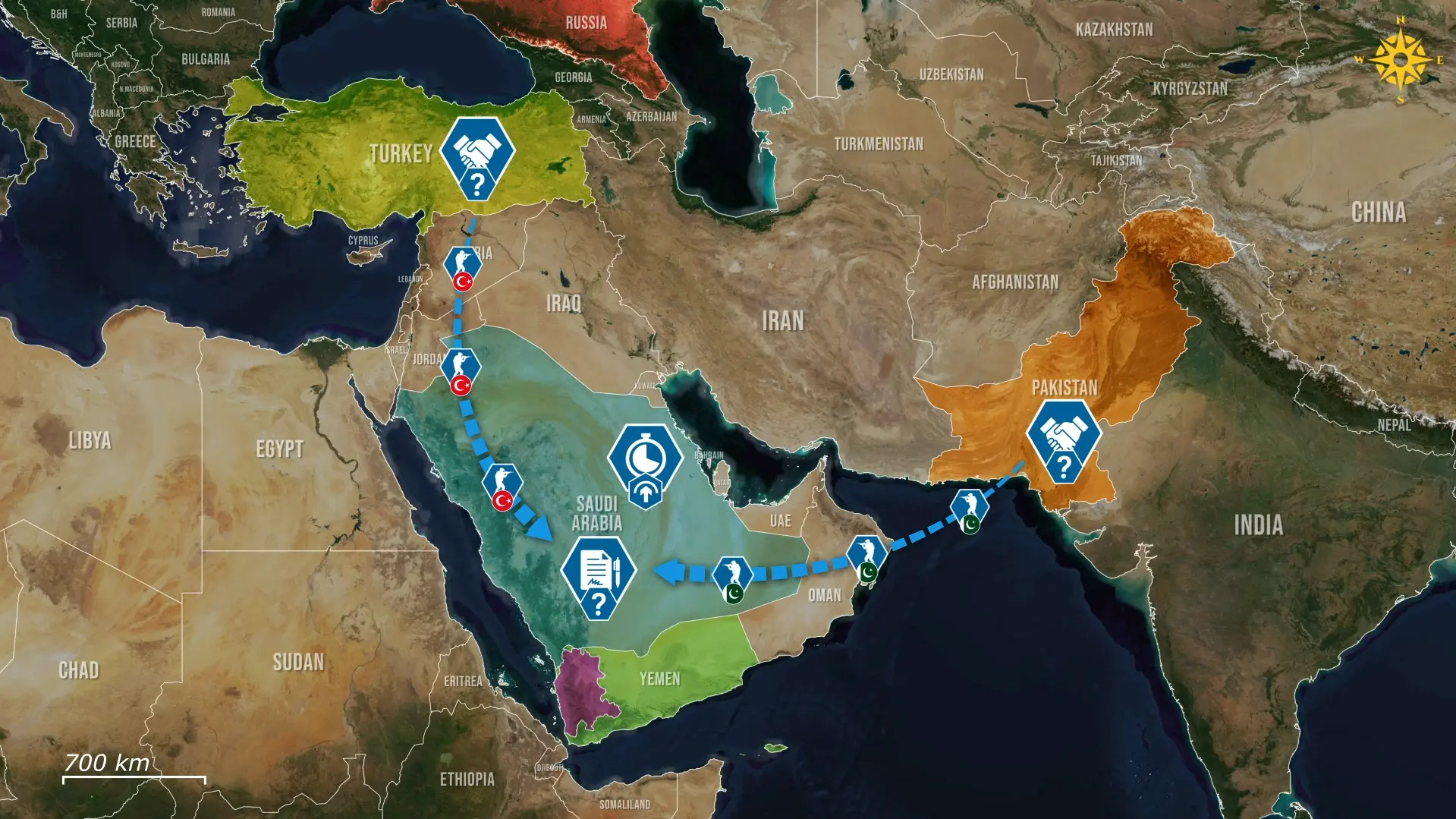
However, the most concerning aspect of the Makkah Joint Defense Agreement is its ambiguity, as the full text of the agreement has not yet been made public, leaving it unclear what kind of assistance Turkey and Pakistan would provide to Saudi Arabia. According to expert analysis, rather than intervening directly in the conflict, the two countries could initially provide intelligence sharing, logistical support, and other forms of indirect assistance. However, past conflicts have shown that even limited support can quickly develop into deeper military involvement. If Pakistan and Turkey enter the war directly on Saudi Arabia’s side through kinetic strikes or even boots on the ground, the conflict would no longer be limited to a border conflict between Saudi Arabia and Yemen’s Houthi group.
On the other hand, Iran’s involvement in the conflict between Saudi Arabia and Yemen’s Houthi movement has further complicated the situation. The Houthis are an Iran backed rebel group that has long conducted military operations in coordination with Iran’s broader regional strategy. If Turkey and Pakistan directly join Saudi Arabia in fighting the Houthis, Tehran is unlikely to remain passive as the countries would be directly working against Iran’s interests. It would view their entry into the conflict as a new challenge to its regional influence.
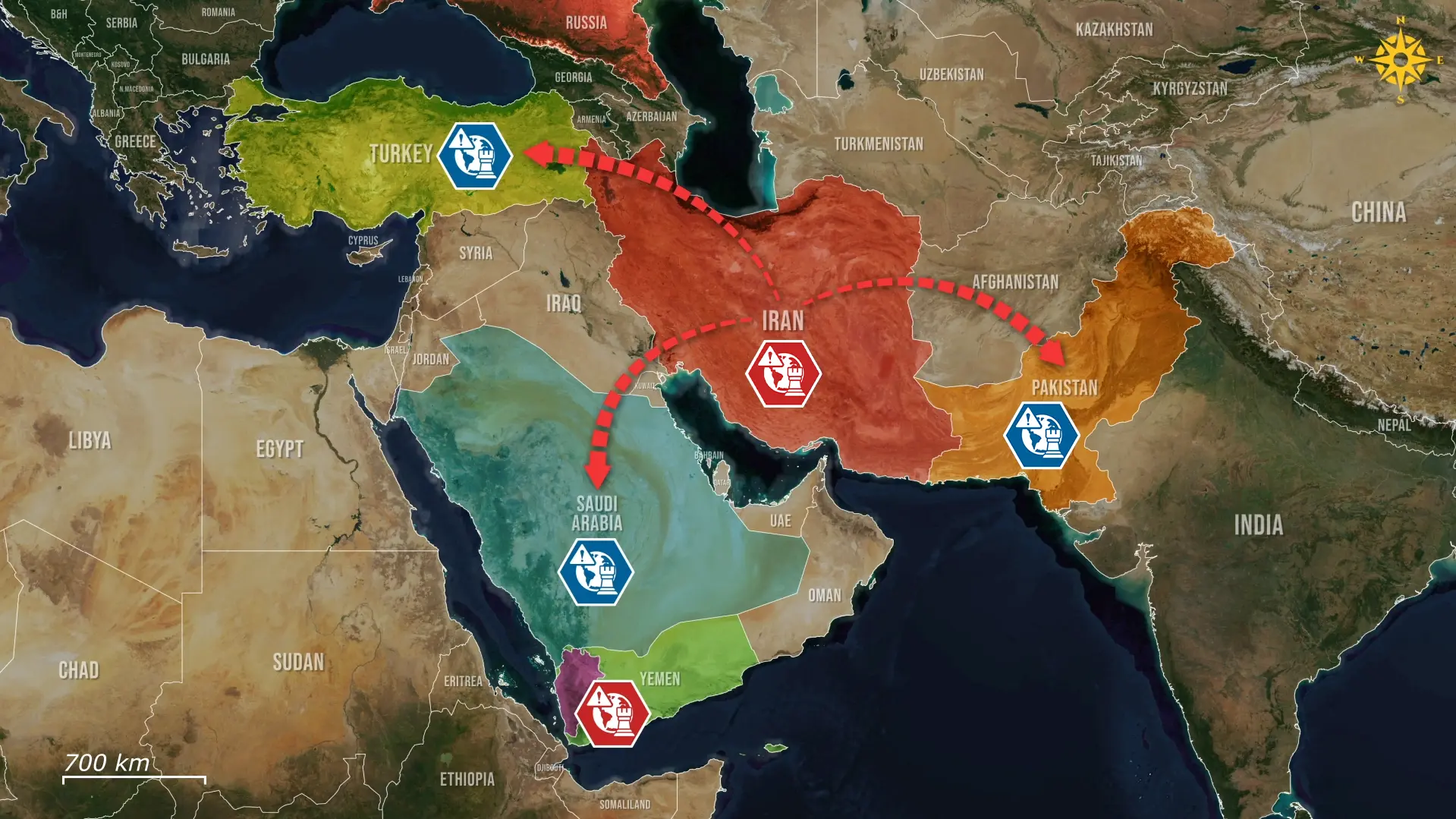
Iran has already demonstrated its willingness to launch direct missile strikes against Saudi Arabian territory. If Turkey or Pakistan become directly involved in the conflict on Saudi Arabia’s side, Iran could well threaten to launch direct strikes against them as well. In Turkey’s case, there is a real precedent for this risk, as at the very beginning of the war, multiple Iranian ballistic missiles were intercepted over Turkish airspace. However, initially Iran could prefer to use its conventional proxy strategy to provide funding and weapons to armed groups operating in Turkey and Pakistan, or redirect existing proxy’s efforts toward these countries instead. As both Turkey and Pakistan have groups operating against their governments within their countries to various degrees, both are vulnerable to Iranian involvement.
Overall, the Houthis are placing sustained pressure on the Saudi economy by repeatedly targeting critical infrastructure such as energy facilities, while also increasing instability in global oil markets. More concerningly, these attacks are raising the risk of activating the Makkah Joint Defense Agreement. If Turkey and Pakistan, as parties to the agreement, become directly involved militarily on Saudi Arabia’s side, this would create new security challenges for Iran and the Houthis. If the conflict persists, Iran could be drawn into direct confrontation with Saudi Arabia, Pakistan, and Turkey, further intensifying tensions across the Middle East and potentially triggering a broader regional conflict.

.jpg)

Comments