

.svg)
Today, the biggest news comes from the Middle East.
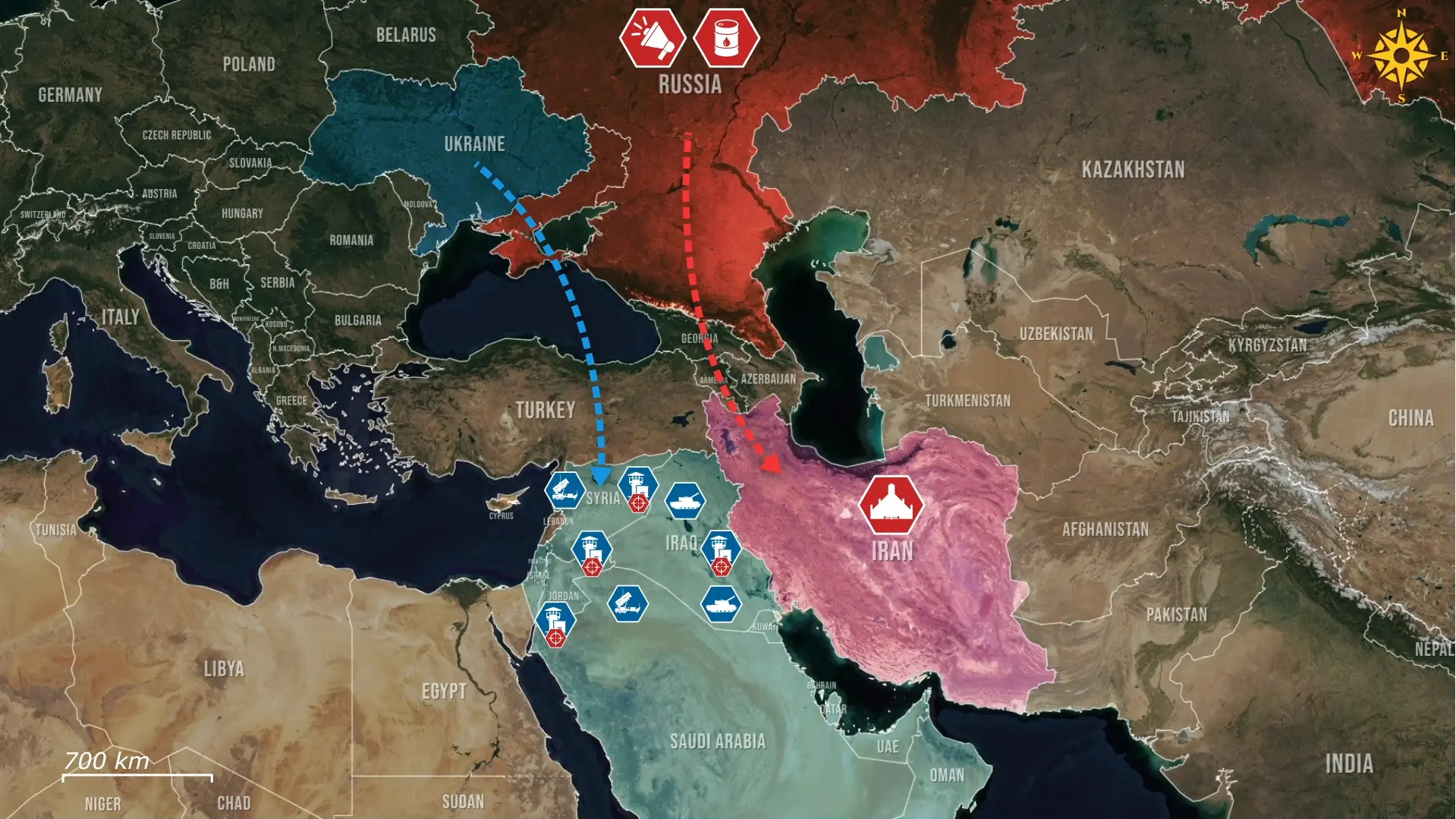
Here, Russia is now entering the Iranian war from the shadows by bringing in drone warfare expertise forged in Ukraine. At the same time, the United States has turned to Ukrainian specialists to defend its bases from Iranian and now Russian drone strikes, meaning both sides are now applying the same battlefield experience against each other in a new theater of war.
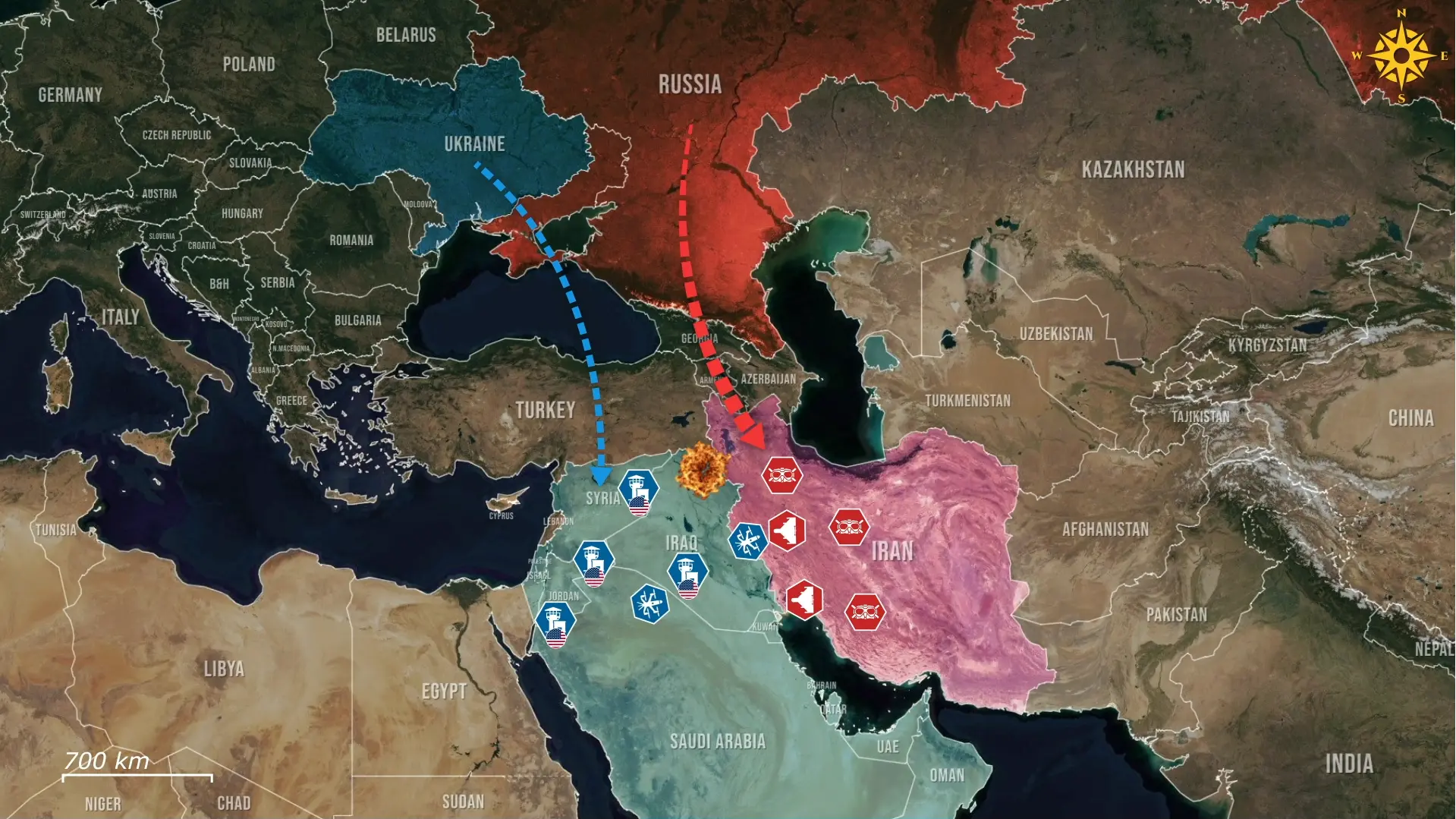
The main development is that Russia is entering the Iranian conflict through operational support. Moscow is deploying its own drone specialists to assist Iran in planning and executing drone strikes against US and allied targets in the region. This mirrors the Ukrainian specialists now being sent to support American and Gulf defenses, as reports say Washington asked Ukraine to help defend US bases and troops against Iranian Shahed drones. Separate reporting indicates that Russia has also expanded its support through satellite imagery and improved drone-related assistance, allowing strike patterns to be continuously adjusted based on real-time battlefield feedback. Russia is not joining the war openly with its own forces, but it is shaping how the war is fought from behind the front line, in the same way Ukraine is shaping the defense on the other side.
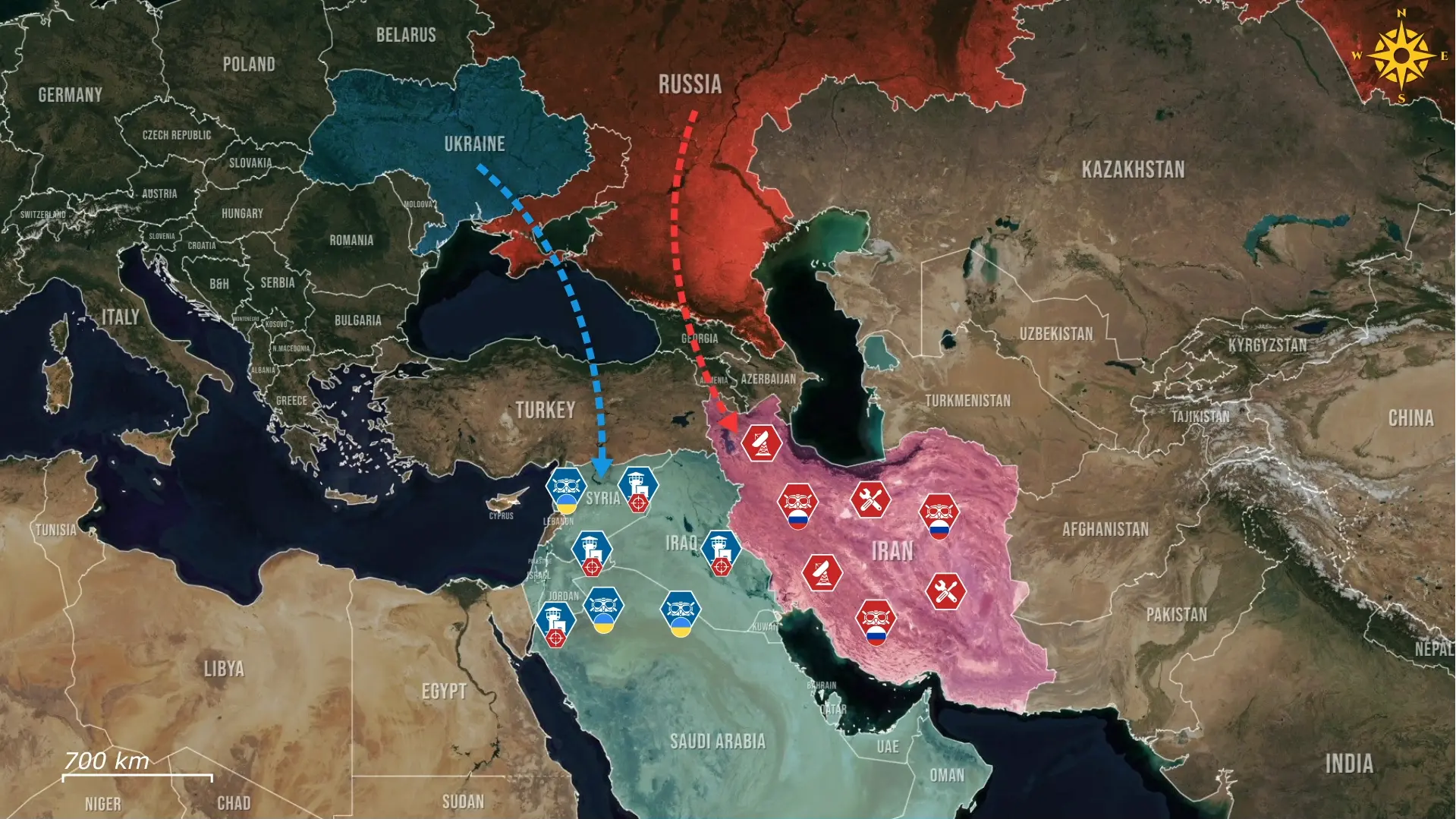
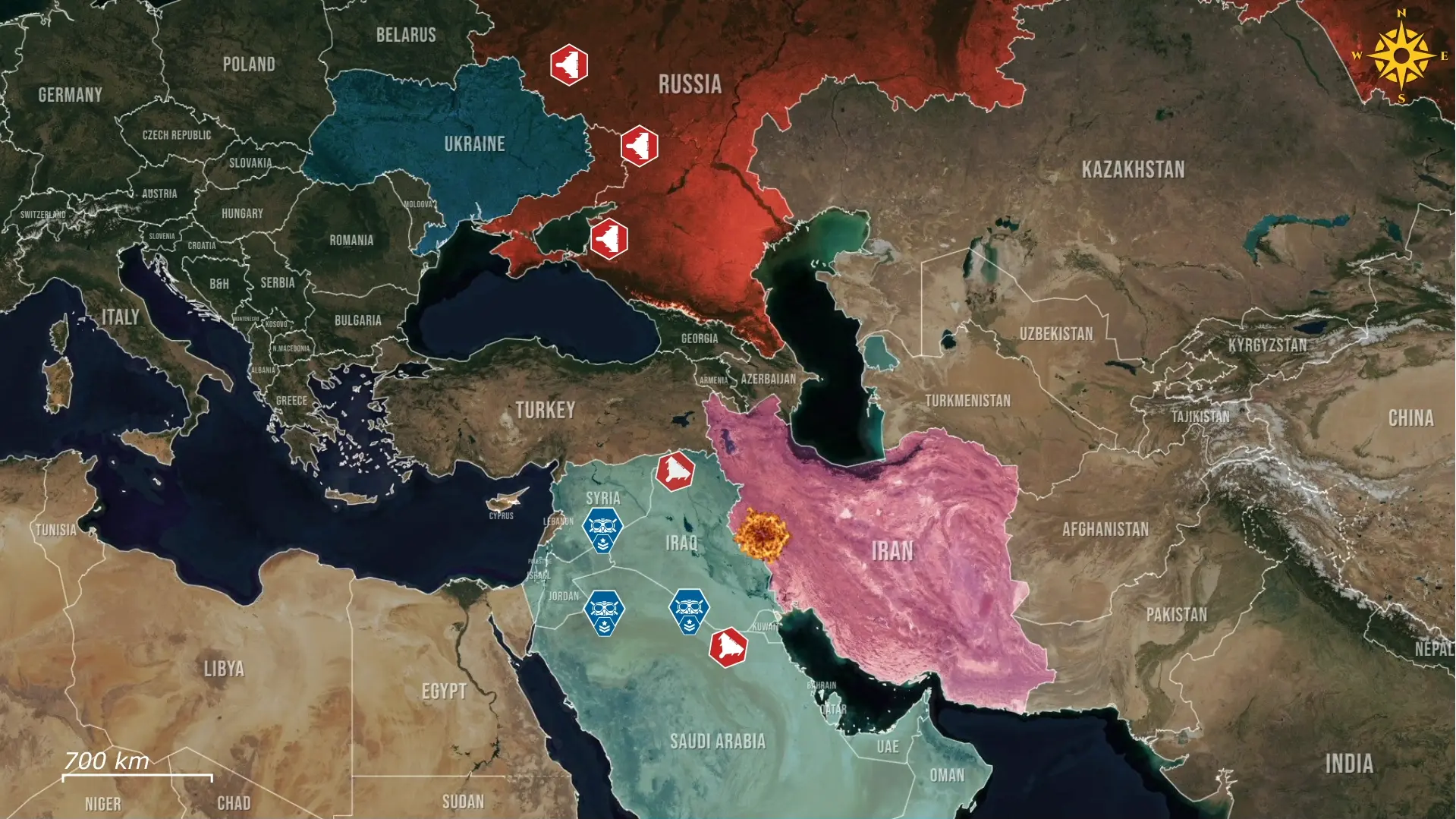
Iran needs this because Ukraine has become the most experienced force in intercepting Shahed drones, and that expertise is now being exported to US and Gulf defenses. Russia, however, is currently the most experienced force in launching these drones under real battlefield pressure. This includes adjusting how drones approach targets so they are detected later and arrive in coordinated waves that overwhelm air defenses, increasing the probability that some reach their targets.
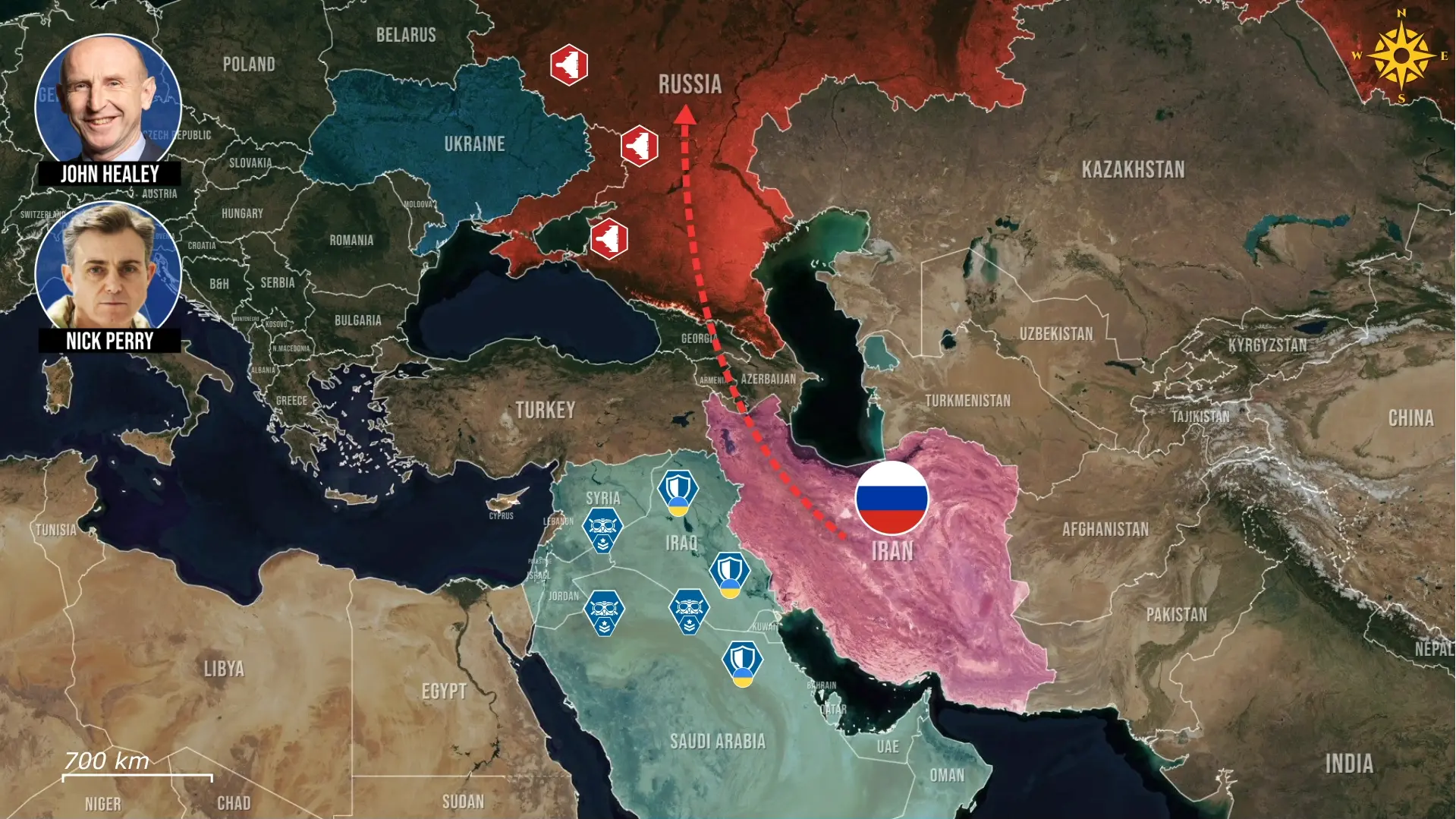
Britain’s Defense Secretary John Healey and Chief of Joint Operations Lieutenant General Nick Perry said Iran and its proxies were increasingly using Russian drone tactics and had likely received Russian tactical advice. This means Iran is turning to Russia to counter a defense model that is already optimized against its own systems. Without that support, its drone campaign risks becoming predictable and losing effectiveness as American and Gulf defenses scale Ukrainian methods.
Russia’s support extends beyond tactics, as reports indicate that Moscow provided Iran with targeting information, including the locations of American warships and aircraft in the Middle East, and later expanded this support through satellite imagery and improved drone-related assistance. This effectively allows Russia to guide Iranian strikes toward US assets by helping identify targets, confirm their presence, and improve the accuracy of attacks. It also shortens the decision cycle between detection and strike execution, increasing the likelihood of successful hits.
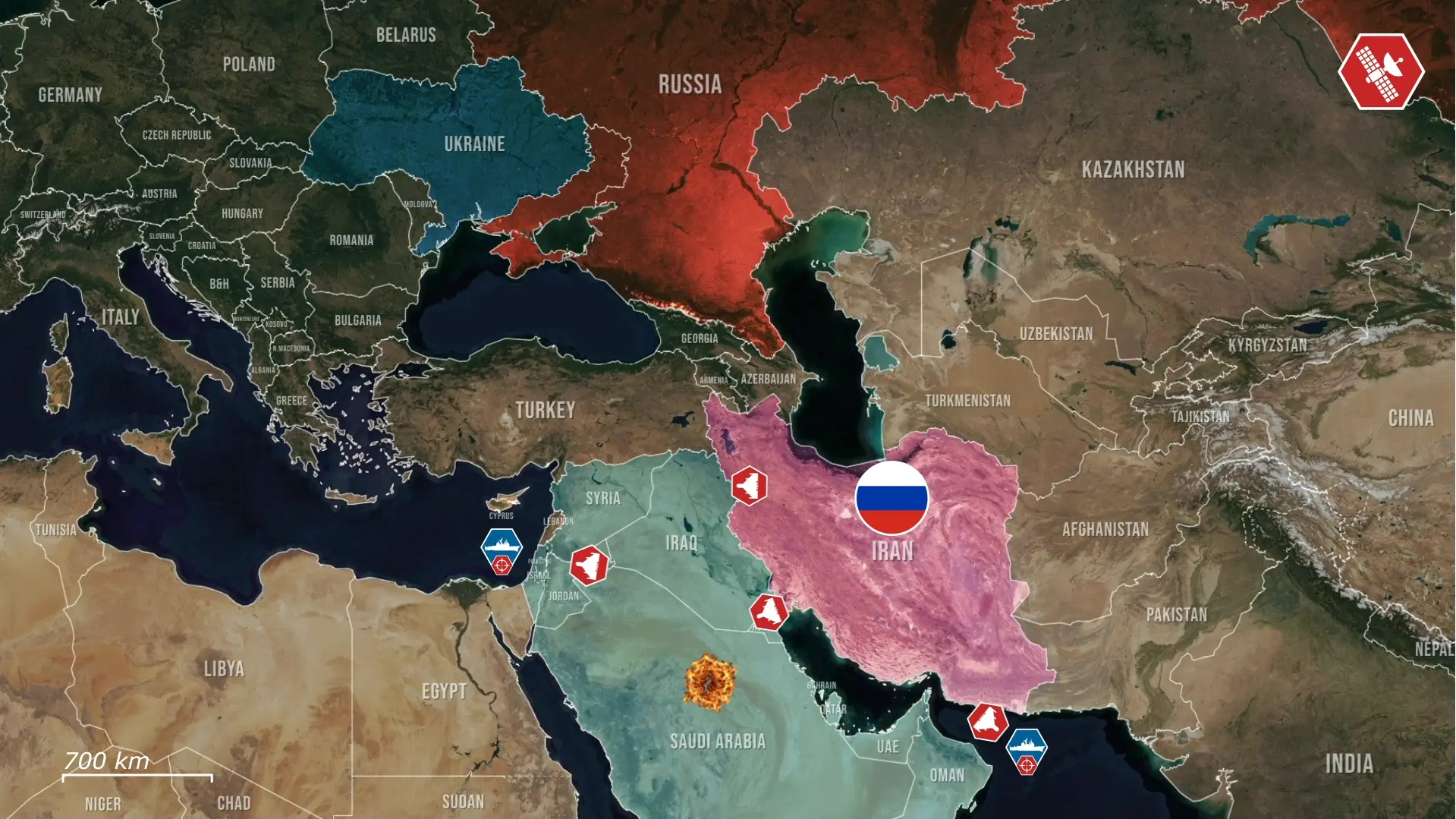
The Kremlin has denied parts of this reporting, but taken together, the available information points to a broader Russian support in shaping how Iran conducts strikes against American forces.
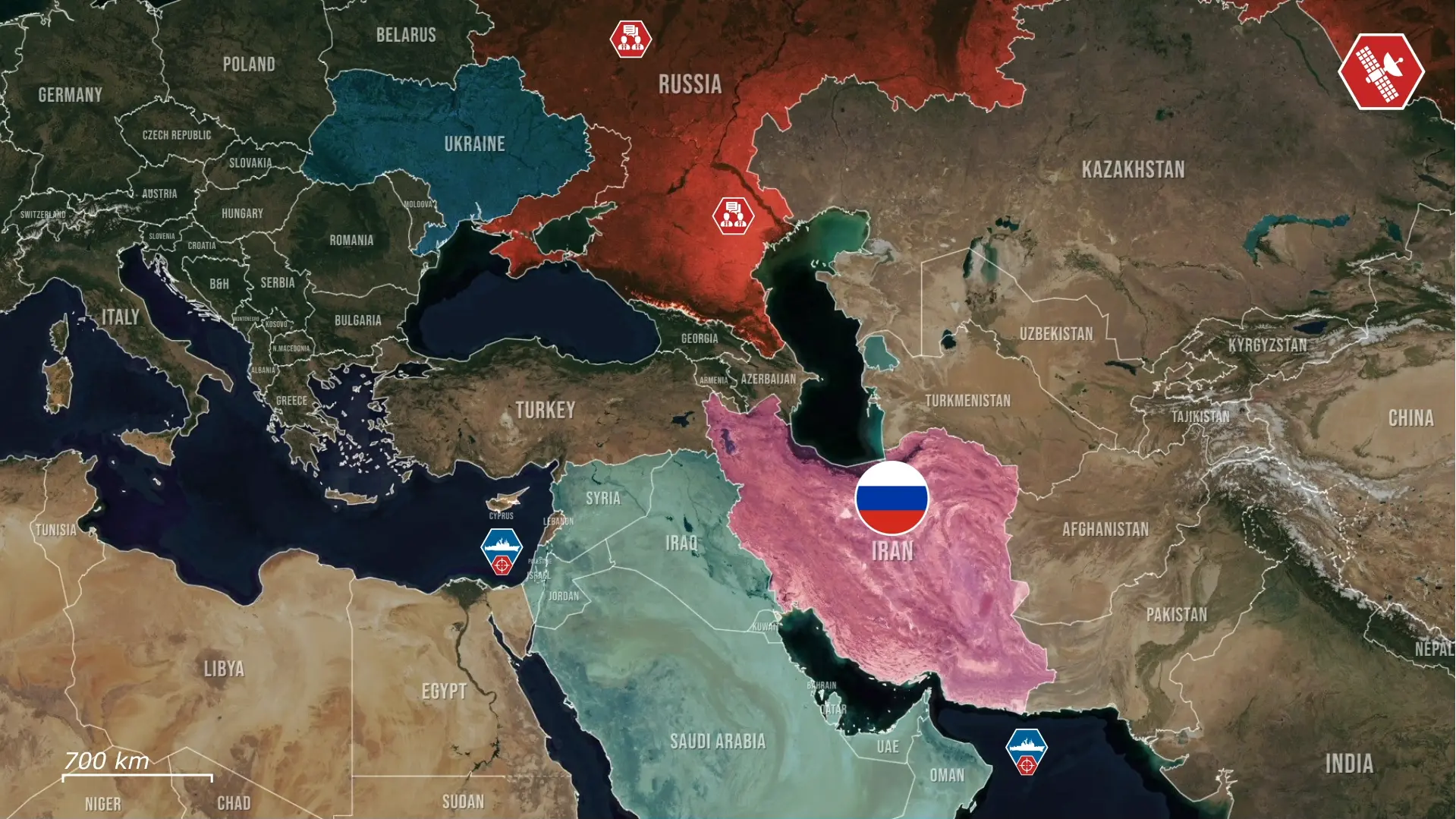
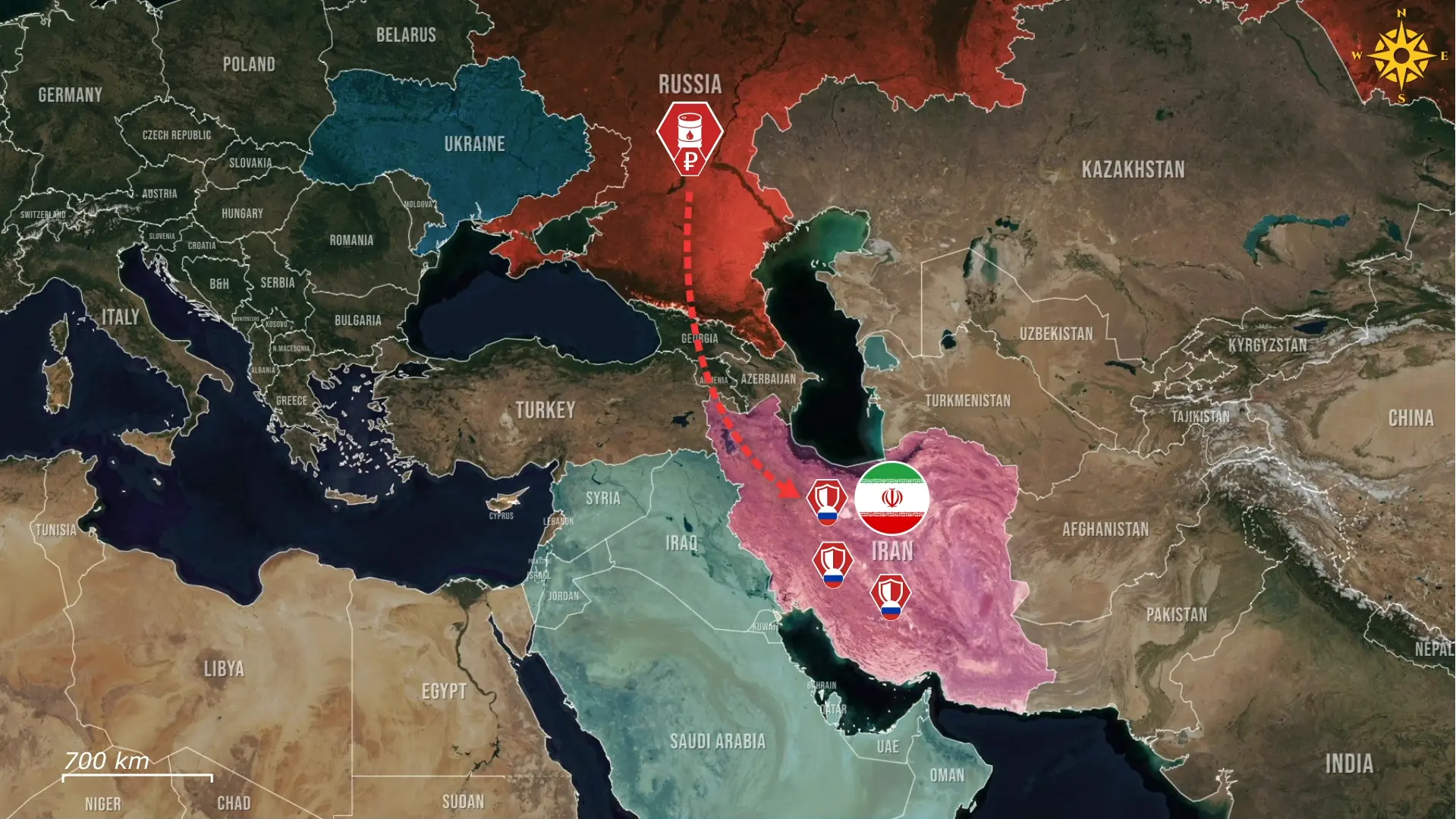
Russia’s involvement is primarily driven by economic gain, as Reuters reported that revenues from its main oil extraction tax are expected to surge sharply due to higher global oil prices driven by fighting in the Gulf, directly increasing state income while Moscow continues financing the war in Ukraine. This means prolonging instability in the region translates into immediate financial gain for the Russian budget, especially as higher prices amplify export revenues without requiring increased production. The second reason is geopolitical, as Iran is one of Russia’s most important anti-Western partners. If Iran’s military credibility collapses, Russia’s influence across the Middle East would weaken, damaging one of the few major countries that still remains closely aligned with Russia. Helping Iran stay in the fight, therefore, serves both Russian revenue and Russian strategic interests simultaneously.
Overall, this points to a conflict that is likely to last longer, as both sides are now reinforcing their capabilities with external battlefield experience. If Russia continues expanding its support, Iranian strikes will become more coordinated and more difficult to neutralize, increasing sustained pressure on US positions in the region. This will force the United States and its partners to commit more air defense assets and personnel to the Middle East, reducing flexibility in other theaters. Strategically, this turns the region into a secondary arena shaped by the Ukraine war, allowing Russia to challenge US forces indirectly while sustaining higher oil revenues and expanding its influence.

.jpg)

Comments