

.svg)
Today, the biggest news comes from the Russian alliance.
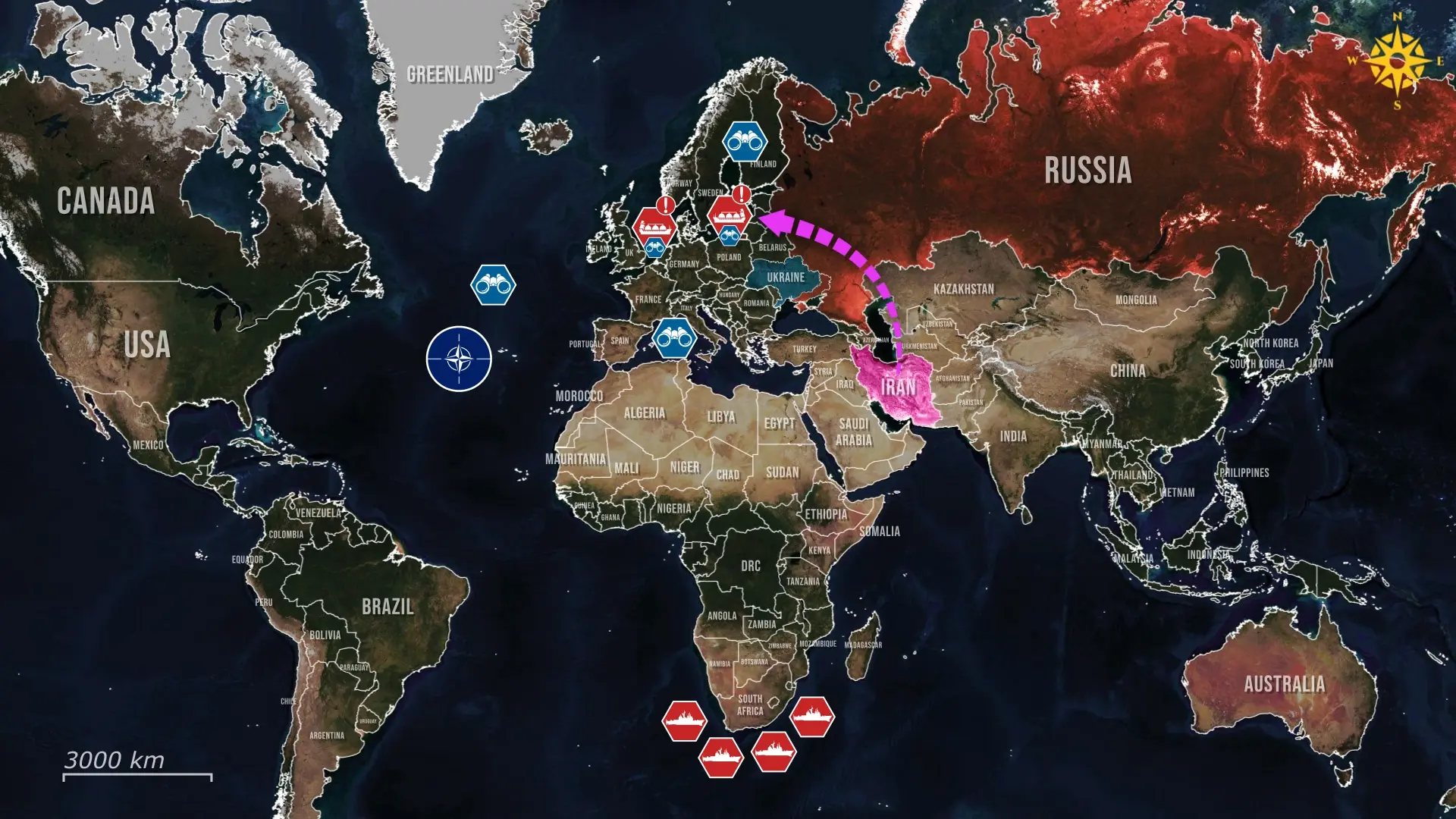
Here, Russia and Iran are now putting naval forces to sea as their sanction-evading shipping networks come under sustained pressure, with physical boardings and seizures happening more frequently by the day. However, what looks like a show of force from the axis of resistance is unfolding not as one might initially expect.
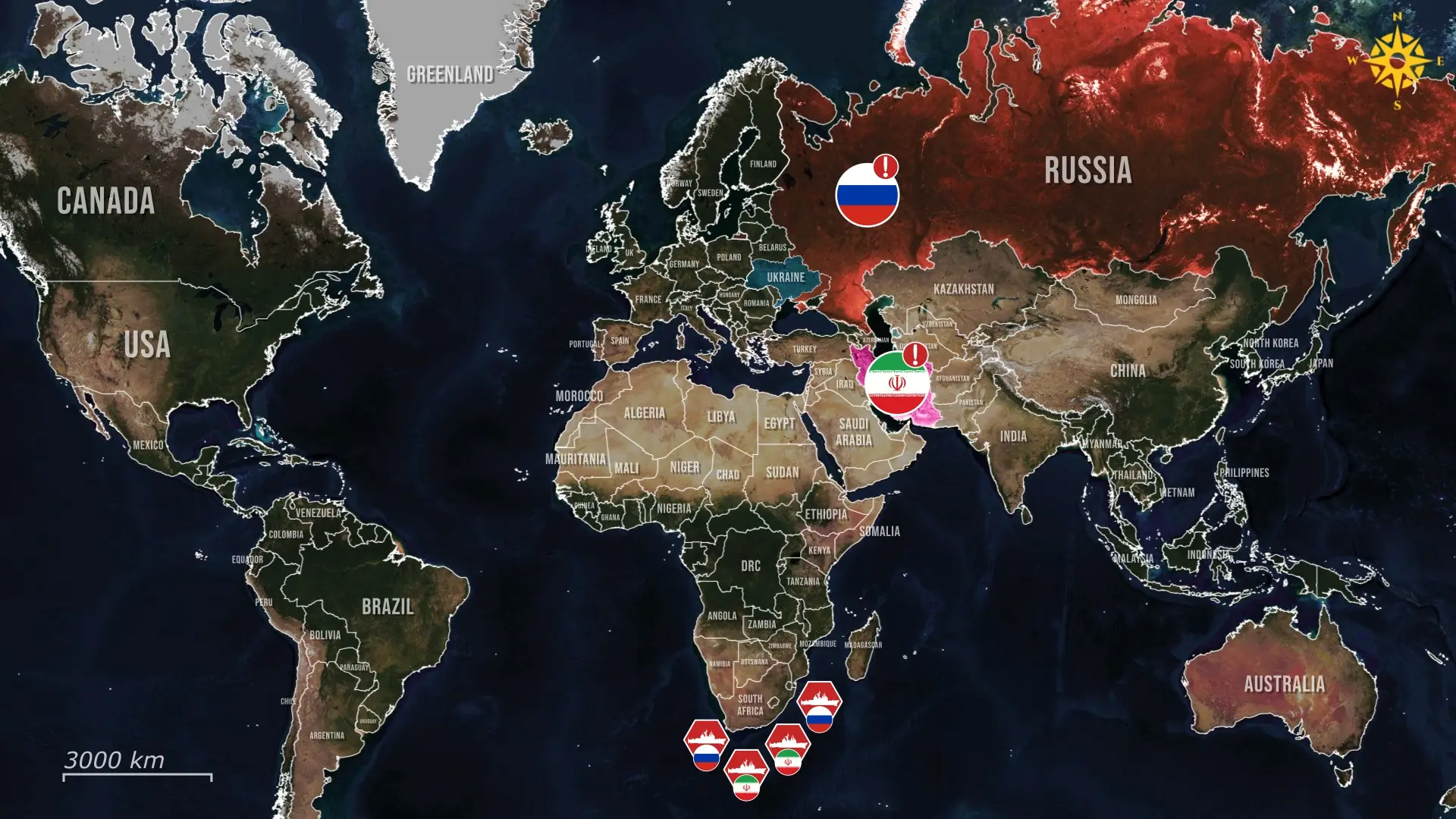
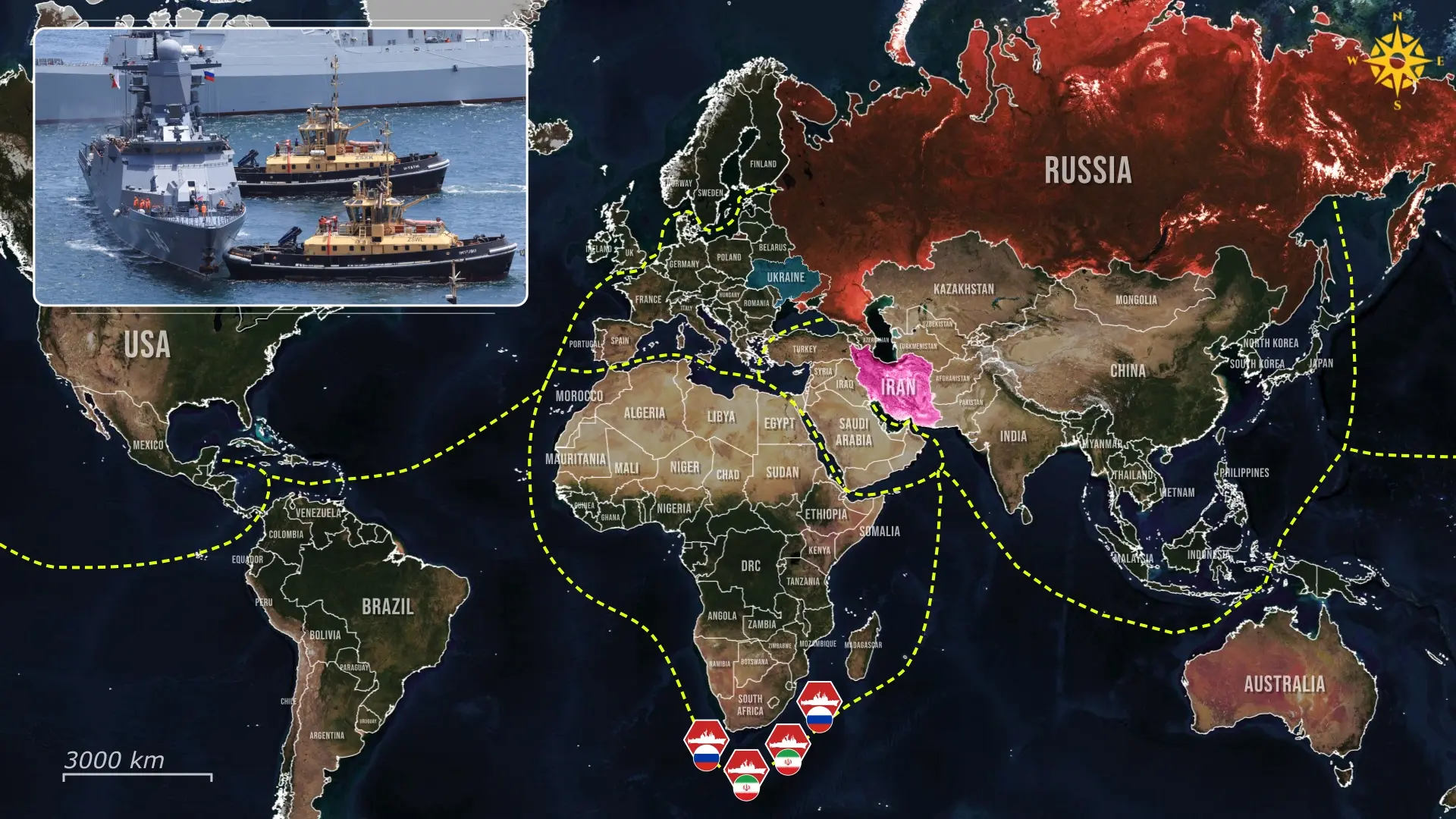
Russia and Iran have begun joint naval exercises and publicly presented them as missions to protect commercial shipping, as Brics alliance members have joined in in various roles. The drills are described as defensive and stretch across sea lanes linking the Indian Ocean with the Persian Gulf, the Red Sea, and the Cape South Africa route, allowing Russia and Iran to present the exercise as a response to growing threats against maritime trade. Warships arrive in port, formations are assembled, and footage is produced in glorious fashion to signal mobilization and resolve, aiming to signal deterrence by showing that their navies are prepared to respond to outside interference with their shipping, sanctioned or not.
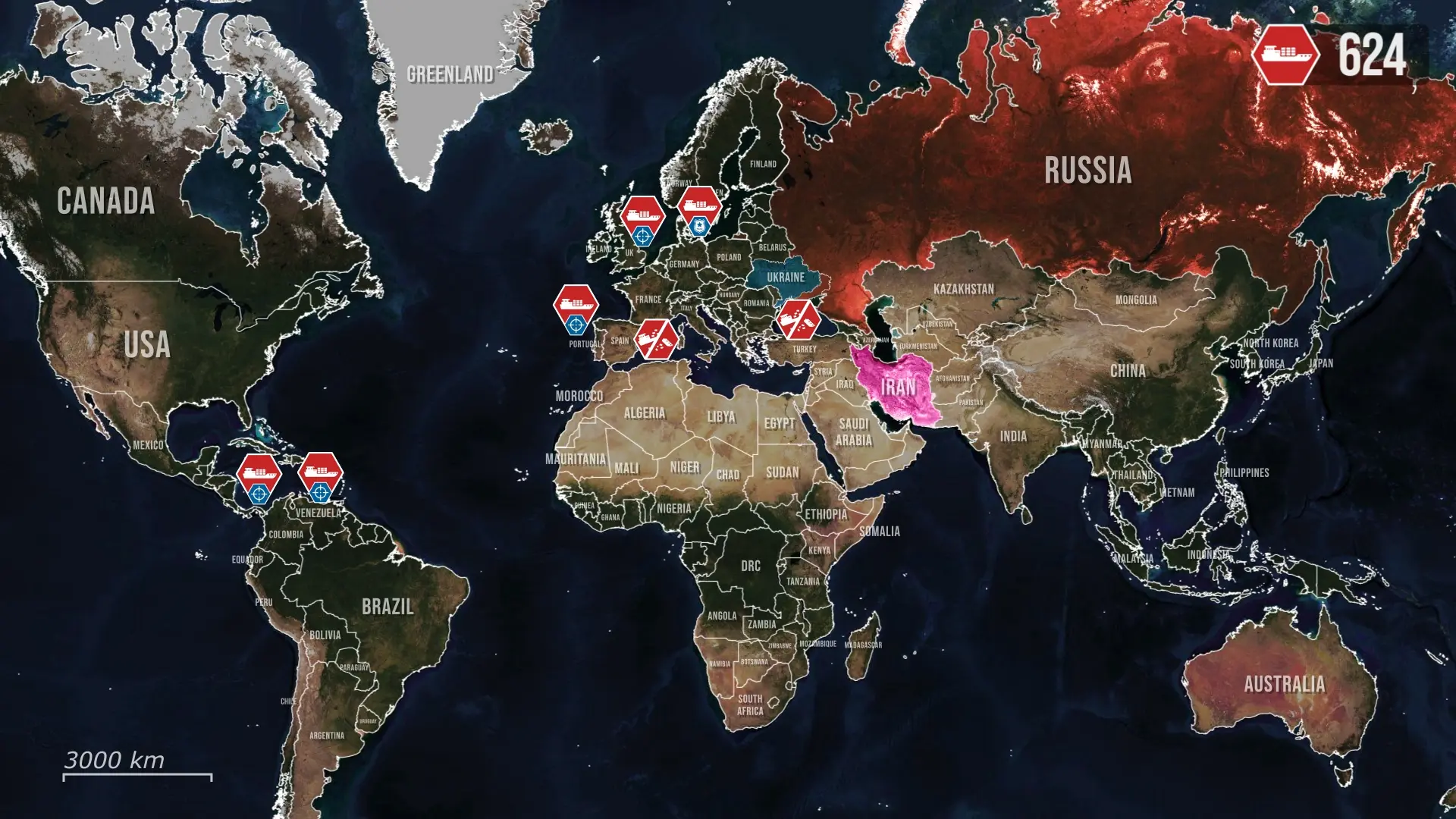
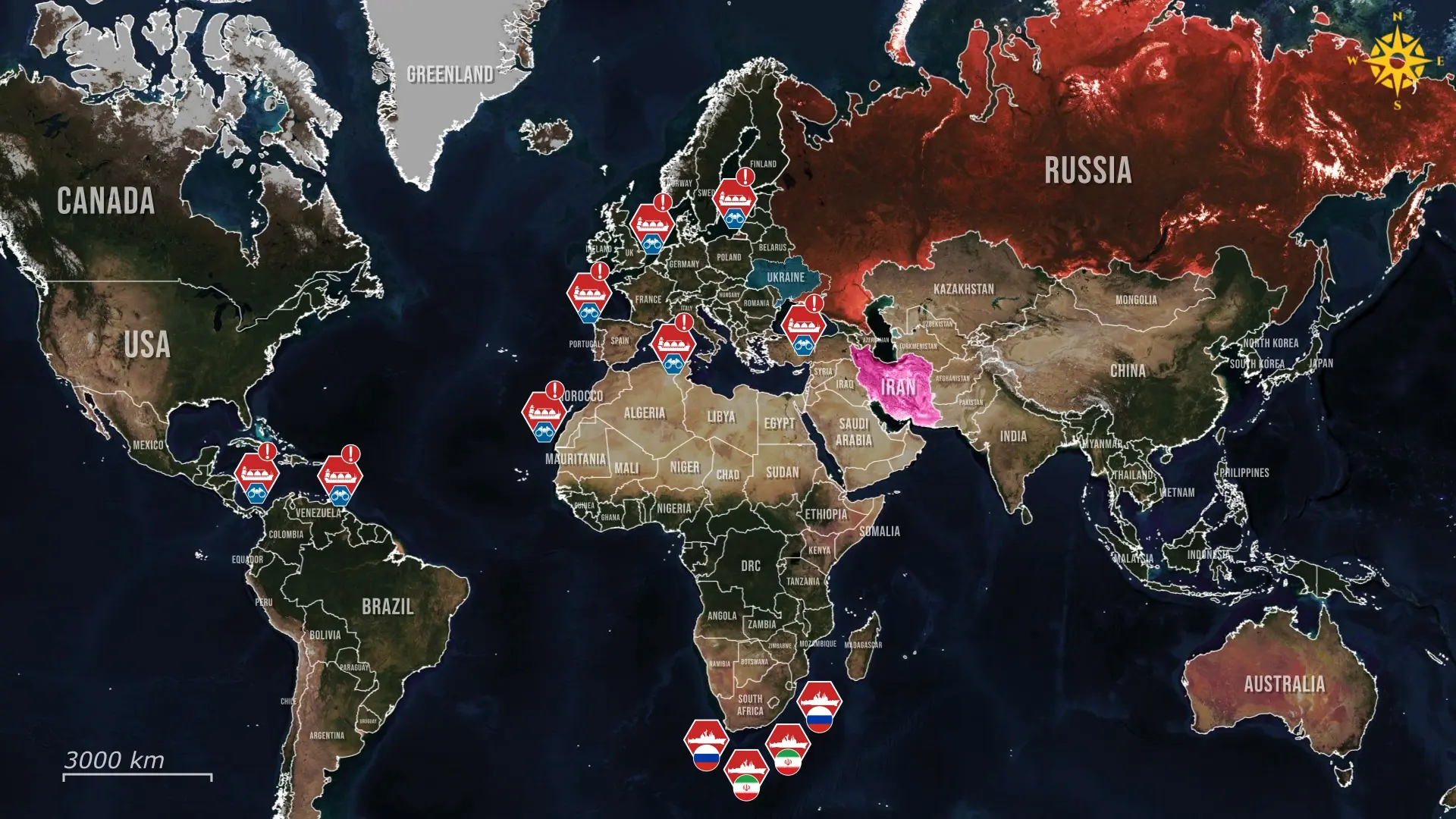
The trigger for this mobilization is accumulated loss, with 624 shadow fleet vessels now sanctioned by the European Union, 12 tankers boarded or detained in the Baltic and North Sea, and seven vessels seized or held under investigation by the United States in Atlantic waters. Ukraine has added its own pressure by striking at five shadow fleet tankers supporting Russian exports in the Black Sea, one in the Mediterranean, and one off the coast of Senegal, turning enforcement from a legal risk into a physical one. Especially in the Baltic, repeated boardings near Estonia and Finland have shown how quickly paper-flagged vessels become vulnerable once they enter narrow approaches controlled by Nato members.
A boarding does not just create a headline; the ship is forced to slow, comply, and divert, while crews are questioned, documents are checked, and insurers and buyers freeze payments until the legal status is clear. Even a temporary detention can remove a tanker from service for weeks, which matters because the shadow fleet depends on constant rotation, not on a few protected voyages. Against that backdrop, the location of the Russia-Iran naval exercises is revealing, as the drills are being conducted off the East African coast, thousands of kilometers from routes where most shadow fleet losses have occurred. A naval formation operating near South Africa does not escort tankers through Danish straits, deter inspections near Estonia, shield Atlantic crossings, or protect vessels from Ukrainian strikes in the Black Sea and Mediterranean.
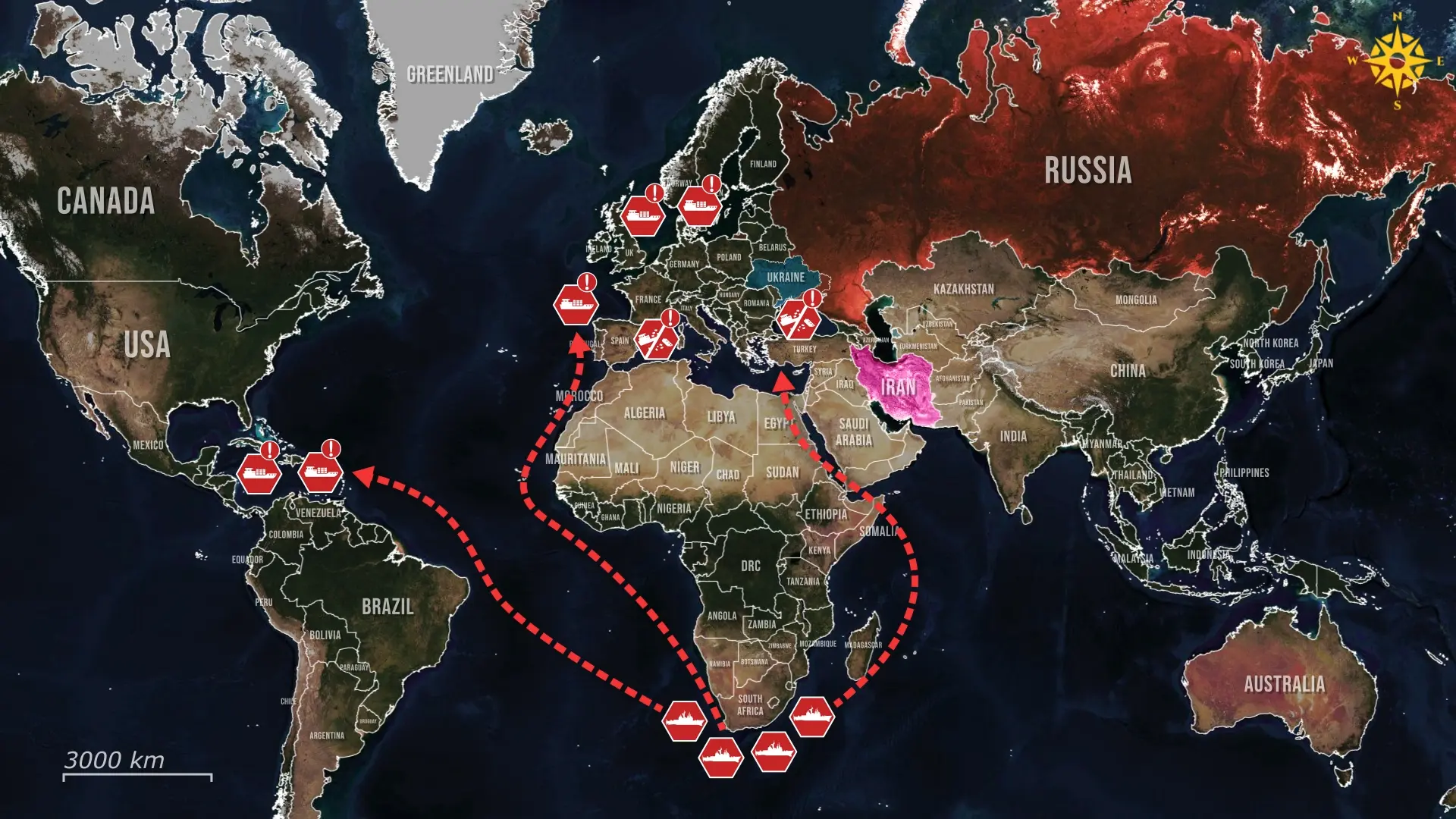
The exercises are held in permissive waters because operating closer to seizure zones would immediately place Russian and Iranian warships under constant Nato surveillance and military pressure. Escorting tankers through the Baltic or North Sea would mean continuous air patrols, naval shadowing, and coast guard authority, where even a routine inspection could escalate into a direct and uncontrollable incident. Iran faces an even harder constraint, because projecting and sustaining naval cover into Northern Europe requires logistics, ports, and endurance it does not have, while any forward deployment would be exposed to tracking and political pressure long before it could protect a single tanker. As a result, the shadow fleet remains exposed where it operates, while Russia and Iran only gain footage and signaling, valuable for domestic and online audiences. The Atlantic, Mediterranean, and Baltic corridors remain governed by Western surveillance, legal authority, and proximity to ports willing to detain vessels.
Overall, pressure is being applied by regimes that turn sanctions evasion into a physical and legal risk at sea. What is disappearing is Russia and Iran’s ability to move sanctioned oil with predictability and protection across multiple sea routes. Naval exercises staged far from seizure zones cannot reduce boarding risk or prevent detentions where oil moves. By signaling intent without delivering protection, this mobilization encourages stricter enforcement because it signals that Russia and Iran are unwilling or unable to protect their tankers where seizures occur, lowering the perceived risk of escalation for boarding states. More aggressive inspections and a higher tempo of seizures as shadow fleet operators are left exposed in contested waters.

.jpg)

Comments