

.svg)
Today, there is important news from the Liman direction.
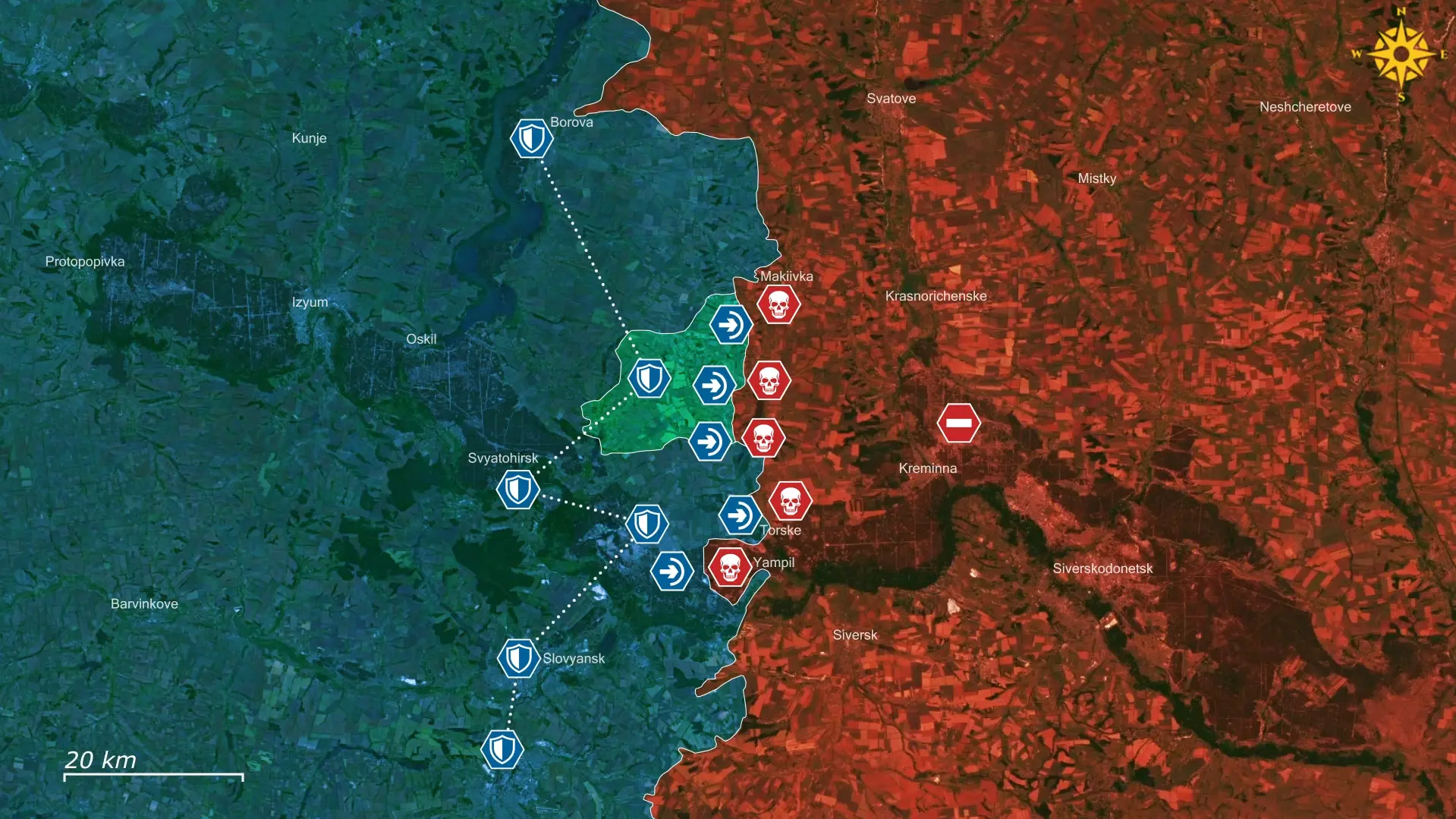
Here, the Ukrainians finally forced the Russians to retreat from their salient west of the Zherebets River after the threat of being encircled. As a result, Russian forces are once again retreating from Liman’s approaches under Ukrainian pressure.
Ukraine has liberated almost two-hundred square kilometers in total, as Russian formations first abandoned their bridgehead west of the Nitrius River before retreating farther east. Ukrainian troops recaptured Shandryholove, Nove, and Novomykhailivka, together with most surrounding forests.
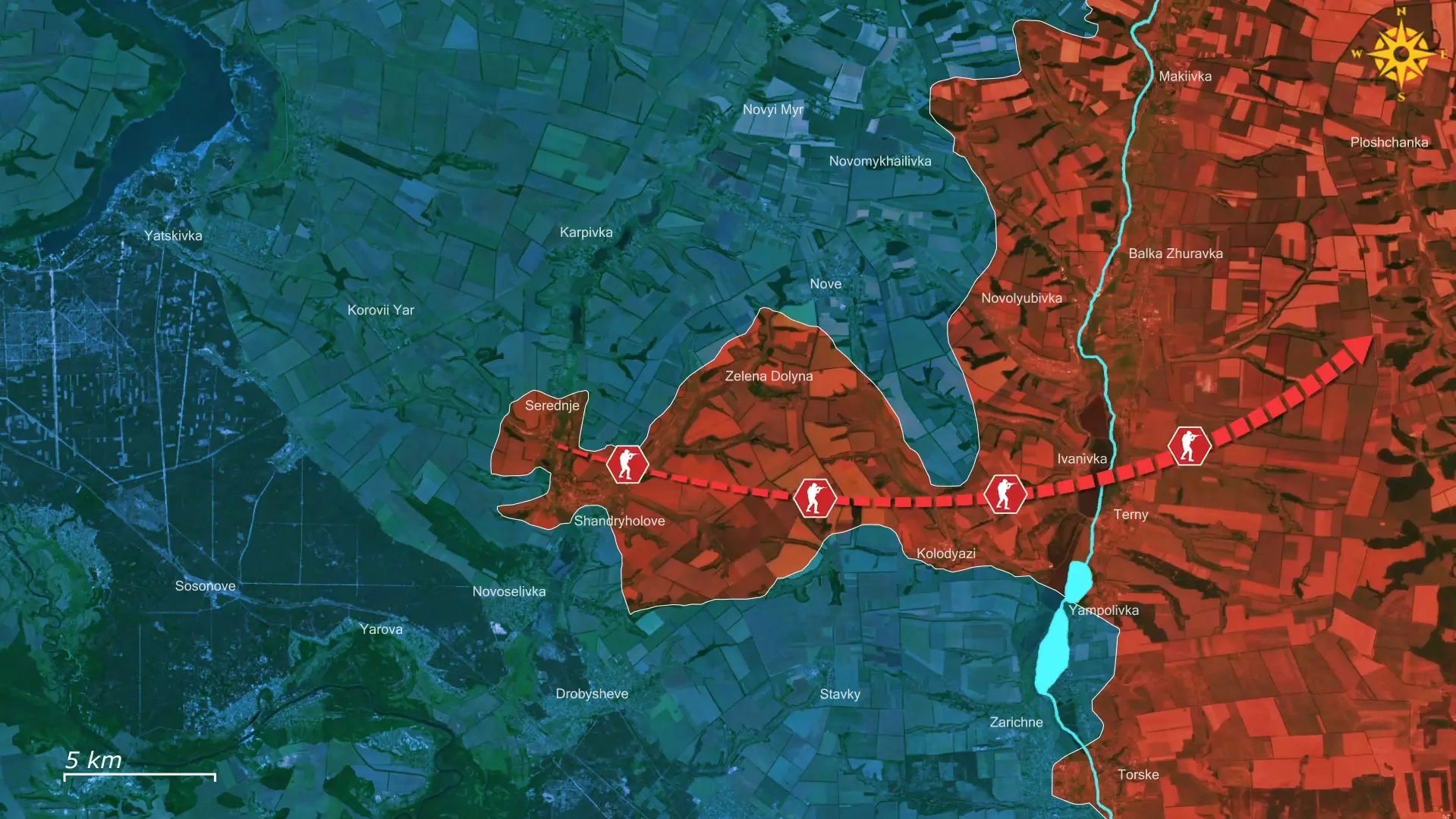
The withdrawal came once Russian commanders concluded that Kolodyazi and Zelena Dolyna could no longer be held strongly enough to prevent Ukraine from cutting the salient apart. Russian sources reported that roughly three hundred Russian soldiers remaining there risked encirclement, but rather than sacrificing them as usual, Moscow ordered a phased retreat after the beginning of September. Forest cover, artillery, and glide-bomb strikes helped shield the withdrawal, with Russian sources claiming that most Russian formations managed to escape before Ukraine could close the pocket.
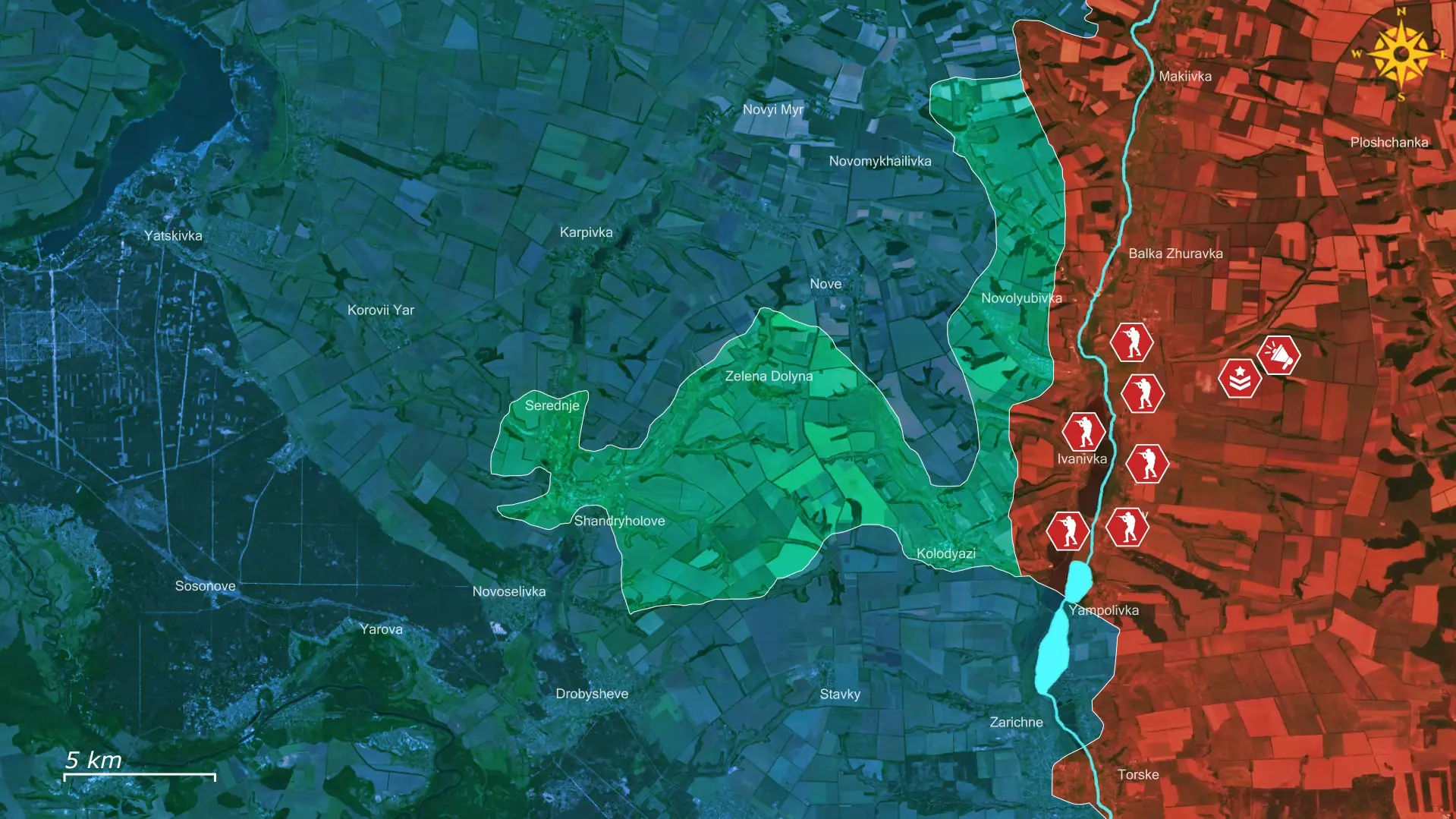
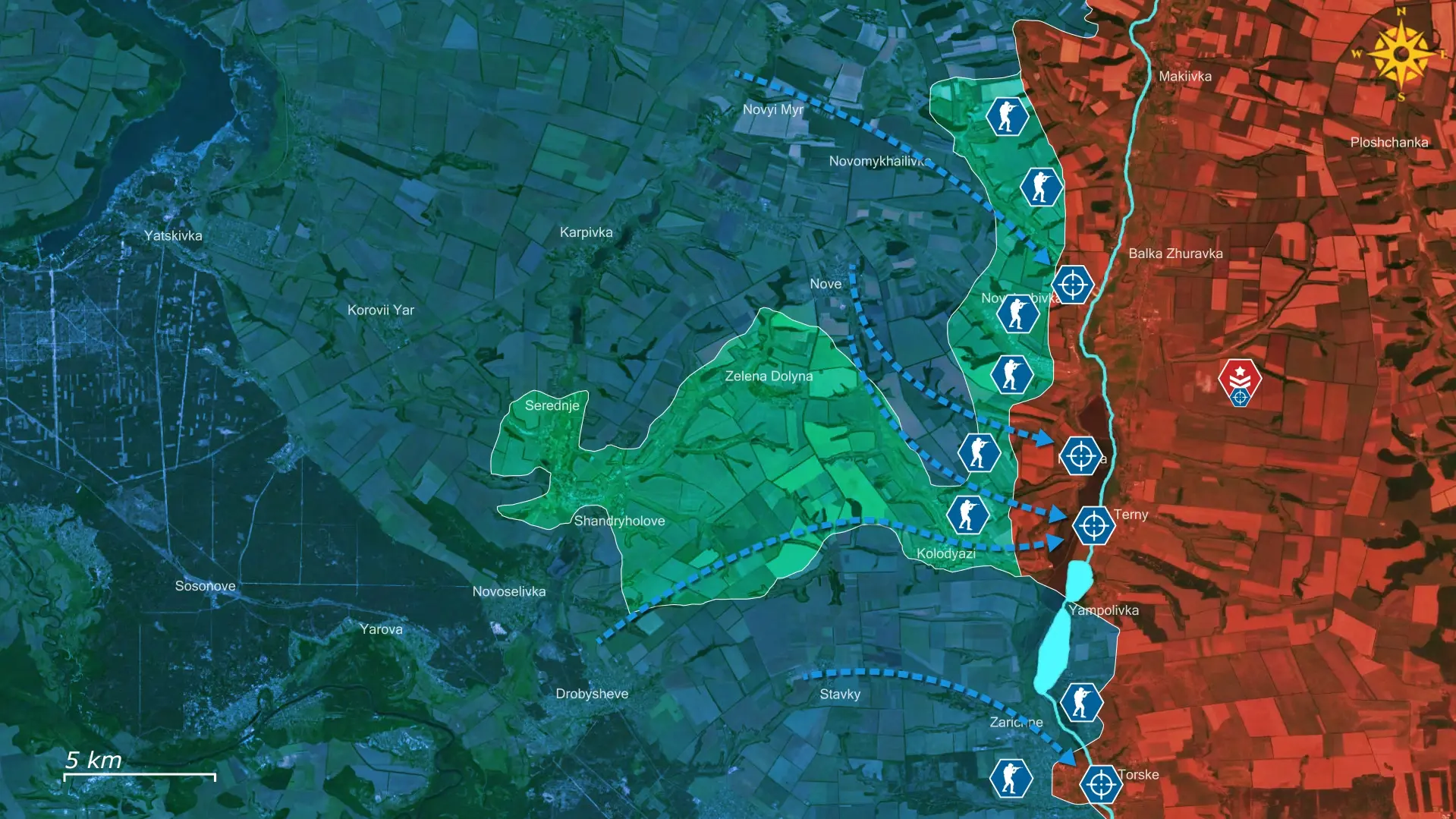
Ukraine is now exploiting that success instead of stopping at the abandoned positions, as Ukrainian units are advancing through gullies from Nove toward Ivanivka and Terny, pushing directly toward the Zherebets. Ukrainian assault groups are simultaneously moving beyond Kolodyazi and consolidating full control, while additional groups move through gullies around its flanks.
Farther north, Ukrainian troops are moving through Novomykhailivka and are expanding along the valley toward Novolyubivka. On the opposite southern flank, Ukrainian forces are intensifying infiltrations into Zarichne, expanding the grey zone through its northern streets while attempting to cross the Zherebets and retake strongpoints around Torske. The Ukrainian offensive has therefore transitioned from eliminating Russia’s bridgehead to pursuing retreating forces toward the river.
The scale of the reversal becomes clearer when measured against time, as Russia spent roughly twenty-one months, beginning in January two-thousand-twenty-five, grinding forward in this sector. Those gains have now effectively been erased, as the northern Russian pincer for enveloping Liman has collapsed, meaning the city is no longer facing the immediate encirclement threat created by the salient.
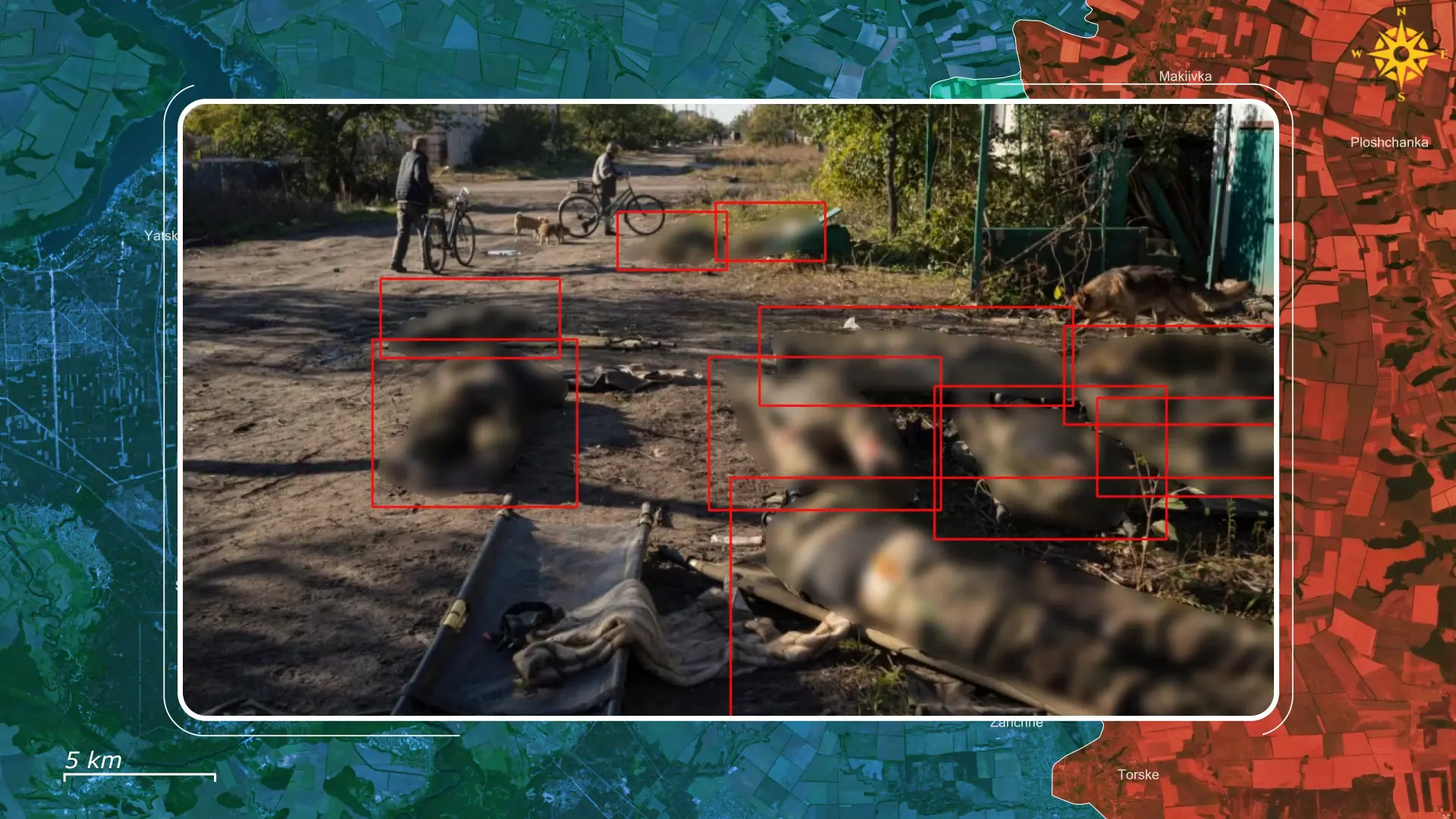
That also changes the wider defensive picture, as Russian pressure on Borova to the north has decreased substantially, while the danger to Sloviansk farther south has been reduced. Russia may now attempt to develop pressure on Liman from the south through the local national park, but it must effectively rebuild an operational problem Ukraine has just spent months dismantling. Liman’s defense has consequently bought Ukraine potentially months while forcing Russia to restart offensive preparations from considerably worse positions.

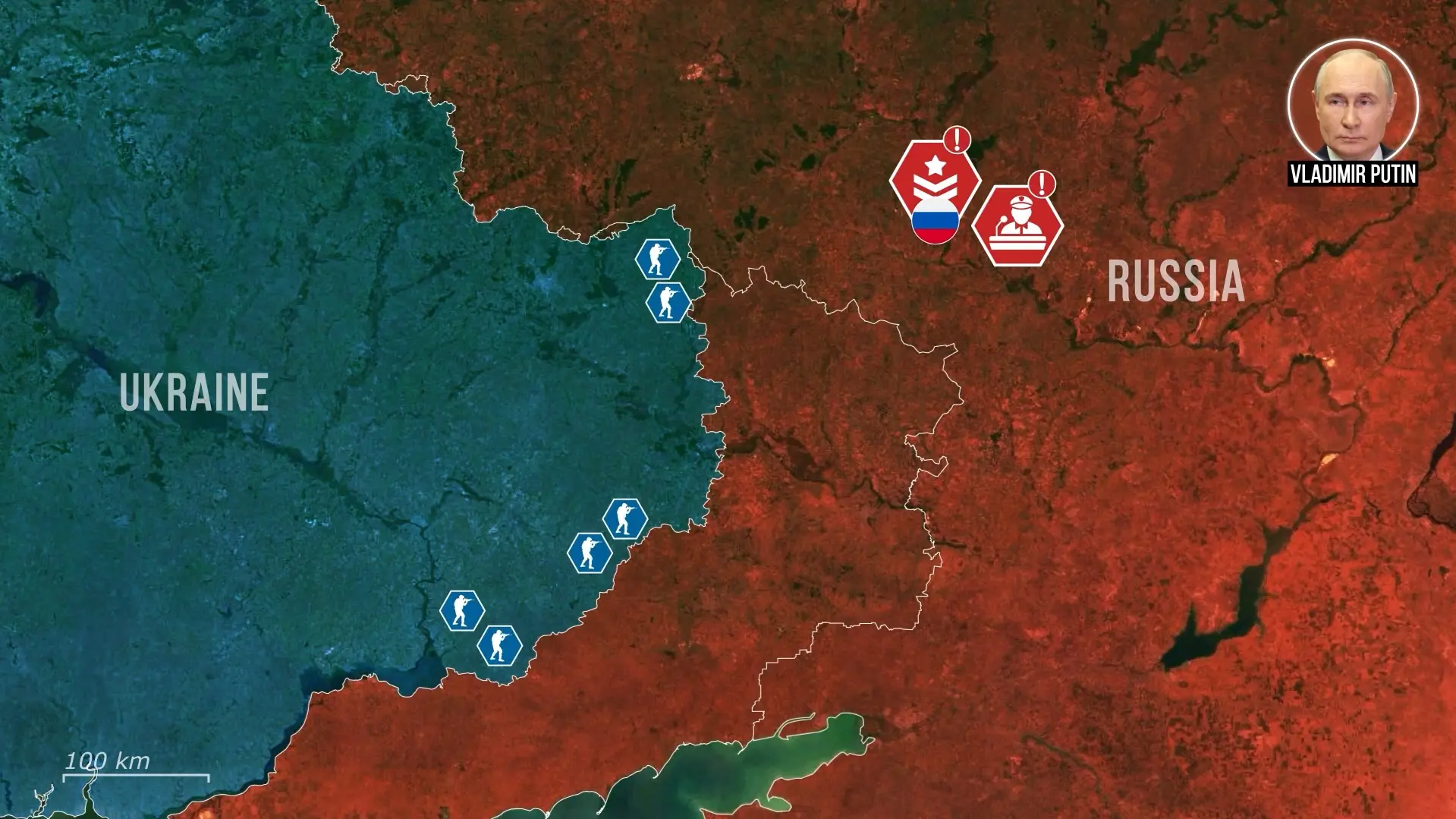
Overall, the contrast with Moscow’s public narrative is striking, as Putin had just claimed Sviatohirsk was captured, yet Russian troops have instead been driven kilometers farther away. Third Army Corps commander Andriy Biletsky visited Sviatohirsk after the salient collapsed, describing it as effectively a rear area because Russian forces are now roughly twenty kilometers away and openly mocking Putin’s claims. That symbolism matters strategically, as Putin continues demanding the capture of the remaining Ukrainian-controlled Donbas, reportedly treating the end of the year as a critical objective deadline. Yet around Liman, months of Russian offensive effort and thousands of losses have led to another Russian retreat. Ukraine has not merely stabilized the front, but it has removed the northern encirclement threat, liberated substantial territory, and pushed toward the Zherebets River. Instead of advancing, Russian forces are retreating, strengthening the entire Ukrainian defensive architecture protecting northern Donetsk Region and the approaches toward Sloviansk.
.jpg)

Comments