

.svg)
Today, the biggest news comes from Poland.
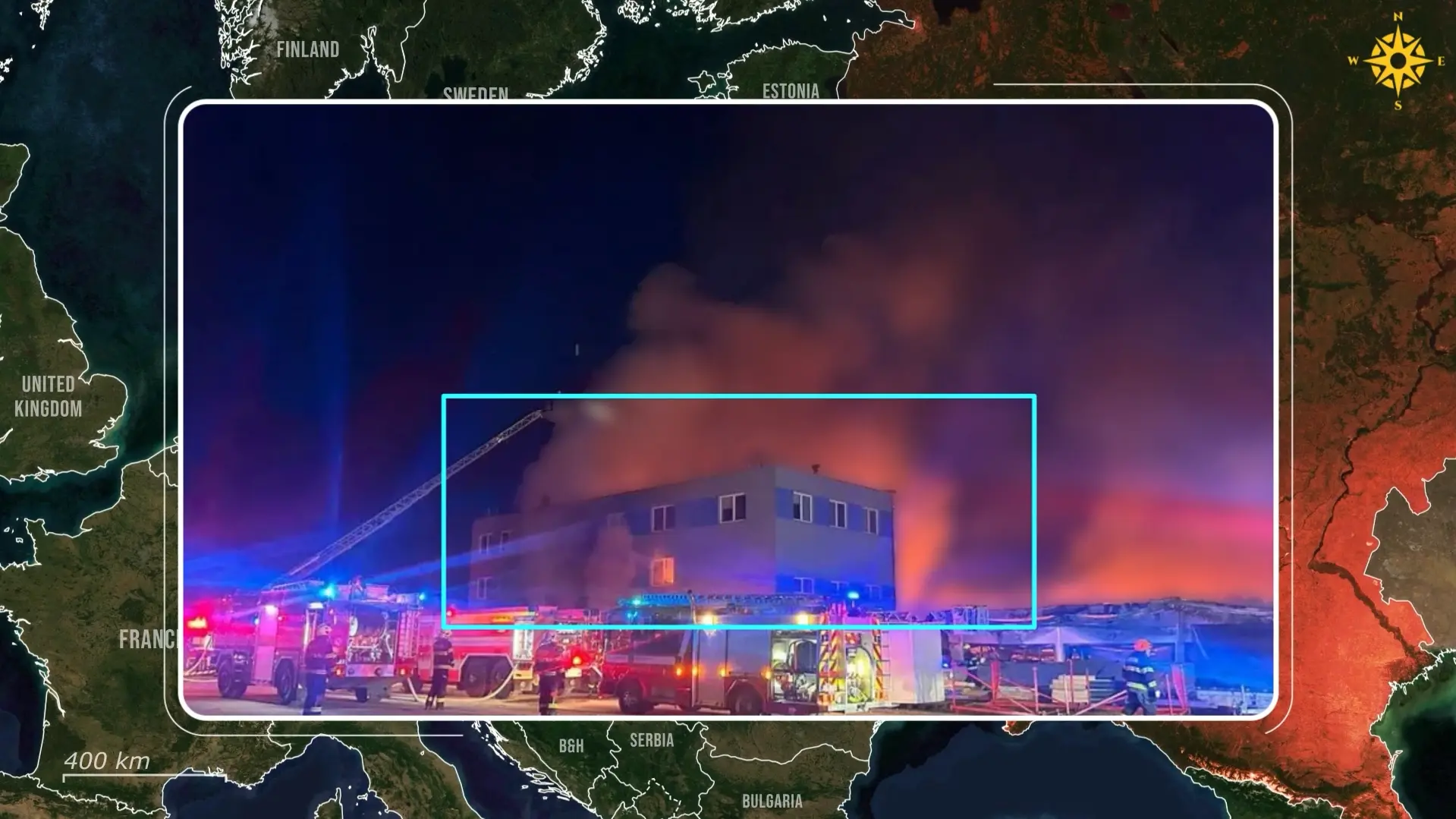
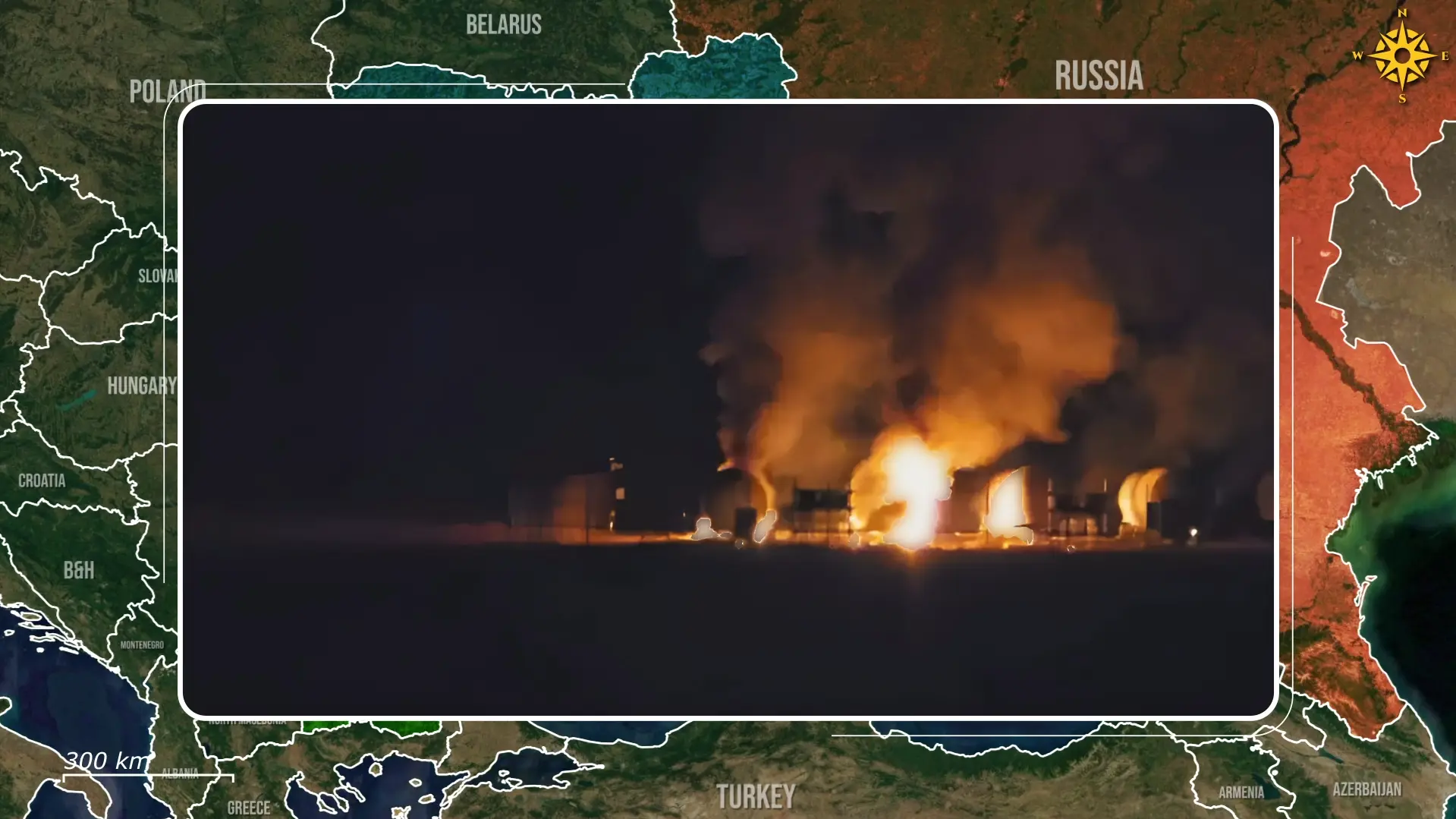
A Russian sabotage attack caused a major overnight fire at a Polish factory operated by WB Electronics, an important private defense company producing drones, components, and loitering munitions for Polish and Ukrainian forces. The blaze damaged the warehouse and production facilities, causing an estimated three point five million euros in losses. Surveillance cameras captured an unknown person wearing a balaclava climbing over a fence and entering the facility shortly before the fire, while a rucksack and a long sleeved top were later discovered nearby. Poland’s Internal Security Agency and military counterintelligence were notified, while police launched a terrorism investigation examining possible involvement by Russian intelligence services.
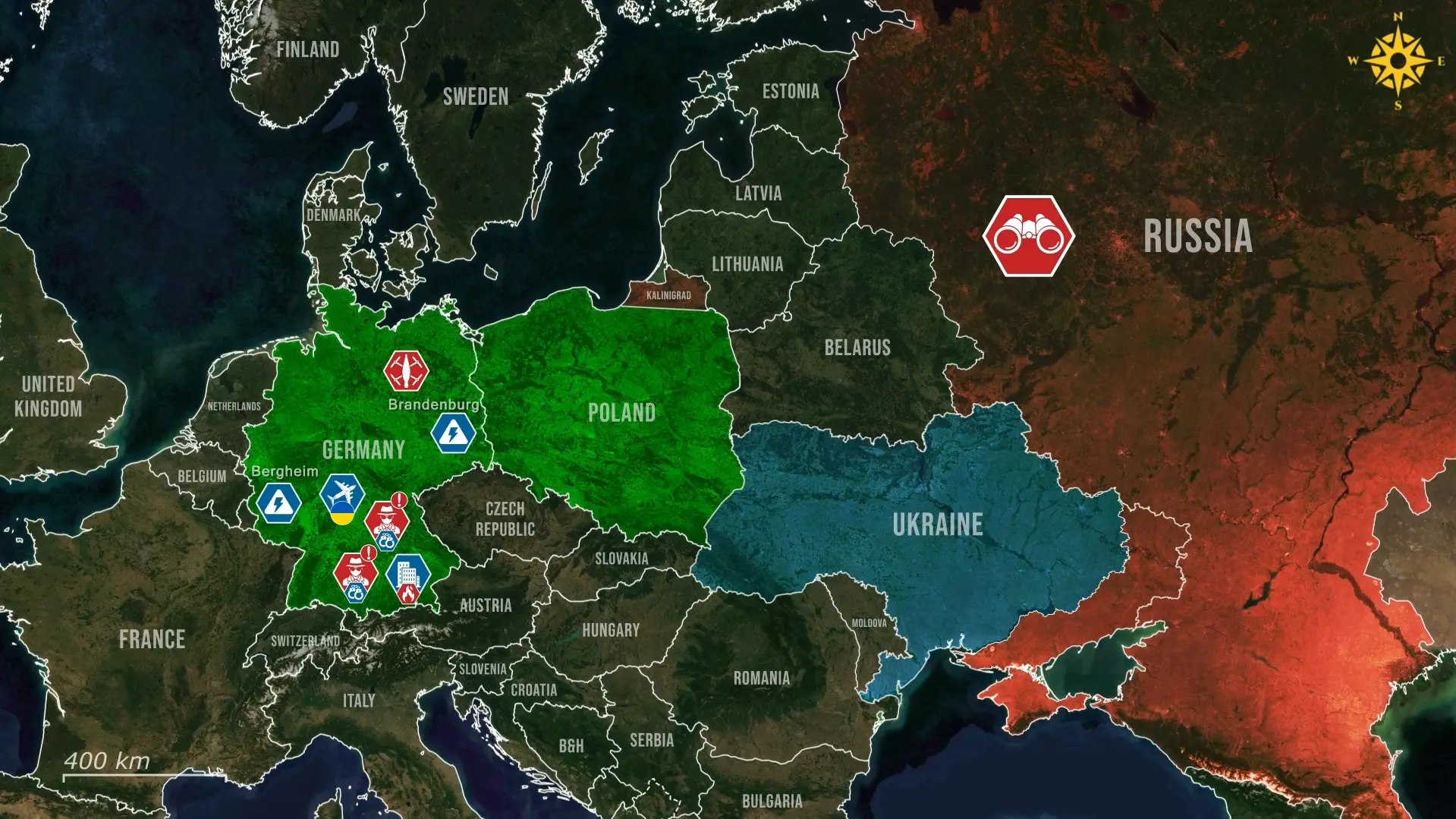
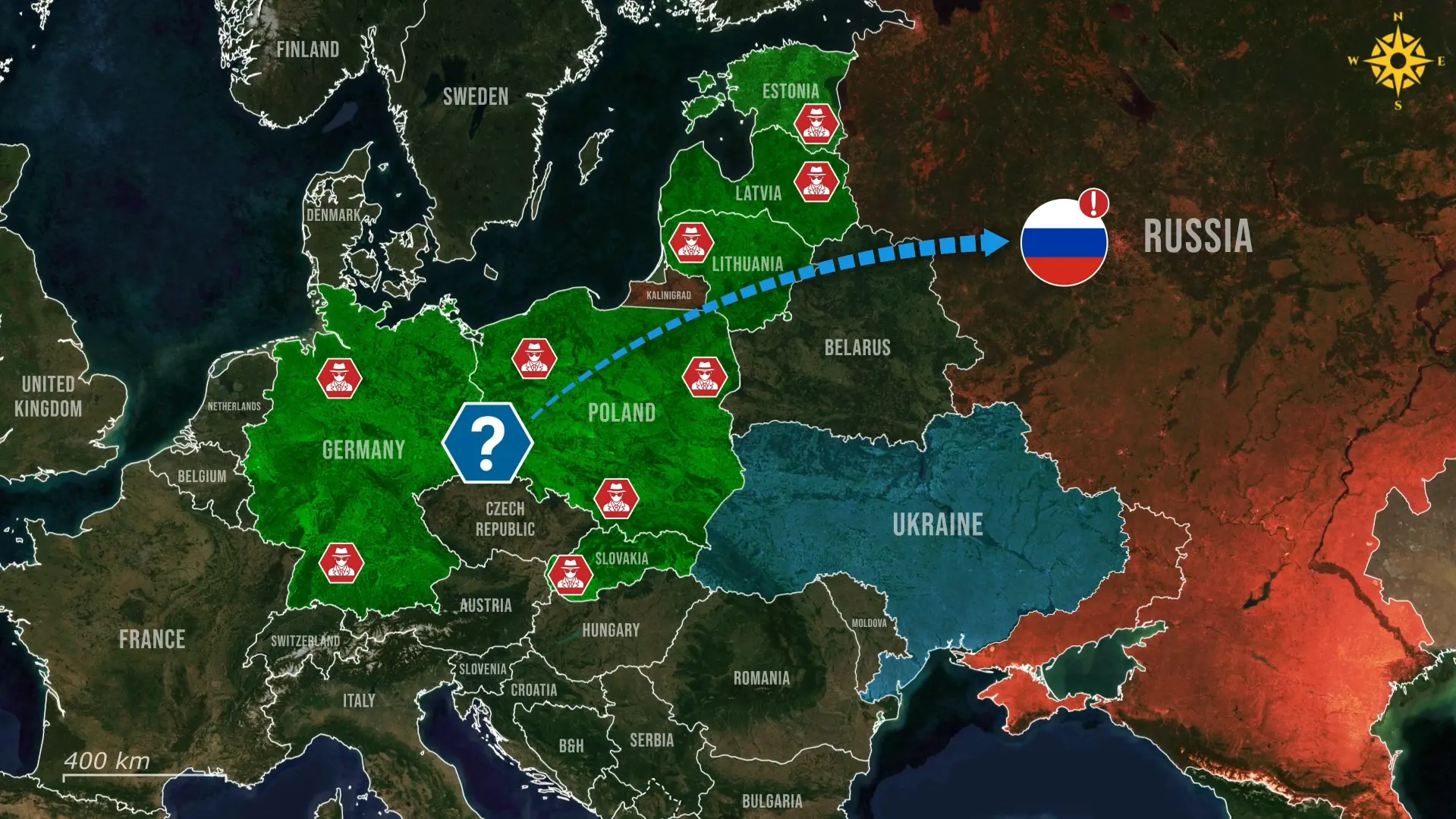
This attack follows a series of sabotage and hybrid warfare events across Europe where Russia’s involvement is proven or suspected. In September, Germany experienced an uptick in attacks with improvised explosive devices. One attack damaged high voltage power lines and a substation near the Jänschwalde lignite plant in Brandenburg, causing brief interruptions. A separate incident damaged a substation near Bergheim, temporarily taking it offline. Additionally, attackers threw incendiary devices at a construction site outside the headquarters of German defense company Rohde and Schwarz, causing a fire before police arrested two Bulgarian nationals. The use of foreign recruits allows Russia to strike European defense companies while keeping its own personnel out of sight. Most importantly, Russian operatives planted drones equipped with explosives to attack Ukrainian Antonov cargo planes at the Leipzig airport.
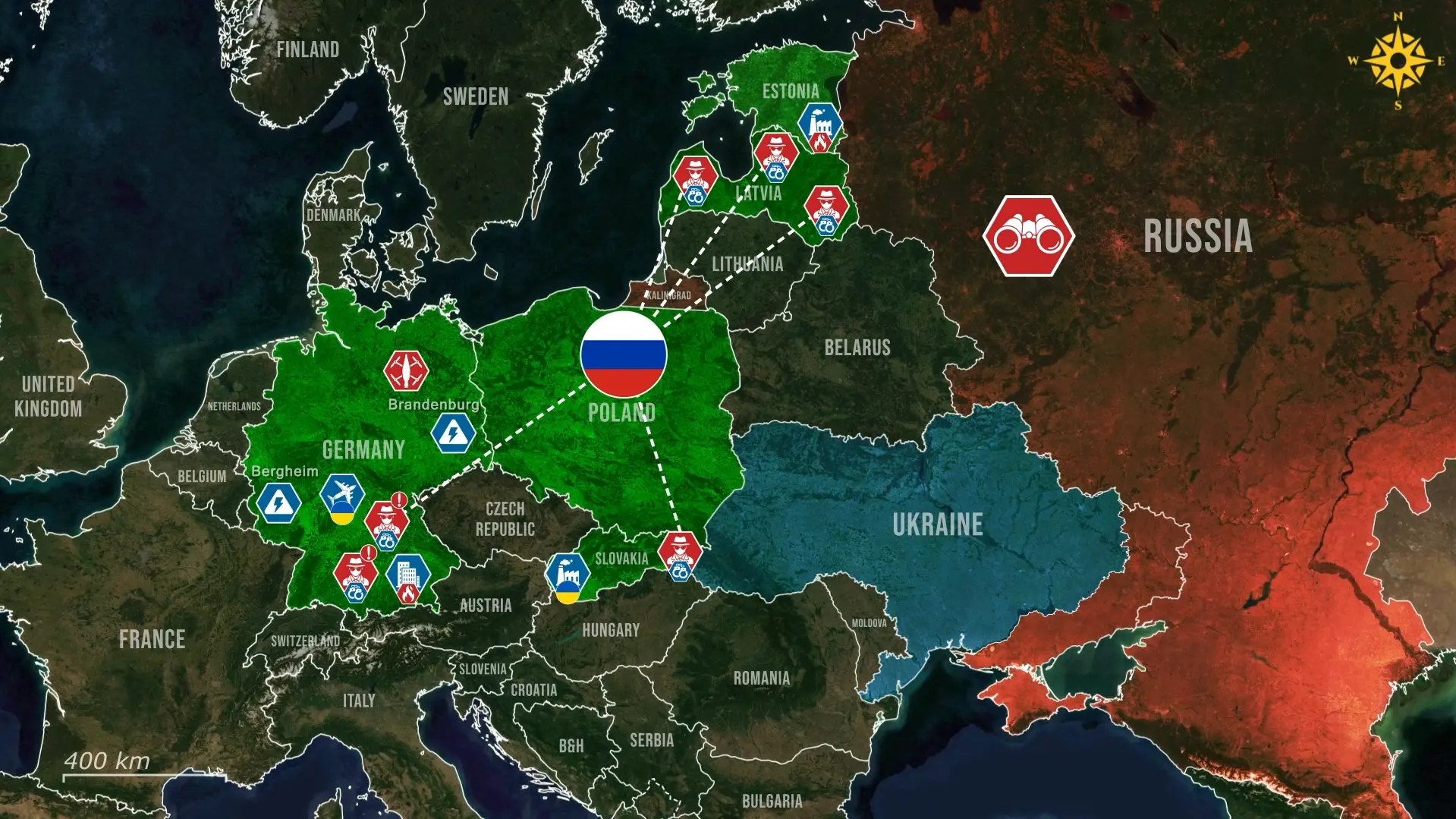
In Slovakia, authorities detained three foreign nationals preparing an arson attack on the Ukrainian owned drone manufacturer producing systems for Ukraine. Seized materials included an incendiary mixture, tools, phones, a camera, and a facility map. Furthermore, a fire broke out at a building linked to the Estonian firm supplying unmanned ground vehicles to Ukraine. Latvia detained three of its nationals suspected in connection with the attacks, while Russian involvement remains under investigation. Taken together, these attacks show a pattern that resembles how Russia operates in Europe and conducts hybrid attacks using local gangs or foreign individuals.
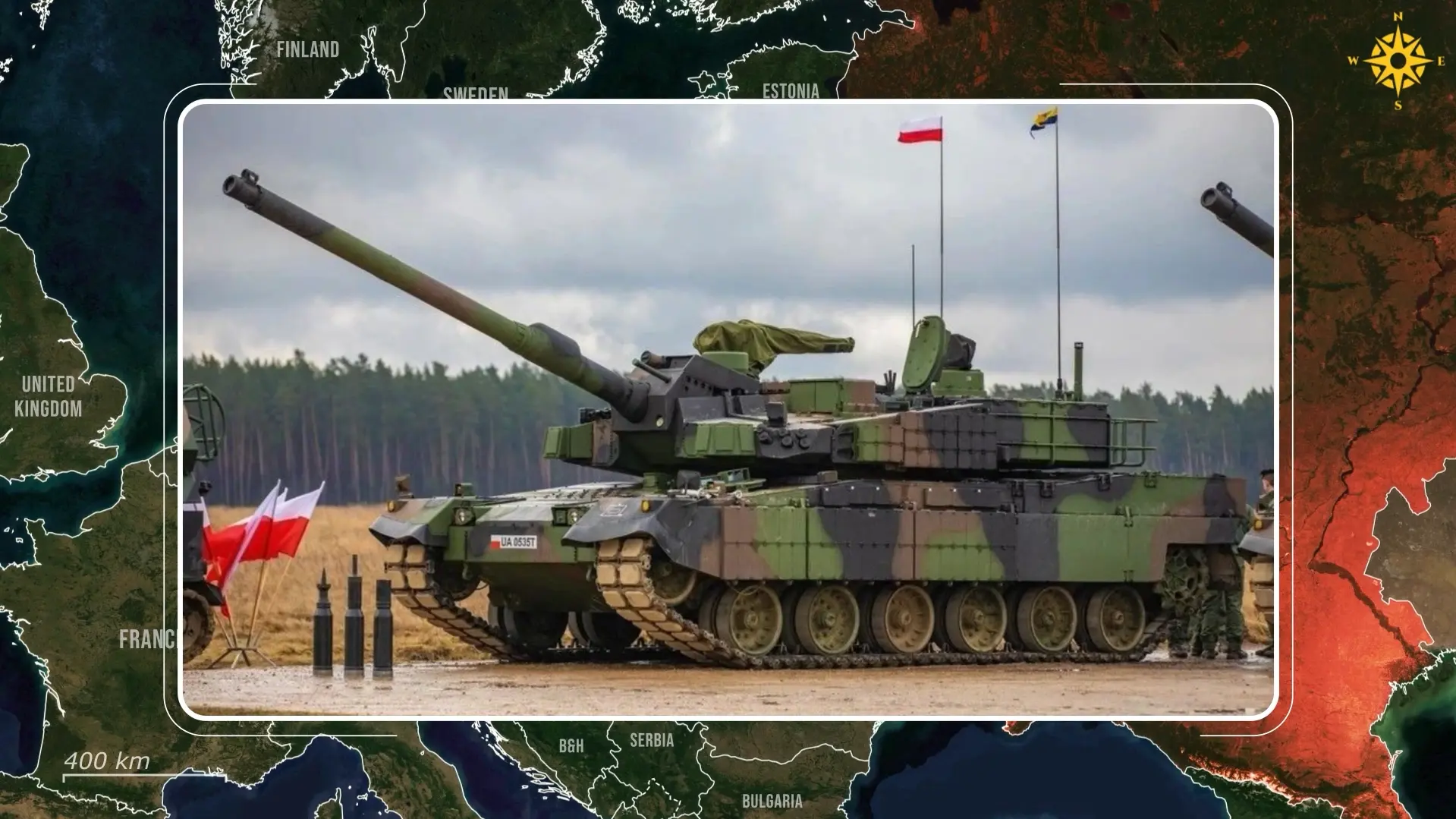
Because of the constant threats from Russia, Poland decided to reinforce its border and deploy tanks near the Kaliningrad region, according to the country's Ministry of Defense. The tanks are meant for a much larger threat than sabotage: a possible Russian ground provocation against Poland. Kaliningrad is a heavily militarized Russian territory directly on Nato’s border, meaning Polish armored units must be positioned nearby if they need to respond quickly.
Due to the possibility of serious escalation, Polish Prime Minister Tusk warned that the next seven to eight months will be critical for the security of Ukraine and all of Europe. European countries are already facing a hybrid threat from Russia, proven by multiple sabotage actions in the last month alone. Additionally, Poland and the Baltic states are warning Europe that Russia is collecting Ukrainian long range drones, which they intend to use in a large scale attack against European critical infrastructure. Using Ukrainian drones would create confusion in Europe, which would be exacerbated by a Russian disinformation campaign to blame Ukraine for the attack. At the same time, Russia is preparing to mobilize hundreds of thousands of troops in September, which could be used for a limited ground incursion into a Nato country. In this scenario, Russia would seize a limited area and then threaten nuclear retaliation to intimidate Nato and prevent the alliance from taking the territory back.
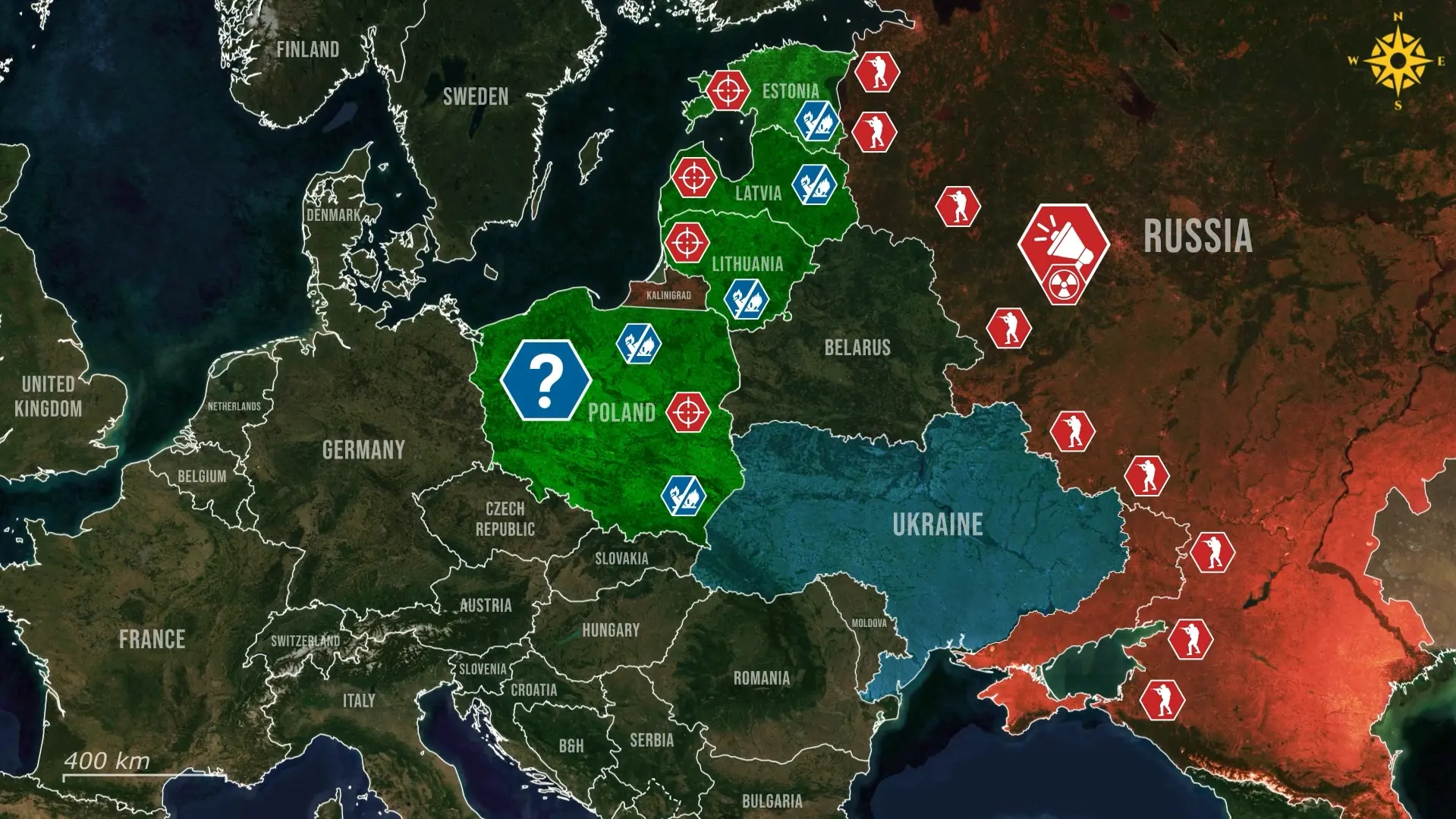
Overall, Europe is entering a new kind of confrontation where Russia does not need to cross a border to cause disruption. Small attacks, cyber operations, and covert agents can create uncertainty, force governments to spend resources, and test how quickly Nato reacts. The real danger is miscalculation because if one incident is mistaken for a larger attack, pressure to respond could escalate rapidly. Europe’s challenge is how long it can tolerate repeated Russian attacks before failing to respond becomes more dangerous than responding.
.jpg)


Comments