

.svg)
Today, the biggest news comes from the Donetsk region.
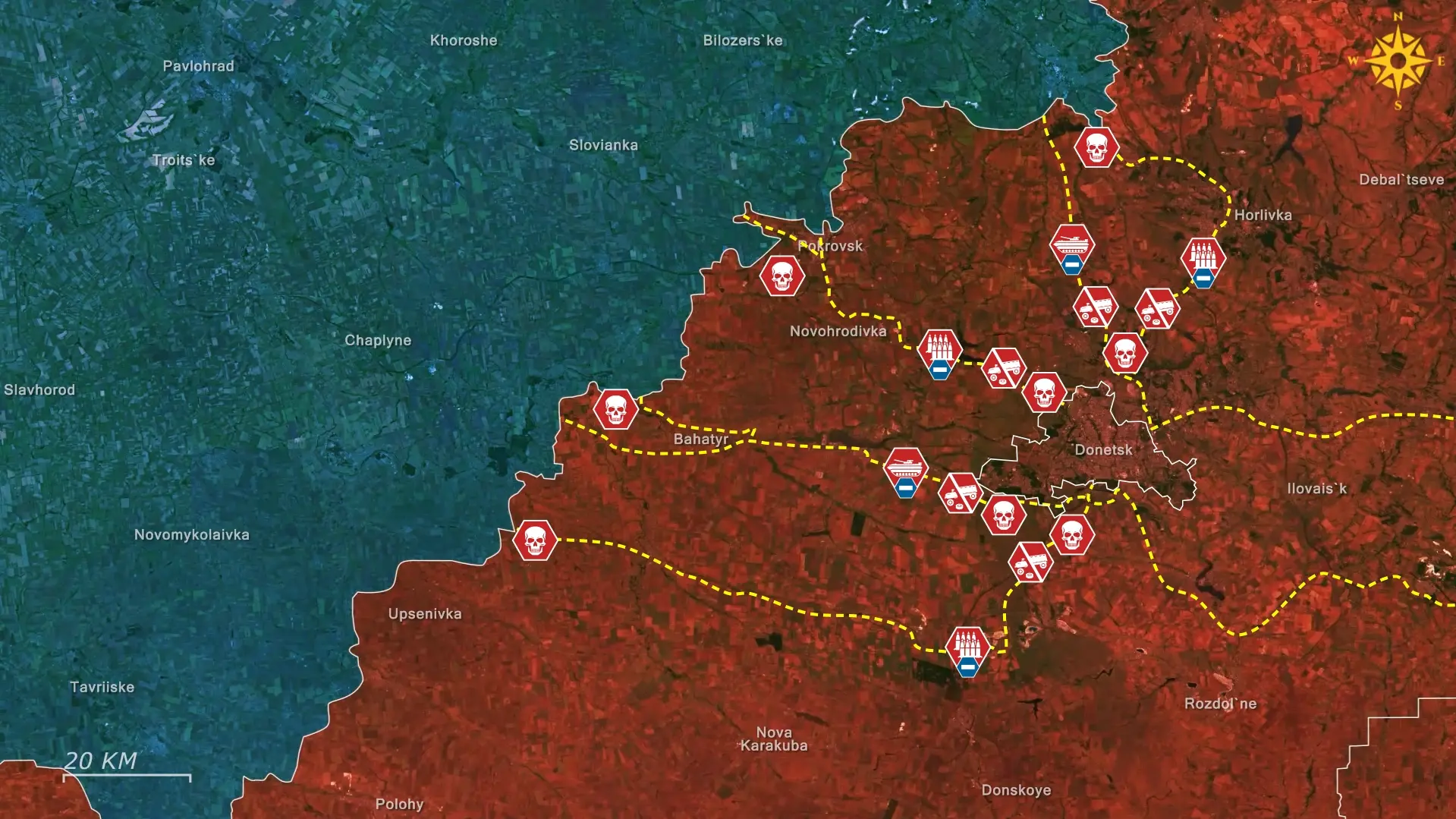
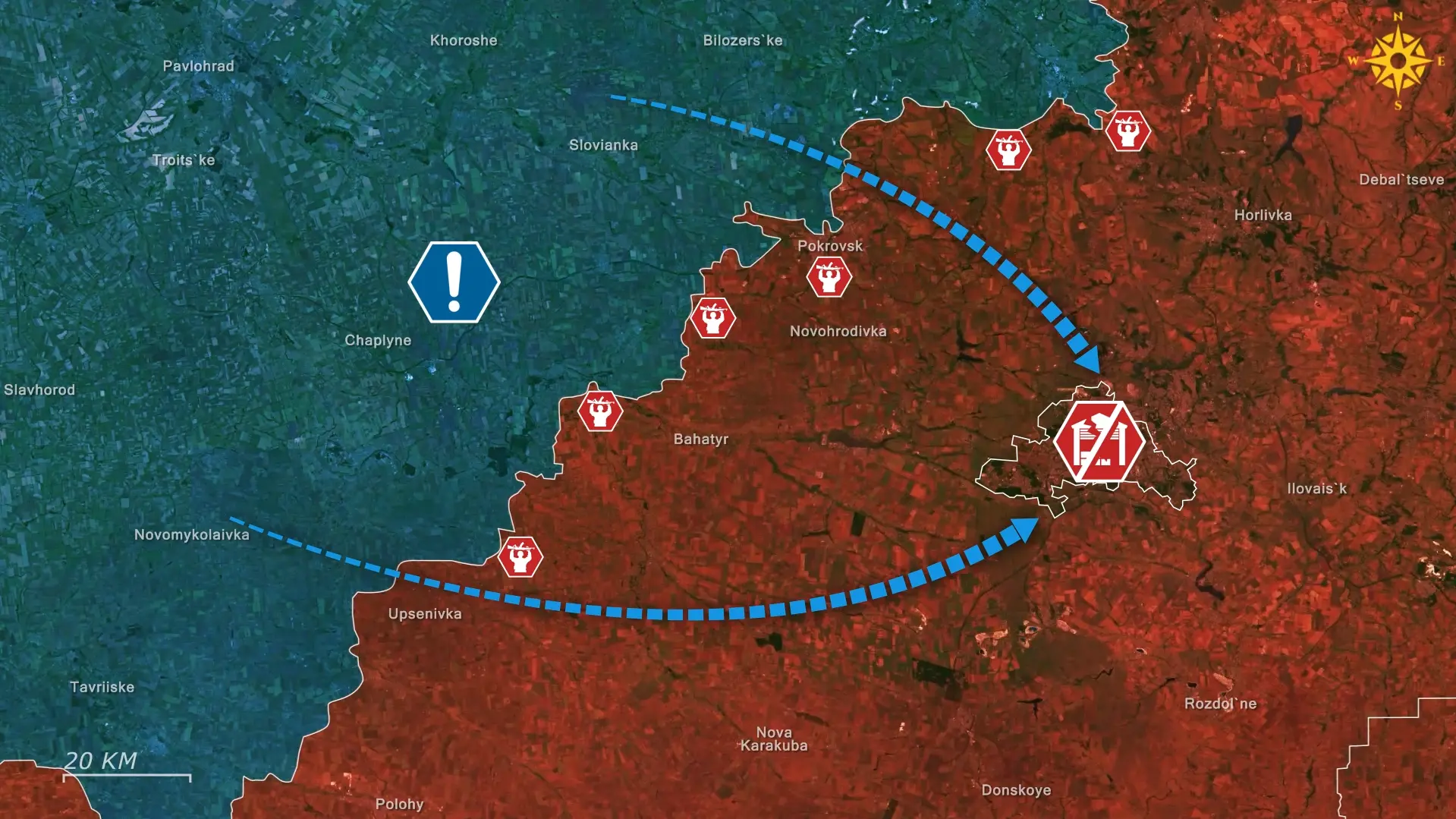
Here, Ukrainians effectively encircled Russian-controlled Donetsk city by cutting off Russian logistics with their newly developed weapons. Ukrainian forces are now striking Russian targets so far behind the front line, that it creates the setting for a potential collapse of the Russian summer offensive.
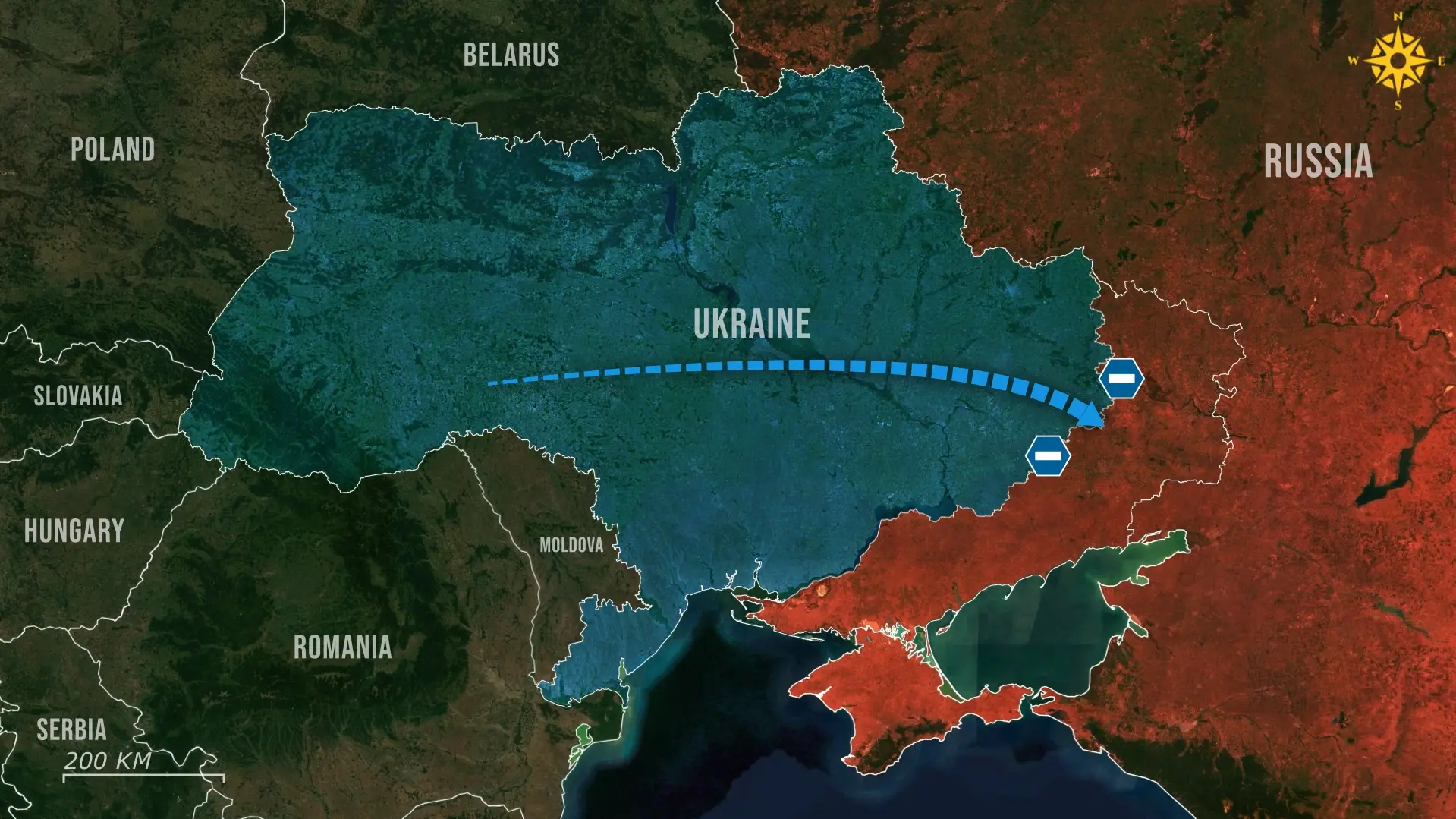
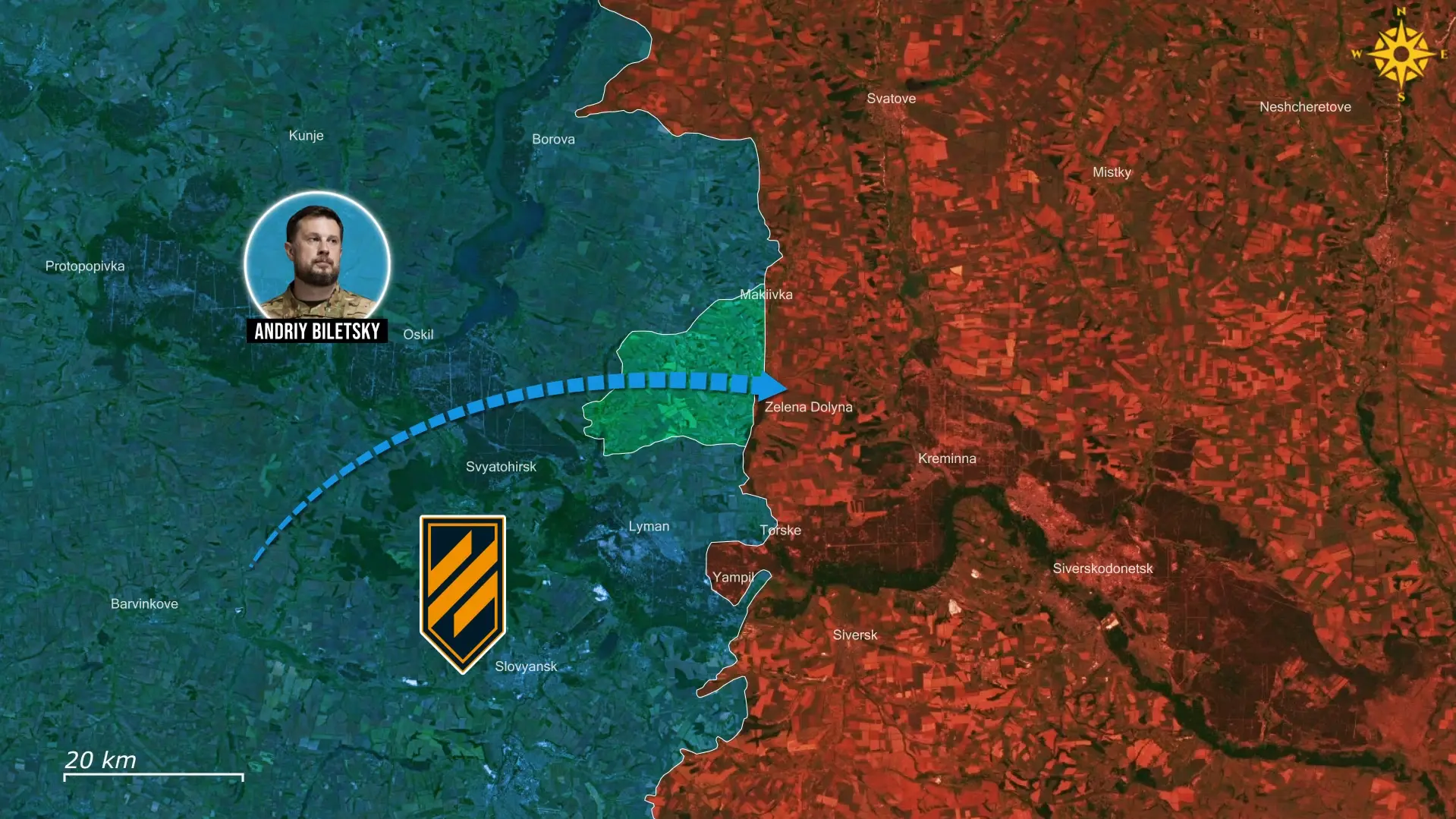
Recently, Ukrainian units have intensified strikes on Russian rear infrastructure at distances of one hundred to three hundred kilometers. Ukraine aims to systematically disrupt Russian logistics that sustain frontline operations, and geolocated footage shows Ukrainian drones flying over Donetsk non-stop and targeting key transport routes, with operators from the Azov Corps actively striking Russian military vehicles around the city. Additional footage indicates other strikes within the city, including repeated attacks on infrastructure such as the Druzhba Hotel, which was used by the Russian military.
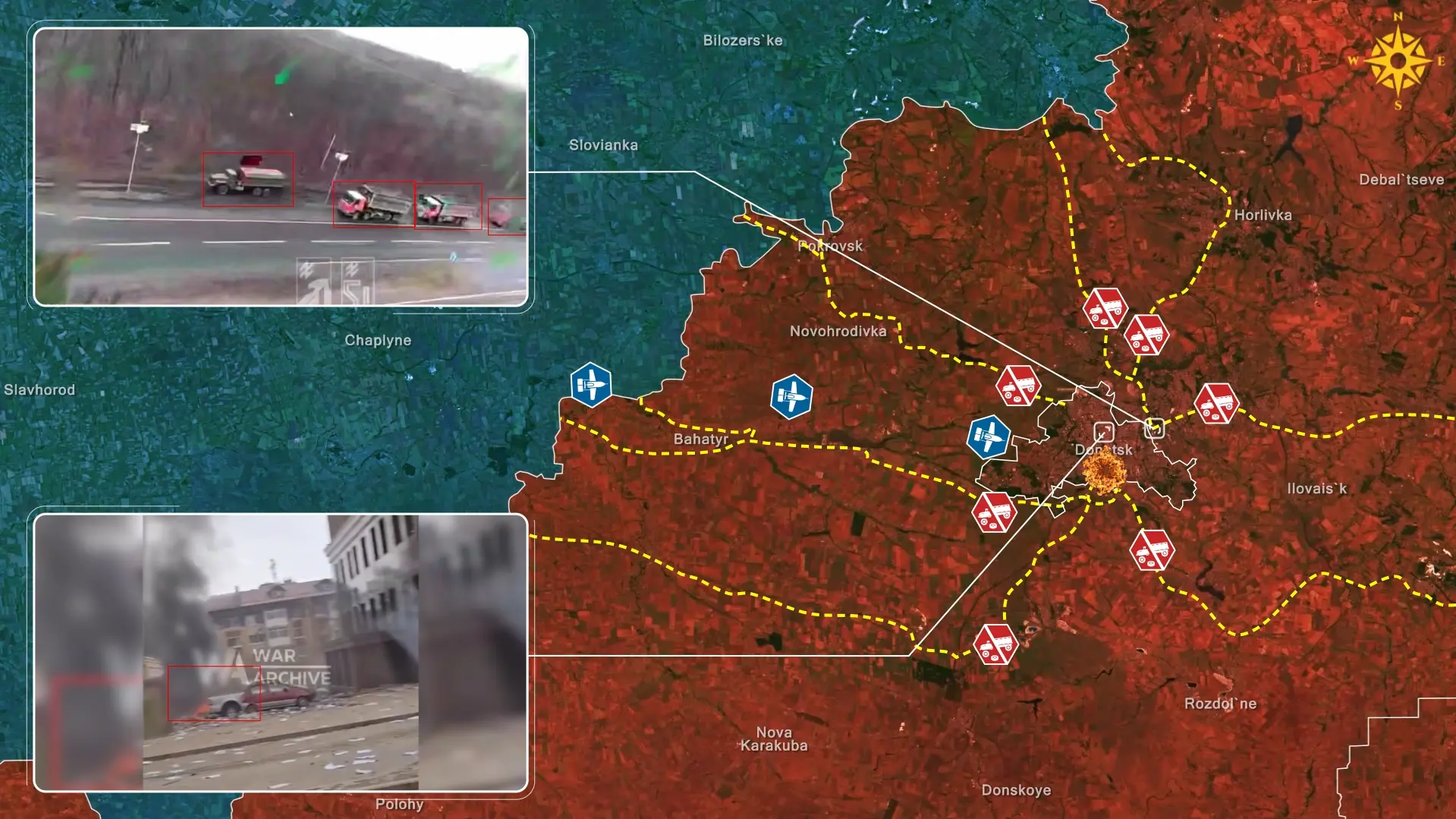
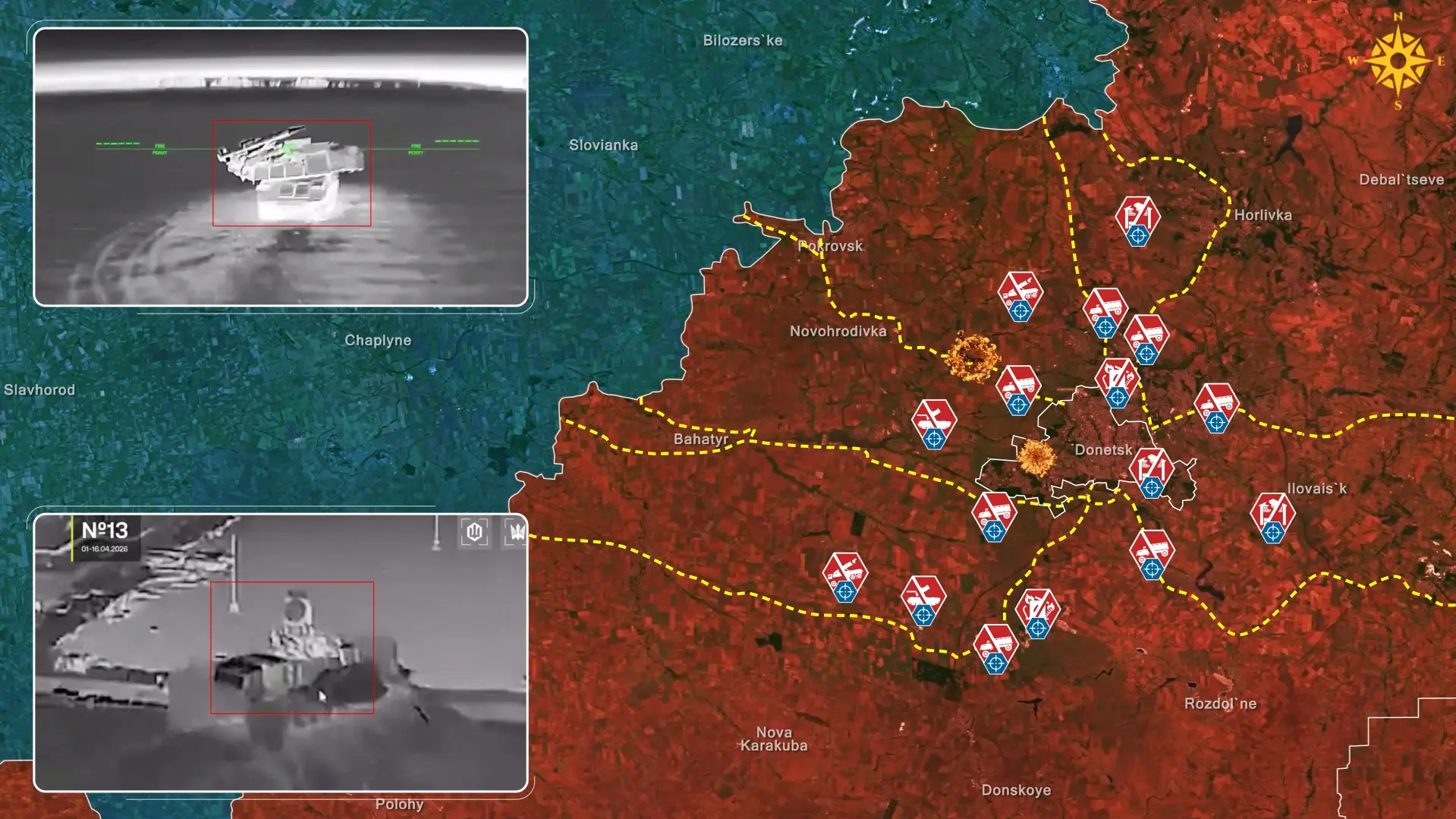
This campaign aims to effectively encircle Donetsk but is also a part of a broader effort in which Ukraine’s forces have destroyed two Iskander launch bases to prevent ballistic strikes on Ukraine and three ammunition and fuel depots to starve out Russian infantry on the frontline.

By targeting air defense systems such as Tor and Pantsir, Ukraine is not only disrupting the Russian defense of current supply chains but also creating conditions for sustained and expanded strike operations deeper into Russian-controlled territory. To achieve this, Ukraine struck approximately five hundred targets, from which around two hundred were logistics hubs like warehouses, command posts, and maintenance sites, storing and repairing weapons, armored vehicles, and other military equipment.
These strikes, which have allowed the Ukrainians to encircle Donetsk city from a distance, are significant because the capital of the region functions as a major military hub. Now, no Russian truck can go in or out without risking being targeted, even though the frontline is sixty kilometers away. Given that Donetsk supports multiple axes of advance, its isolation risks fragmenting the Russian army and undermining the entire operational system supporting Russian forces across the area.
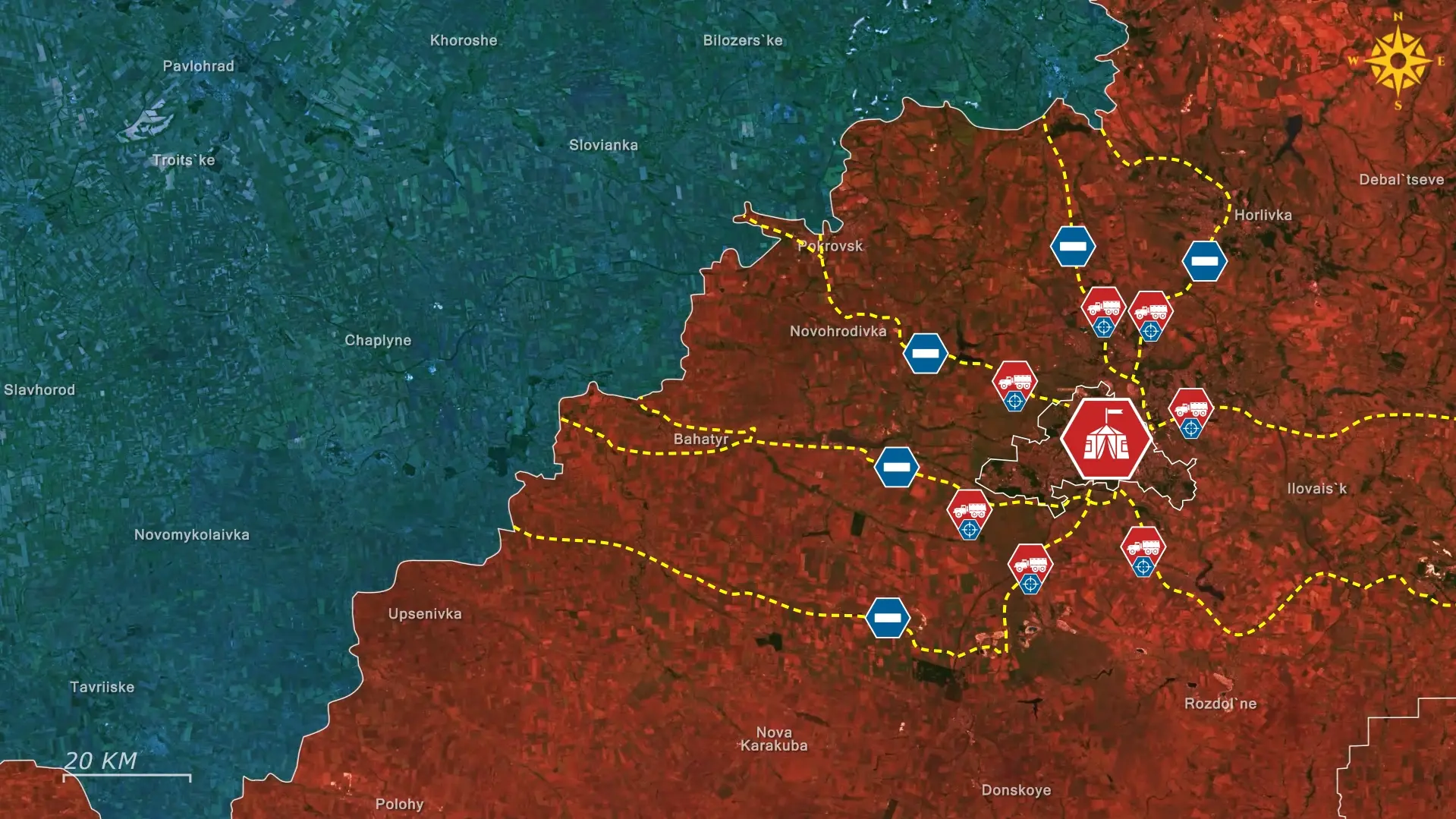
While near the front stockpiles can conceal short-term disruption, constricted supply routes produce long-term shortages, resulting in ammunition rationing, reduced artillery fire, and limited maneuverability due to the lack of fuel. At the same time, such hubs serve as command-and-control centers, so restricting movement can also degrade staff coordination, slow intelligence flow, and delay reinforcements, compounding the broader operational impact.

To prevent Russia from achieving one of its main operational goals, the capture of the whole Donetsk Region, Ukraine has effectively created a denial zone around Donetsk using a layered system of drone coverage. Short-range FPV drones dominate the near approaches, persistently monitoring and striking vehicles and movement corridors within twenty kilometers behind the frontline, limiting Russian freedom of movement.
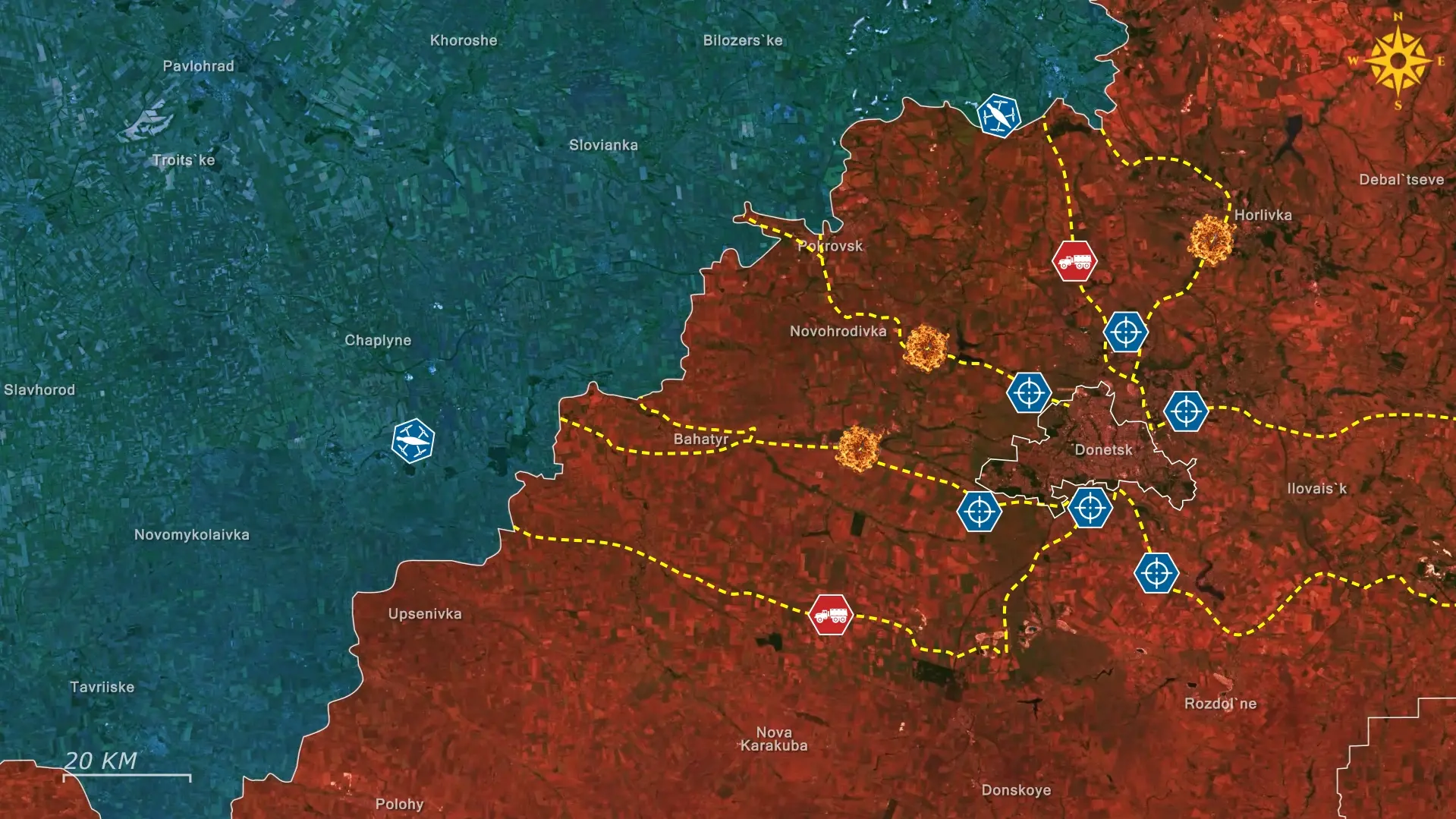
Beyond that, mid-range strike drones extend this reach deeper into the rear, targeting key roads to Donetsk with high precision. Together, these layers overlap to form continuous surveillance and strike coverage, which makes moving in and out of the city increasingly risky and unpredictable.
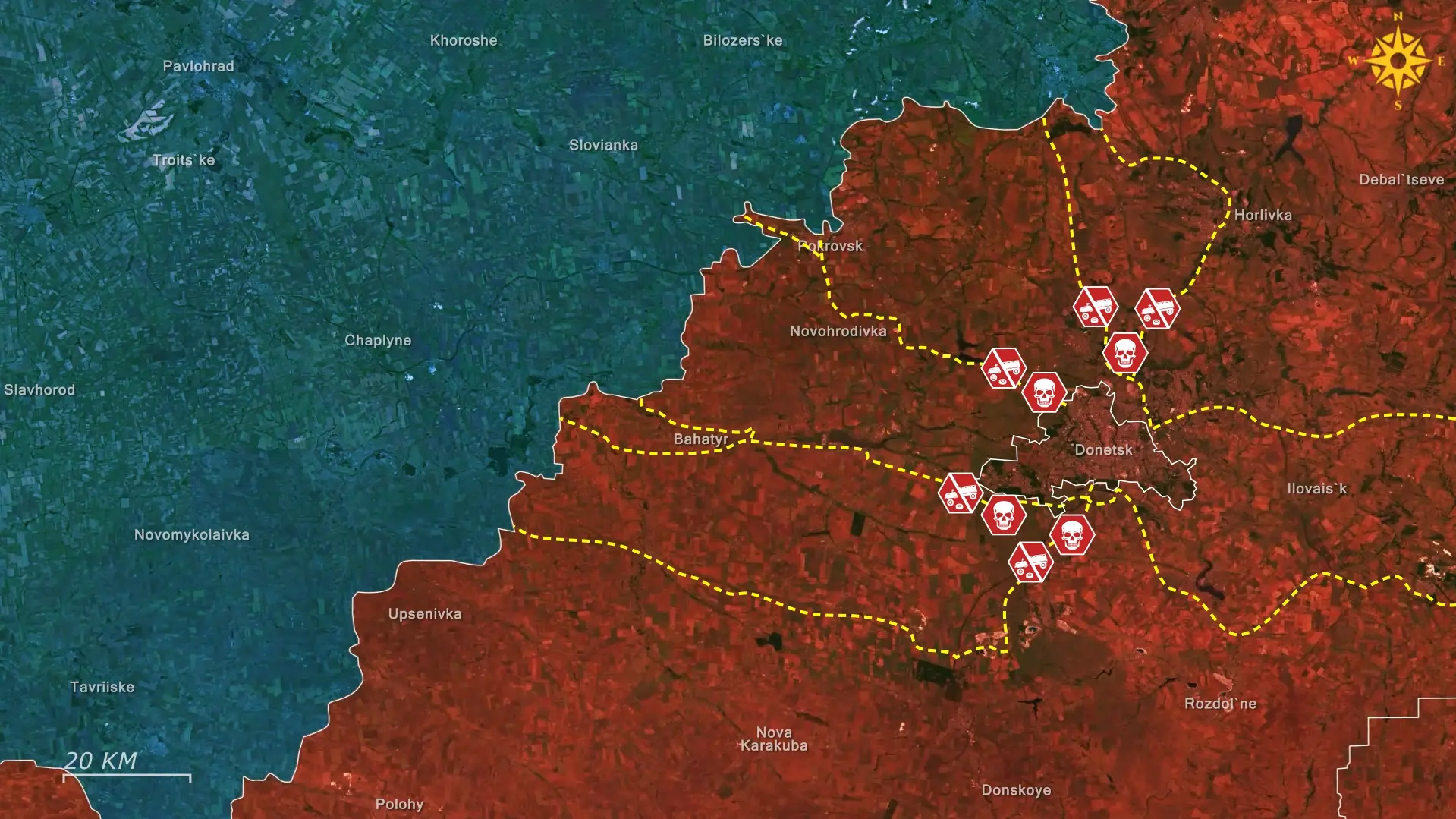
Within this framework, different drone types serve complementary operational roles rather than acting independently. The result is not just a series of isolated strikes but a coordinated effort to systematically disrupt logistics, restrict mobility, and impose constant pressure, effectively isolating Donetsk by denying safe transit across multiple depth layers and roads.
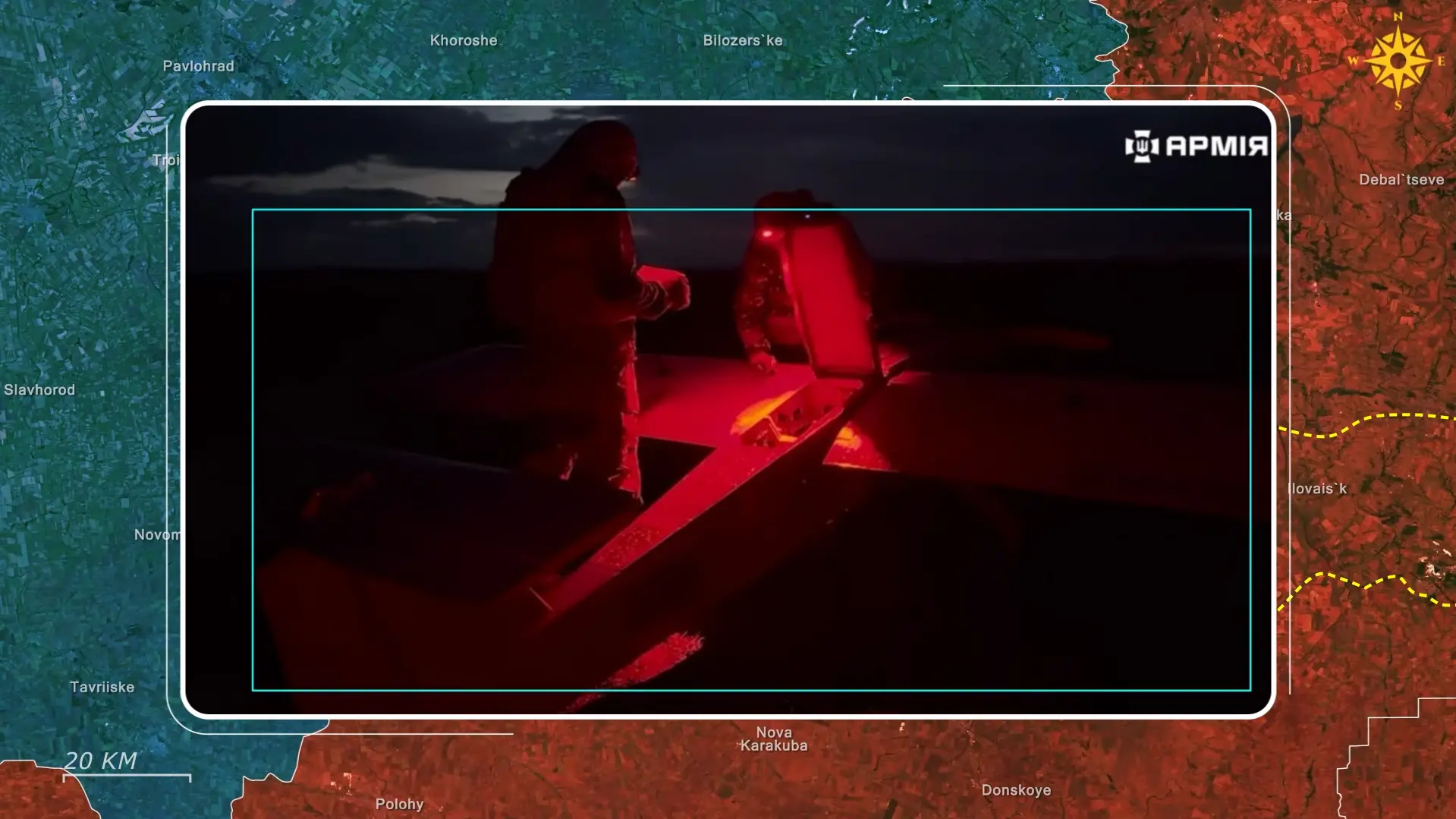
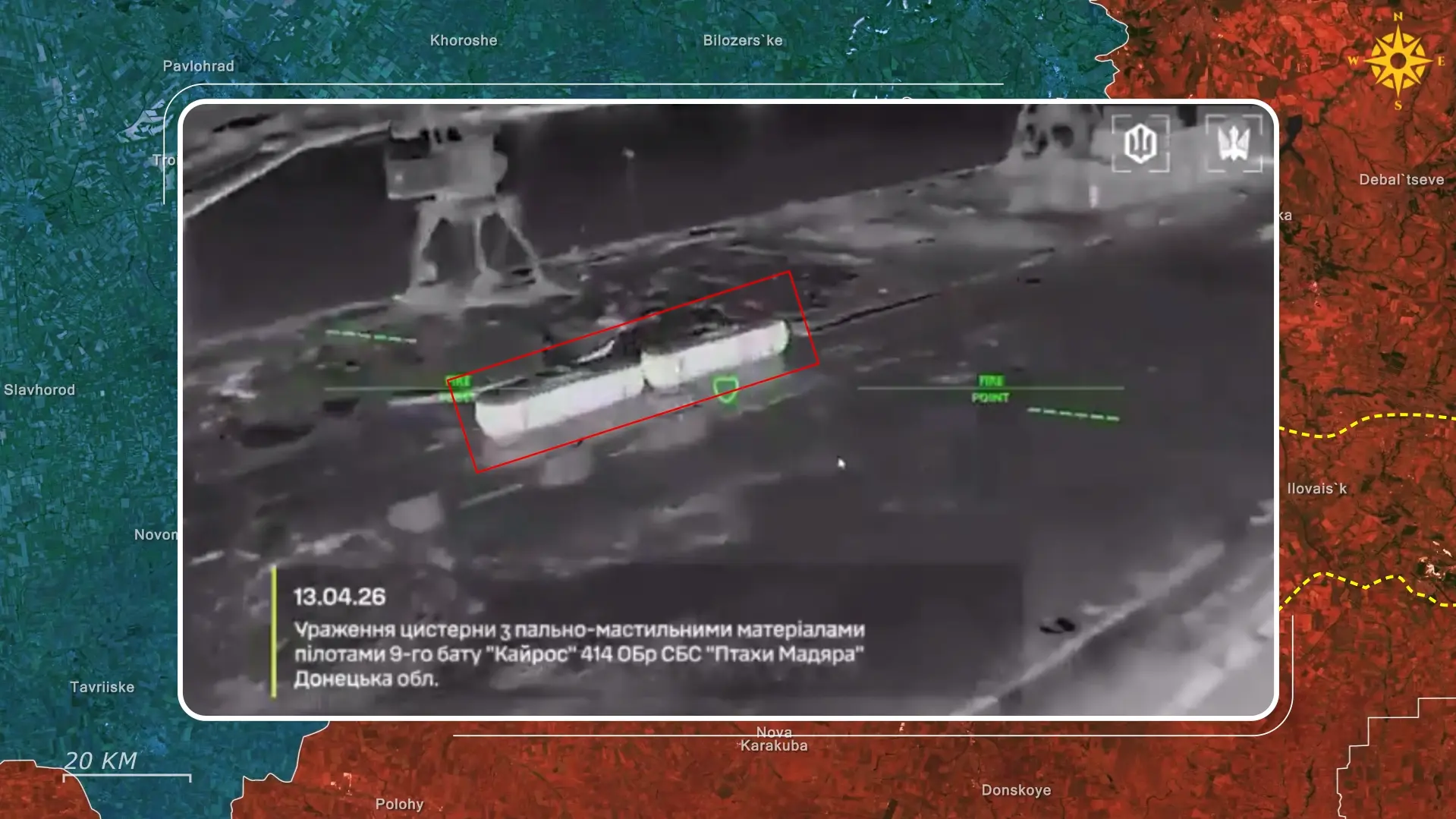
The platforms Ukraine uses are further enhanced by strong responsiveness, stable low-altitude flight, and resilience against electronic jamming, making them highly effective in contested environments like Donetsk city.

This disrupts the flow of armored vehicles, ammunition, and other critical supplies to the frontline, weakening the ability of Russian units to sustain offensive operations and stalling their tempo. As Russian resupply fails and rotation cycles break down, troops remain in position longer with fewer resources, making them more vulnerable to attritional pressure from Ukrainian forces.
Overall, by encircling Donetsk with persistent drone pressure, Ukrainians are placing Russian forces in a deteriorating operational position. With logistics steadily choked, Russian units face mounting shortages that threaten to effectively starve the army of critical supplies. With future strikes, Ukraine will further erode Russian combat capability and force operational setbacks across the frontline by nullifying the importance of Donetsk as a regional hub supporting the Russian army.

.jpg)

Comments