

.svg)
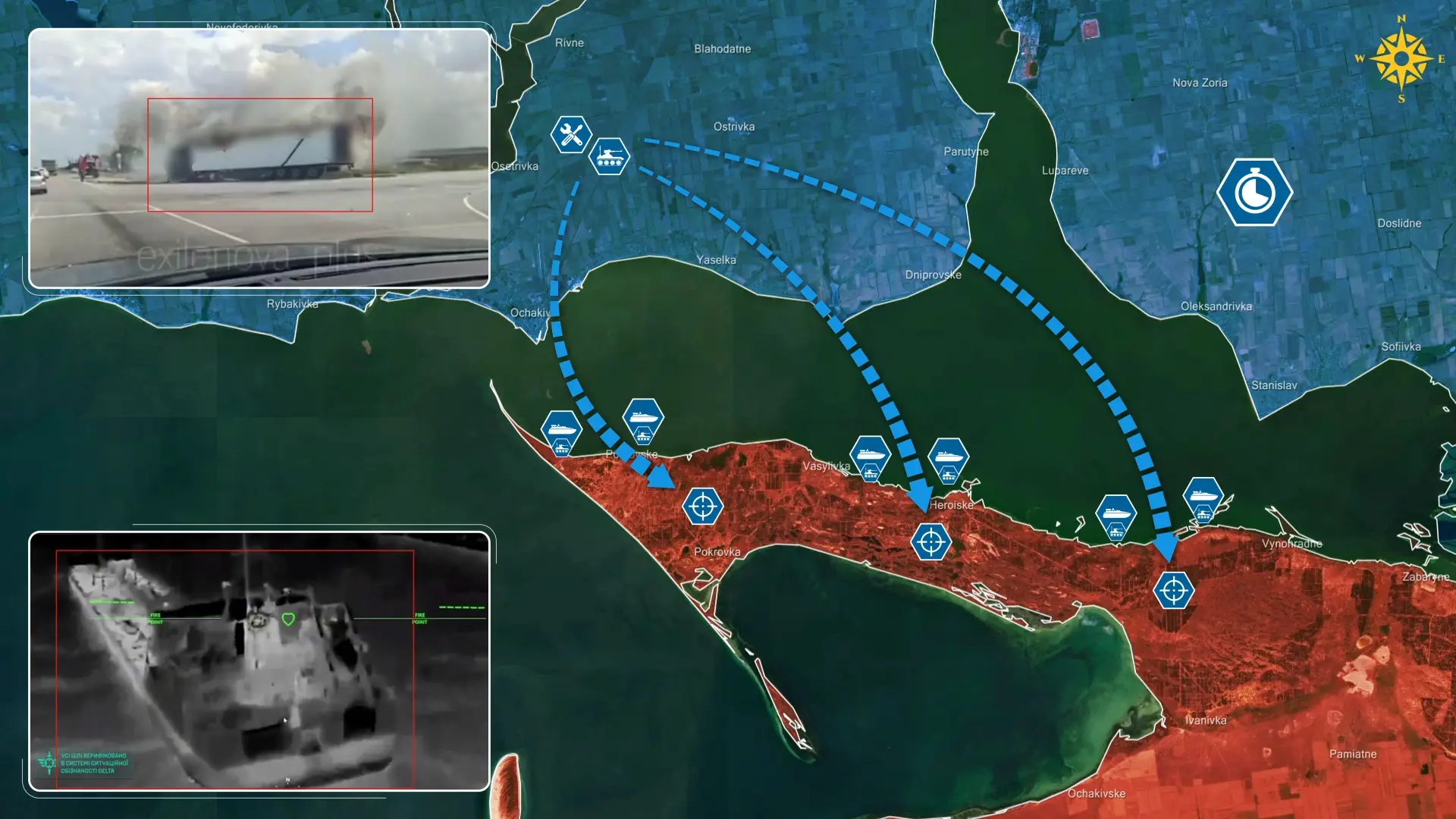
Ukraine has just successfully landed a machine-gun-equipped ground drone onto the Kinburn Spit using a naval drone specially configured as a robotic landing craft. Equipped with a bow ramp, the surface vessel transported the unmanned ground vehicle directly onto the shoreline without exposing a single Ukrainian soldier to Russian fire. Once ashore, the ground robot immediately advanced inland and opened fire on Russian positions while the landing craft safely withdrew across the water.
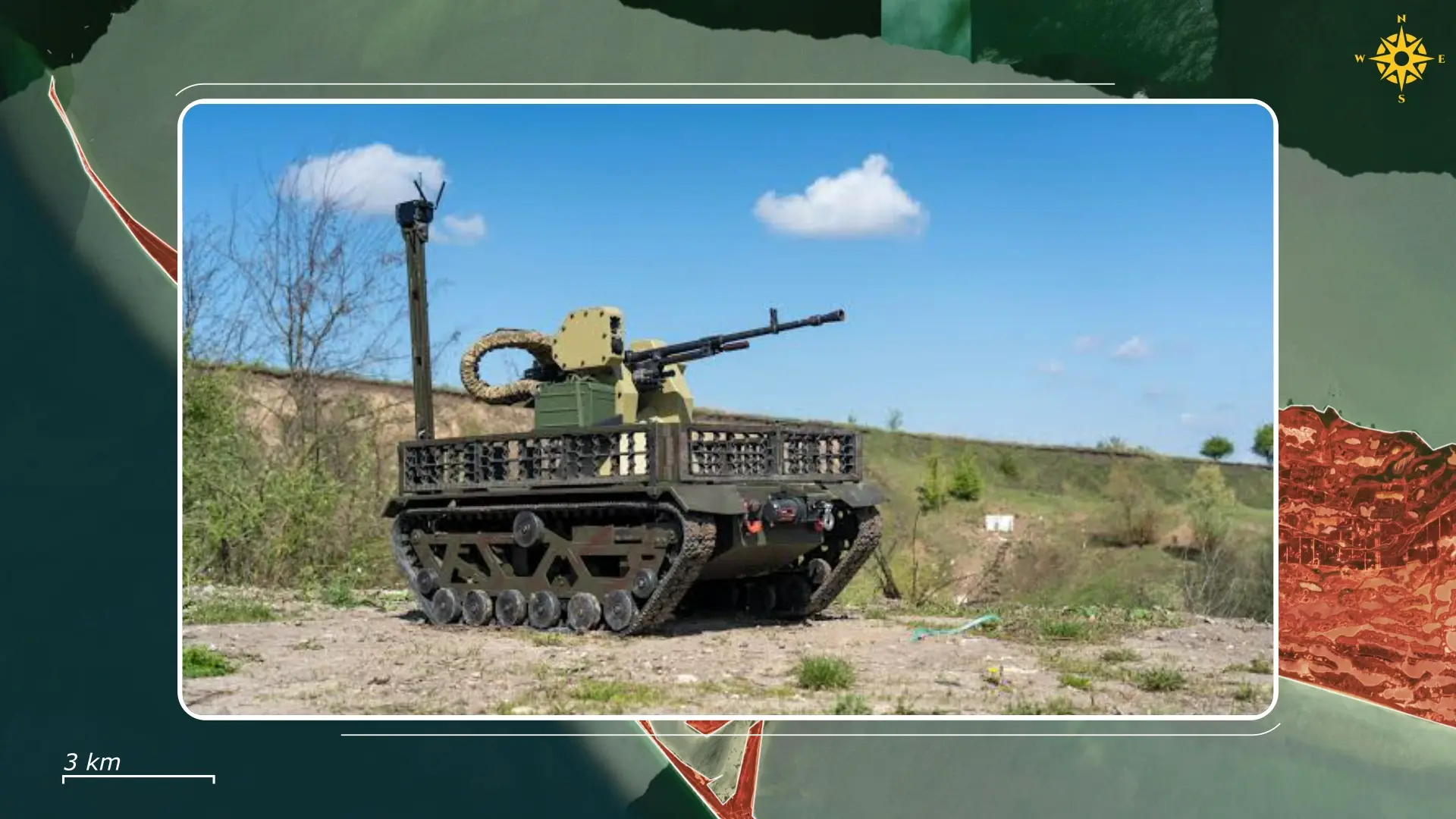
The mission was conducted on the strategically important Kinburn Spit, used by Russian forces to restrict Ukrainian operations in the Black Sea. Rather than merely observing or striking targets, this operation proves that ground drones can now secure key positions independently, and a naval landing conducted with unmanned vehicles is a real and viable tactic. This allows the Ukrainians to land these robots behind Russian lines to interdict roads, ambush logistics convoys, and block ground lines of communication.
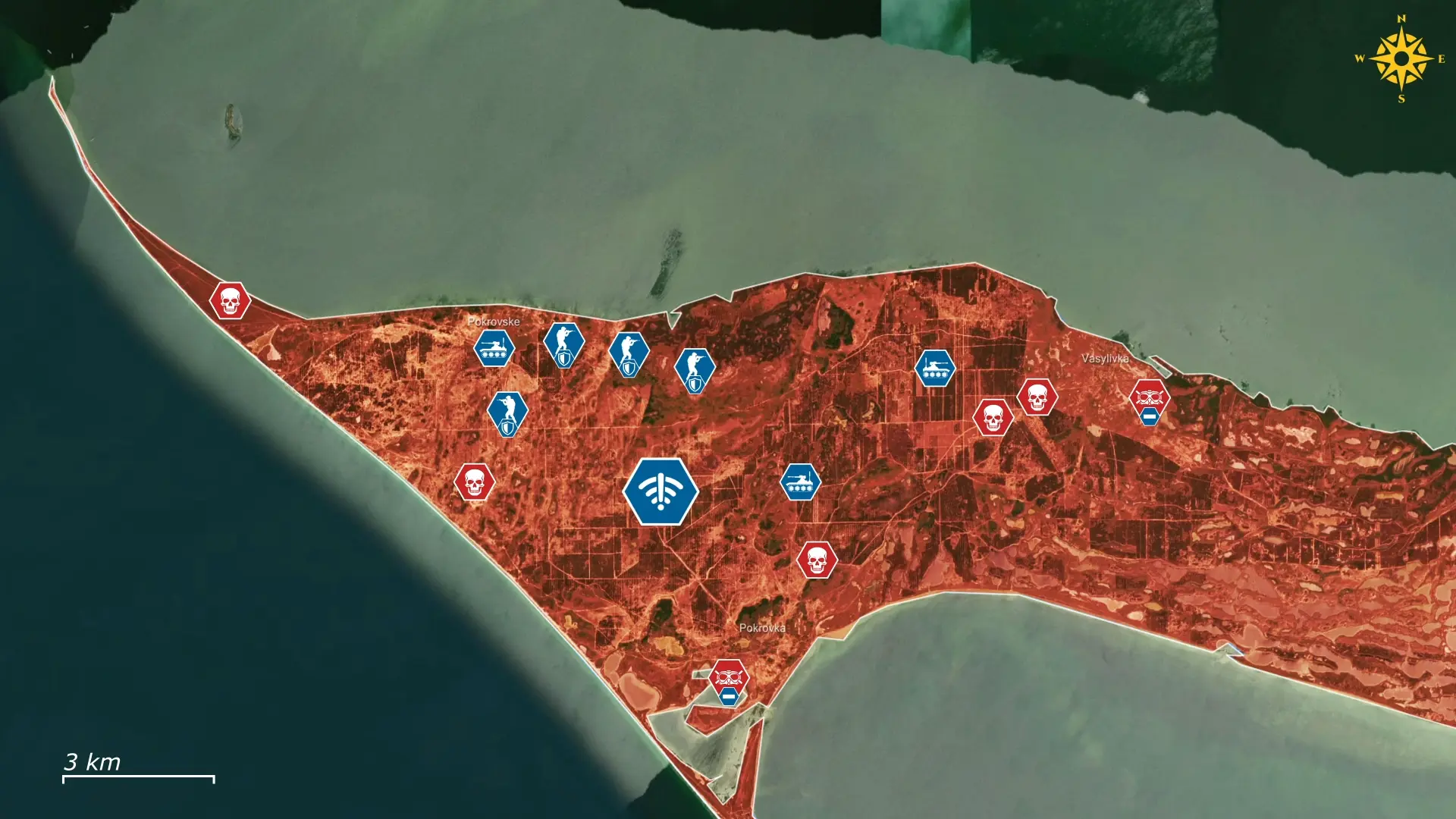
The geography of the spits in the Kherson Region makes this concept especially powerful, as these narrow strips of land and extensive marshes and swamps leave only a handful of usable roads that naturally funnel any movement through predictable chokepoints. By placing machine-gun-equipped ground drones at critical locations, Ukrainian forces effectively dominate entire sections of the spits, sealing them off and preventing Russian reinforcements from rapidly counterattacking these newly established bridgeheads.
During follow-up amphibious operations, groups of robotic vehicles can suppress the Russian defenders and provide covering fire while Ukrainian marines disembark. Instead of replacing infantry, the drones dramatically increase their effectiveness by taking their place in the highest-risk phase of any landing operation while preserving offensive momentum.
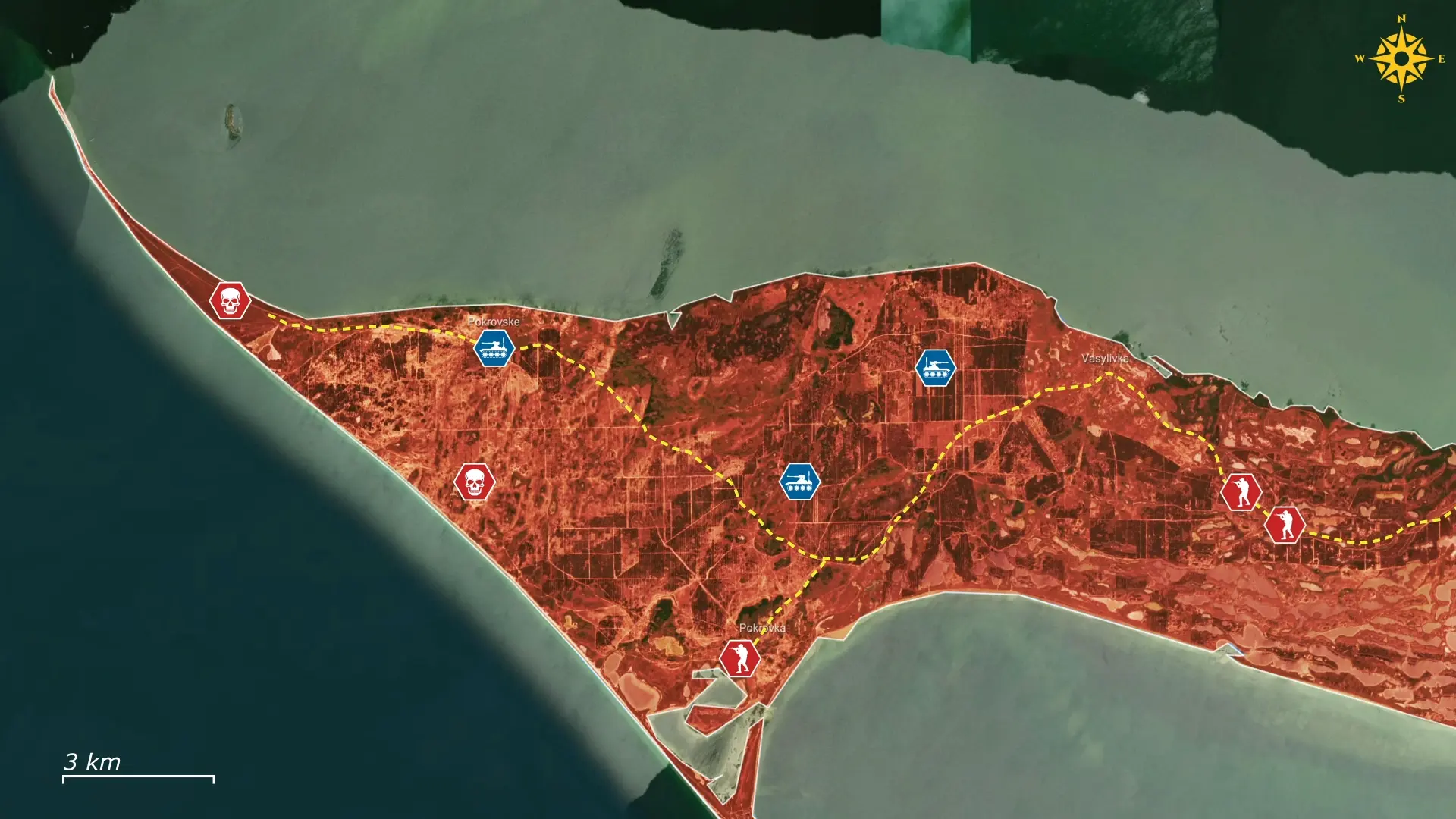
With the typical battery pack of a ground strike drone lasting for up to twelve hours of continuous movement and up to one hundred and twenty hours in ambush mode, these systems have plenty of power to survive long enough to secure the initial landing and disrupt immediate Russian responses. Once Ukrainian infantry arrives, batteries and ammunition can be replaced directly on site. Alternatively, naval drones could continuously rotate new ground drones ashore while recovering depleted ones, creating a persistent robotic presence maintained entirely through unmanned logistics. This relay system would allow Ukraine to sustain pressure indefinitely while minimizing human exposure throughout the consolidation phase.
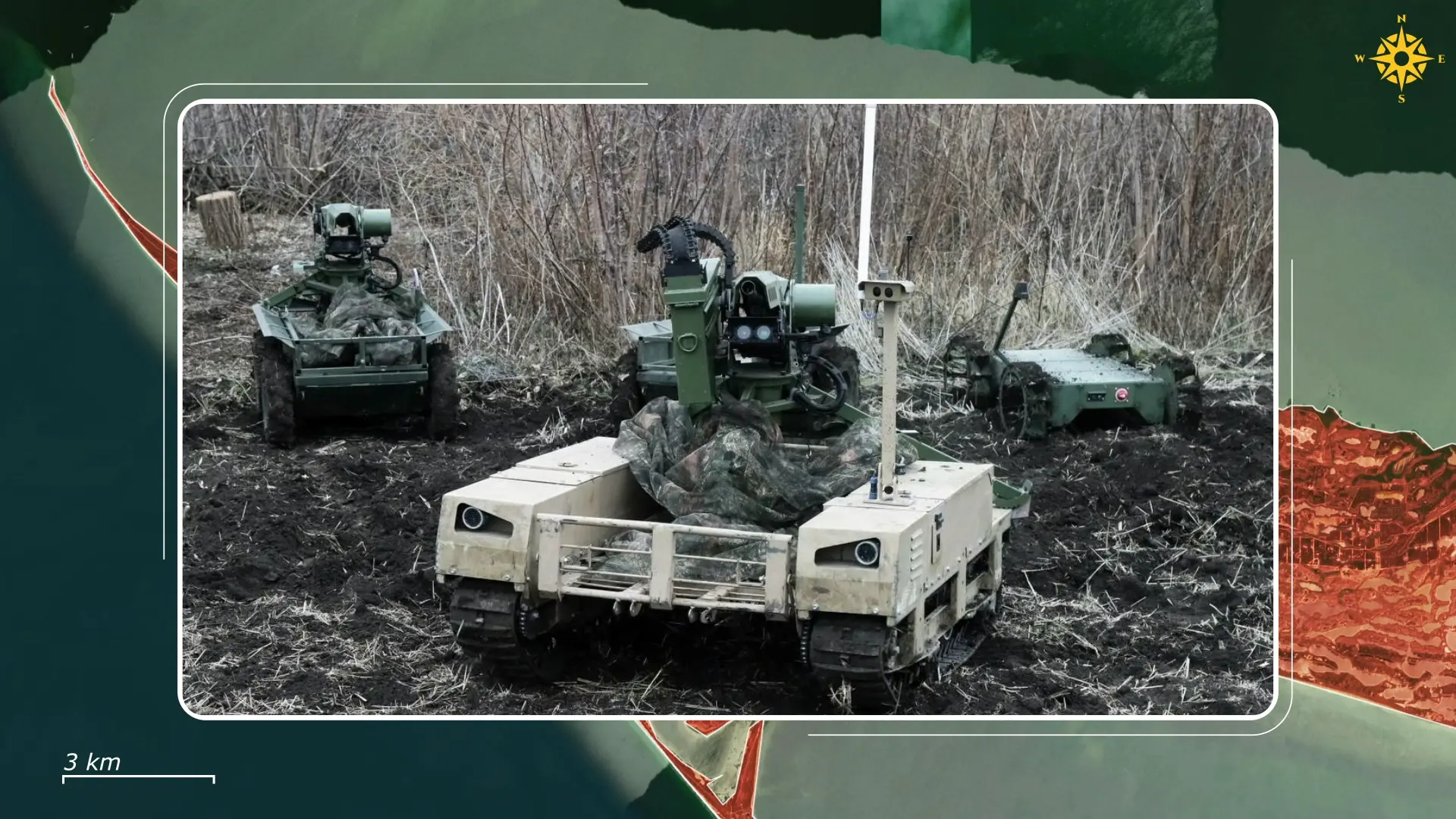
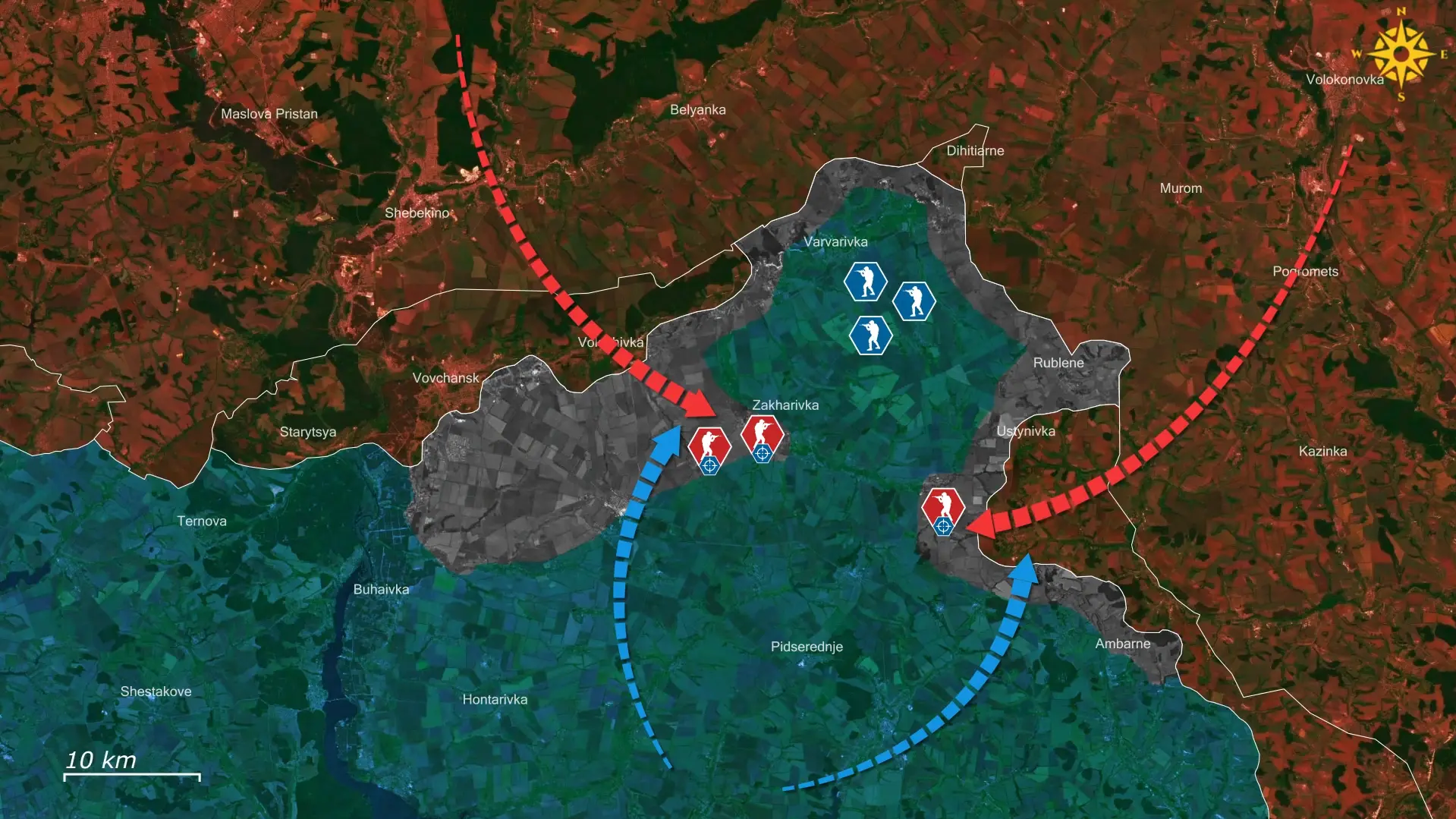
The greatest threat to Ukrainian ground drone operations remains Russian FPV kamikaze drones capable of hunting the relatively slow-moving ground vehicles. Yet Ukrainian operations in Dnipropetrovsk have demonstrated that once Russian drone activity is sufficiently suppressed, Ukrainian forces rapidly dominate the battlefield. This means that Russian FPV usage is not an automatic counter to a Ukrainian amphibious ground drone landing, but only a problem that needs to be solved through electronic warfare, counter-drone measures, or specialized interceptor drones.
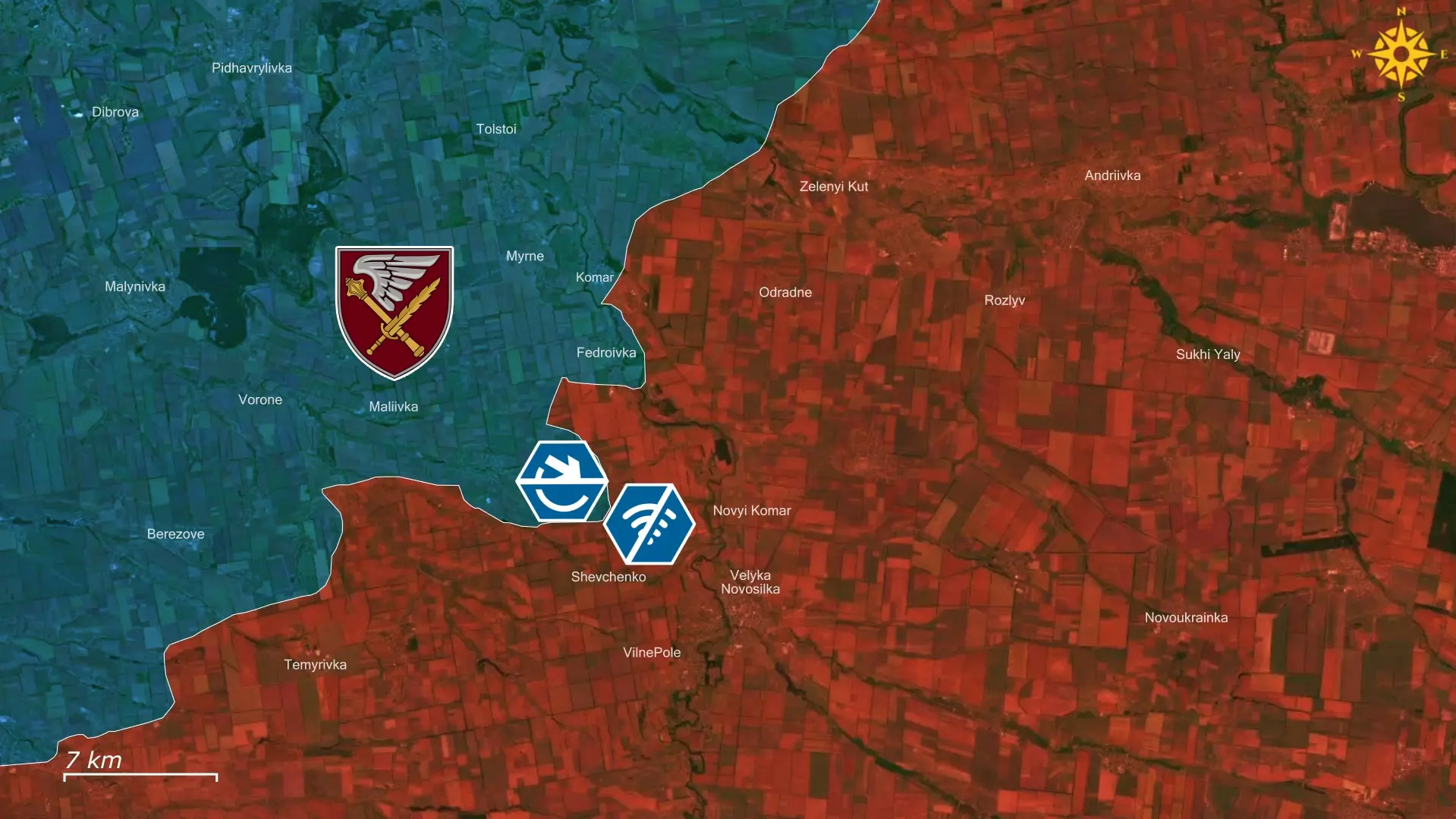
On top of that, dedicated Ukrainian ground drone units have spent months experimenting extensively with pure-ground drone assault tactics, refining coordination with other ground and aerial drones, navigation, and electronic warfare resilience in dedicated rear-area training grounds.
The Kinburn operation represents the evolution of these efforts, extending proven robotic assault concepts into amphibious warfare. The scale of Ukraine's investment further demonstrates its confidence in this direction. Ground robotic missions increased by more than one hundred twenty-two percent since the beginning of the year, with over sixty-six thousand missions of different types already completed. More than twenty-two thousand ground drones have been contracted for production and delivery during this year alone, while Ukrainian planners openly aim to replace virtually all frontline logistics missions with robotic systems, preserving soldiers for combat while continuously expanding unmanned battlefield capabilities to take more and more combat roles as well.

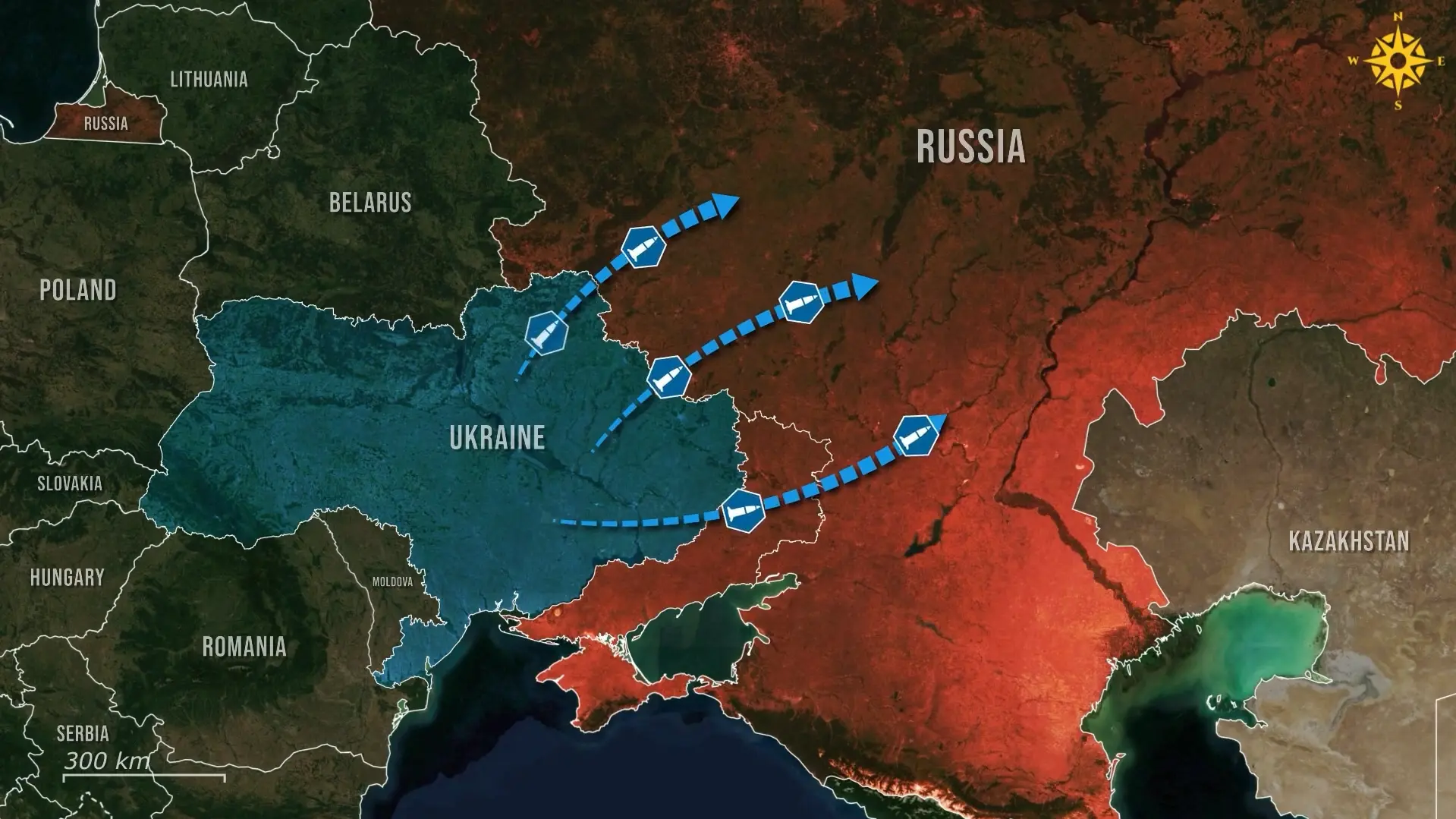
Overall, these developments show how Ukraine is systematically identifying vulnerabilities within Russian defenses and building robotic tools specifically designed to exploit them. Extensive rear-area testing combined with increasingly ambitious combat deployments shows that Ukrainian commanders are refining concepts before committing them on a larger scale. Once they identify a weakness, they have repeatedly demonstrated the ability to concentrate innovative capabilities with remarkable speed, just as they previously dismantled Russian ground logistics in southern Ukraine and Crimea before rapidly expanding the same methodology against Russian maritime logistics throughout the Black and Azov Seas. Robotic amphibious warfare may now become the next battlefield element of the Ukrainian army, where that pattern repeats itself.

.jpg)

Comments