

.svg)
Today, there are interesting updates from the Russian Federation.
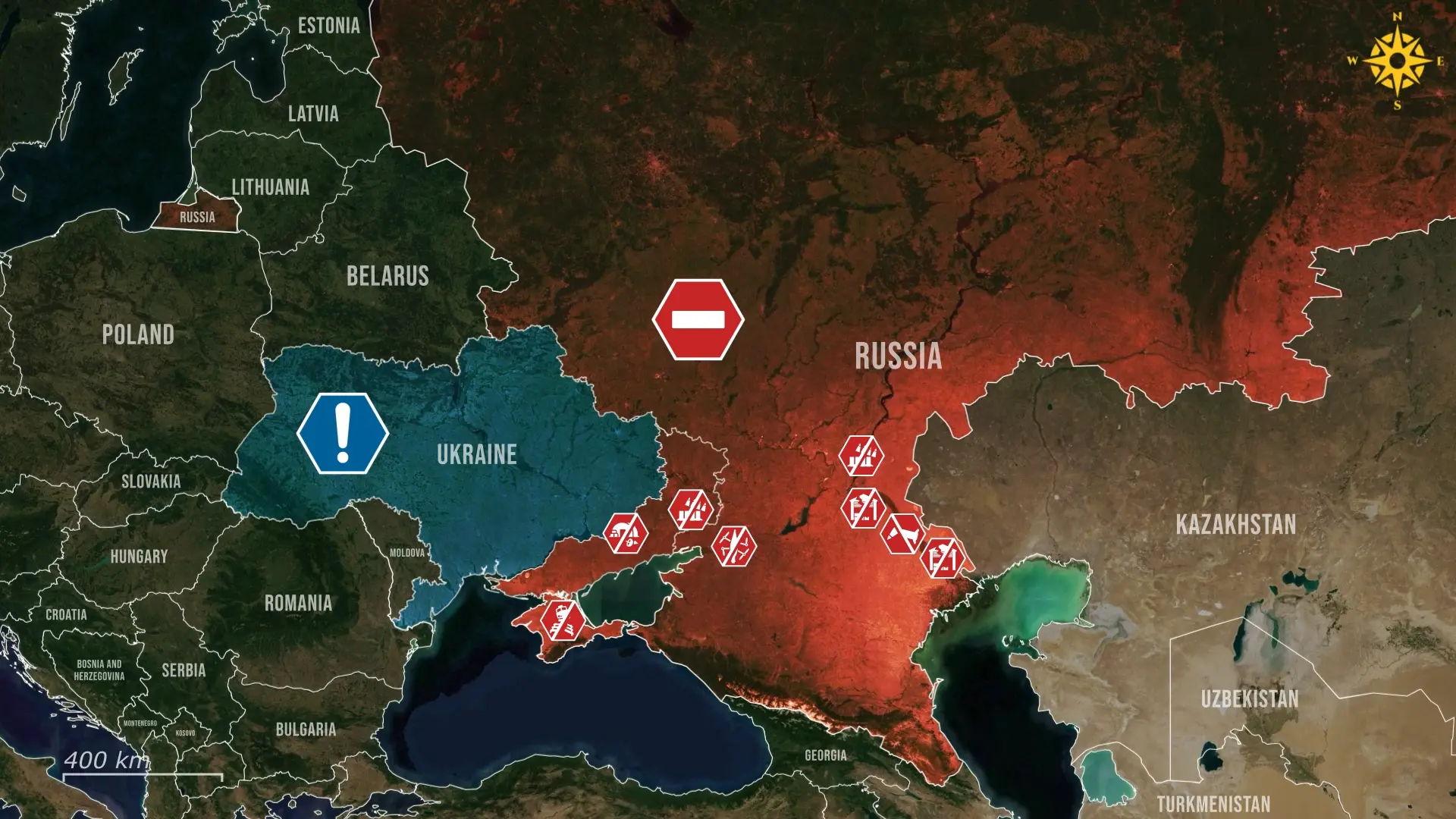
Here, the Ukrainian forces unleashed their upgraded Flamingo missiles, combining them with long-range drones to target some of the most important Russian military infrastructure. With ammunition depots destroyed from the frontline to the deep rear, the Russian army was put under great danger of getting cut off from supplies for months.
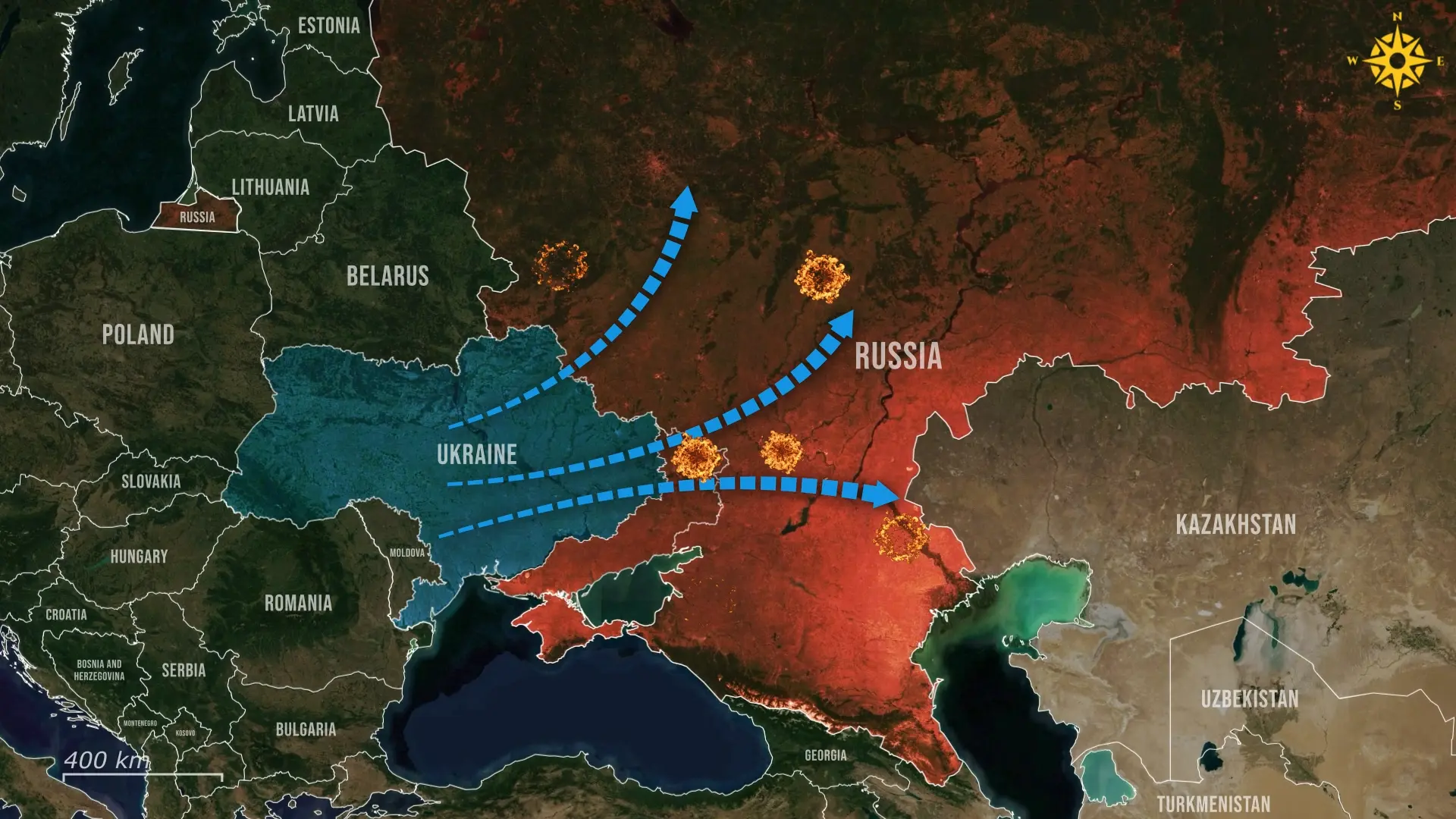
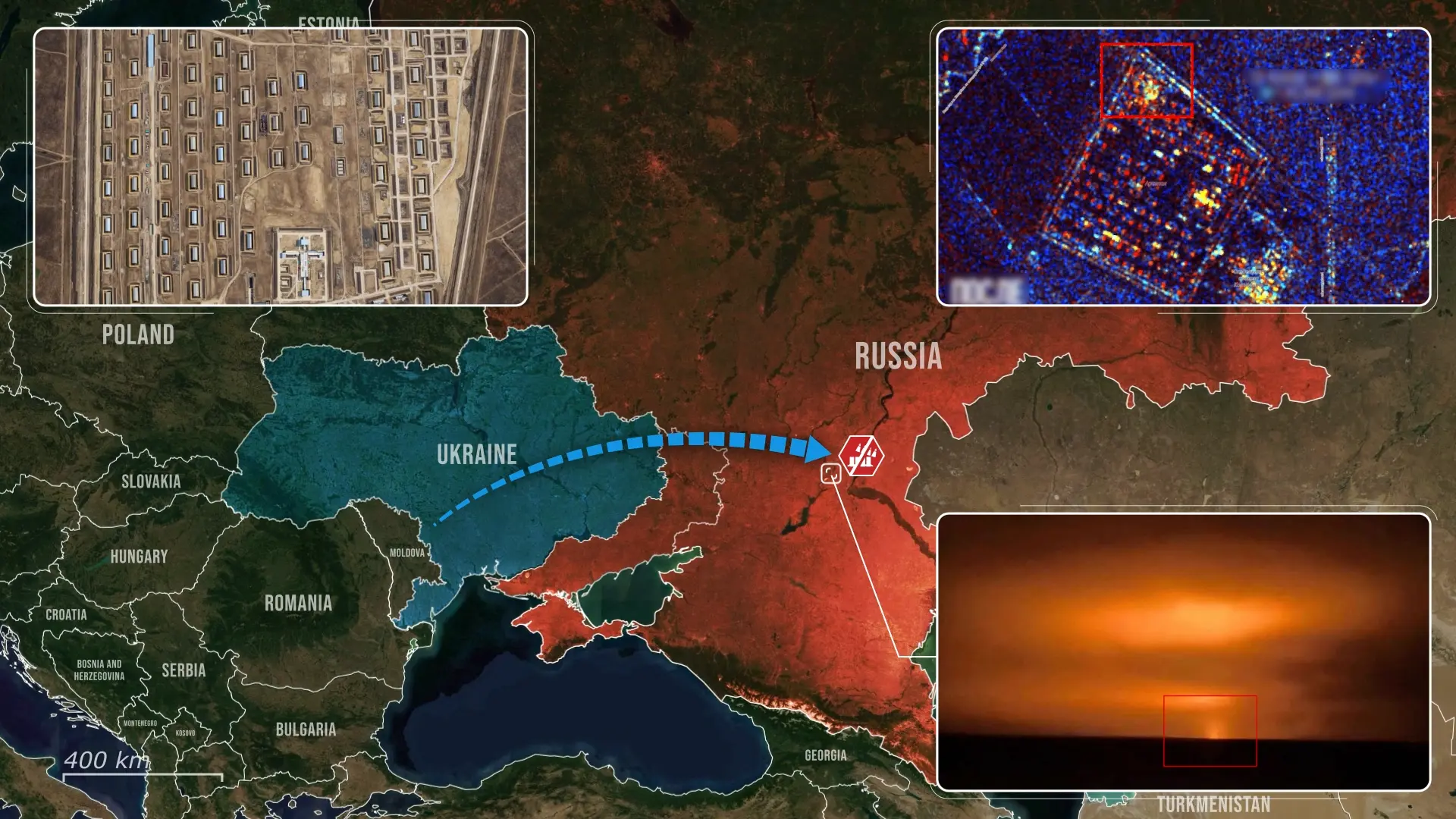
The latest and biggest strike was the confirmed destruction of a Grau arsenal near Kotluban by Ukraine using Flamingo missiles. The strike triggered powerful explosions followed by sustained secondary detonations across the site. The facility, covering roughly two square kilometers and comprising more than 90 individual storage bunkers, is assessed to have held up to 150,000 tons of ammunition, equivalent to one to two months of Russian combat expenditure at current rates. Local authorities evacuated residents from the nearby town, underscoring the scale of the blast and the damage.
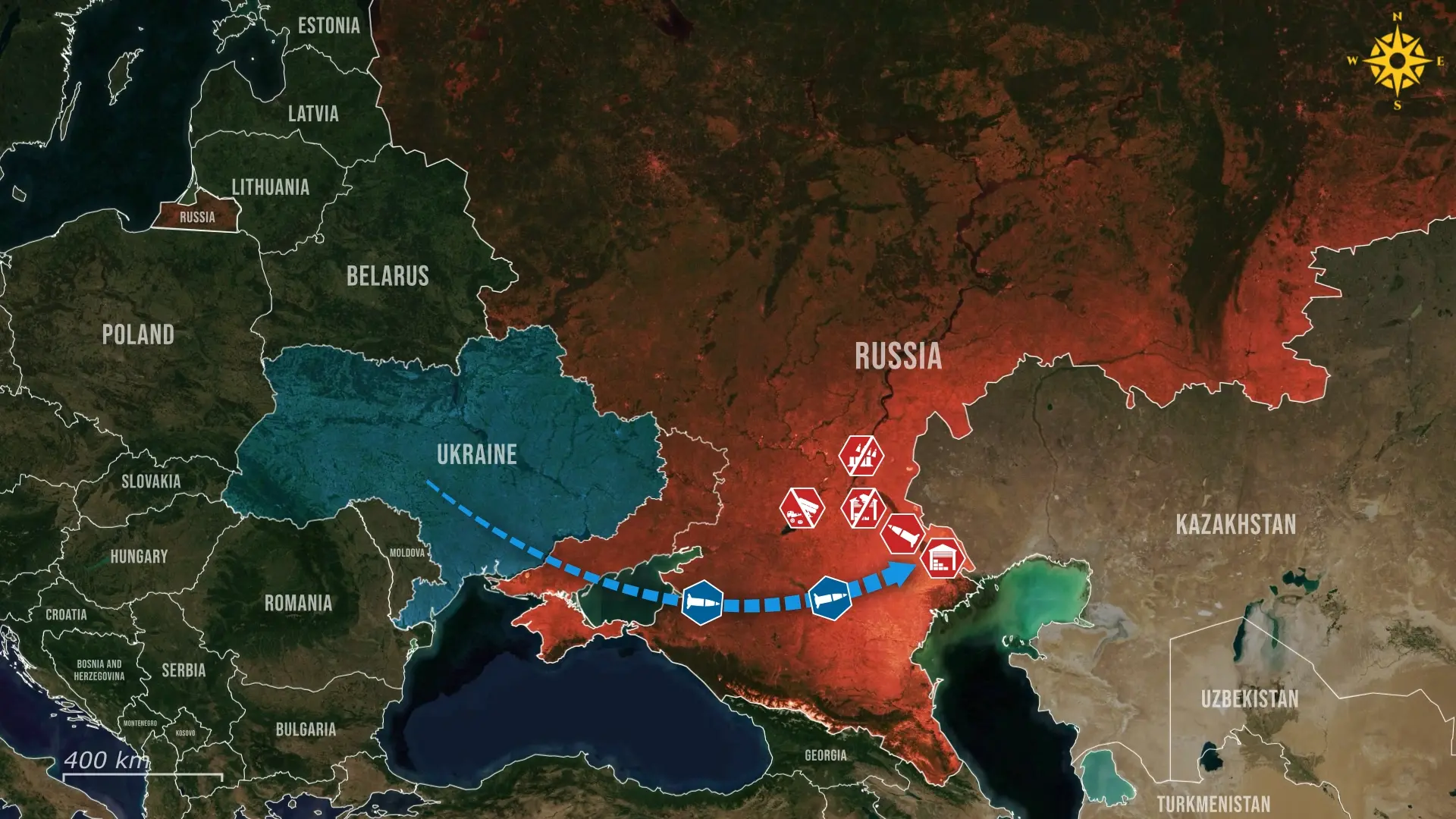
The Flamingo was chosen for specific operational reasons, as it carries a warhead of an estimated 1,150 kilograms, more than double the 300 to 450 kilogram warheads on typical Tomahawks or Storm Shadows missiles, making it capable of severely damaging hardened infrastructure, such as oil refineries, command centers, and weapons depots.


Most importantly, a recent upgrade to it enables low-altitude flight to significantly enhance survivability, as the integration of a terrain contour matching system allows the missile to navigate independently of satellite signals, increasing resistance to electronic warfare. Flying at low altitude reduces radar detection windows and complicates interception.


Striking Grau arsenals has an important strategic significance, as these facilities serve as the central ammunition reservoirs from which smaller Russian frontline depots are supplied. By targeting the starting point of distribution rather than dozens of smaller forward storage sites, Ukraine disrupts the entire Russian logistics chain downstream. Even partial destruction can create multi-week supply gaps, forcing Russian units to ration artillery fire and slow offensive tempo. Reports of extensive fires and prolonged detonations indicate that this strike specifically did major structural damage across several storages on the facility, degrading both inventory as well as the infrastructure needed to receive and distribute.
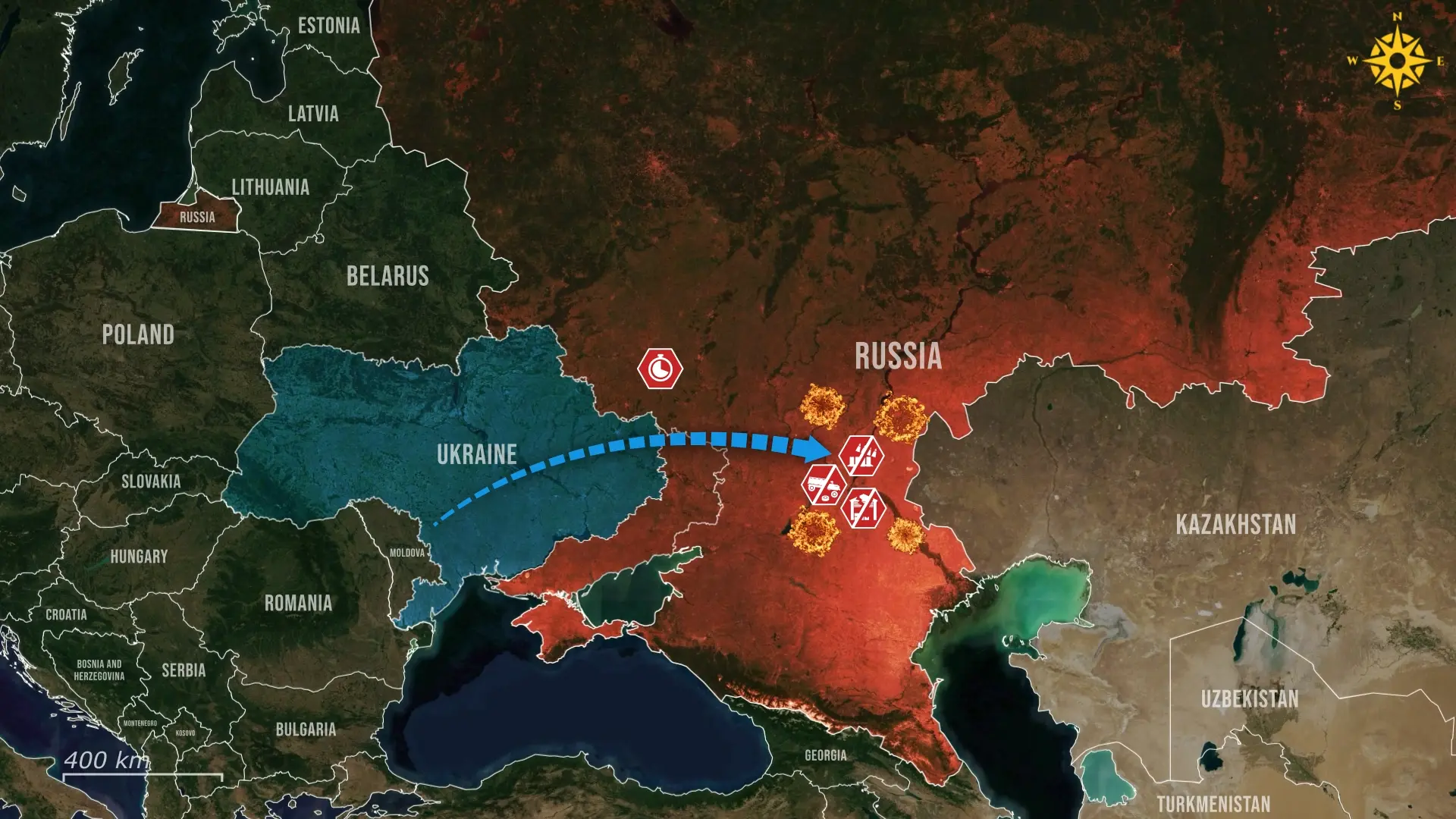
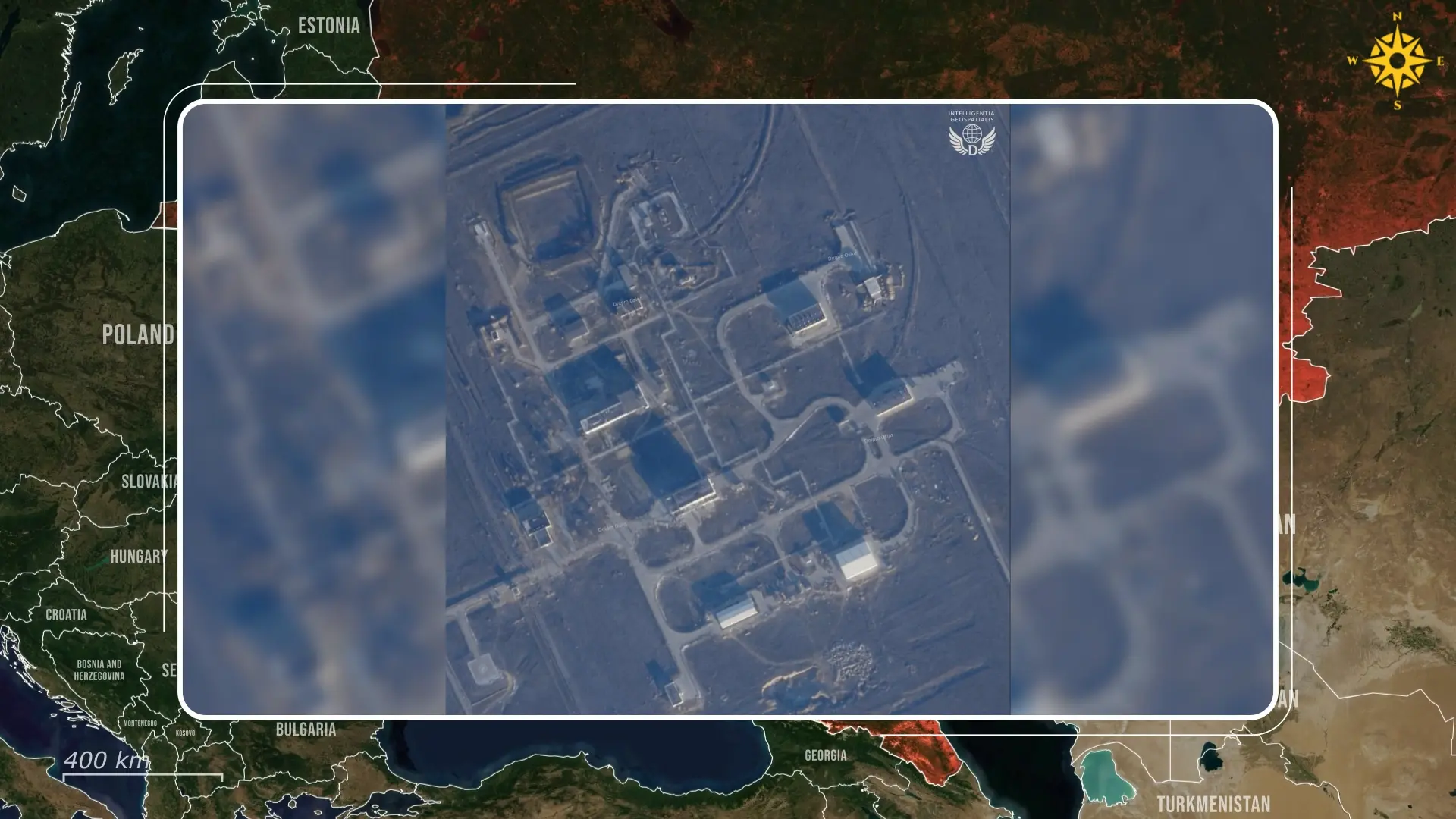
Just days before the latest strike, the Flamingo campaign has also targeted Kapustin Yar, a critical node in Russia’s ballistic missile program. It is located roughly 120 kilometers from the Grau arsenal in Kotluban, demonstrating that Russian air defenses were unable to effectively reinforce the area despite the warning of earlier strikes.
The Ukrainian strikes on the ballistic missile site in Kapustin Yar damaged hangars used for pre-launch preparation, technical servicing facilities for medium-range ballistic missiles, as well as logistics warehouses storing missiles themselves and supporting equipment necessary for launches and maintenance. Satellite imagery confirmed these impacts, including a building associated with Oreshnik missiles specifically, with all personnel on the base being evacuated for fear of further secondary detonations.

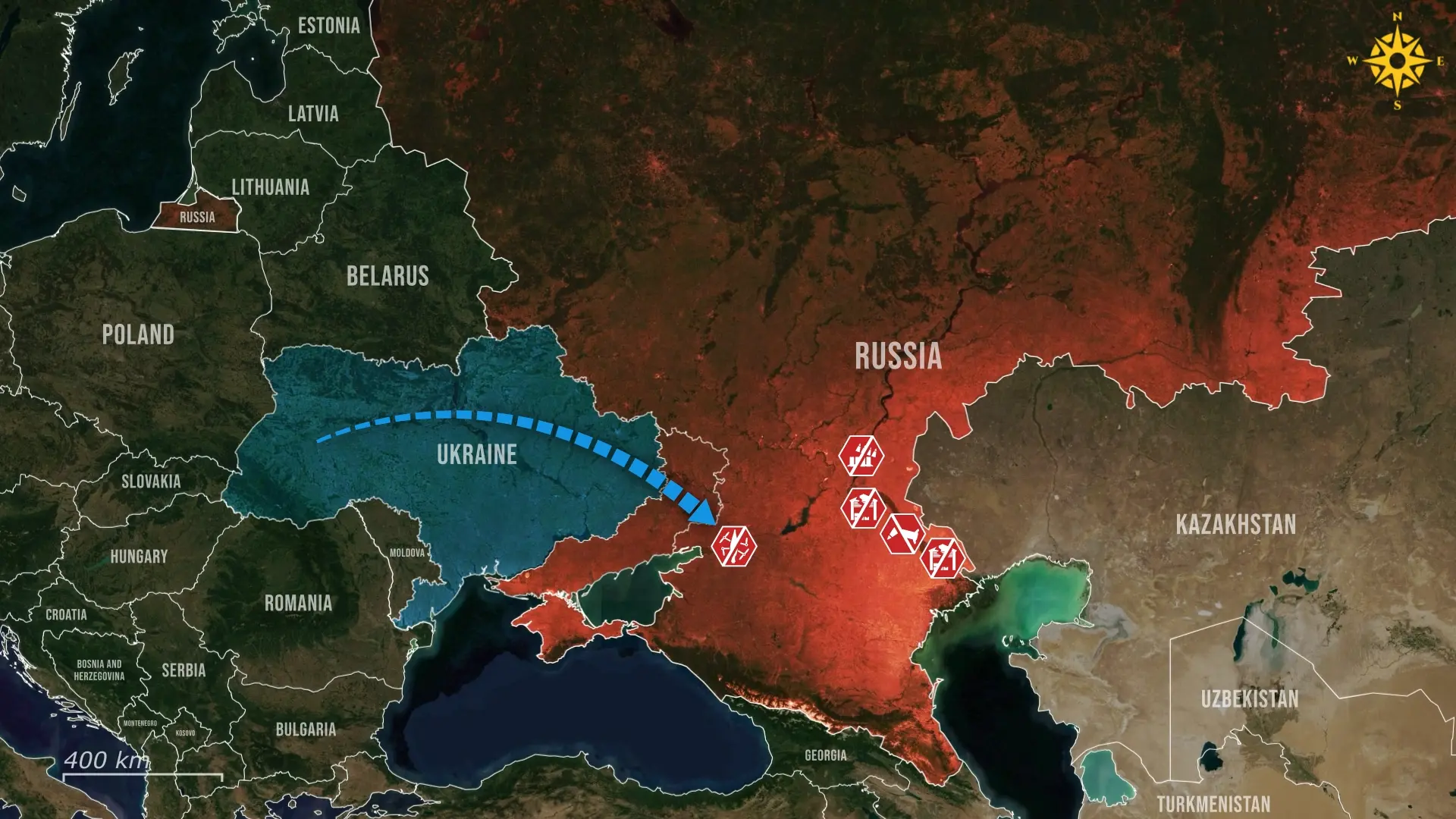
Additionally, Ukraine conducted a strike destroying approximately 6,000 FPV drones and components in at least three storage sites in Rostov-on-Don.
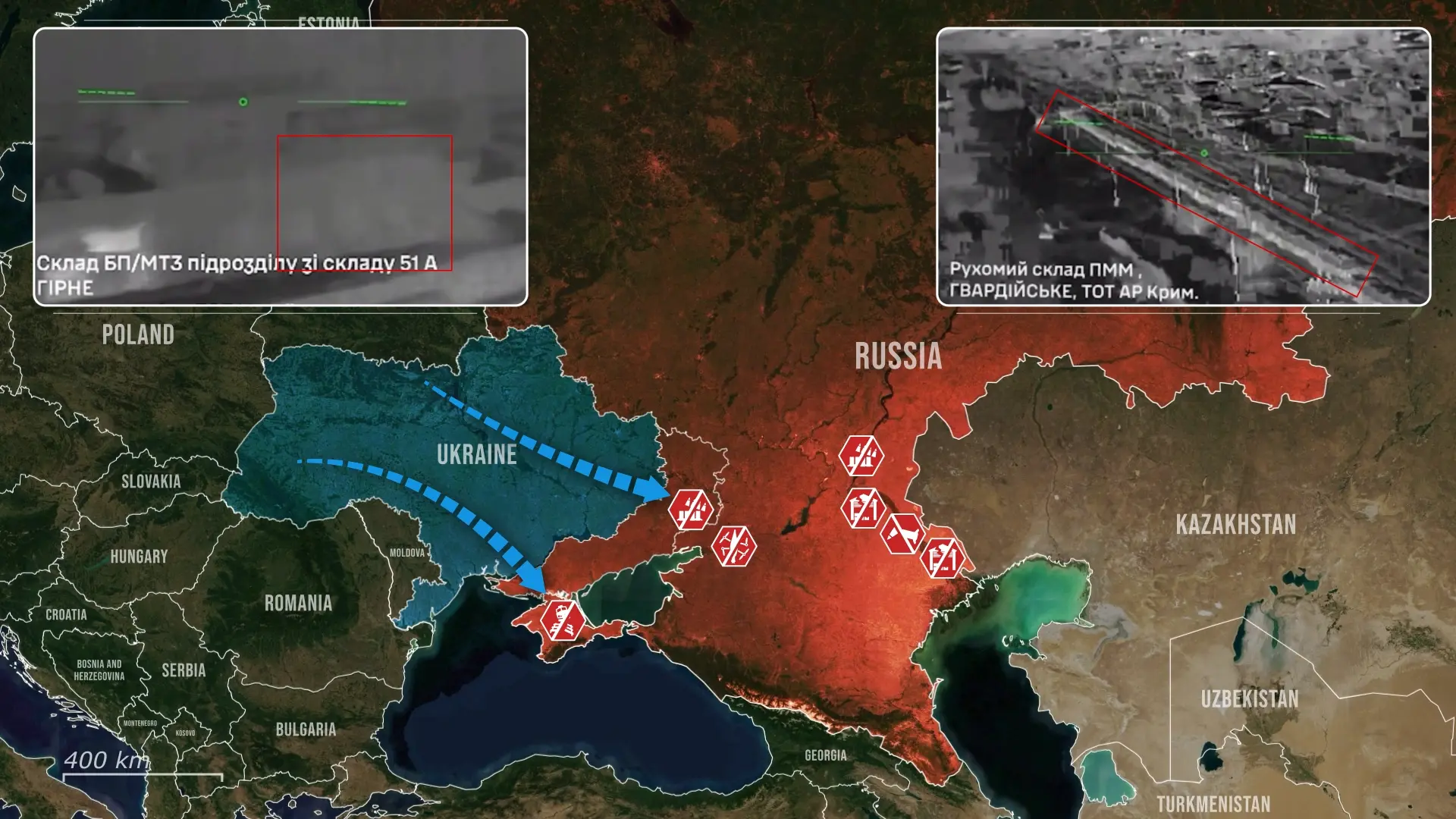
Ukrainian FP-2 drones also targeted ammunition depots and logistical facilities linked to the 51st Combined Arms Army in the Donetsk region and fuel rolling stock at an oil depot in a coordinated attack in Crimea.
Meanwhile, long-range drone waves exceeding 100 drones are operating over the Moscow region, with the aim of taking down Russian air defenses and clearing the way for more strikes on the large logistical node that the capital is. Additional strikes have hit specialized infrastructure, including a data center in Primorsk, reportedly located in a former post office building, and responsible for the coordination and delivery of Russian supplies to the frontline units.
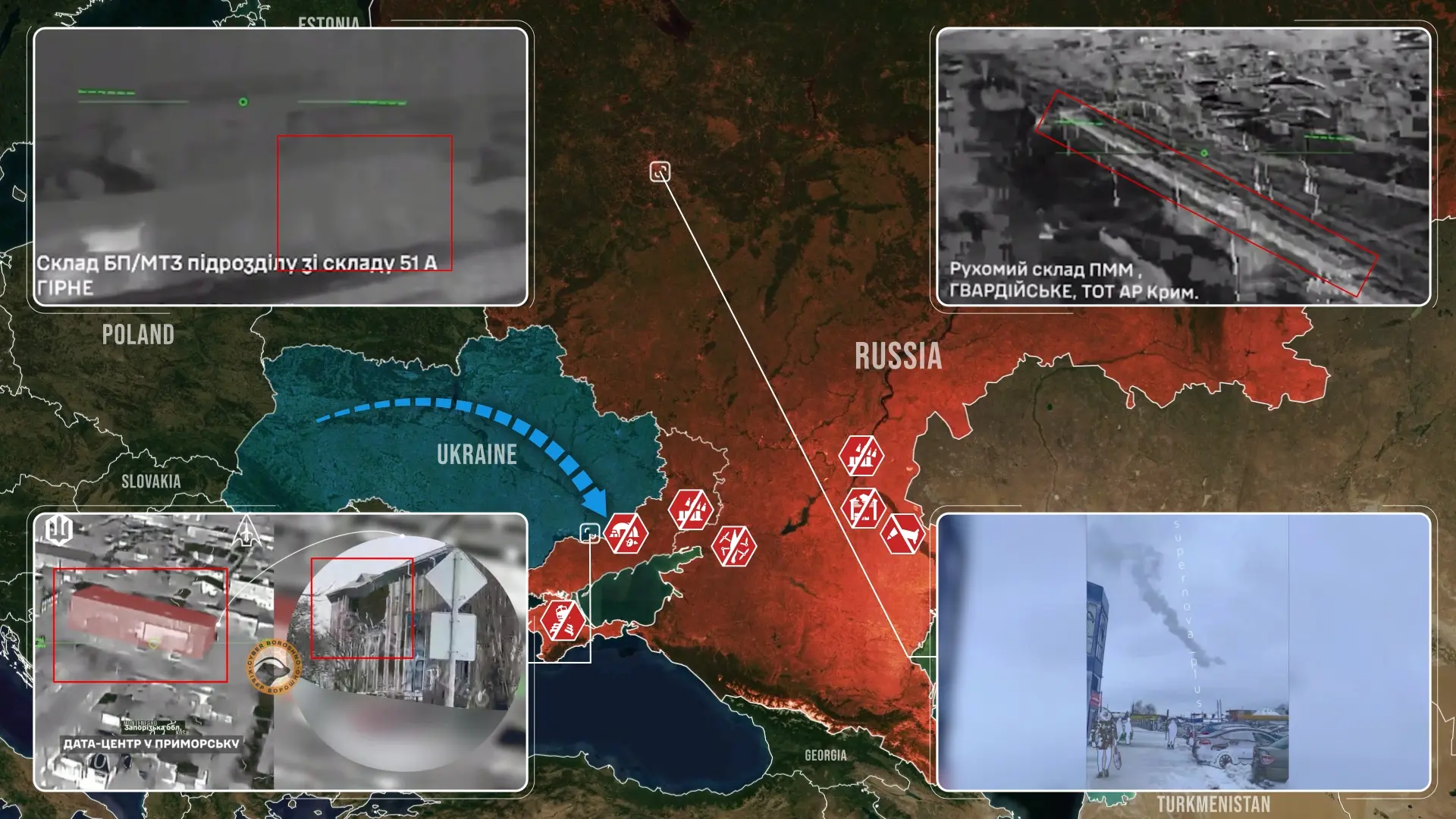
Taken together, these strikes represent a coordinated campaign aimed at degrading Russia’s military ecosystem rather than isolated targets. By simultaneously targeting ammunition stockpiles, missile infrastructure, drone warehouses, fuel logistics, data centers, and rear-area launch sites, Ukraine not only compresses Russia’s ability to regenerate combat power but also damages the entire supply chain at each critical step.
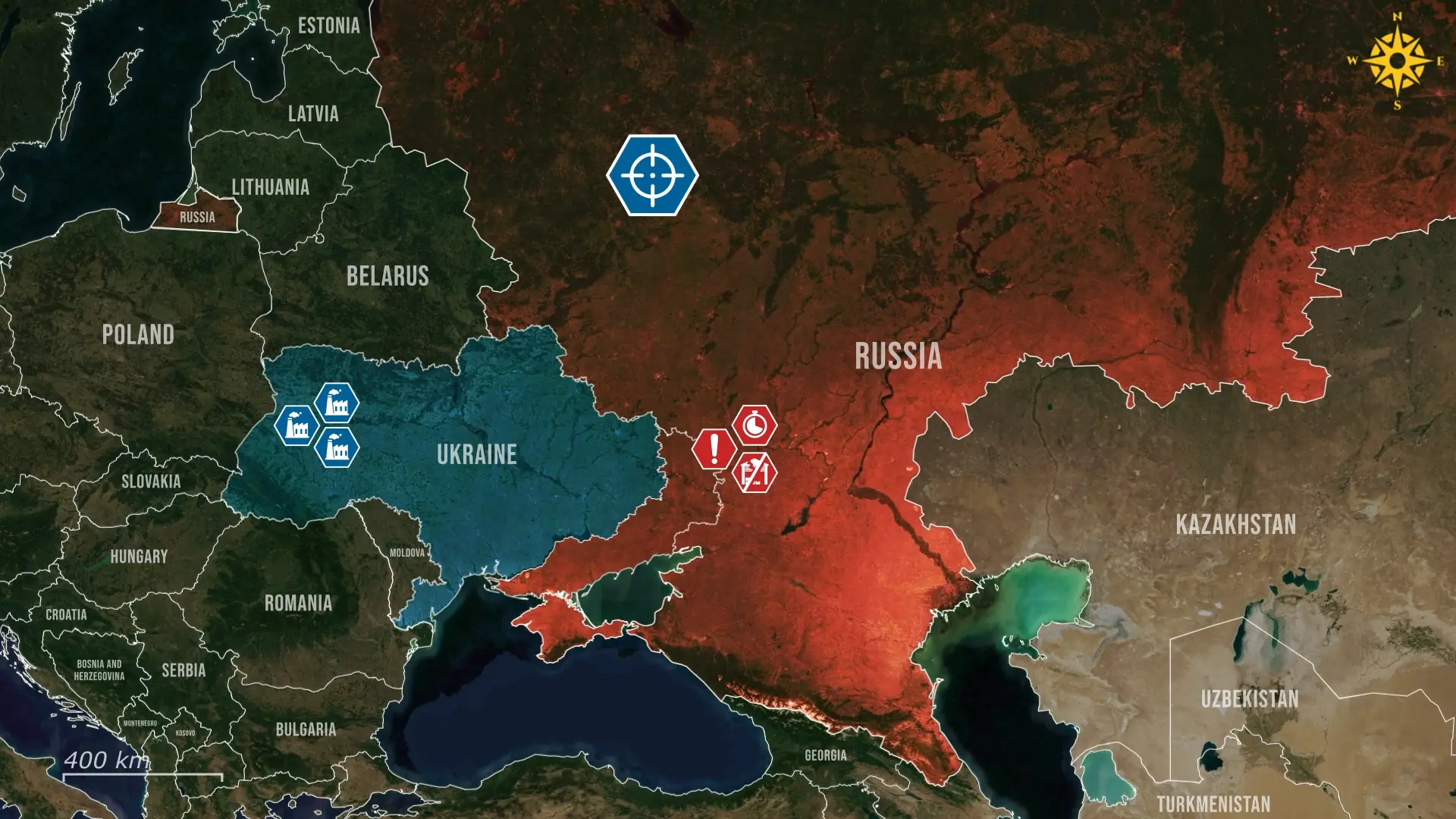
Overall, Ukraine’s domestically produced long-range missiles and drones are now systematically striking critical Russian infrastructure deep in the rear. The successful targeting of both Kapustin Yar and the Kotluban Grau arsenal by Flamingo missiles, separated by roughly 120 kilometers, demonstrates significant degradation of Russian air defenses.

The campaign imposes continuous operational strain, denies recovery time, and disrupts supply chains at their origin. As Ukraine expands production and refines low-altitude penetration capabilities, the sustained targeting of high-value nodes suggests a deliberate strategy to weaken Russia’s logistical foundation and reshape the operational balance.

.jpg)





Comments