

.svg)
Today, the biggest news comes from India.
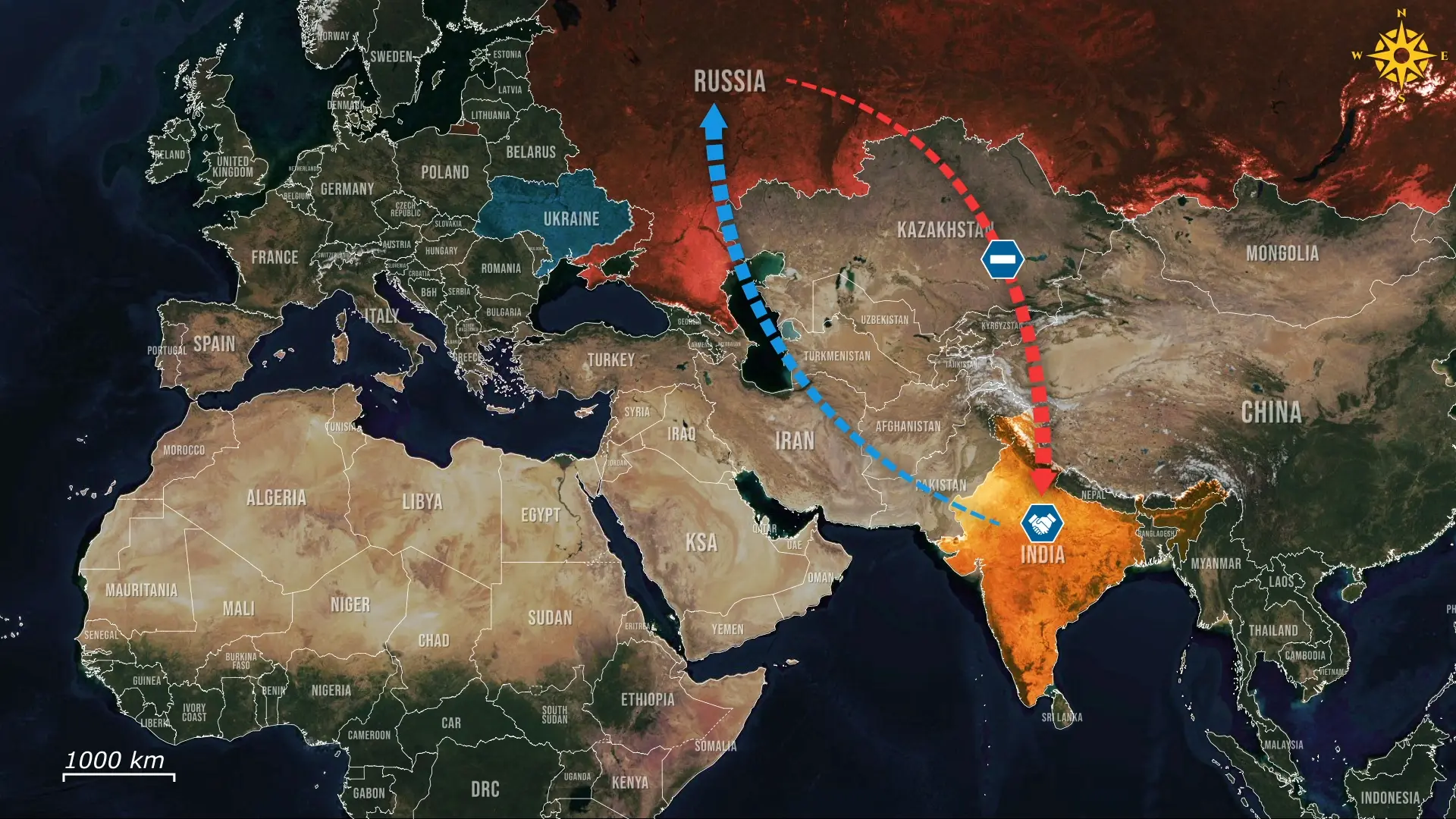
Here, Russian policymakers are waking up to a shock as India begins turning on its longtime partner, cutting energy ties and detaining shadow-fleet tankers that once moved sanctioned oil freely. In a dramatic shift, New Delhi is aligning with Western enforcement, exposing Russia’s maritime lifeline and signaling that Russian ships may soon be next in line.
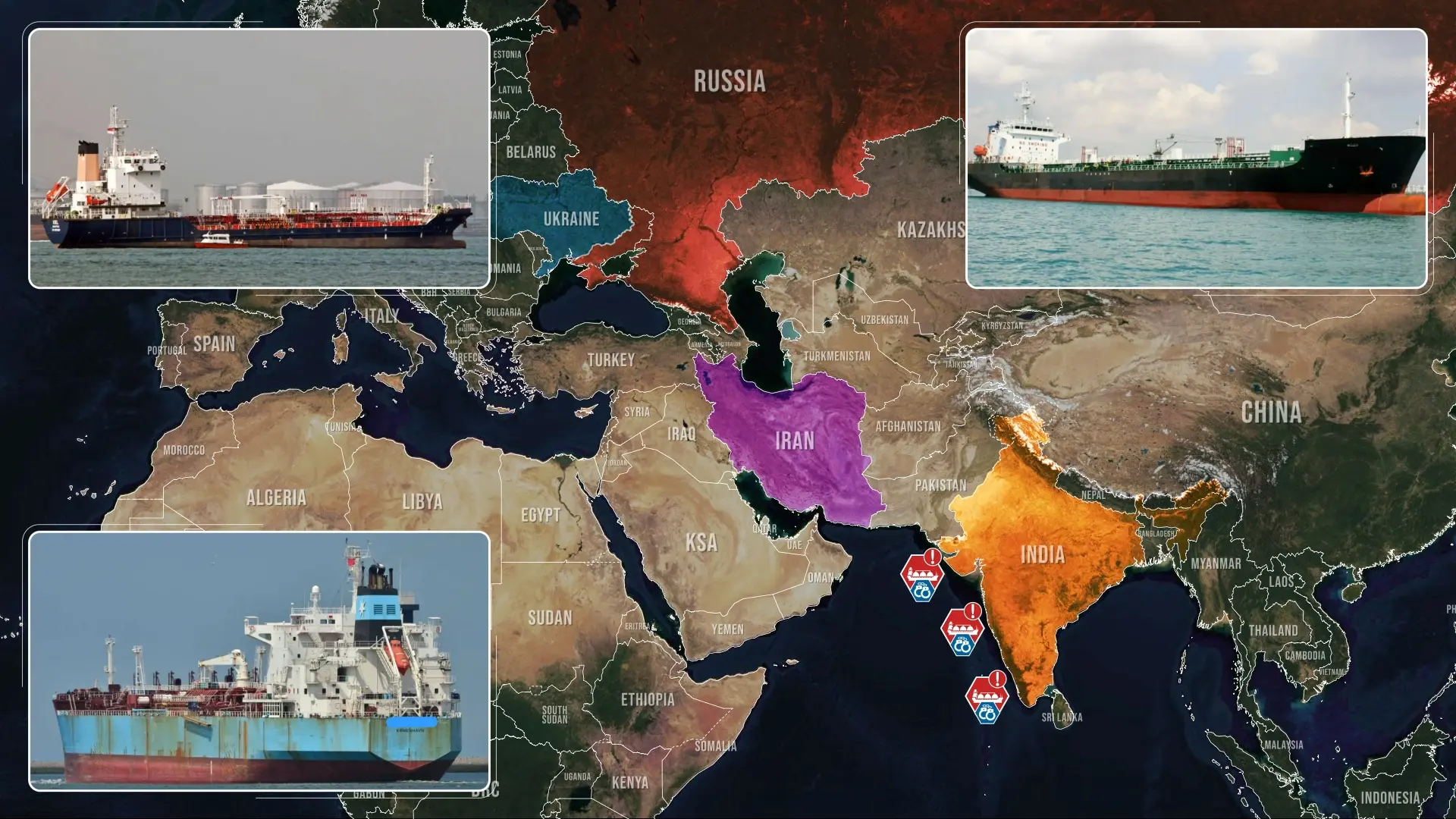
In a ruthless move, the Indian Coast Guard has just detained three Iranian Shadow Fleet tankers, all reportedly under US sanctions for illegal oil transport. Early reports indicate that these ships were involved in transferring smuggled Iranian crude from one vessel to another at sea. Notably, such Shadow Fleet ships are not tied to any single country; they move illegal, uninsured oil on behalf of various sanctioned states simultaneously.
Until now, India had been buying sanctioned Russian oil carried by these shadow fleet tankers, but its recent policy shift has led it to detain the very same vessels.
Although the immediate focus is on Iranian sanctions evasion, the implications are wider because they are used by both Iranian and Russian shadow fleets. Disrupting Iran’s shadow operations, therefore, also limits Russia’s ability to ship discounted oil to global markets.
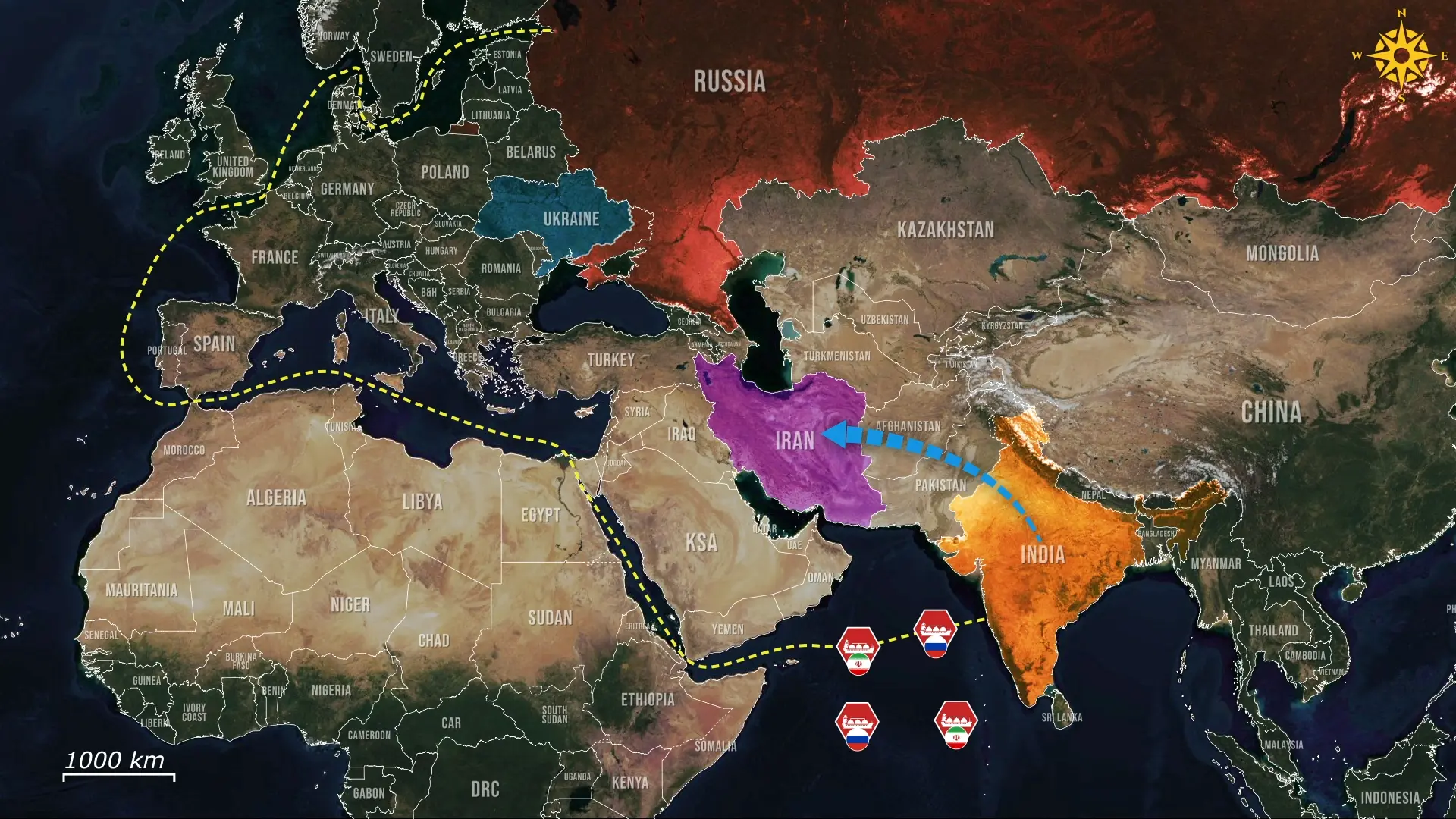
The exposure of shadow-fleet shipping routes to Asia suggests that trade relationships between India and Russia are shifting. Recently, Indian Oil, Bharat Petroleum, and Reliance Industries, which are among India’s largest refining companies, have begun declining new offers of even discounted Russian crude, with most other refiners similarly pausing purchases. This change comes as a result of a new trade agreement between the US and India after months of negotiations. In exchange for the action of halting Russian oil imports, the United States has agreed to lower the tax it charges on many Indian products from 25 percent down to 18 percent, and it also removed an extra 25 percent penalizing tax that it had previously put on Indian goods for buying Russian oil.
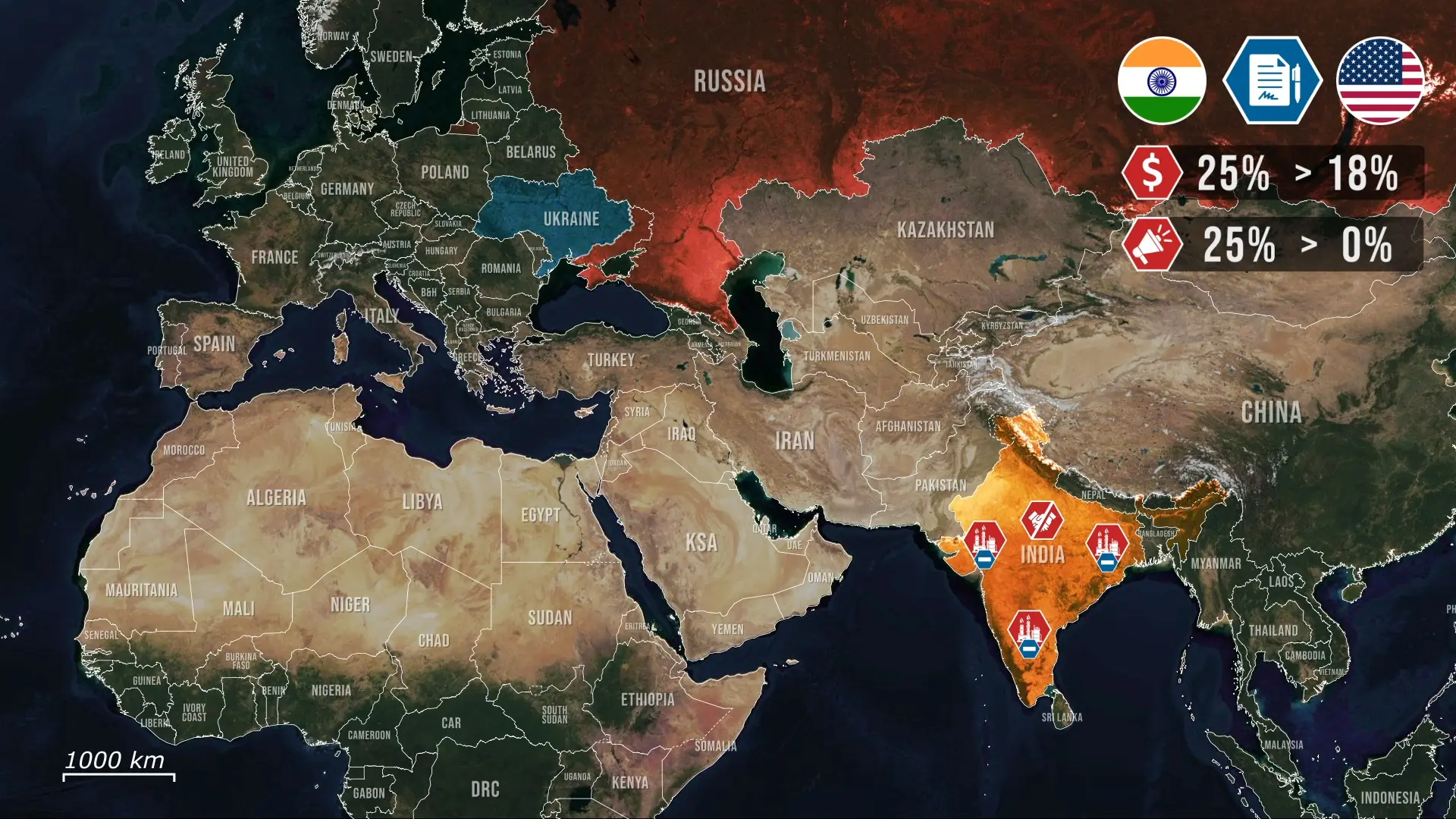
US officials say these changes were implemented because India will now buy less oil from Russia and instead buy more from the United States and Venezuela. To save face, Moscow officially stated that India has never relied on just one country for oil imports, although Russian officials also understand that India will reduce its oil imports dramatically if not completely. As a result, Russia’s energy exports are becoming increasingly dependent on China, which now accounts for approximately 50 percent of its oil exports. This imbalance gives immense leverage over Russia to China, which they can use to get even further discounts.
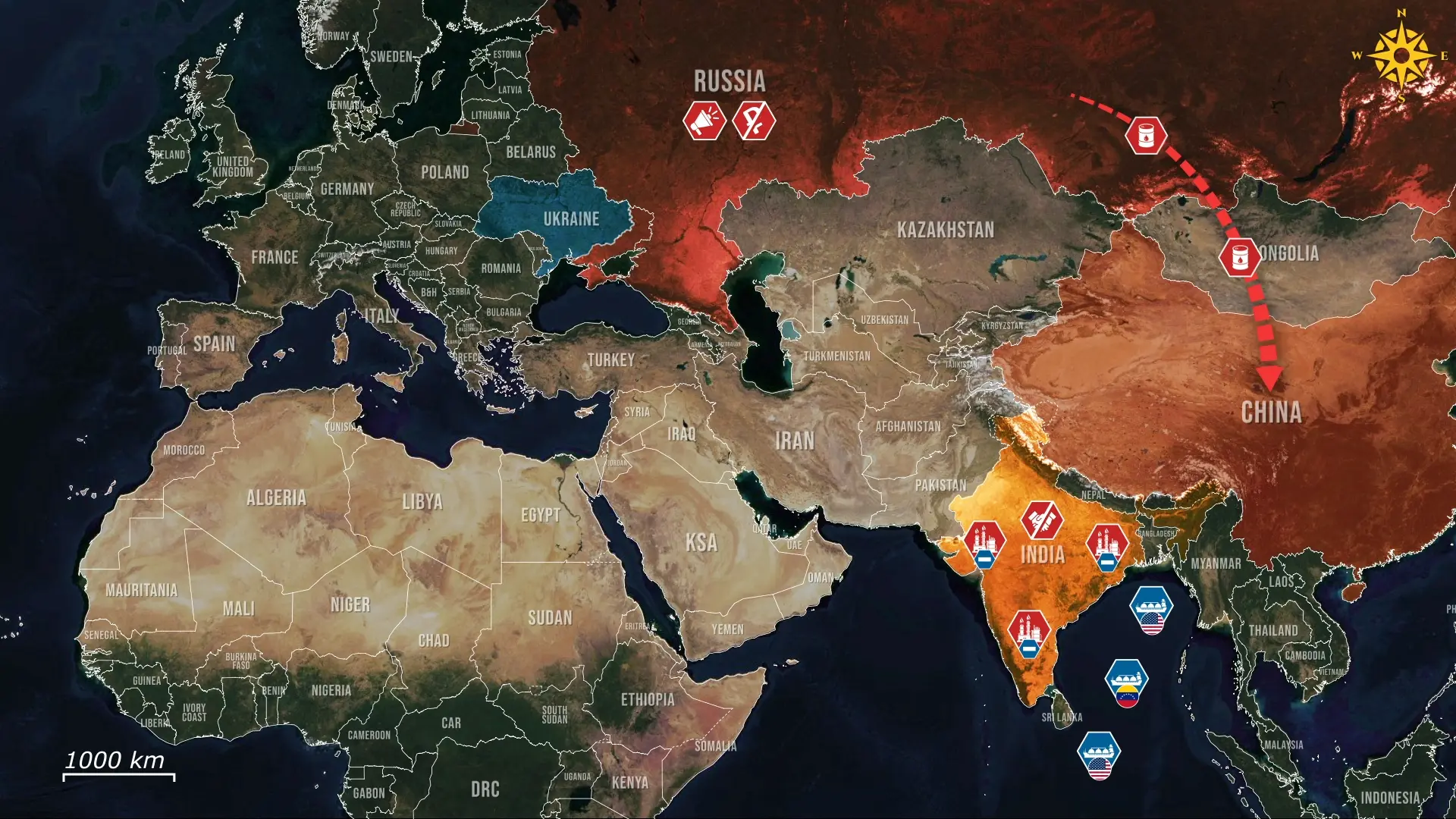
India’s recent detention of shadow-fleet tankers marks a significant step in its diversification efforts. These detentions, in combination with the halting of purchases, show that India is willing to step in and stop efforts to bypass sanctions in alignment with Ukraine’s allies, and even move to enforce them. India’s move on Iran’s shipping has major implications, it gives off a clear signal that the country is laying the legal and political groundwork to take stronger action against Russian shadow fleet operations in the future as well.
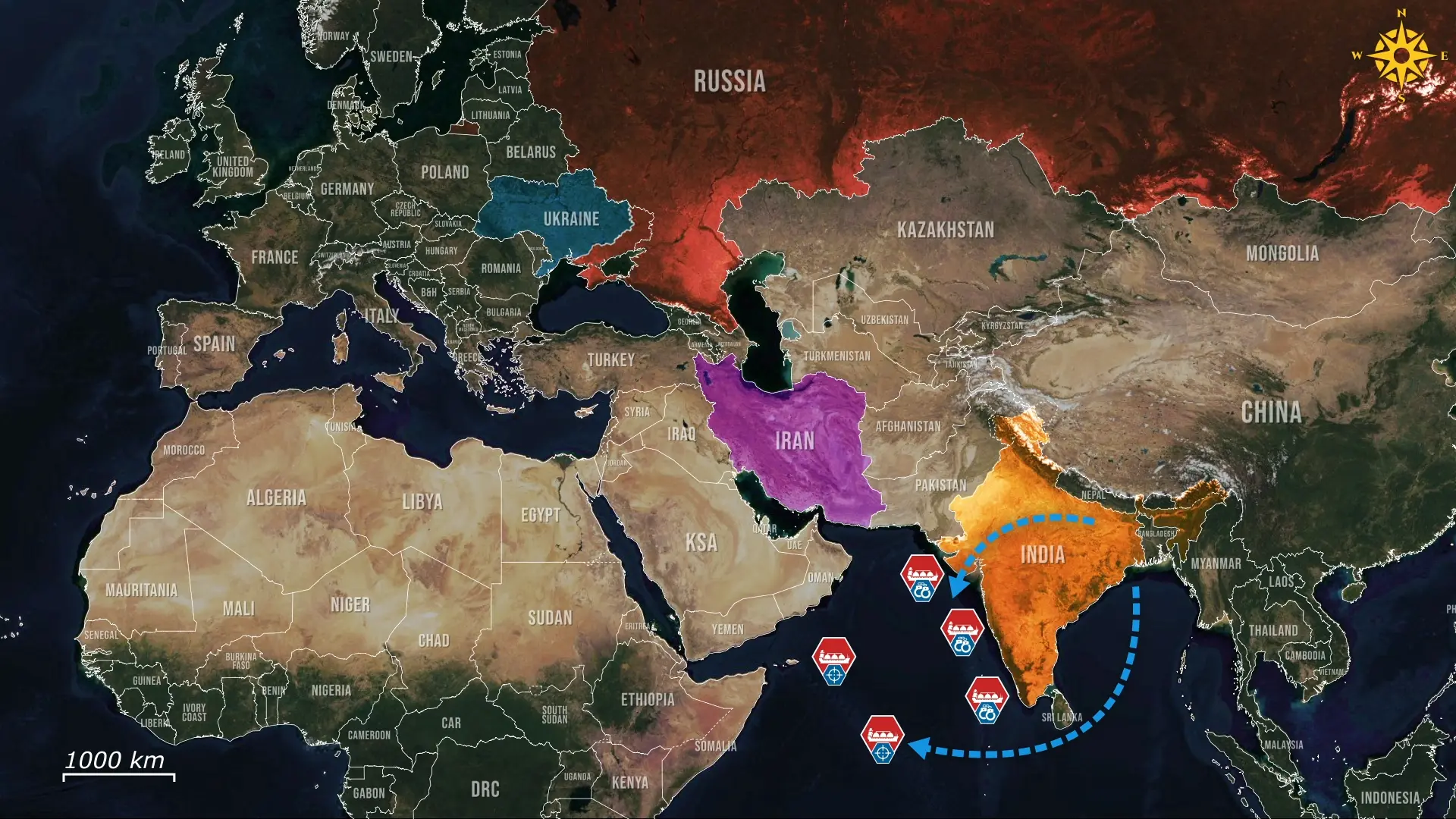
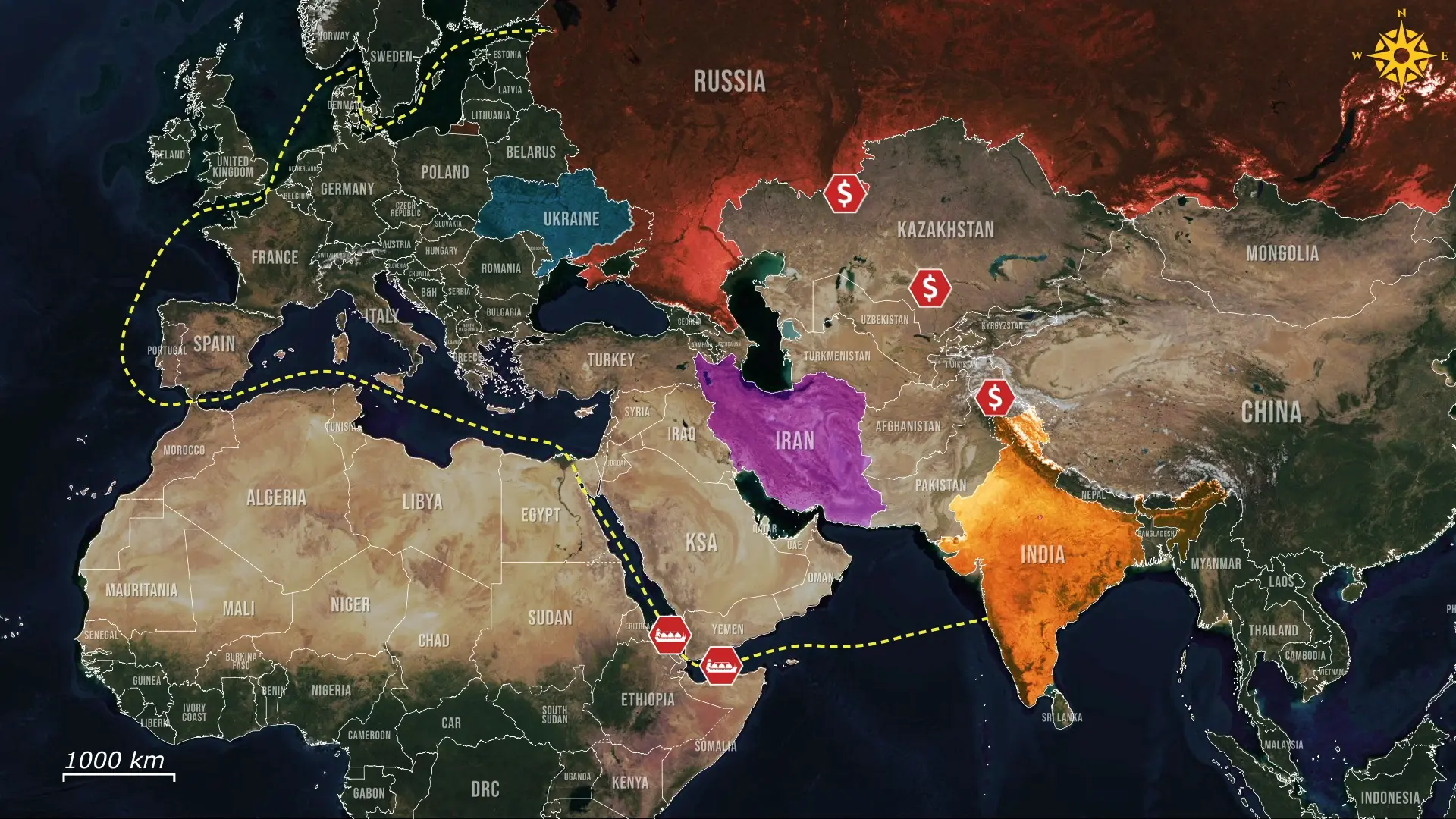
By stopping ships linked to Iran, India is normalizing the use of its navy and coast guard to crack down on sanction-evading shipping in the Indian Ocean, which is a key route also used by Russian oil shipments to Asia, where approximately 66 percent of Russia's total crude oil exports transit through. Outside of only movement, Russian vessels regularly use weak enforcement in the Indian Ocean to evade sanctions by ship-to-ship transfers.
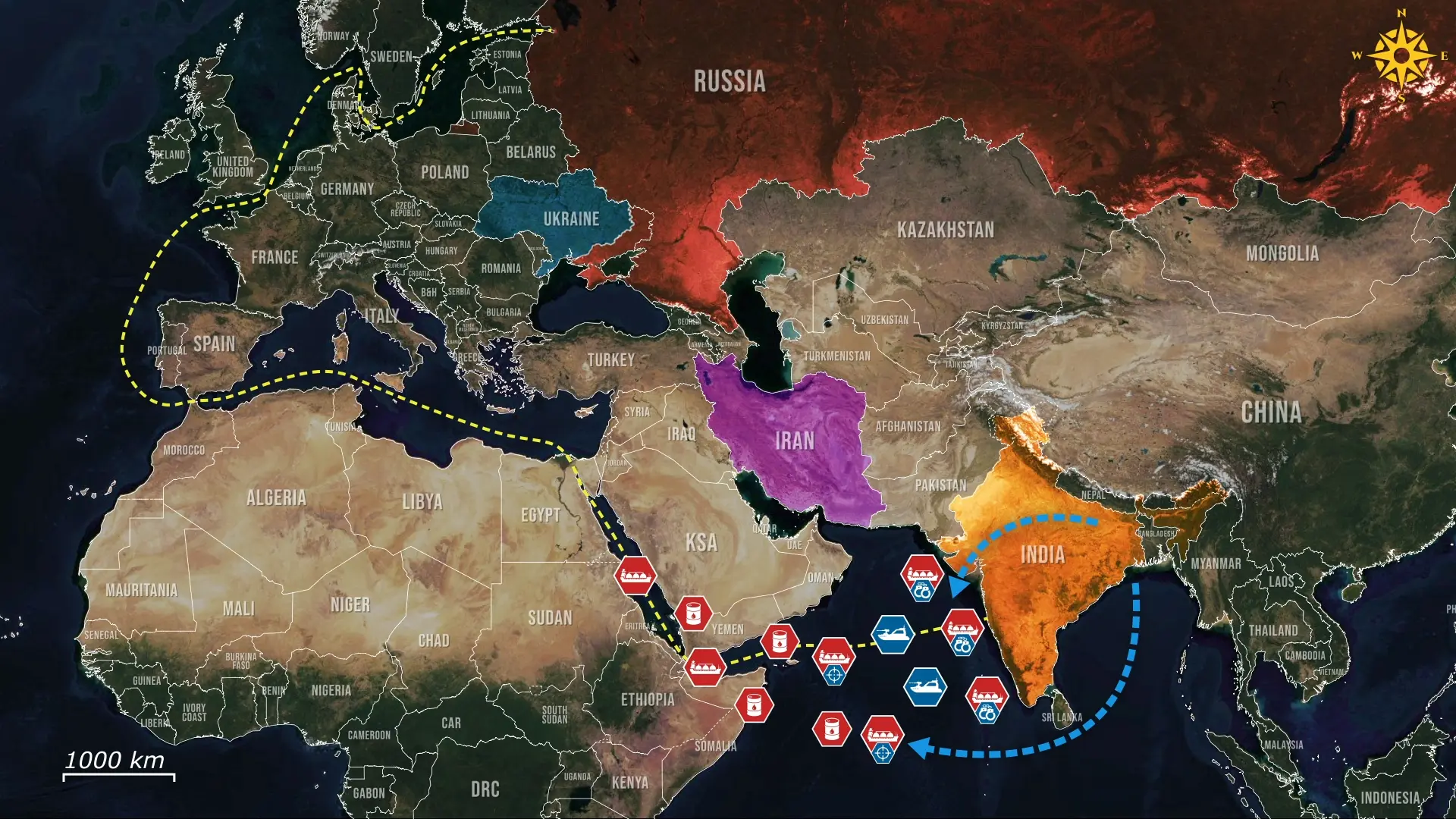
India’s actions show it has the ability and willingness to disrupt these operations, even without directly going after Russian ships just yet. In this way, the detentions against Iran act as a test, showing how India can align enforcement with trade rules while signalling support for US sanctions.
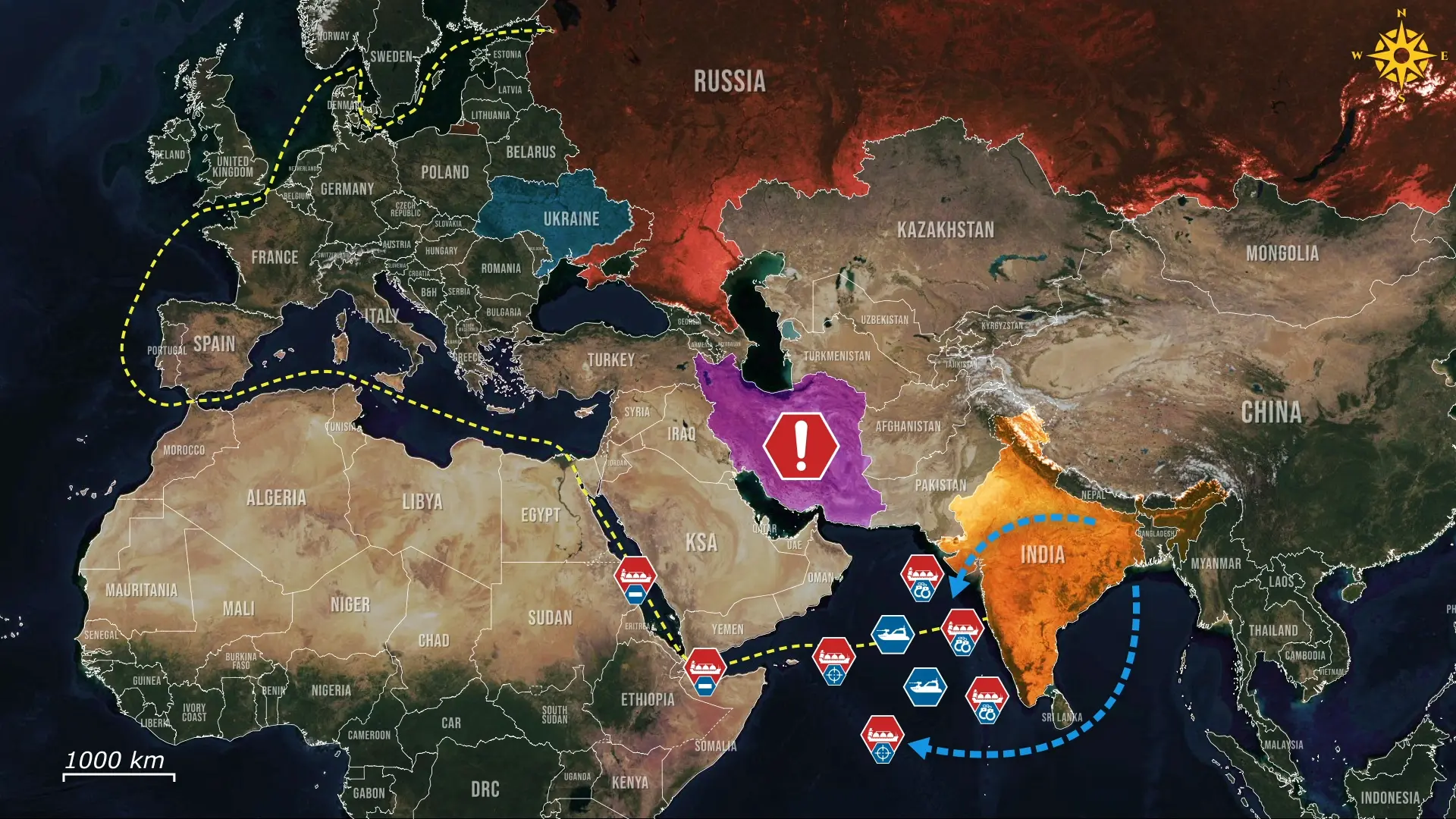
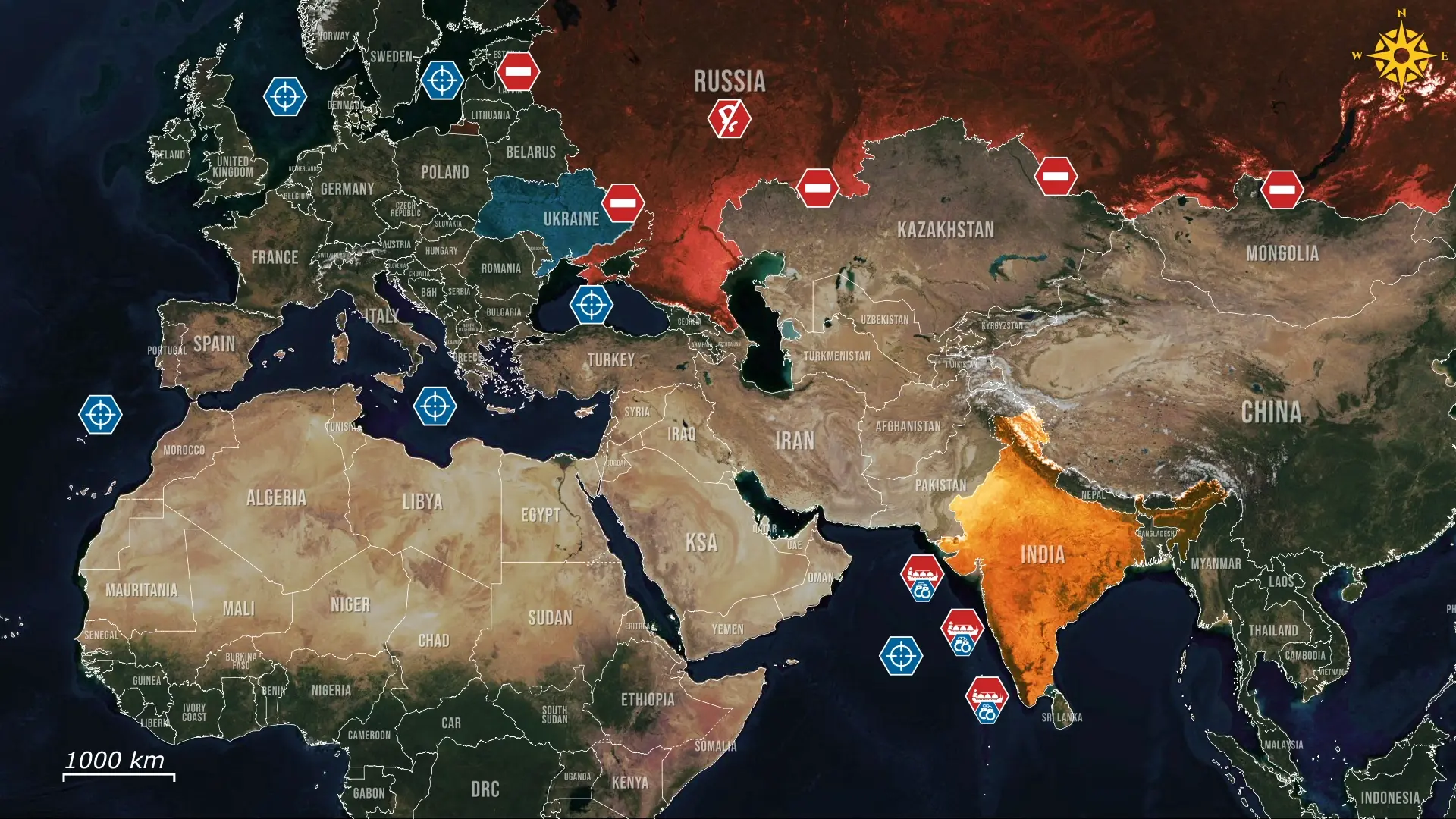
Overall, Russia’s economic isolation grows day by day as the threat now comes from previously friendly countries as well. What Moscow assumed would remain pressure confined to the Black Sea, Baltic, North Sea, Atlantic, Mediterranean, Caribbean, and Western and North African waters has now extended into the Indian Ocean as well. With India, a former partner, now clearly signalling its readiness to enforce sanctions and seize Iranian-linked vessels, Moscow faces a stark reality that its shadow fleet ships are next, putting a critical export lifeline and Russia’s economic and geopolitical leverage directly in jeopardy.

.jpg)

Comments