

.svg)
In this video, we will analyze the developments in the Malian gold sector.
Here, Mali has become the center of a global gold scramble, drawing the attention of many countries. However, this larger involvement is gradually challenging the central position that Russia has gradually reserved for itself in the country.
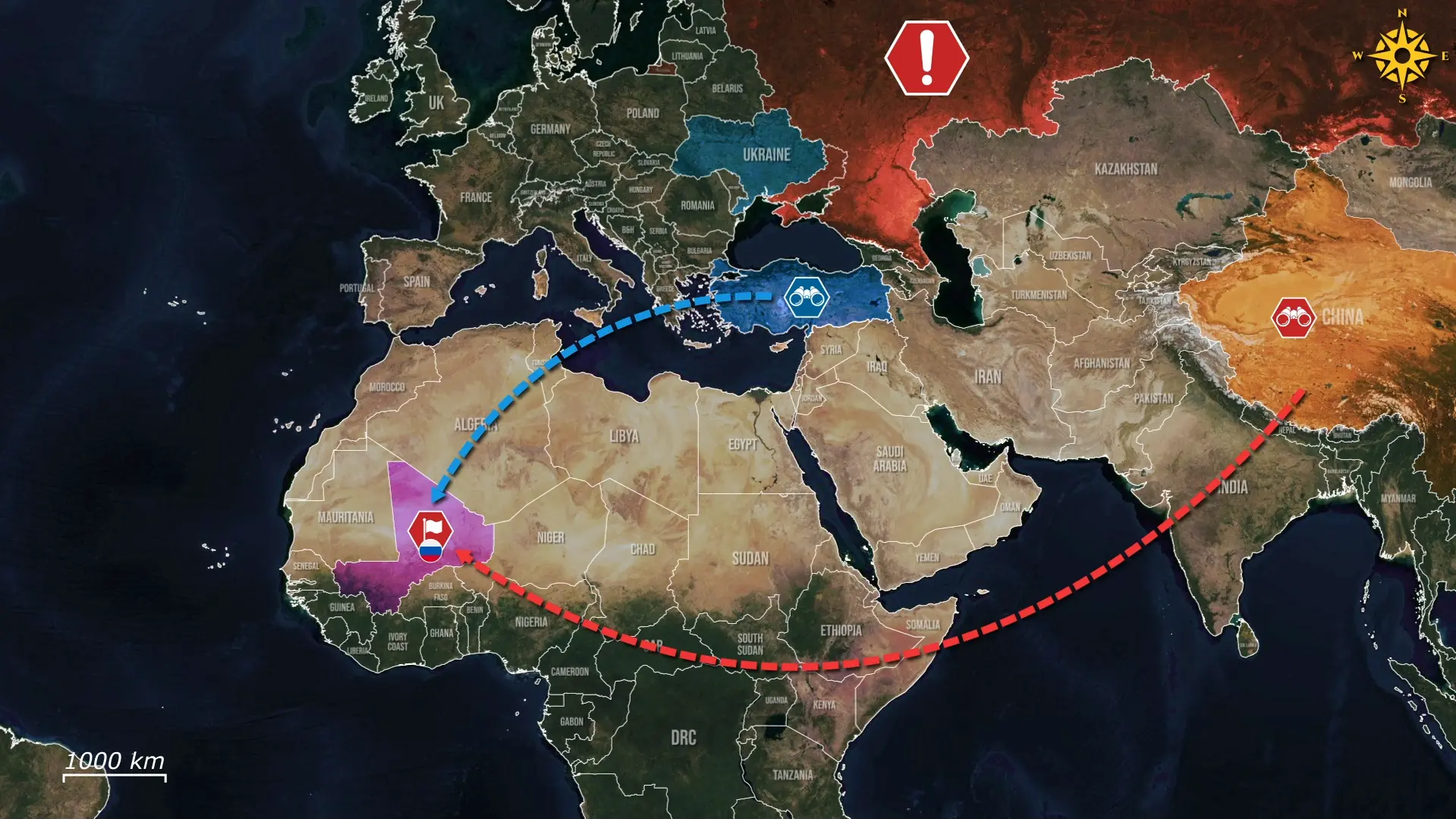
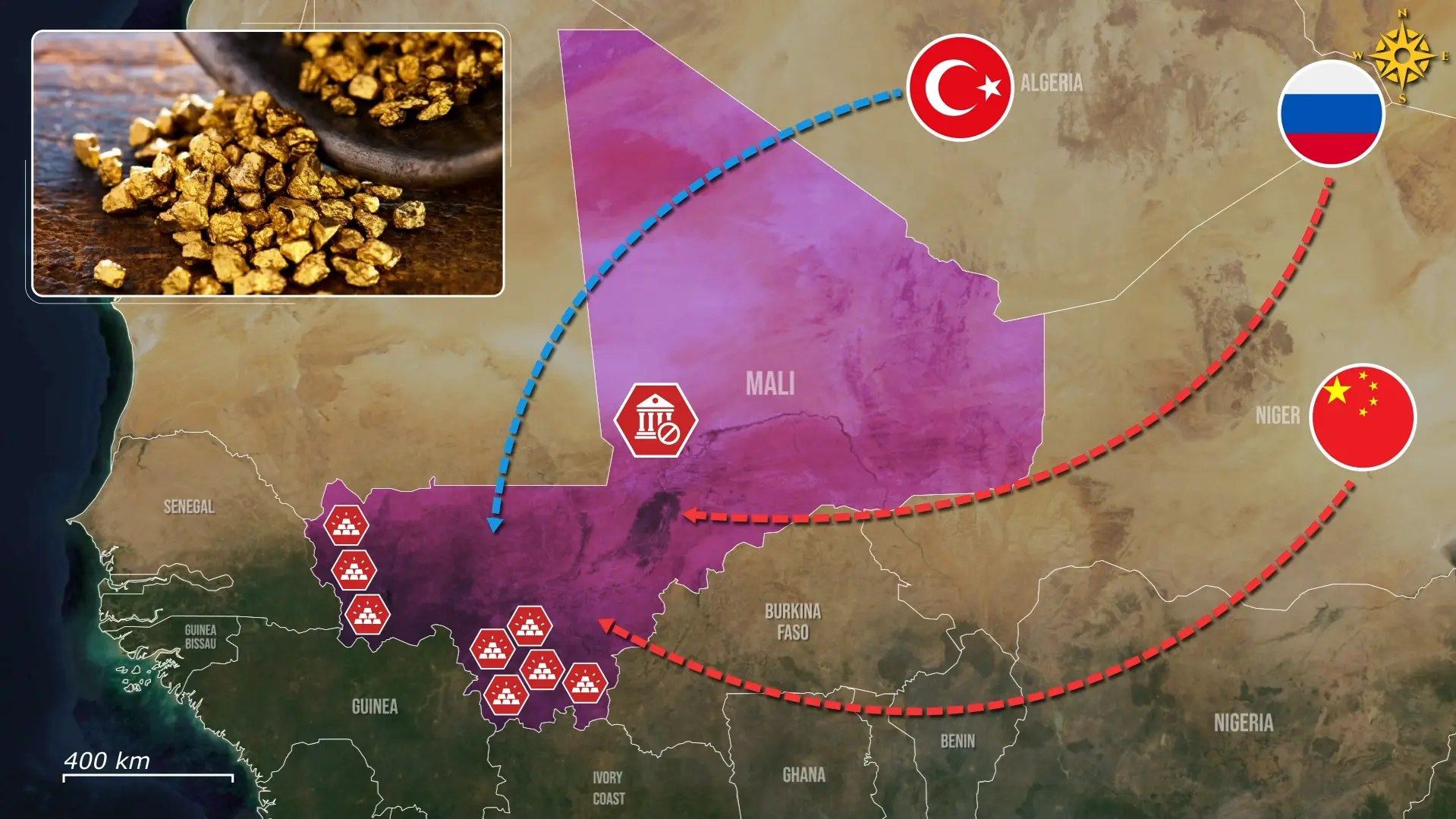
Mali has been one of Africa’s major gold producers for many years, but its importance is growing, becoming central to the country’s political and economic direction. In fact, the government depends heavily on gold revenues to fund the state and support the armed forces, so decisions about mining directly affect national stability. The country produces well over sixty tonnes of gold a year, placing it among the continent’s top producers. Gold concentration has also become a magnet for foreign governments and companies seeking a way to step in. Since many mining regions are remote and difficult to govern, these external actors offer investment or security assistance in exchange for access to gold.
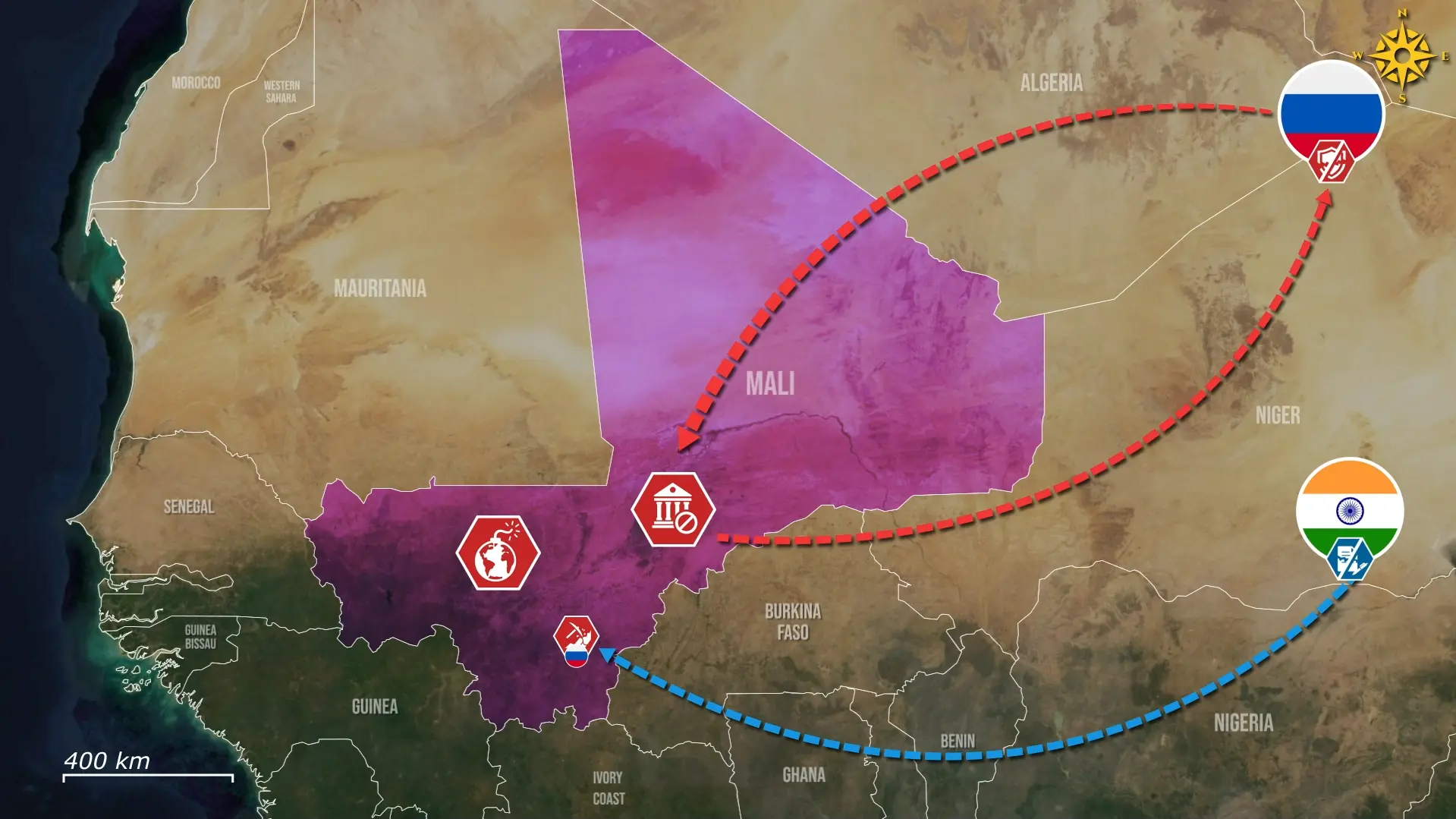
Russia has relied on practical military support to gain a foothold and entrench its position, sending equipment that keeps Malian units functioning. For example, in addition to military aid, Russia has recently delivered hundreds of generators essential for communication and coordination in areas with unreliable electricity. This strategy makes the Malian government more dependent on Russia's continued support, thereby increasing Russia’s leverage. However, the country's instability has also recently prompted India to pull out of a Russian backed lithium project due to rising security risks. This decision indicates a declining trust in Russia’s foothold in the country and in its ability to safeguard a joint investment in Mali.
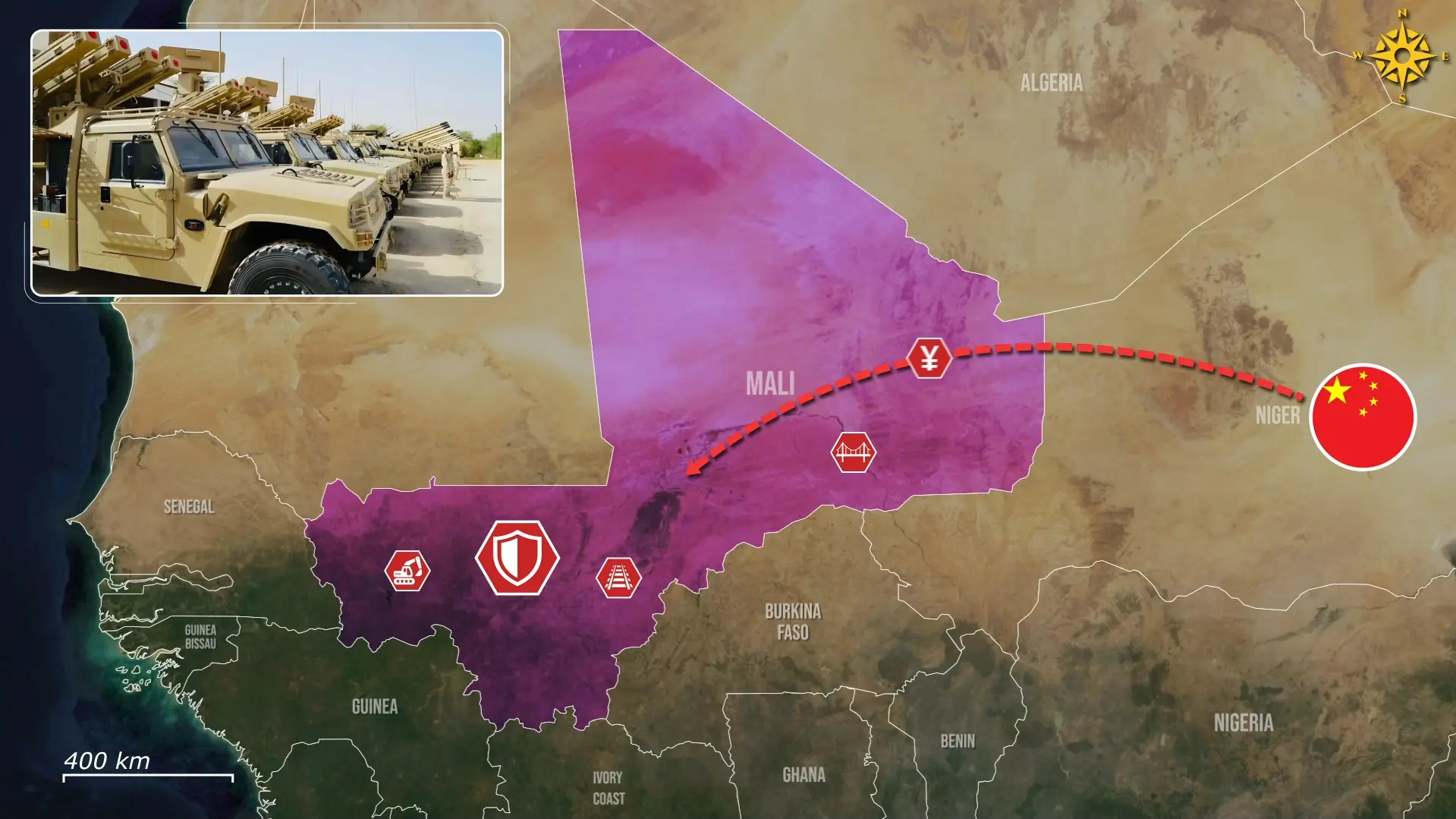
China’s approach fits into a broader pattern in that it mixes infrastructure investments and commercial interests, allowing it to present itself as a reliable partner to build long‑term influence. However, military cooperation has also recently increased, as evidenced by the delivery of the Chinese Yitan air‑defence system in April, which allowed Mali to bypass Russia entirely. This approach allows China to steadily build influence, since it offers not only weapons but also the prospect of roads, energy projects, and technical expertise that can support Mali’s wider ambitions. Turkey has increased its involvement as well by providing the modernized Akinci drones, giving Mali new surveillance and strike capabilities. This drone cooperation also creates long-term links for training and maintenance, reinforcing Turkey’s strategic presence across the Sahel.
The growing foreign influence pushed the Malian government to create a new state mining company, Sopamim, marking a turning point in how Mali manages its gold industry. This company will hold all state shares in mining projects, replacing the previous system in which different ministries and local officials controlled separate pieces of the sector. The 2023 Mining Code had already increased the Malian state's share to 30 percent, but the new structure gives the government a more unified and stronger position when negotiating with foreign investors. The authorities have also begun tightening control over mining sites, indicating an intent to centralize decision‑making and ensure that gold revenues flow directly to the state rather than being diluted through local deals.
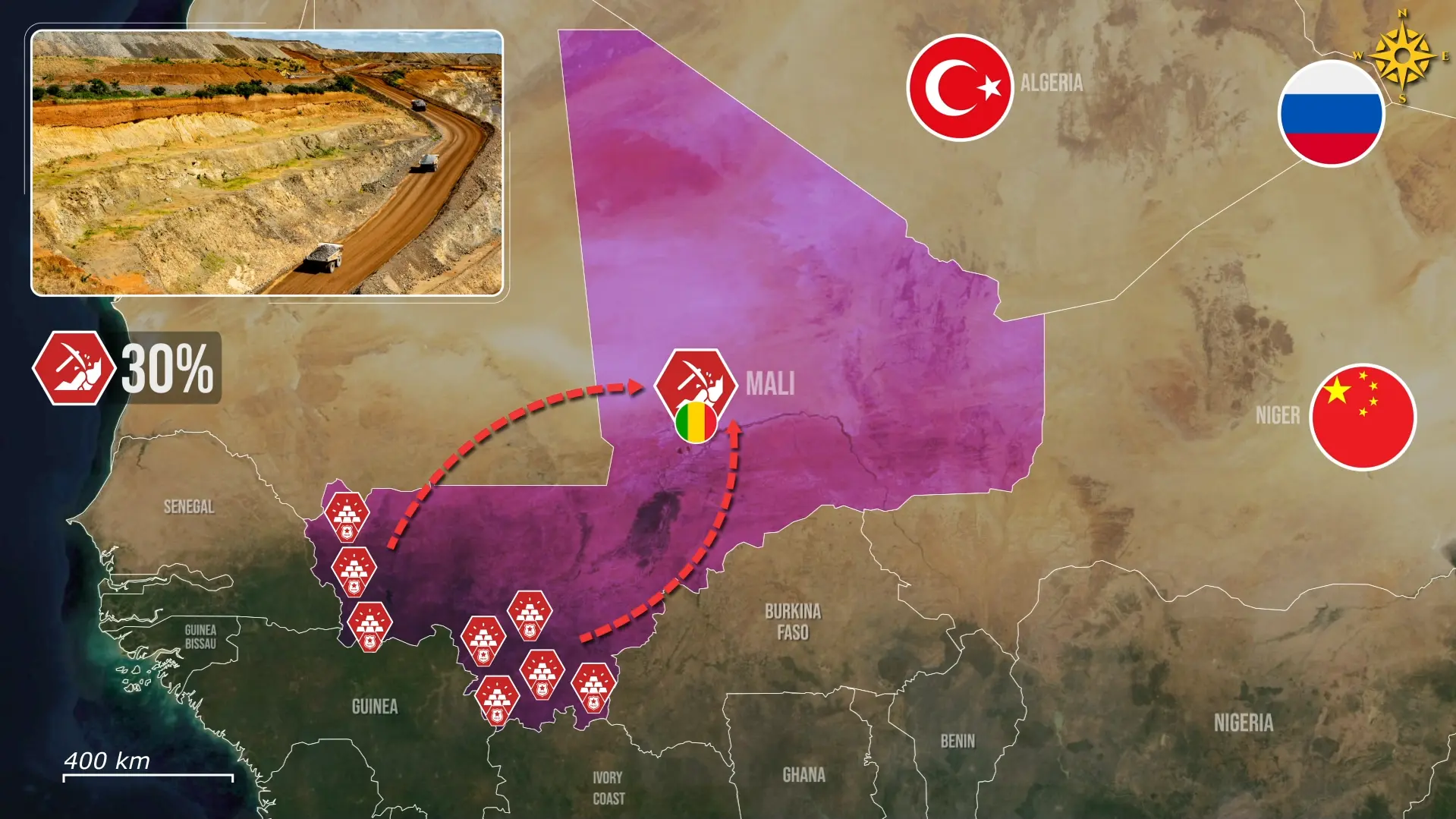
The nationalization intent is not to automatically push foreign players away but to force them to rethink how they operate in Mali, although some may reduce their involvement if they feel the rules are becoming too unpredictable or if they believe the security situation makes investment too risky. In the meantime, others may try harder to win the trust of the authorities by offering military support, infrastructure or political backing in the hope of staying close to the people who now control access to Mali’s gold. Russia faces the greatest pressure because its influence depends heavily on military cooperation rather than broad economic engagement, leaving it vulnerable as Mali asserts greater control over its resources.
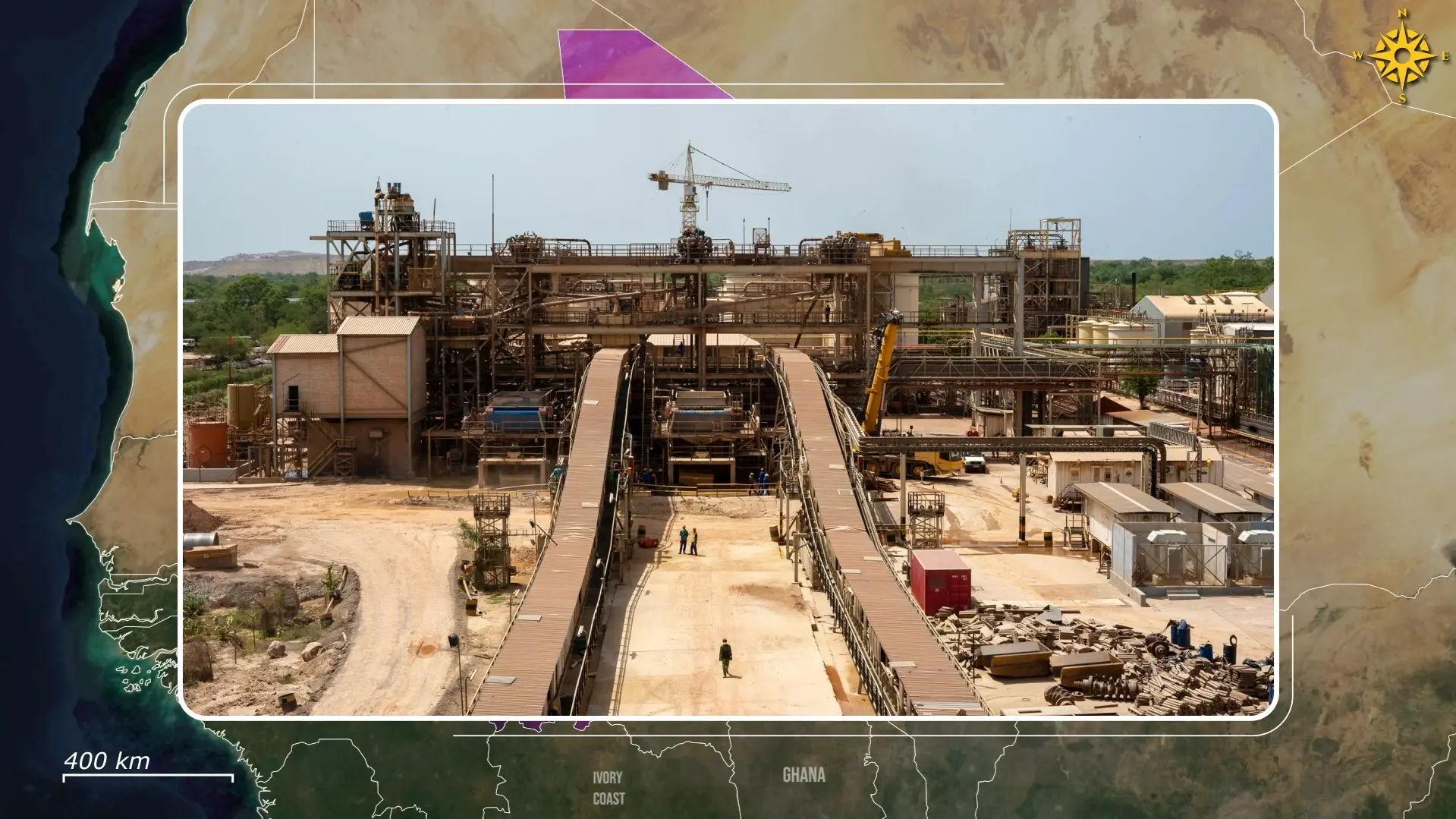
Overall, Mali’s push to nationalize its gold industry is reshaping the competition among foreign powers and forcing each actor to adjust its strategy. Although Russia remains deeply involved, its importance diminishes as Mali changes the rules and other actors increase their presence. Access to gold will likely continue to attract new players, and as long as gold prices rise, Mali has little reason to settle for a single partner. Mali’s leaders now face the challenge of using this competition to strengthen the state rather than becoming more dependent on new foreign partners.
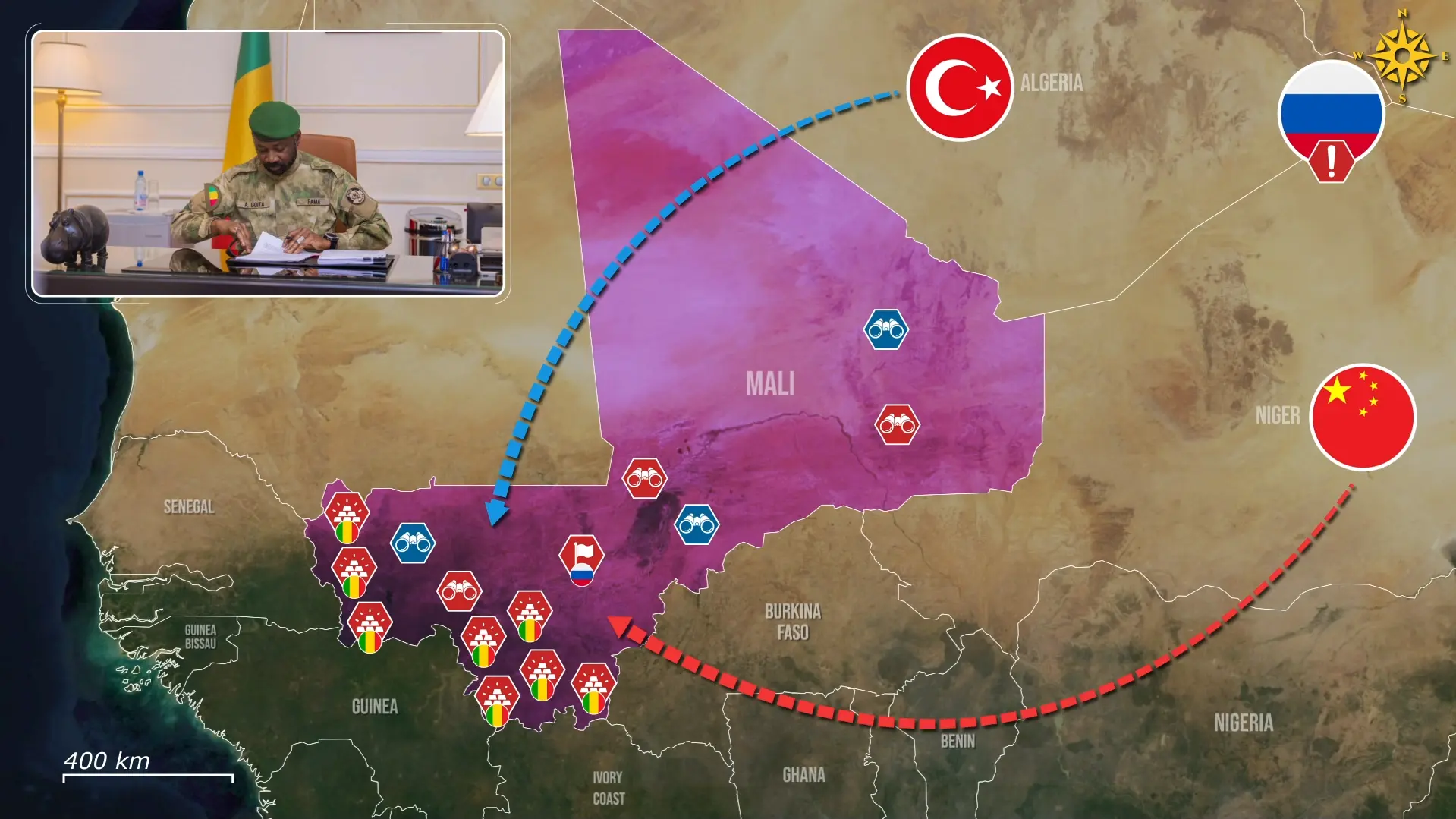

.jpg)

Comments