

.svg)
Russia was just humiliated after one of the world’s largest oil producers was forced to ask India, its biggest crude customer, for additional gasoline to ease the country’s deepening fuel crisis. Rosneft, Gazprom Neft, and Lukoil approached Indian refiners because damaged Russian refineries were no longer producing enough gasoline to meet domestic demand. Moscow had already imported at least sixty thousand metric tons of gasoline from India, an unusual reversal for a country that has traditionally exported refined fuel. At the same time, nearly forty percent of Russia’s refining capacity had remained out of operation for at least two months, sharply reducing the amount of crude oil that could be converted into gasoline and making emergency imports increasingly difficult to avoid. Russia could still extract and export enormous quantities of oil, but it could no longer refine enough of that oil into the gasoline required at home, leaving Moscow dependent on the same country that had spent years buying its crude.
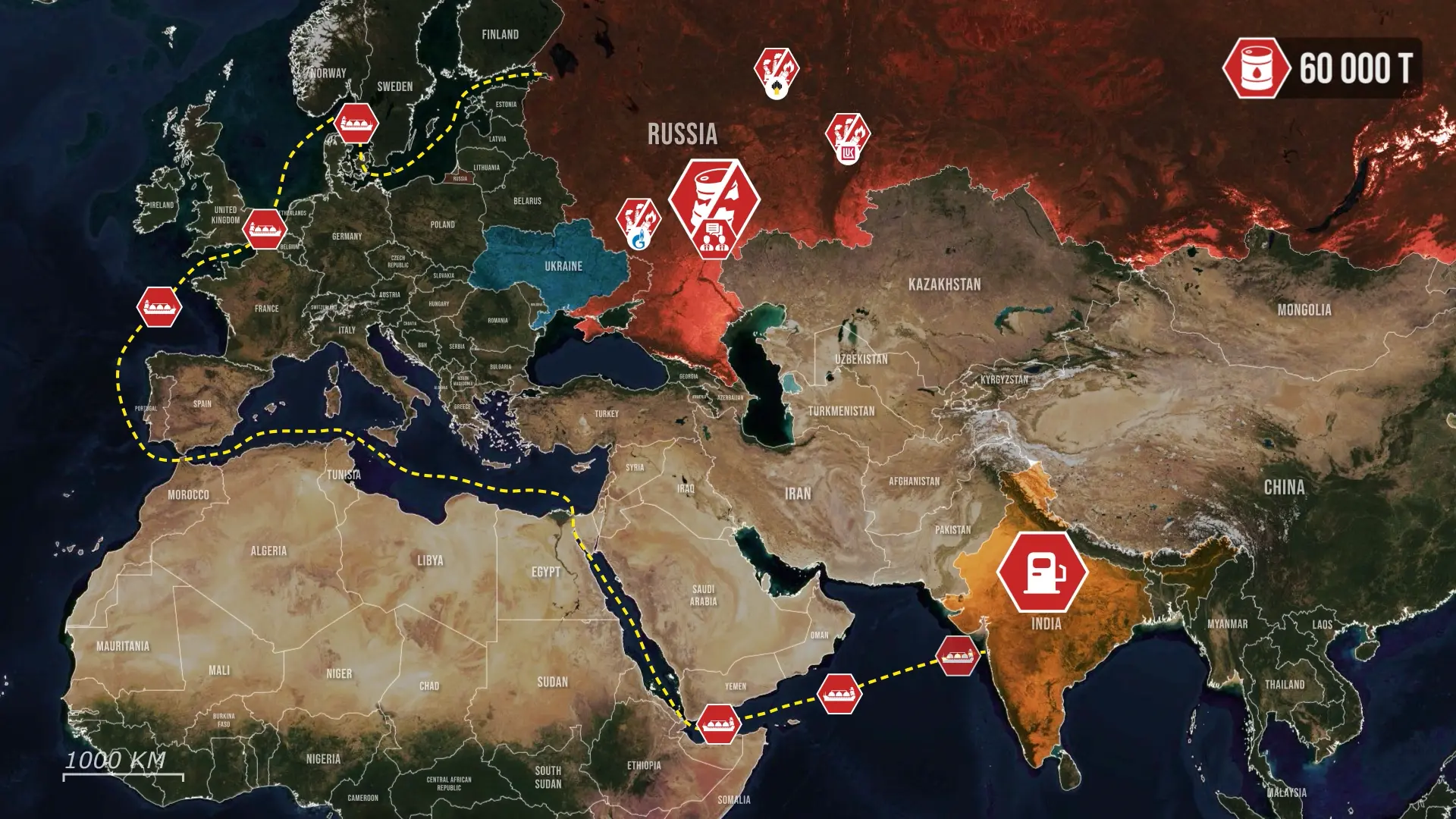
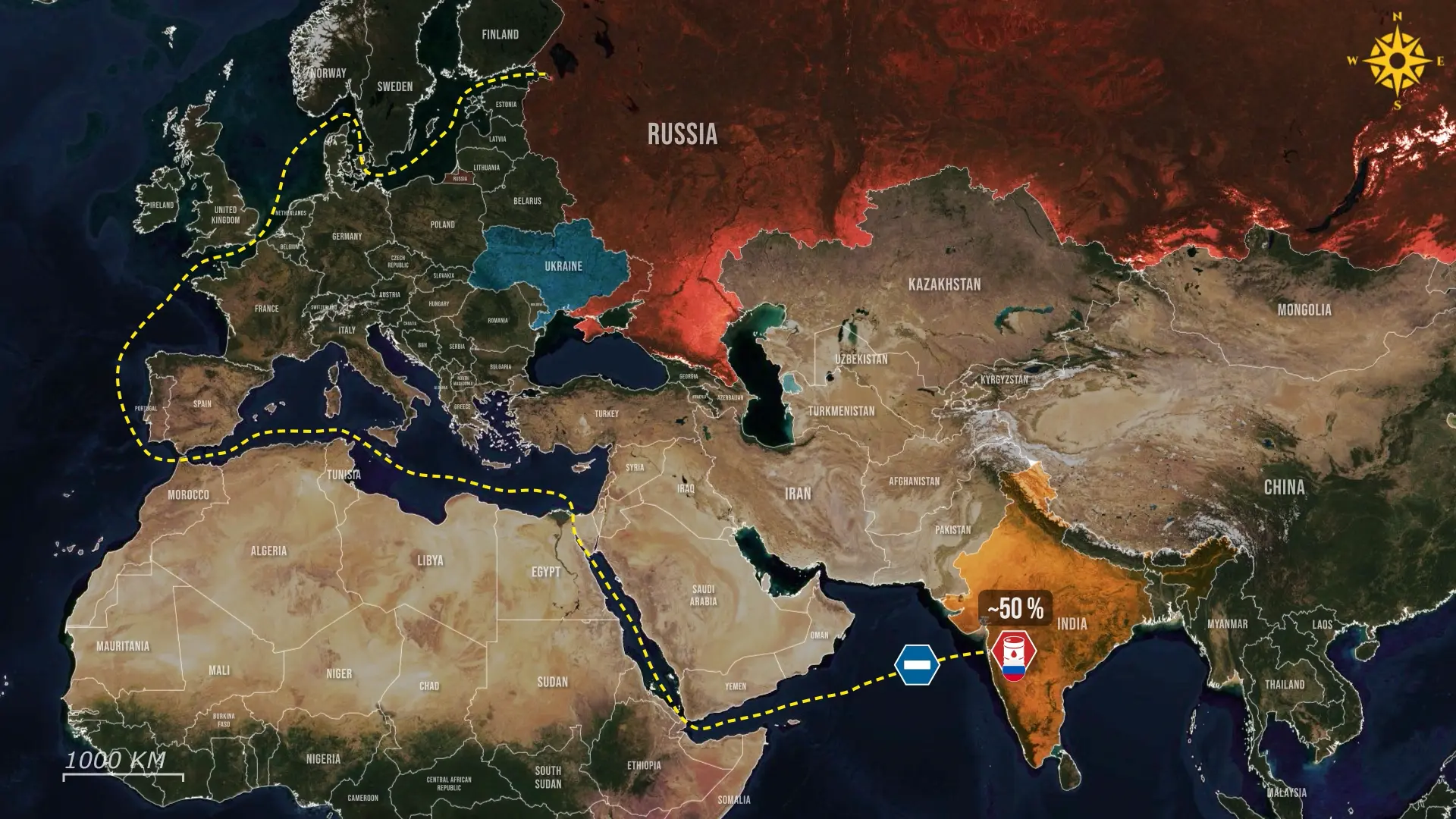
India then closed off that option, as Indian Oil Corporation, Bharat Petroleum, and Hindustan Petroleum told the Russian companies that they had no surplus gasoline available for export. This came despite India importing a record two point six four million barrels of Russian crude per day in June, accounting for roughly half of the country’s total oil imports. Once India refines the Russian crude, it owns the resulting fuel and decides whether it is used at home or sold abroad. Domestic demand and existing supply commitments had already absorbed the volumes available from the Indian oil companies, leaving nothing further for Moscow.
Russia urgently needed those additional volumes because Ukrainian drone strikes had forced major refineries to halt or reduce processing, including Norsi, Russia’s fourth largest refinery and its second largest gasoline producer. By early July, Russian gasoline output covered only around sixty five percent of normal seasonal consumption, leaving roughly one third of daily demand unmet and forcing authorities to rely on emergency measures across the country. Russia still has enormous crude reserves, but every disabled refining unit reduces its ability to convert that oil into gasoline for civilian vehicles, agricultural machinery, and military transport. The problem cannot be solved simply by sending more crude to another part of the country, because gasoline production depends on specialized refinery units that take time and technical expertise to repair. Summer travel and agricultural activity raised demand at the same time that production collapsed, forcing the world’s third largest oil producer to import a finished product made from the same raw resource it exports.

With domestic production unable to cover demand and India offering no additional relief, Moscow is now being forced into a nationwide fuel shortage. Russian authorities have already redirected gasoline from refineries in Siberia and the Urals toward the Moscow region, which consumes roughly six million metric tons per year, concentrating available supply around the capital while increasing shortages elsewhere. Crimea, parts of southern Russia, and several Siberian regions are already facing rationing and purchase limits, while fuel prices continue to rise. Russia has restricted gasoline exports and turned to Belarus and Kazakhstan for emergency supplies, but these measures cannot replace the large volumes lost from disabled domestic refineries. This redistribution may stabilize supply around Moscow temporarily, but it leaves nearby regions increasingly dependent on irregular deliveries and exposes how quickly a national shortage can become a regional political problem. The longer refinery outages continue, the more Russia must sacrifice regional stability and energy export influence simply to keep its most important domestic centers supplied.

Overall, every prolonged refinery shutdown will make Russia more dependent on foreign partners that control their own fuel supplies and will prioritize their own needs first. Moscow’s foreign partners will gain greater leverage over prices and supply terms whenever Russia returns to the market as an emergency buyer. Russia will consequently have less control over where limited fuel supplies are directed, forcing the Kremlin to choose between protecting civilian consumption, supporting industry, or meeting military demand. If this continues, Russia will remain an energy superpower on paper while becoming unable to produce enough usable fuel for its own needs.


.jpg)


Comments