

.svg)
In this video, we will analyze the Ukrainian missile strikes.
Here, Ukraine’s campaign has fundamentally changed as multiple heavy missile strikes have occurred within days. Now, Ukrainian missiles are destroying Russian targets in quick succession, with a devastating result.
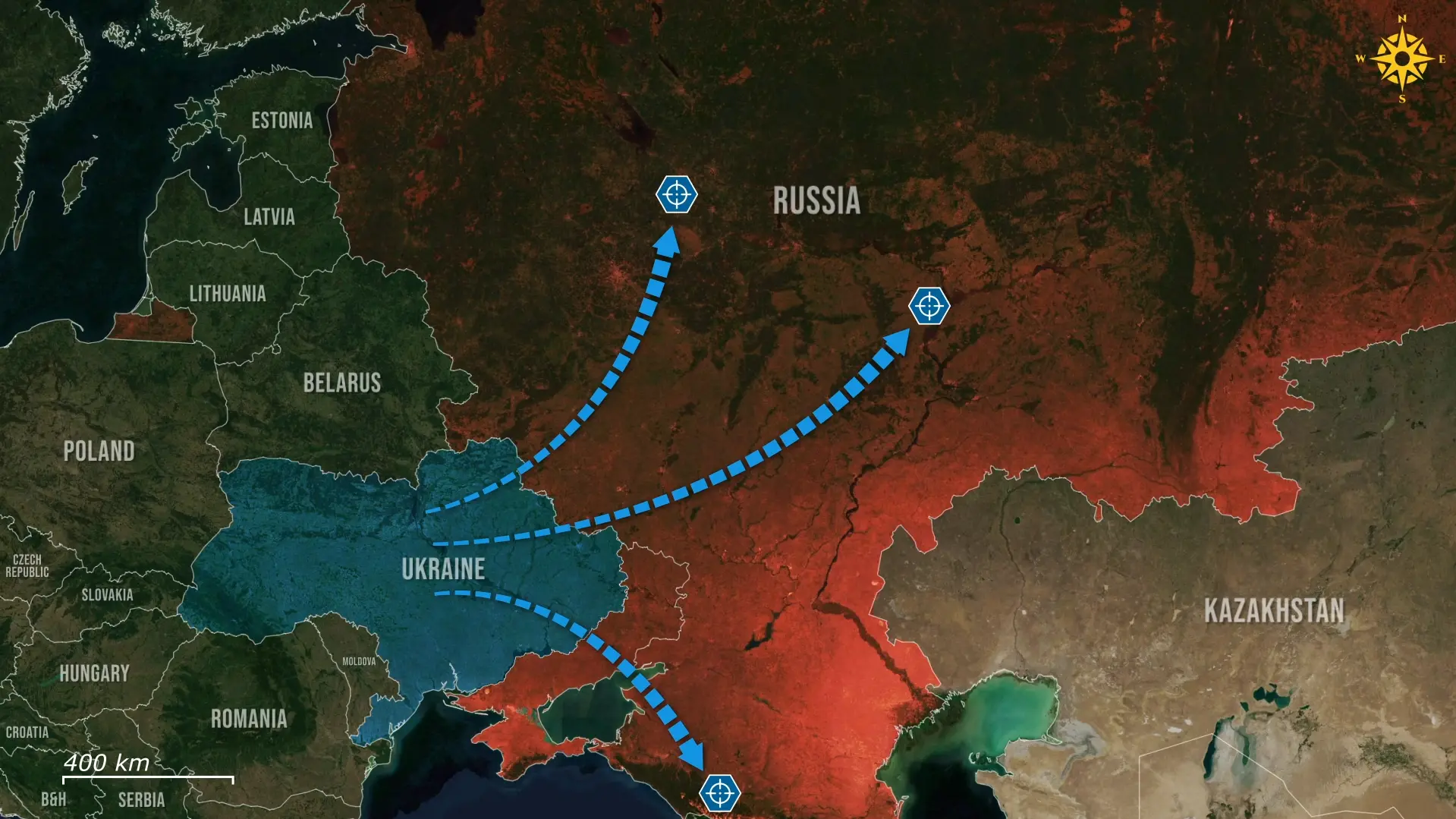
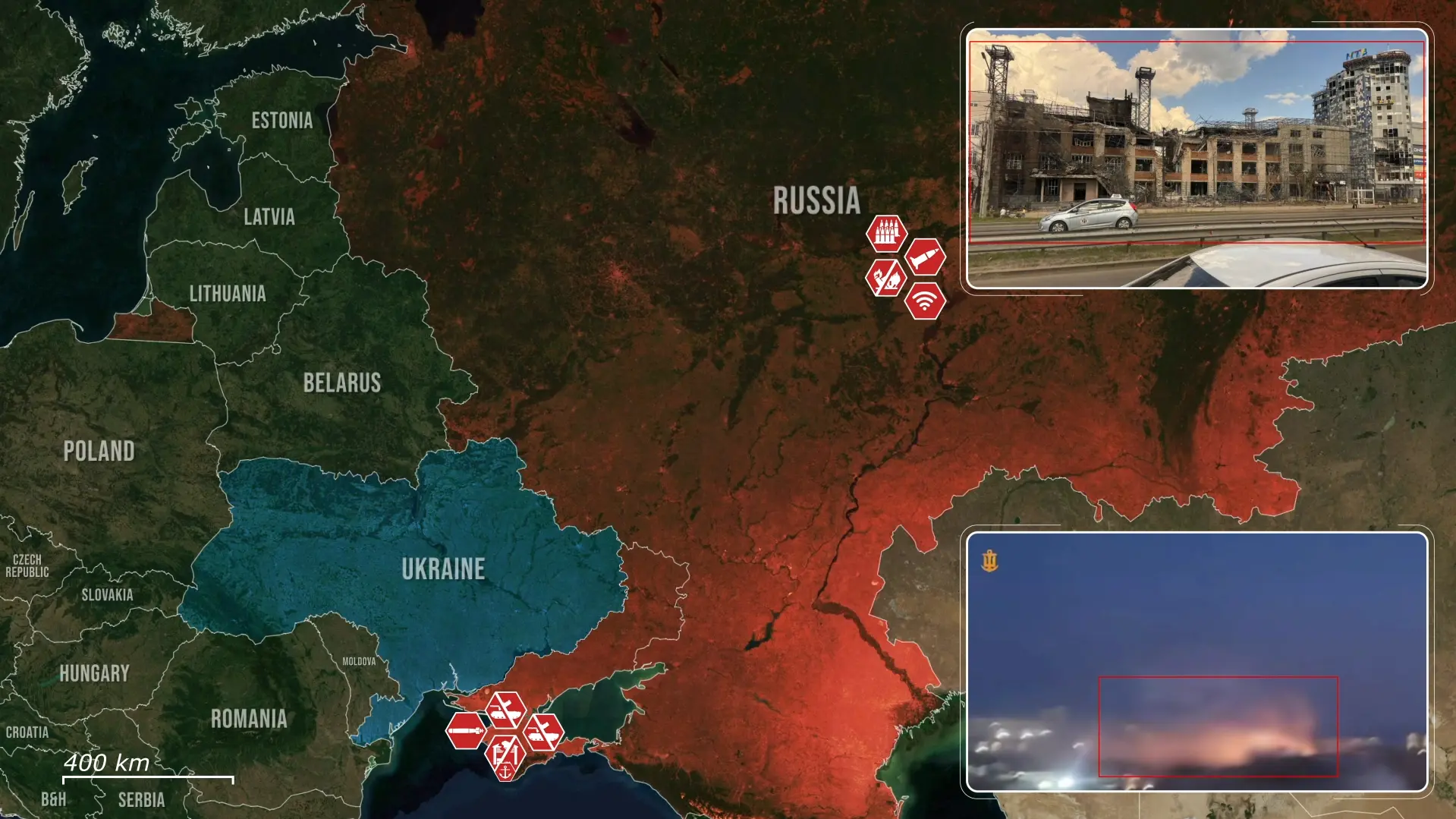
Recently, the heaviest Ukrainian air assaults targeted military production, military logistics, and energy infrastructure within four days. The primary target was the Vniir-Progress plant in Cheboksary, producing components for artillery, Iskander missiles, antennas, and navigation modules, without which Russian combat effectiveness is reduced. Ukrainian Flamingo missiles struck the facility's main building, marking another attack on the plant within just one month. Ukraine even struck the same facility for a third time, hitting it again within forty-eight hours.
Within this four-day period, Ukraine expanded its campaign against military targets in Crimea as well, as Ukrainian Neptune missiles struck a Russian Black Sea Fleet weapons and equipment storage site in Sevastopol. Open-source monitoring indicated that Russian air defenses tracked both waves of incoming missiles but were unable to intercept all of them. The strike destroyed a warehouse containing weapons and military equipment, reducing Russia’s maritime capabilities.
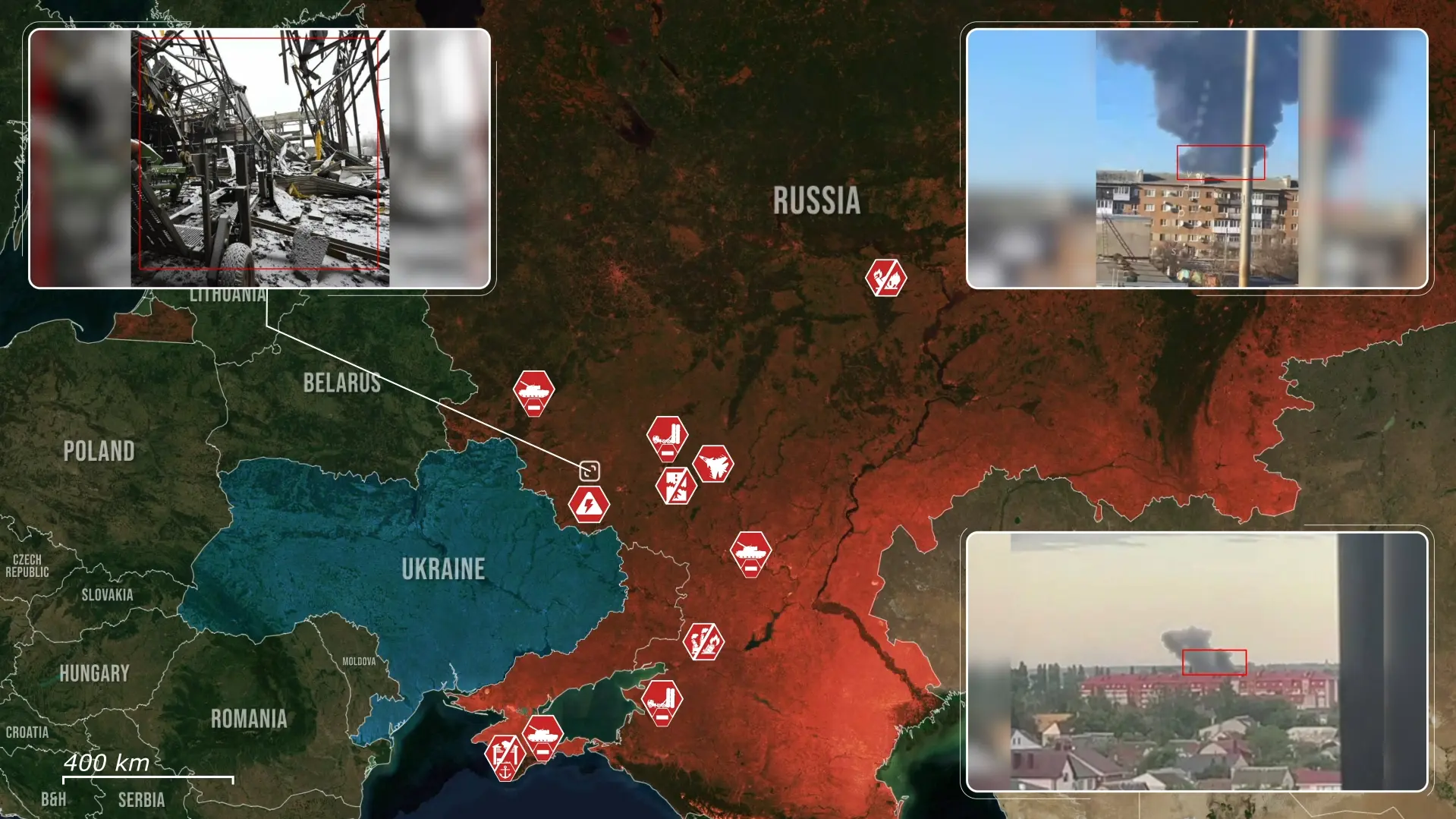
Soon after, Ukraine followed up with another Neptune missile attack against the Novoshakhtinsk Oil Refinery, damaging the two primary oil processing units of the key supplier of diesel and aviation fuel to Russian forces in southern Ukraine.
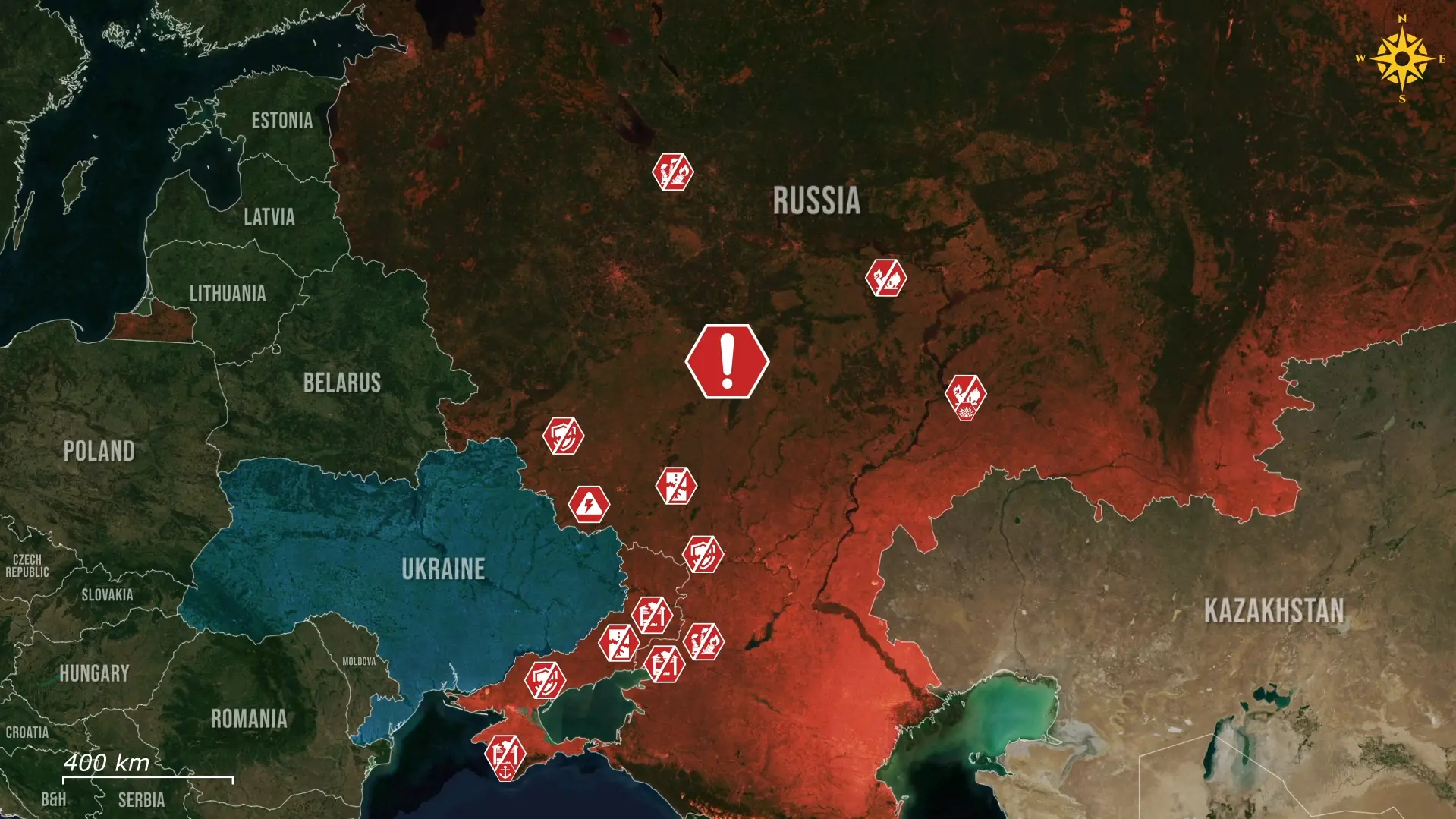
The short time frame of these strikes makes them even more significant, allowing them to overwhelm Russian air defenses and enabling even more attacks. After Russia’s defenses were saturated, Ukraine targeted the Baltimor Air Base in Voronezh with a long-range missile. It hosts Su thirty-four fighter-bombers, which Russia uses to bombard Ukrainian fortifications. By depleting Russia’s air defenses with frequent missile strikes, Ukraine could conduct another missile strike and damage local energy infrastructure in Belgorod, causing disruptions to both electricity and water supplies in parts of the region, as confirmed by Russian officials.
Prior to the rapid-fire strikes, Ukraine prepared the ground for them by carrying out a combined missile and drone strike against a logistics facility in Taganrog. It serves as an important logistics hub and plays a key role in sustaining Russian military operations. As part of the frequent missile strikes, Ukraine also continued its campaign against Russia's defense industry. In this strike, Flamingo cruise missiles were used to strike the Promsintez explosives plant in Chapayevsk, triggering an explosion in the production area. The facility produces more than thirty thousand tons of military-grade explosives annually, making it a critical component of Russia's military-industrial base. Another strike targeted an oil refinery in Yaroslavl, where Nasa satellite data confirmed a significant fire. The refinery was struck multiple times before, halting the production of fifteen million tons of crude oil annually.
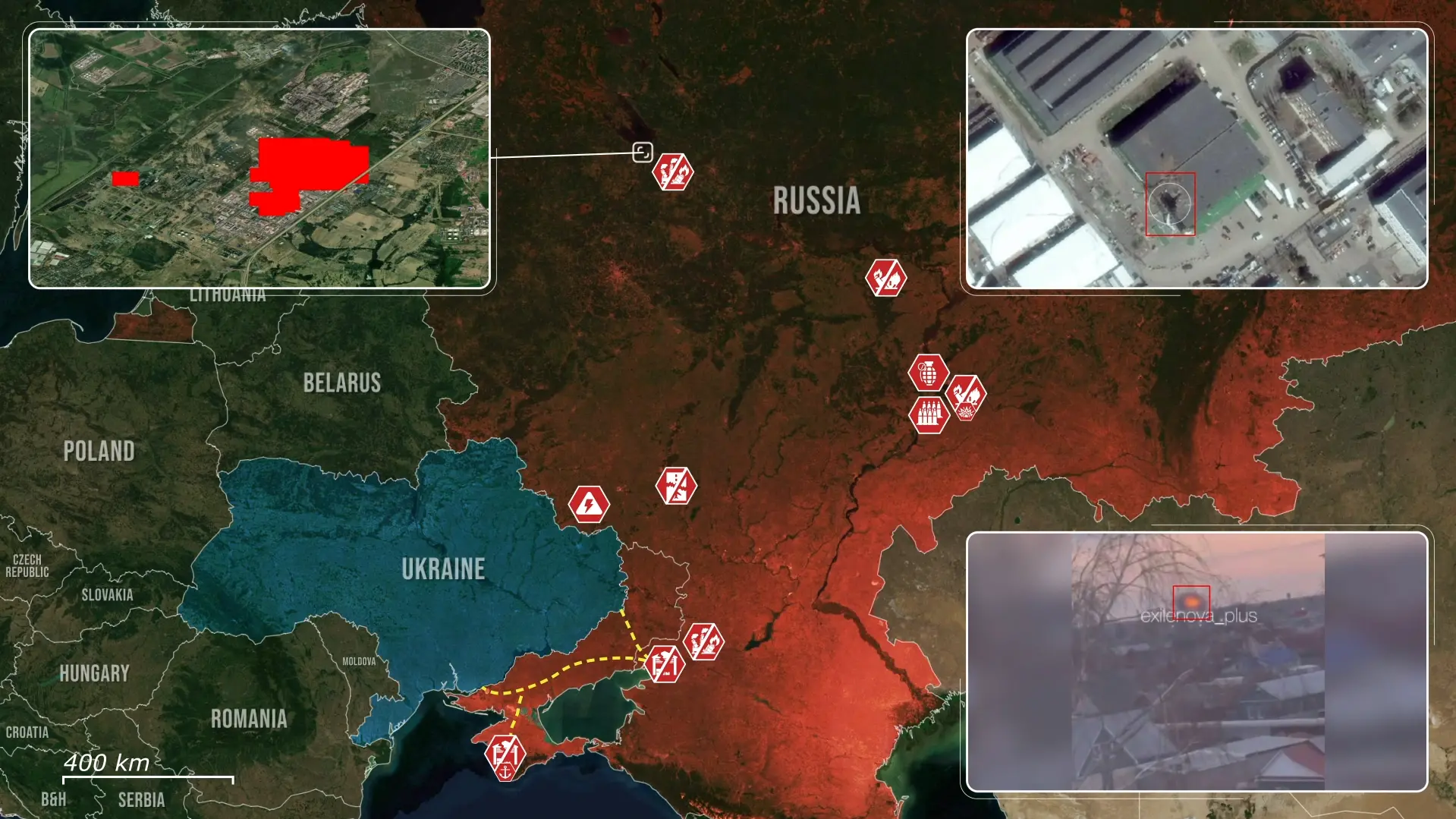
In addition to its domestically produced missiles, Ukraine simultaneously employed Western-supplied long-range weapons as part of the same expanding strike ecosystem. Scalp cruise missiles, provided by the United Kingdom and France, were used alongside other precision-guided munitions in a strike on Russian drone infrastructure near Donetsk Airport, which destroyed a Shahed drone storage, preparation, and launch complex, triggering secondary detonations. This infrastructure was strategically important as Russia launched Shahed strikes every night on Ukraine, and they could quickly reach Ukraine from this position.
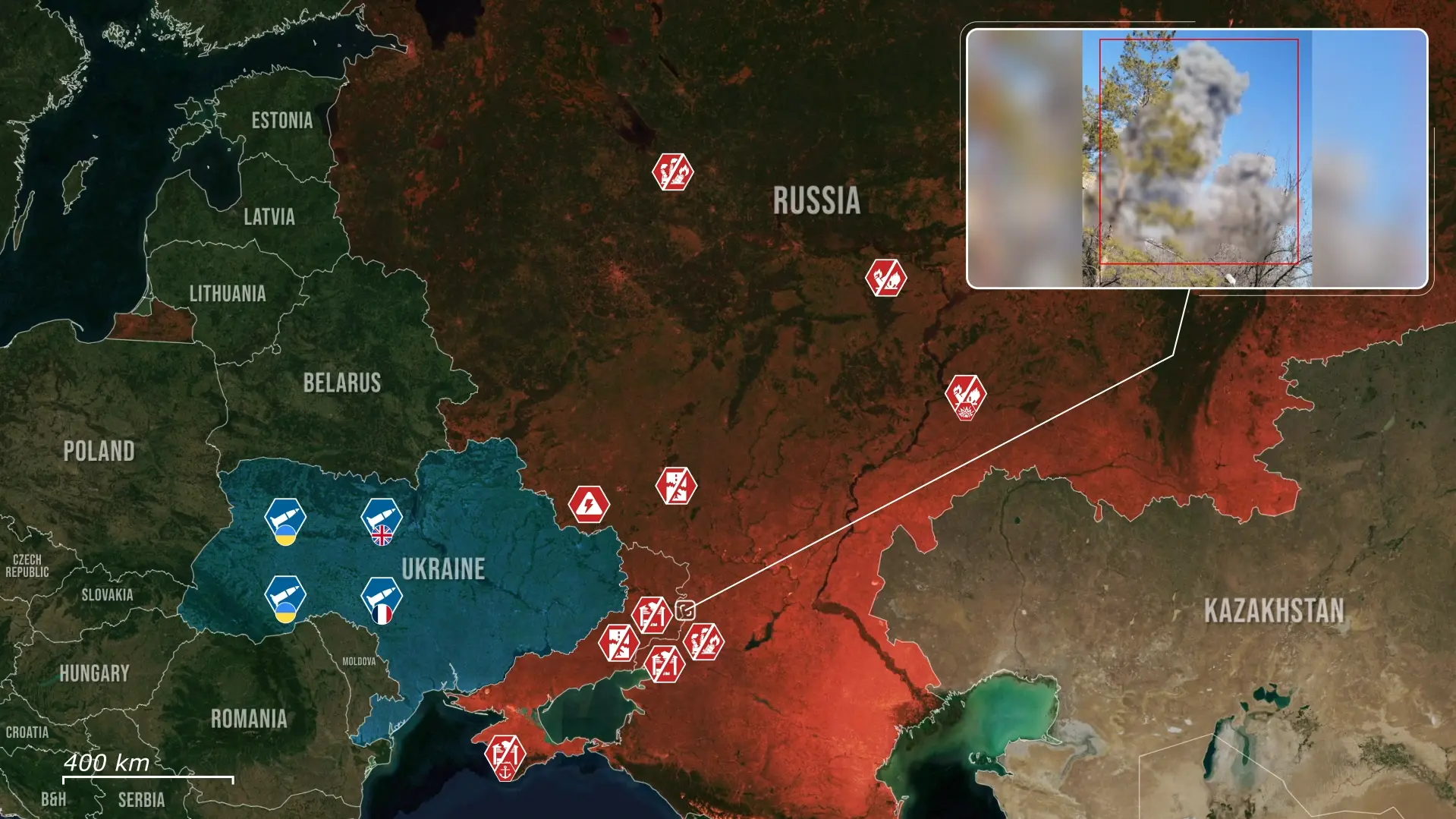
This increasing tempo of Ukrainian missile strikes has been driven largely by significant improvements in the Flamingo missile system. Its simplified deployment process, which eliminates the need for specialized military launch vehicles, allows Ukraine to disperse launch platforms more effectively and carry out strikes with greater frequency. At the same time, expanded production capacity has strengthened this operational advantage, providing sufficient missile stockpiles to sustain high-intensity campaigns such as the recent four-day strike series. As a result of these developments, the program has also attracted growing international interest, including reported German consideration of participation in or support for future production.
Ukraine can currently manufacture three Flamingo missiles per day, which has greatly improved its ability to conduct sustained strikes. This was demonstrated by the strikes on the Vniir-Progress defense plant, where repeated attacks caused substantial damage, making them even deadlier. Now, Russia can no longer assume it will have enough time to repair damaged facilities before being struck again, while at the same time, repeated Ukrainian strikes can ensure some of them won’t be repaired at all.
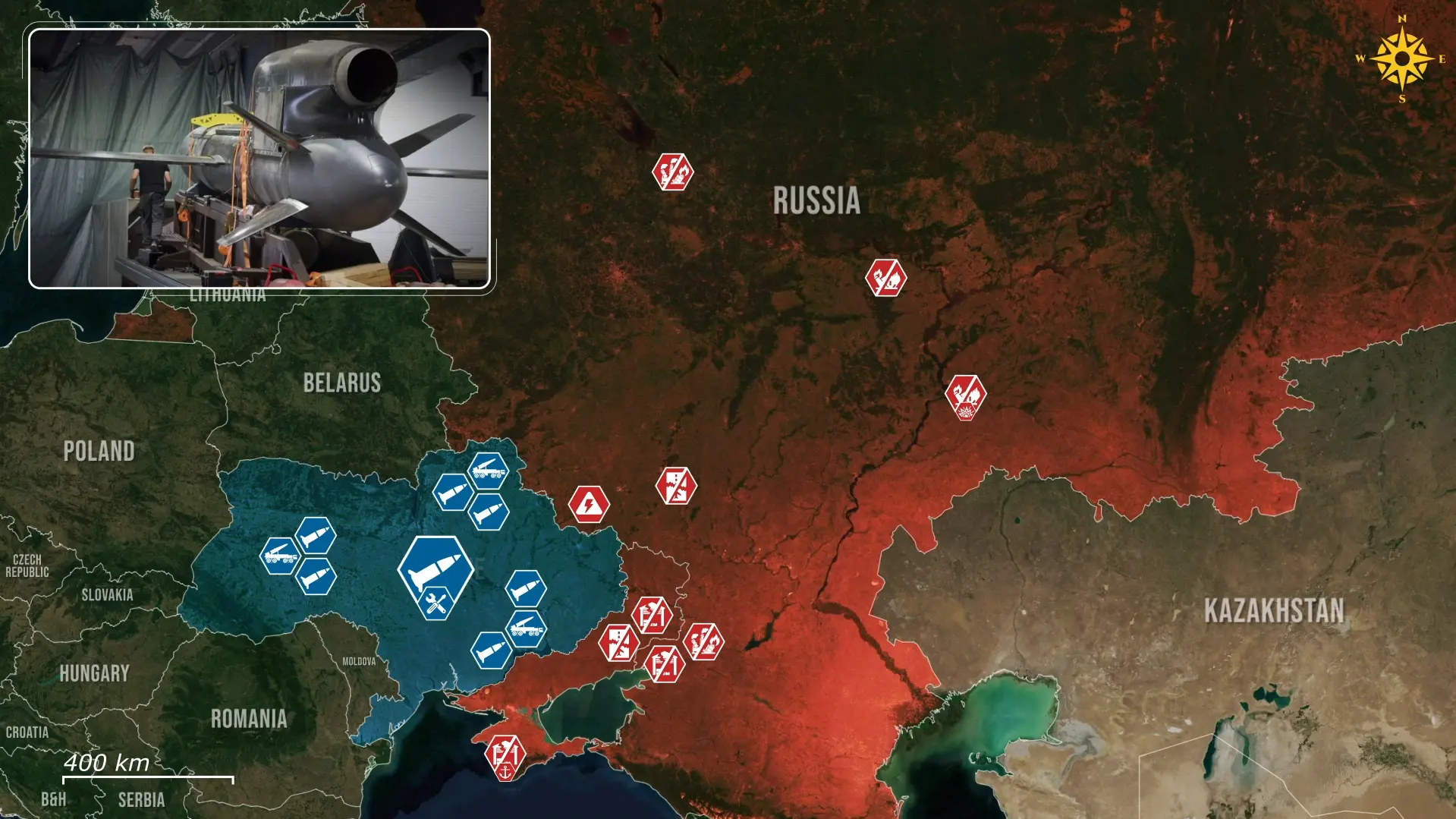
Overall, these strikes demonstrate a major shift in Ukraine's long-range strike capabilities, allowing it to sustain a tempo of missile operations that was previously impossible. As production of the Flamingo missile continues to expand, Russia's military infrastructure is becoming harder to defend. Russia is now unable to absorb damage at the same rate that Ukraine can conduct new missile attacks, making Russia increasingly vulnerable to a growing accumulation of key losses.

.jpg)




Comments