

.svg)
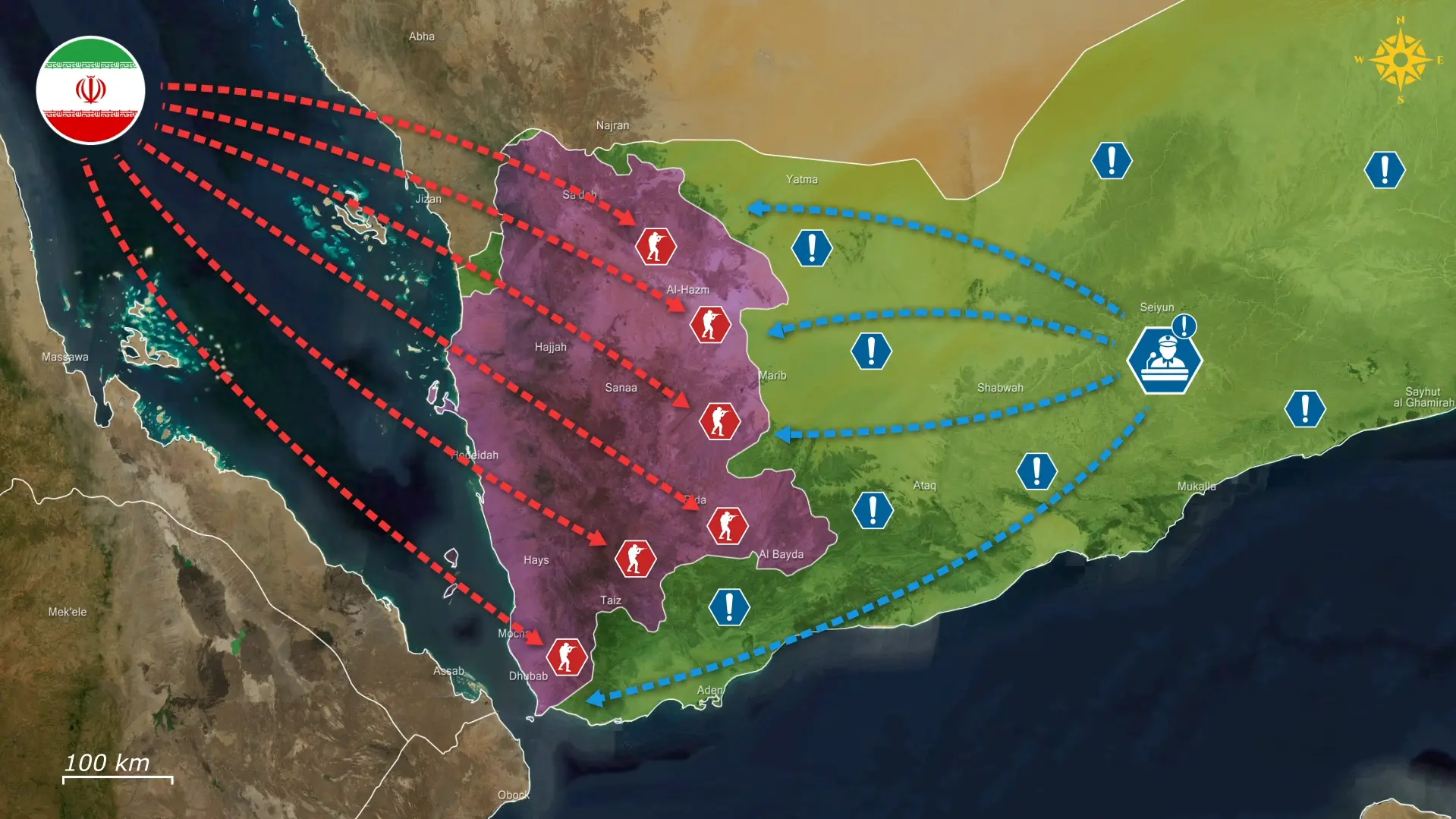
The latest escalation in Yemen has brought the Bab el-Mandeb Strait and the Houthis’ links to Iran back to the center of the conflict, marking the most significant change on the battlefield since the two thousand twenty two ceasefire reduced large-scale fighting. The conflict pits the Houthi movement, which controls most of northern and western Yemen, against the internationally recognized government and its allied forces, led by the Presidential Leadership Council or the PLC, which serves as the government’s main leadership body. The anti Houthi camp, however, remains divided between forces backed by Saudi Arabia and the UAE. This fragmentation has repeatedly limited its ability to coordinate military operations.
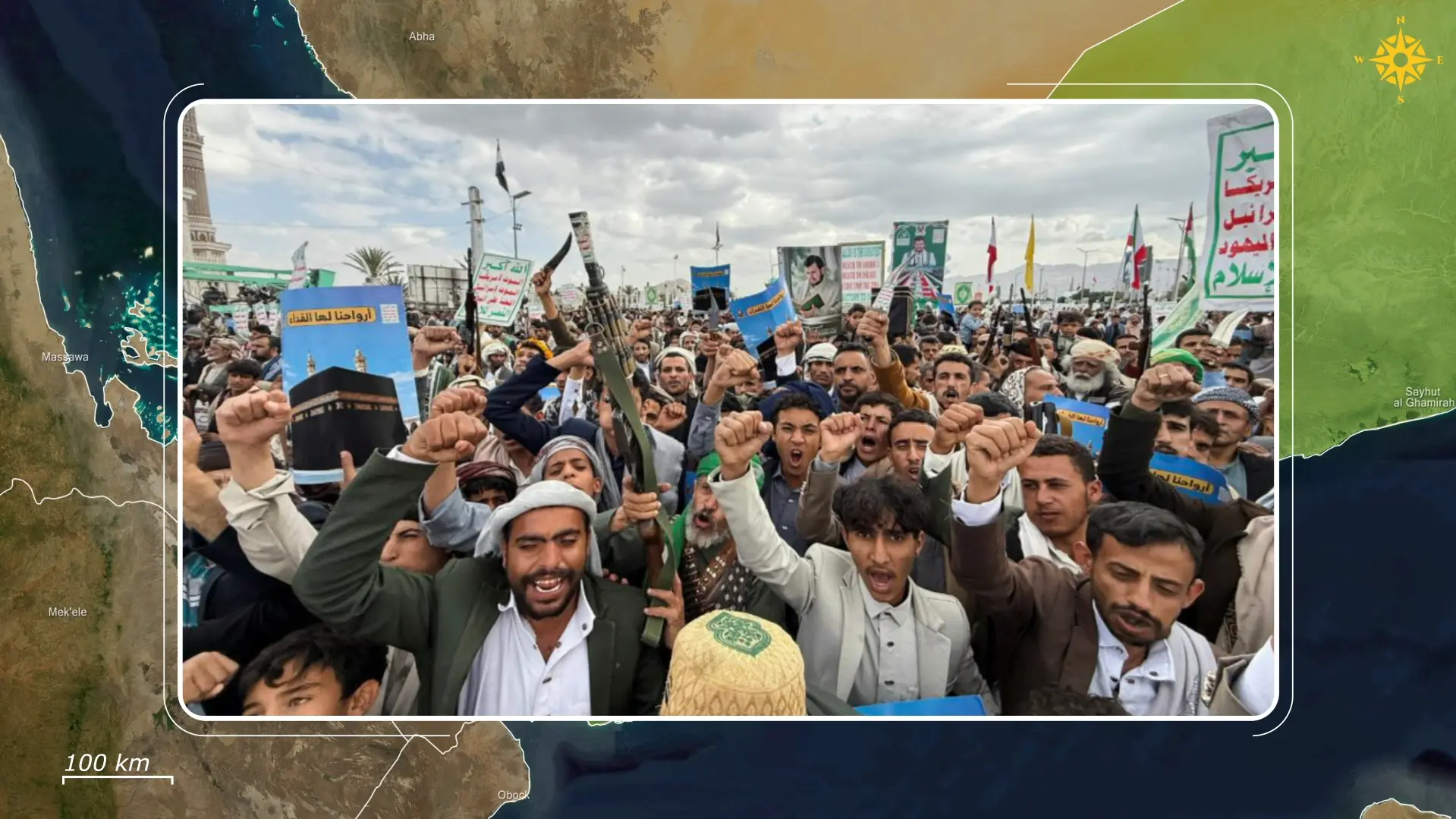
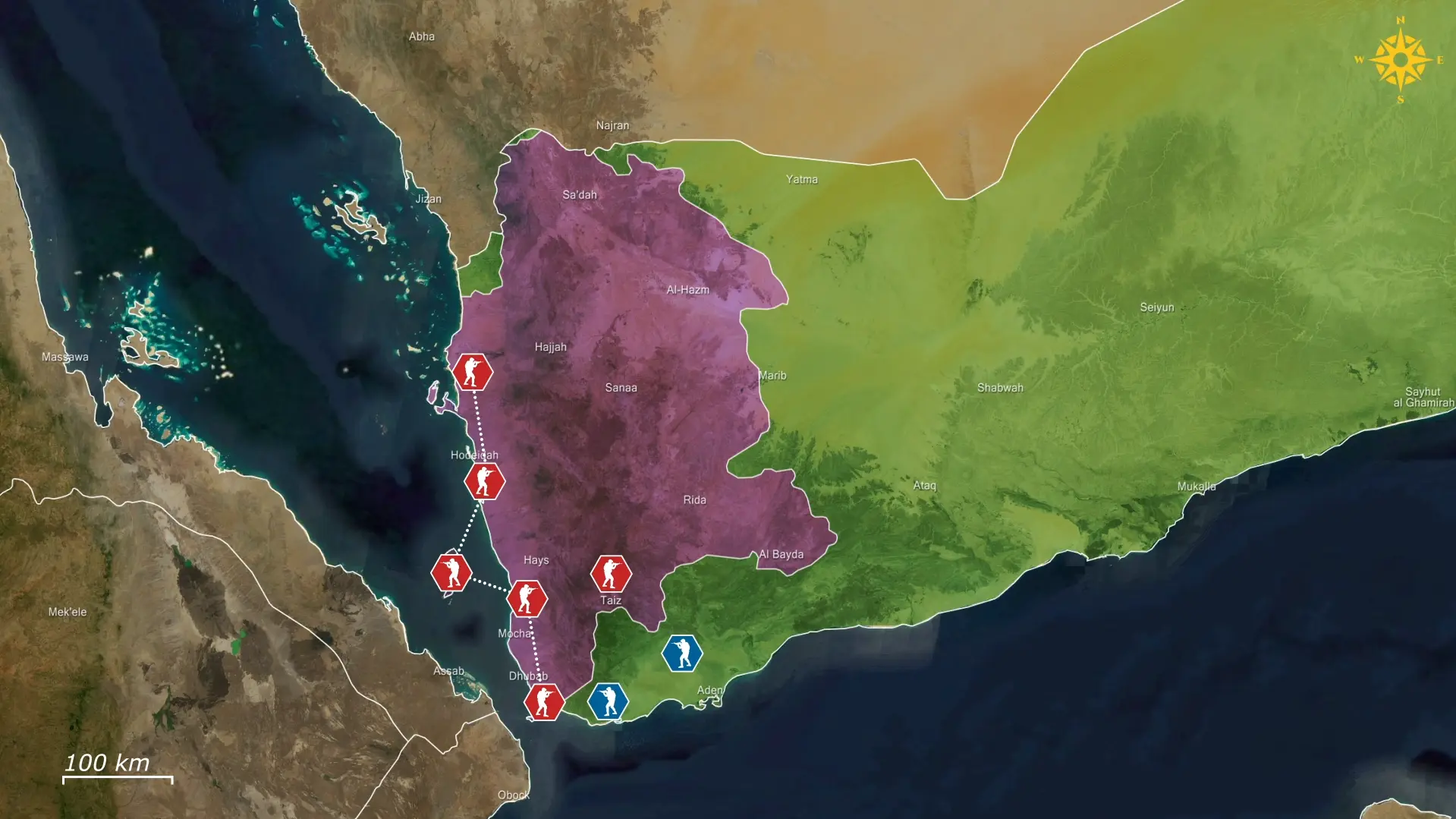
In early September, the Houthis launched a major offensive across western Taiz and southern Hodeidah, pushing toward the Red Sea coast. Government forces initially mounted counterattacks and made gains on several fronts, but the Houthi advance accelerated over the following days. By the eleventh of September, Houthi forces had reached the Bab el-Mandeb area, fundamentally changing the military situation in southwestern Yemen.
The main effort focused on western Taiz and southern Hodeidah, where Houthi forces used missiles, drones and artillery to support ground attacks against the National Resistance Forces. After breaking through the defensive line around Al Kudha and Maqbanah, the Houthis expanded southward while government forces began abandoning isolated positions.
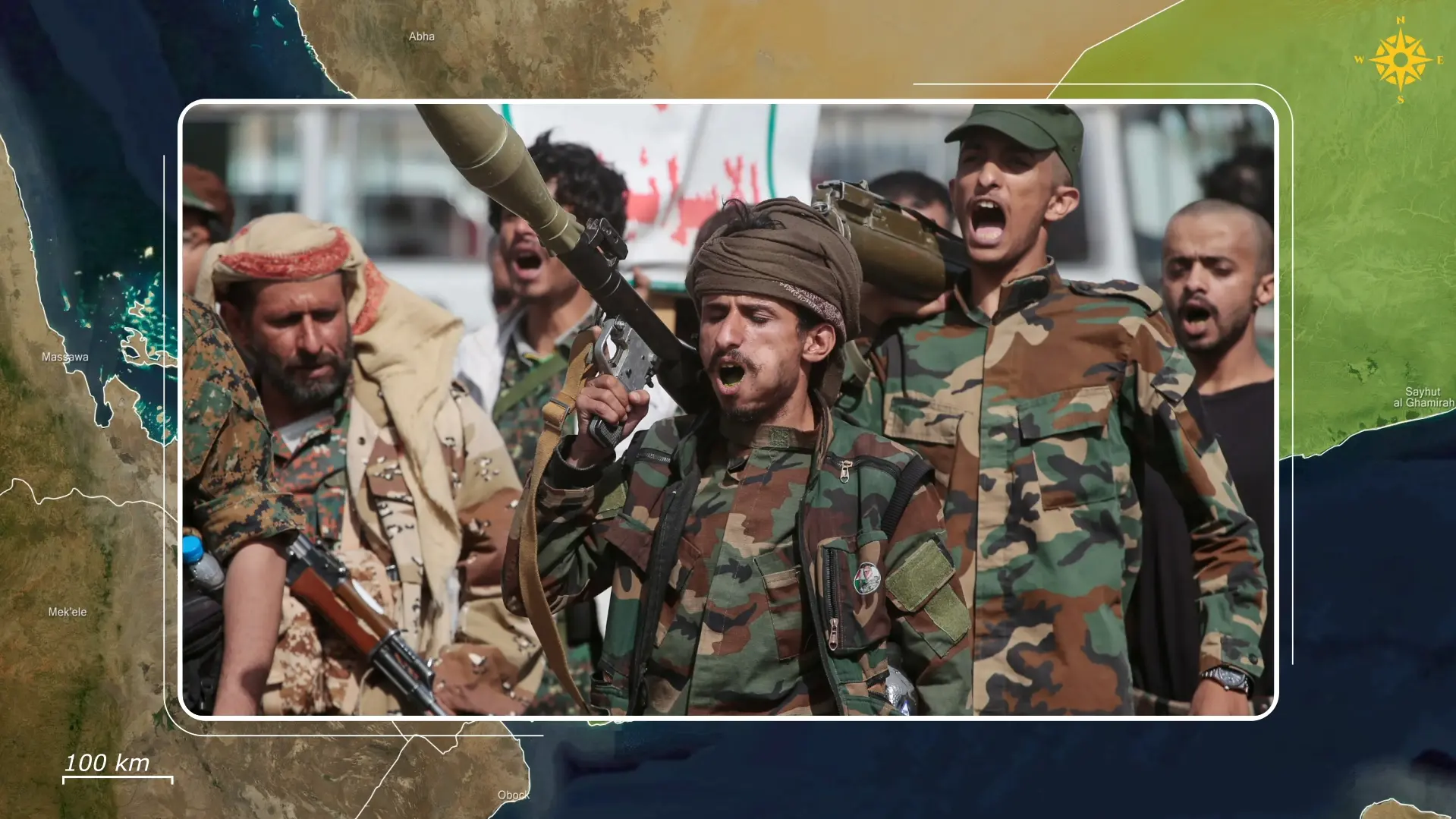
They captured Hays and pushed through areas north of Mokha, eventually seizing the port city on the tenth of September. From there, the advance accelerated towards the Bab el-Mandeb. Dhubab, the government’s last remaining Red Sea port, fell on the eleventh of September, while Houthi forces also reached and took control of Perim Island in the center of the strait. The Houthis also captured the Greater and Lesser Hanish islands, extending their control beyond the mainland coast. The result was a continuous Houthi controlled corridor from the northern Red Sea coast towards Bab el-Mandeb.
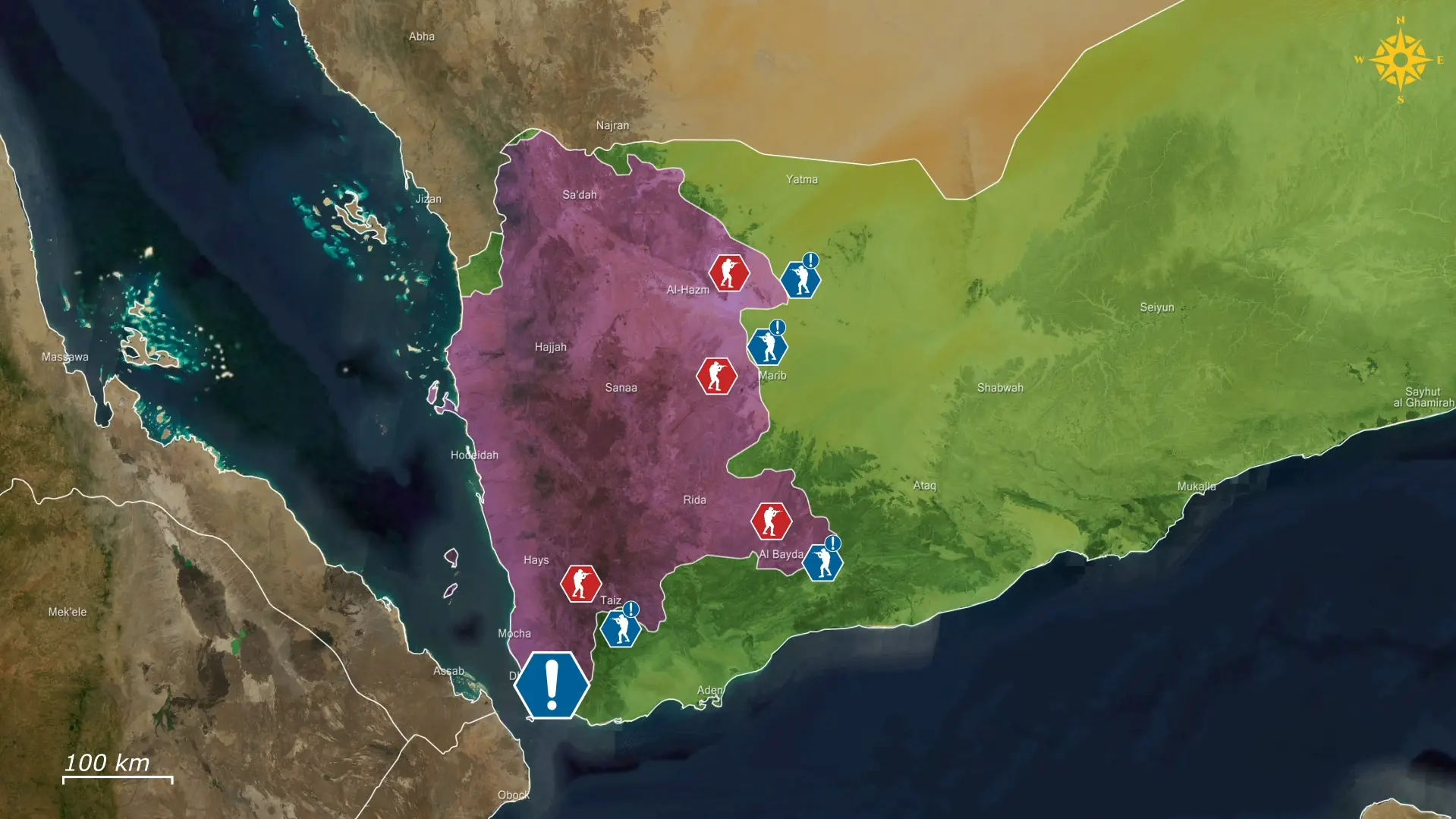
The PLC response initially developed into a broad counteroffensive designed to pressure the Houthis across several fronts simultaneously. In al-Jawf, government forces advanced from the Innab area and captured the Suwayqah and al-Labanat military camps, while fighting also expanded toward Yatma and the approaches to al-Hazm. In al-Bayda, PLC forces opened another axis toward Dhi Na’im, adding pressure on Houthi positions beyond the western front. Government units also reported advances around Bani Bakari and other positions west of Taiz. Taken together, these advances could have opened several new fronts against the Houthis, forced them to divert forces from the western coast, and given government forces greater leverage to regain territory and disrupt the Houthi offensive. However, these gains did not prevent PLC forces from withdrawing from positions around Hays and other areas. This left the western coast increasingly exposed as the Houthis advanced toward Mokha and Bab el-Mandeb.
The key consequence of Houthi control over Bab el-Mandeb is not an immediate closure, but the creation of a much more dangerous maritime environment. Houthi positions on Perim, Dhubab and the adjacent coast place their weapons and surveillance assets much closer to the main shipping lanes, increasing the range of options available for coercion or attack. The effect was already visible on September twelve, when Bab el-Mandeb crossings fell from thirty vessels the previous day to fifteen, while Saudi crude shipments increasingly avoided the strait in favor of safer routes.
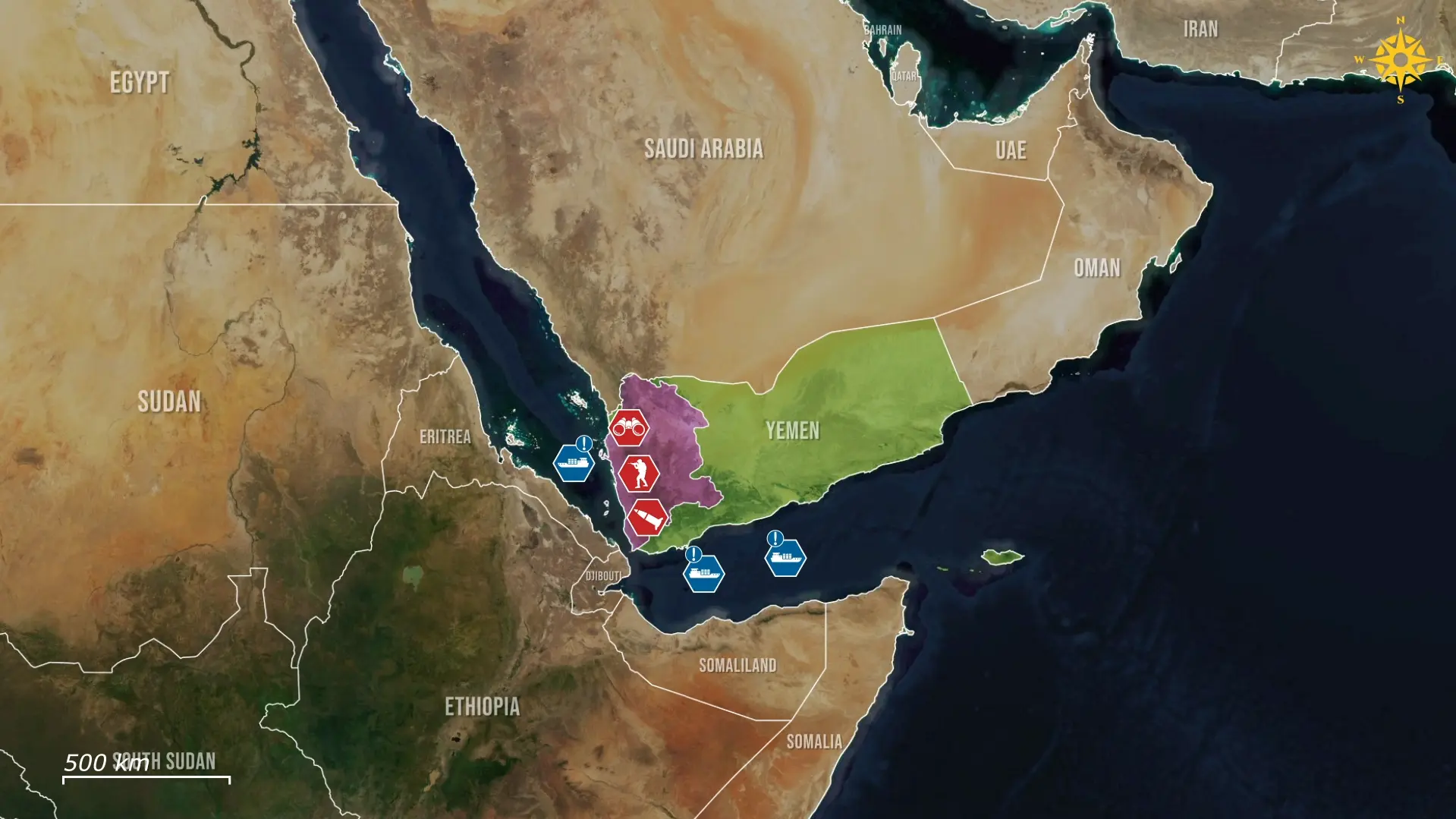
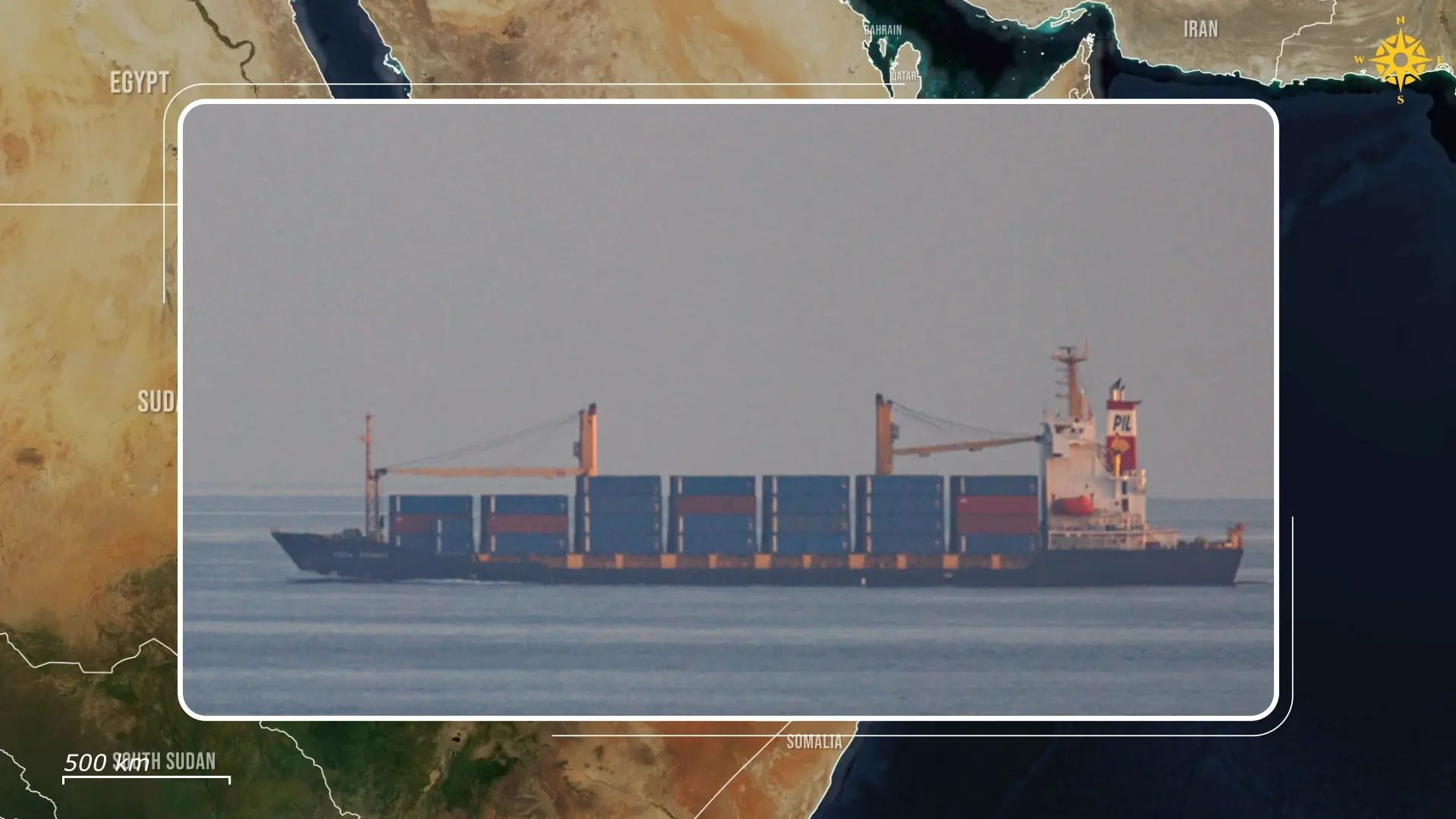
For vessels that would otherwise use the Red Sea route between Asia and Europe, avoiding Bab el-Mandeb means longer voyages around Africa, increasing fuel and operating costs while heightened security risks can raise insurance and freight rates. Saudi Arabia can bypass Hormuz by sending oil through a pipeline to Yanbu on the Red Sea. Shipments heading north toward Suez avoid Bab el-Mandeb, but those sailing south toward Asia still pass through it, exposing that alternative route to pressure from Iran’s Houthi allies.
Overall, the Houthi offensive has strengthened the maritime dimension of the war by extending their territorial gains toward Yemen’s Red Sea coast and the approaches to Bab el-Mandeb. For Iran, the gains of its Houthi allies could increase its regional influence without requiring Iranian forces to capture the strait themselves. Protecting shipping now adds another demand on the same divided government forces already struggling to hold territory. For the government, this creates a new strategic problem, because it must decide whether to reinforce the western coast to contain the Houthi advance, redirect forces from other fronts, or prioritize securing the remaining positions and preventing further territorial losses.

.jpg)


Comments