

.svg)
Today, the biggest development is coming from inside Russia itself.
Here, Russian partisans fighting on the side of Ukraine conducted a large-scale operation deep into enemy-held territory that paralyzed the Russian railway logistics.
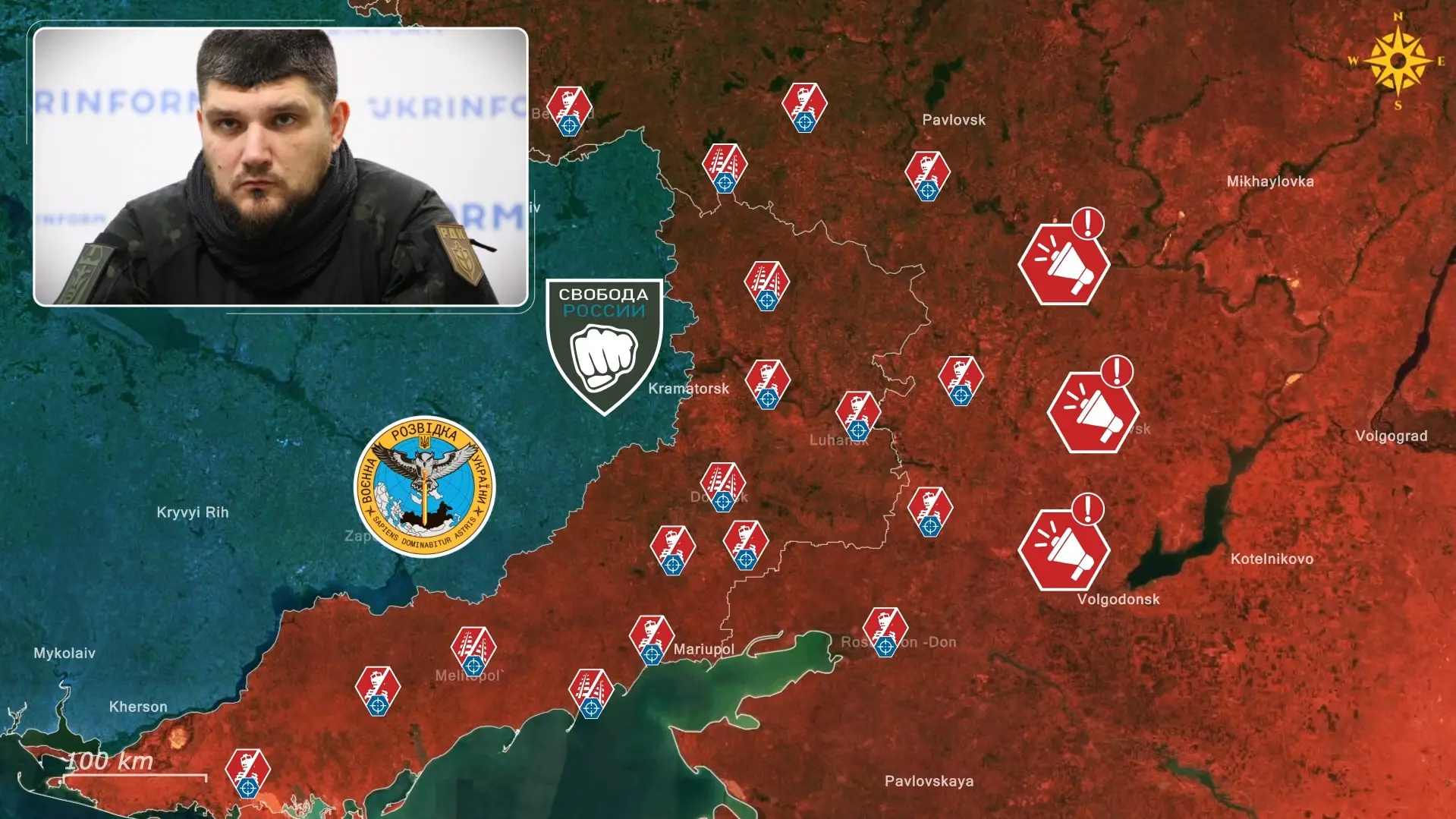
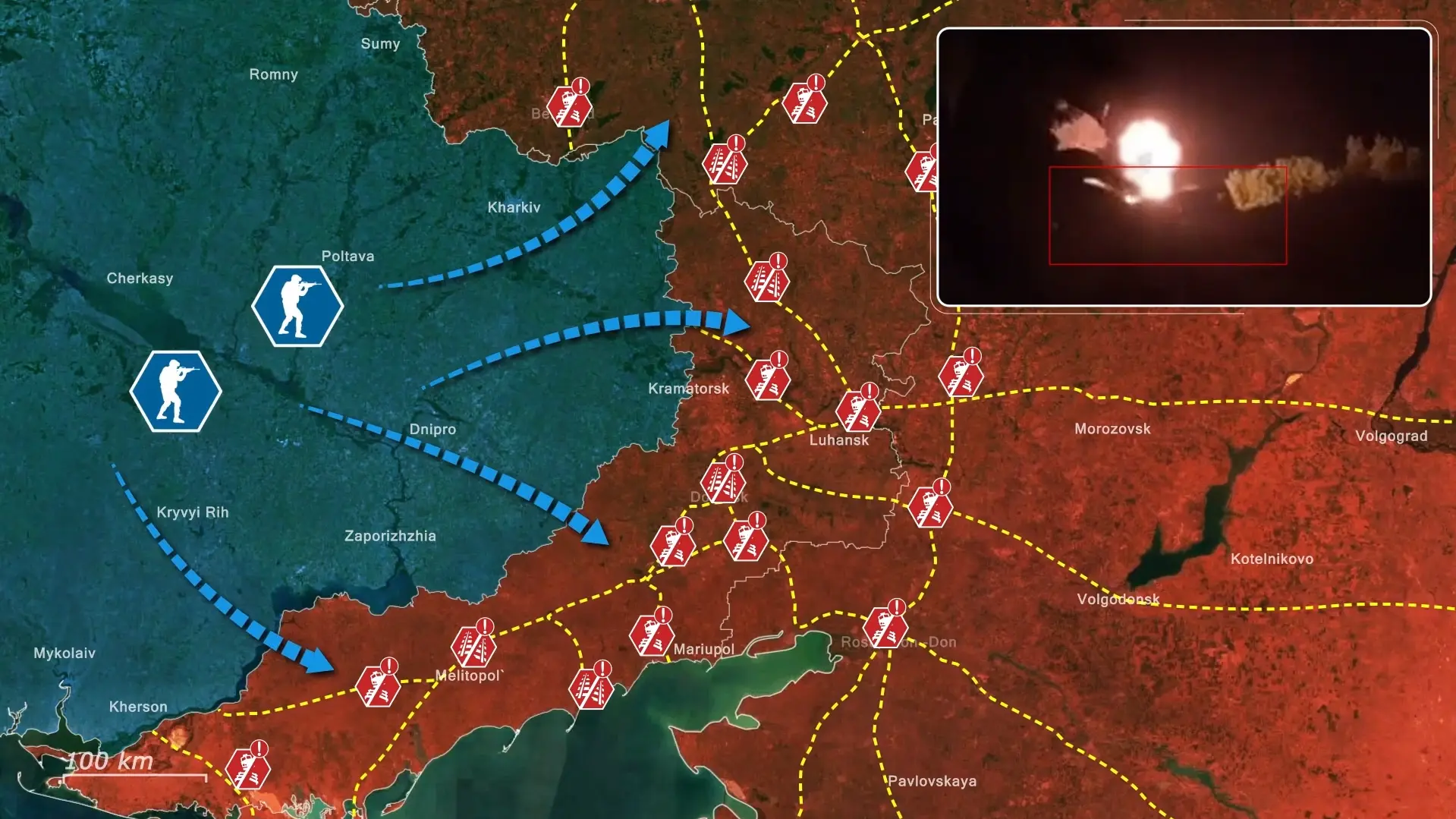
The main Ukrainian intelligence Directorate or GUR, recently released footage of this truly historic covert operation. Russian citizens fighting for Ukraine in the Freedom of Russia Legion were sent to infiltrate all across Russian-controlled Ukraine in one unified operation. Speaking Russian and pretending to be citizens of the Russian proxy states in Donbas, they remained undetected as they moved toward their target, the most critical component of the Russian army’s entire logistics network: their railway lines.
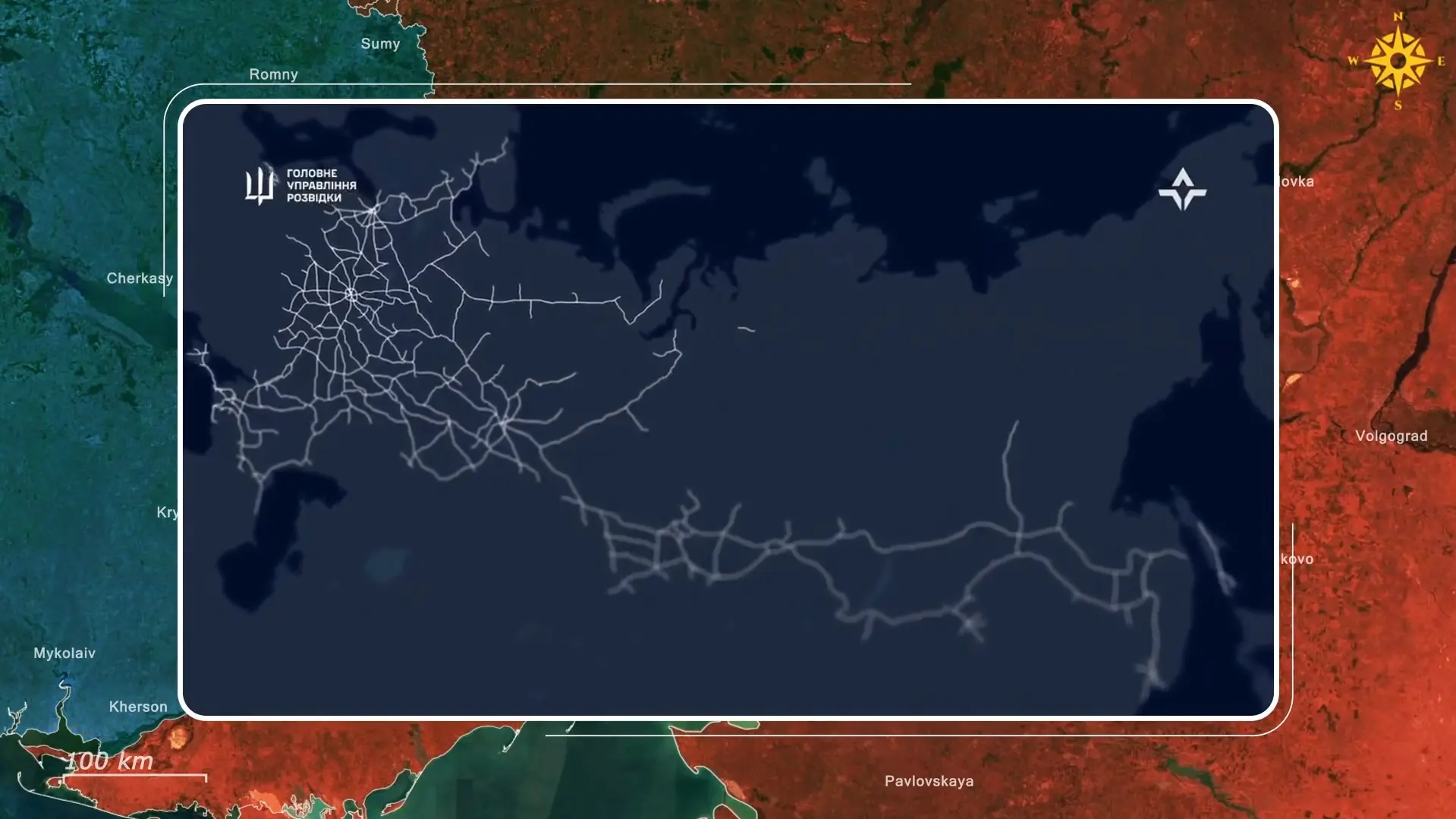
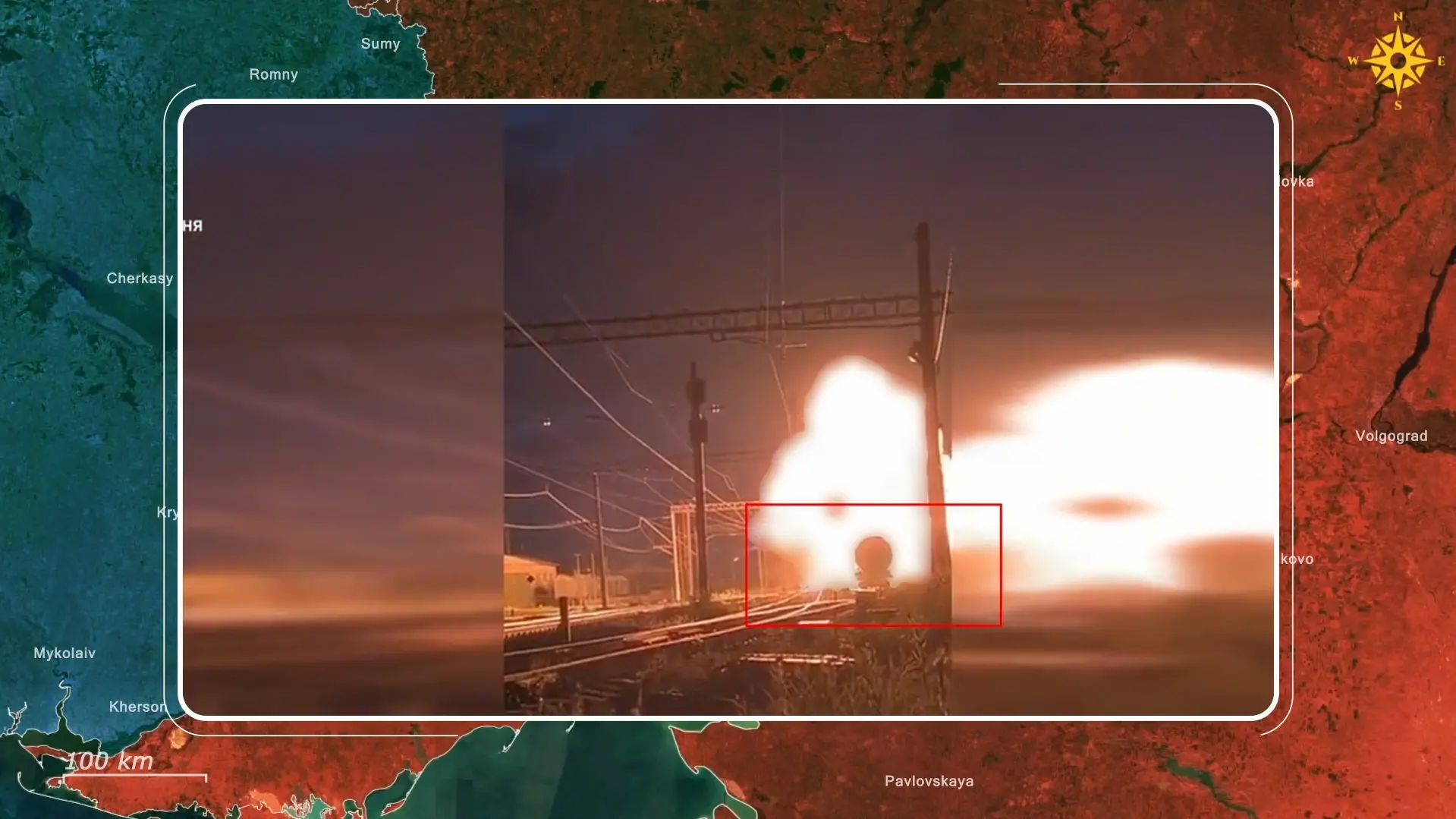
Simultaneously setting explosive charges onto the fuel carts in the middle of the night, all the major Russian railway hubs were targeted. Ukrainians blew up trains in the major cities of Donbas and Luhansk, which form the capitals of Russia’s LPR and DPR puppet states. They set fire to locomotives and rail relay stations in Mariupol and Melitopol, where all of Russia’s logistics in the Zaporizhia and Kherson regions flow through. The undercover operatives even penetrated as deep as Rostov-on-Don, where the main headquarters of Russian high command overseeing the war in Ukraine is operating from. Nowhere was safe, as the footage shows scores of trains and crucial railway infrastructure exploding and going up in flames.
Russians themselves responded with outrage. They complain that too many Russians inside of the country are increasingly showing support and favoritism toward Ukraine. They say that these people are responsible for regular partisan attacks inside of Russia and the Russian-controlled territories in Ukraine. This is not surprising however, as the Ukrainian intelligence directorate is actively advertising to people in these territories and opponents of Putin’s regime to get in contact with them to become a part of the resistance movement, including training, intelligence gathering, and even direct sabotage attacks.
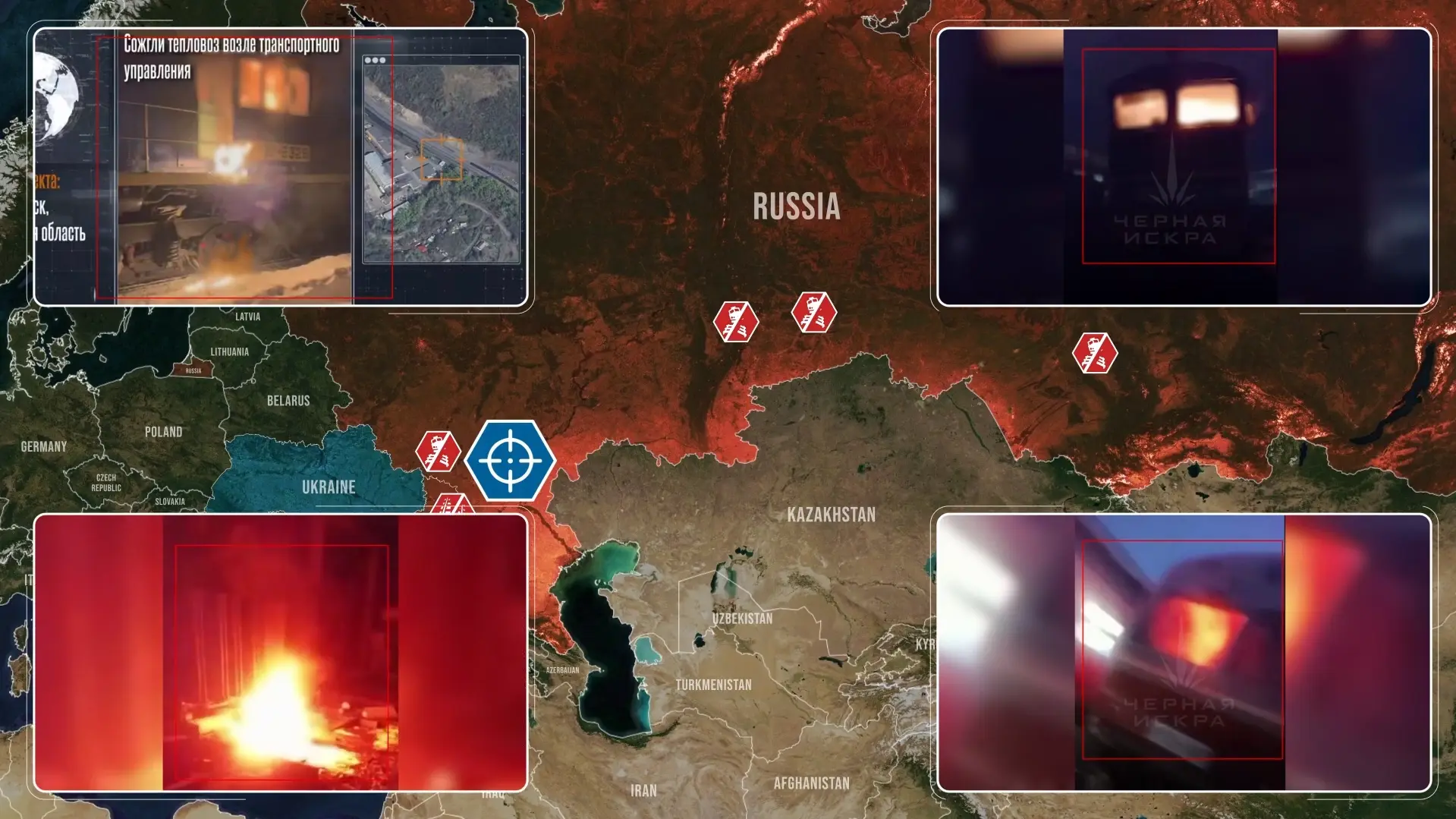
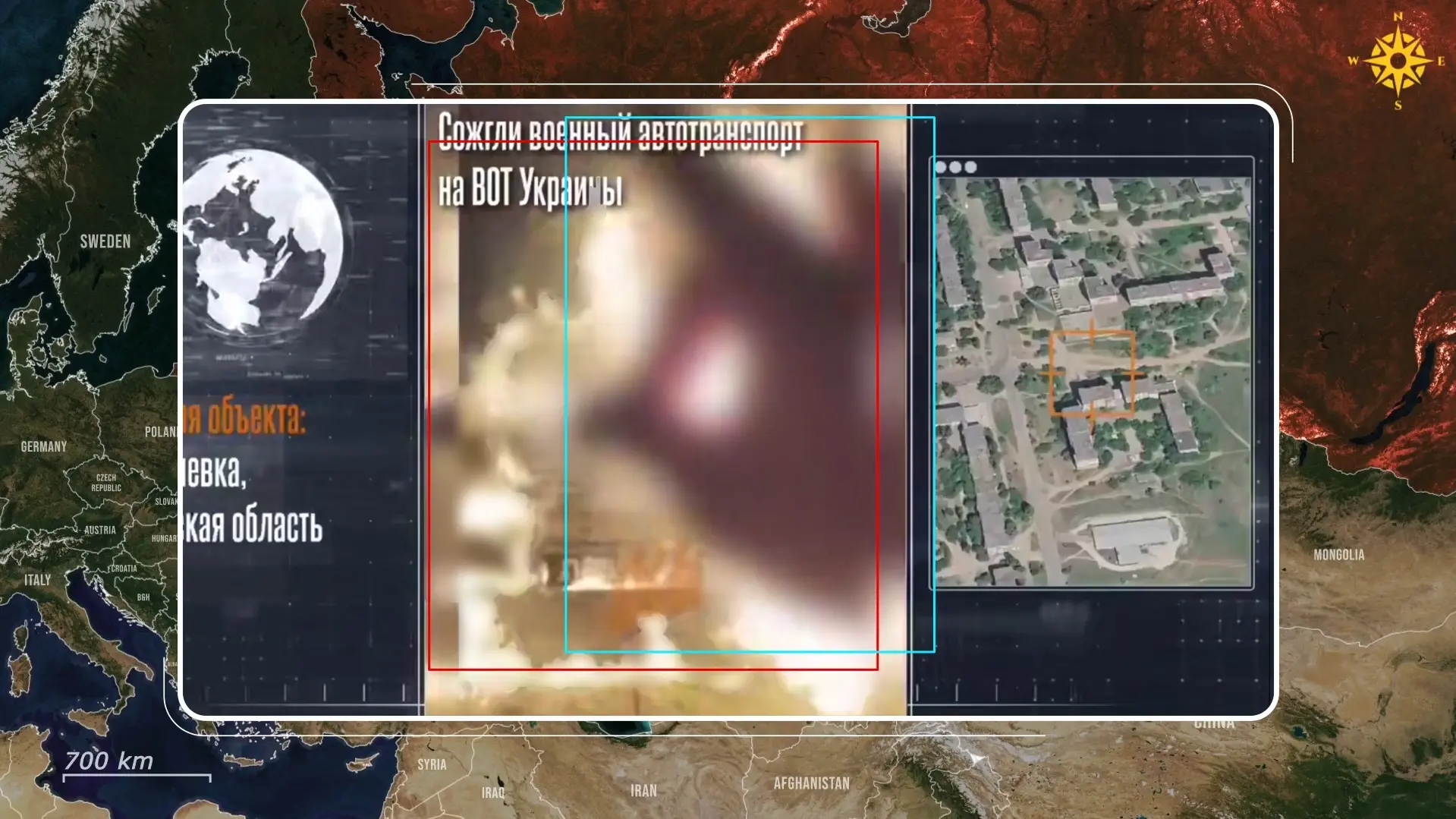
Because of this, recent partisan attacks have spread to railway logistics in cities as far as Kemerovo, Tyumen, and Yekaterinburg. Here, three locomotives in dual-use by the Russian armed forces were burned down, paralyzing Russian transport capacity across the most important transport lines connecting Siberia with Russia-proper across the Ural mountains. Most often however, sabotage occurs much closer to the frontlines in Ukraine, where all disruptions are felt immediately on the front. Partizans set fire to railway cabinets in Luhansk, which ground transport to a temporary halt long enough for follow-up strike drones to take full advantage of the stationary trains.
Vehicles used by Russian soldiers in the rear are also common targets for lower-level sabotage by resistance members, preventing transport of supplies, ammunition, and reinforcements to the front. While the impact of a single vehicle may seem small, this results in one less vehicle that Ukrainians have to deal with on the front, one Russian sector that starts running low on supplies, and fewer potential infiltrators causing a headache for Ukrainian forces in the rear.
Overall, if every minor action adds up to a consequential effect, Ukrainians just unleashed a tidal wave of frontline impact. The coordinated operation executed by volunteers of the Freedom of Russia Legion not only destroyed over ten thousand tons of fuel supplies, but the carriers and locomotives that cart supplies around as well. As the railway continues to form the backbone of the Russian army’s logistics, the disruptions and delays that this destruction has caused are significant. With Russian officials seemingly unable to stem the wave of resistance fighters operating not only within the Ukrainian territories they control, but throughout mainland Russia as well, the pressure is building up, and continued resistance becomes a more accessible option with every operation that passes.

.jpg)


Comments