

.svg)
Today, there is pressing news from Ukraine’s northern front.
Here, the target for the next major Russian offensive operation was just revealed. Ukrainian intelligence reports reveal that Russia is planning a major offensive operation into Ukraine’s northern regions. The report discusses that while Russia currently has no available reserves to launch such an operation, the expected mobilization of three-hundred-thousand soldiers by the end of this year, planned to start after the upcoming elections on the twentieth of September, gives Russia the forces it needs to launch the offensive.
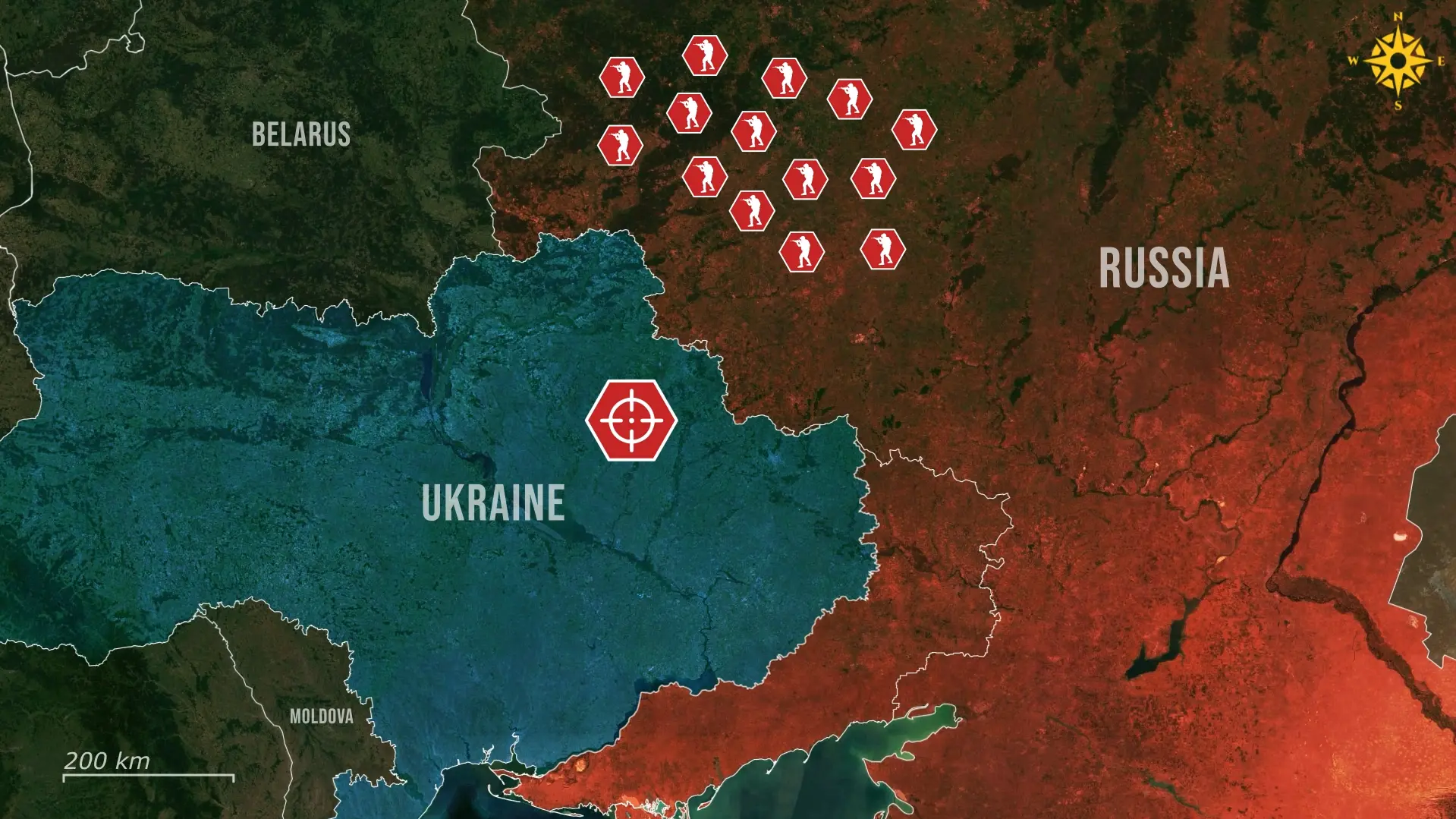
Specifically, Russia plans to mobilize a minimum of six-hundred-thousand soldiers through the end of two-thousand-twenty-six and two-thousand-twenty-seven. Ukrainian intelligence expects that by the end of this year, the first half will be fully mobilized, organized, and formed into respective brigades, allowing the Russian offensive to be launched in January of two-thousand-twenty-seven, within only 4 months. The intended targets for such an offensive would be to cross the border into the Ukrainian Sumy, Kharkiv, and Chernihiv Oblasts, and capture or at the very least threaten the regional capitals with the same names. However, the secretary of Ukraine’s national security, defense, and intelligence reports that Russia is also actively working to formulate an agreement with Belarus, that would allow it to use the country as a staging ground once again.

As repeatedly discussed on this channel, Russia and Belarus are massively expanding their military infrastructure, bases, and direct Russian military deployments to Belarus. Military analysts are repeatedly warning that through these efforts, Russia is creating a staging ground to launch a more sustained military effort into northern Ukraine. They warn that in the event this happens, Kyiv itself could once again become a direct target for a Russian ground advance.

The commander of Ukraine’s national guard Oleksander Pivnenko underscored these threats, stating that with three-hundred to six-hundred-thousand soldiers as reinforcement, Russia could advance between ten to twenty kilometers into Ukraine’s northern border. However, he specified that this would be the maximum extent of the possible Russian advance, and that Russians would not be able to come close to Kyiv again at all. Therefore, the likely main goal and result of the offensive would not be to directly capture regional capitals, but to only threaten them and force a Ukrainian response.
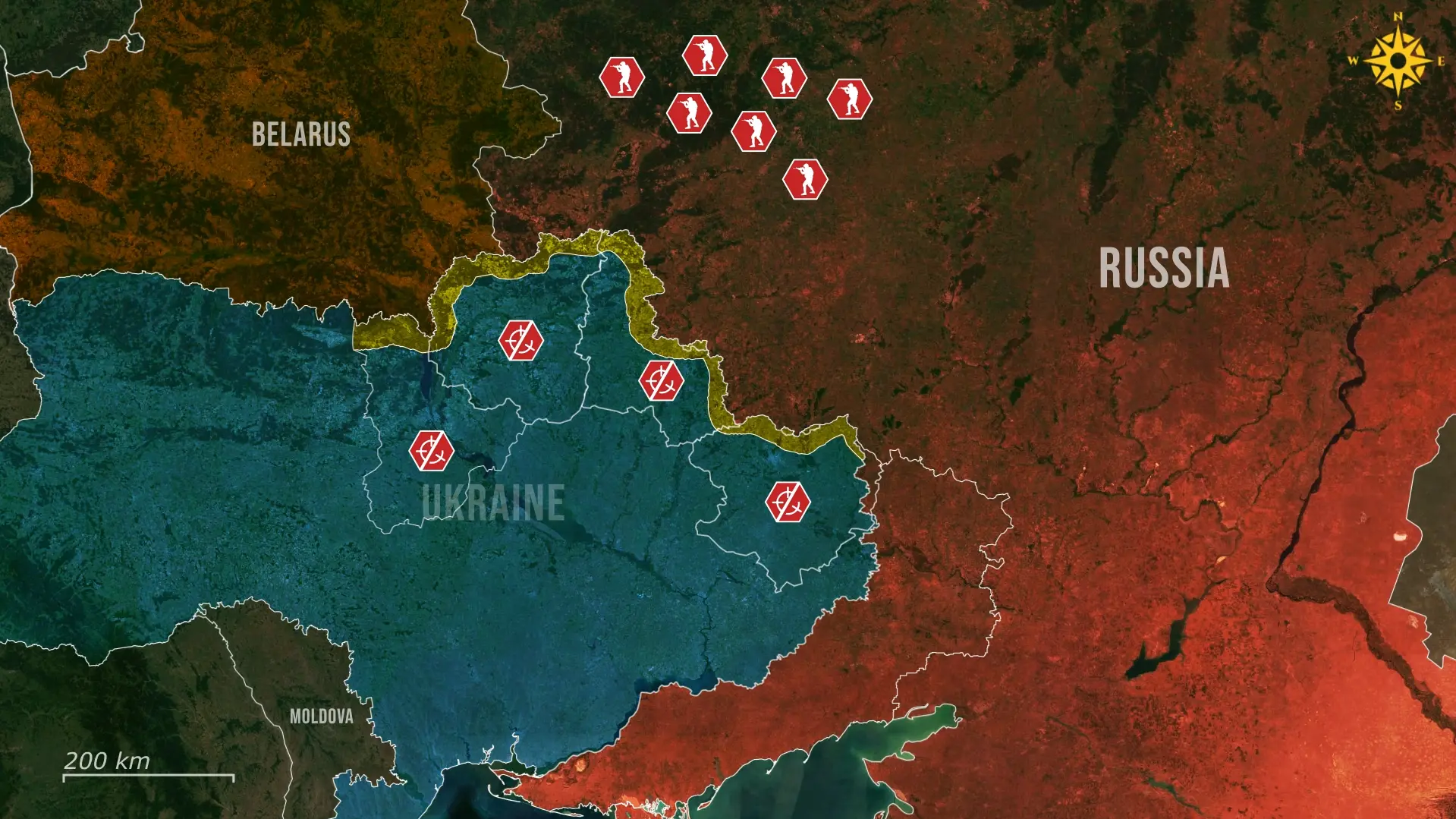
Currently, the main force of Ukraine’s ground army is focused on defending the eastern front along the Donetsk, Luhansk, Dnipropetrovsk, and Zaporizhia regions, with other forces already deployed to the Kherson region, as well as the international border in Kharkiv. If these were forced to redeploy to the north, this would open up opportunities for Russia’s formations in the east to achieve larger operational gains and capture more territory in the Donbas. However, currently Russia is already losing more soldiers here than they can replace, and the constant attacks along the entire frontline have not allowed them to build up any major operational reserves; with all new recruits being almost immediately deployed for frontline assaults. Additionally, in many sectors, Ukrainians are currently either retaking the initiative or forcing Russians into a deadlock by denying any advance. This means that a large part of the soldiers that will be mobilized after the elections will be forced to reinforce Russian formations in the east, so that Russian commanders can retain offensive posture. The more reserves that Russia has to deploy to the east to achieve its main military objectives in Donbas, the fewer soldiers Russia can use to invade Ukraine from the north, and the more they have to scale back their goals for it. Regardless of how massive a success or failure it turns out to be, the threat of a renewed Russian offensive into northern Ukraine, is very, very real, and the outcome depends entirely on Ukraine’s ability to adequately respond.

Overall, the upcoming mobilization that Russia is planning to launch after the parliamentary elections later this month will give Russian high command a massive influx of soldiers that it can deploy. Ukrainian intelligence and military commanders knowledgeable on Russian plans warn that it is highly likely that a large portion of these reserves will be deployed for further cross-border offensive operations into Ukraine’s northern regions. The fact that Russia and Belarus are actively expanding military infrastructure on the Belarusian border as well, signifies that such an offensive could also be launched from the territory of Belarus itself. However, Ukraine’s recent successes in the east may force Russia to redirect a large number of these mobilized personnel to reinforce their eastern offensives instead, significantly lowering the risk to Ukraine’s northern regions; while not outright stamping it out, it is now up to Ukraine to formulate and prepare an effective response to the threat.

.jpg)

Comments