

.svg)
Today, the biggest news comes from Ukraine.
Here, with stalling momentum across the board, Russians were desperately looking to achieve a breakthrough and regain the momentum they had lost, with only one real direction even remotely available for the task. However, with coordination falling outside of their control, Ukrainians are acting decisively to undo months of preparation, and the only hope of a successful Russian summer campaign.
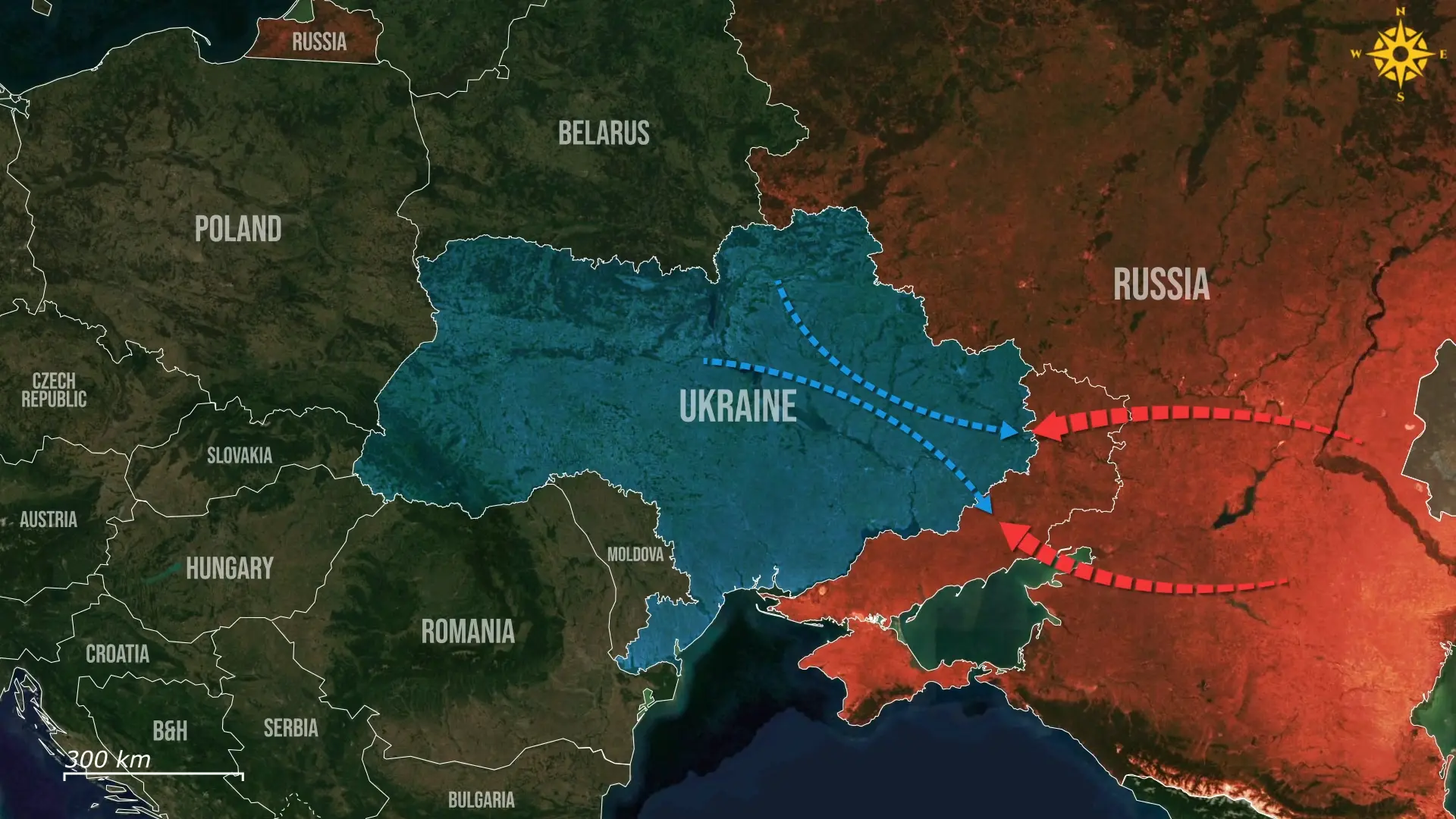
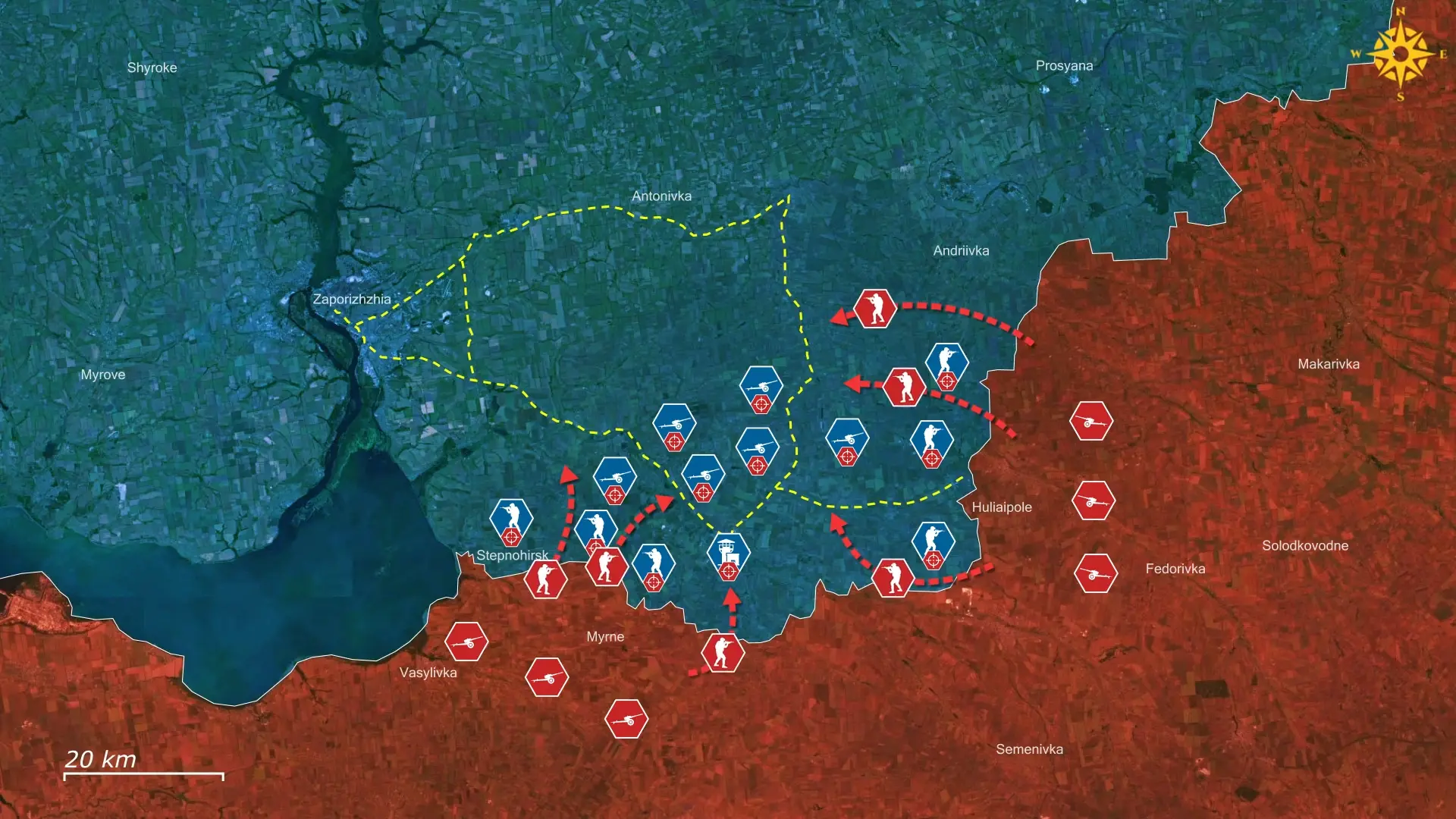
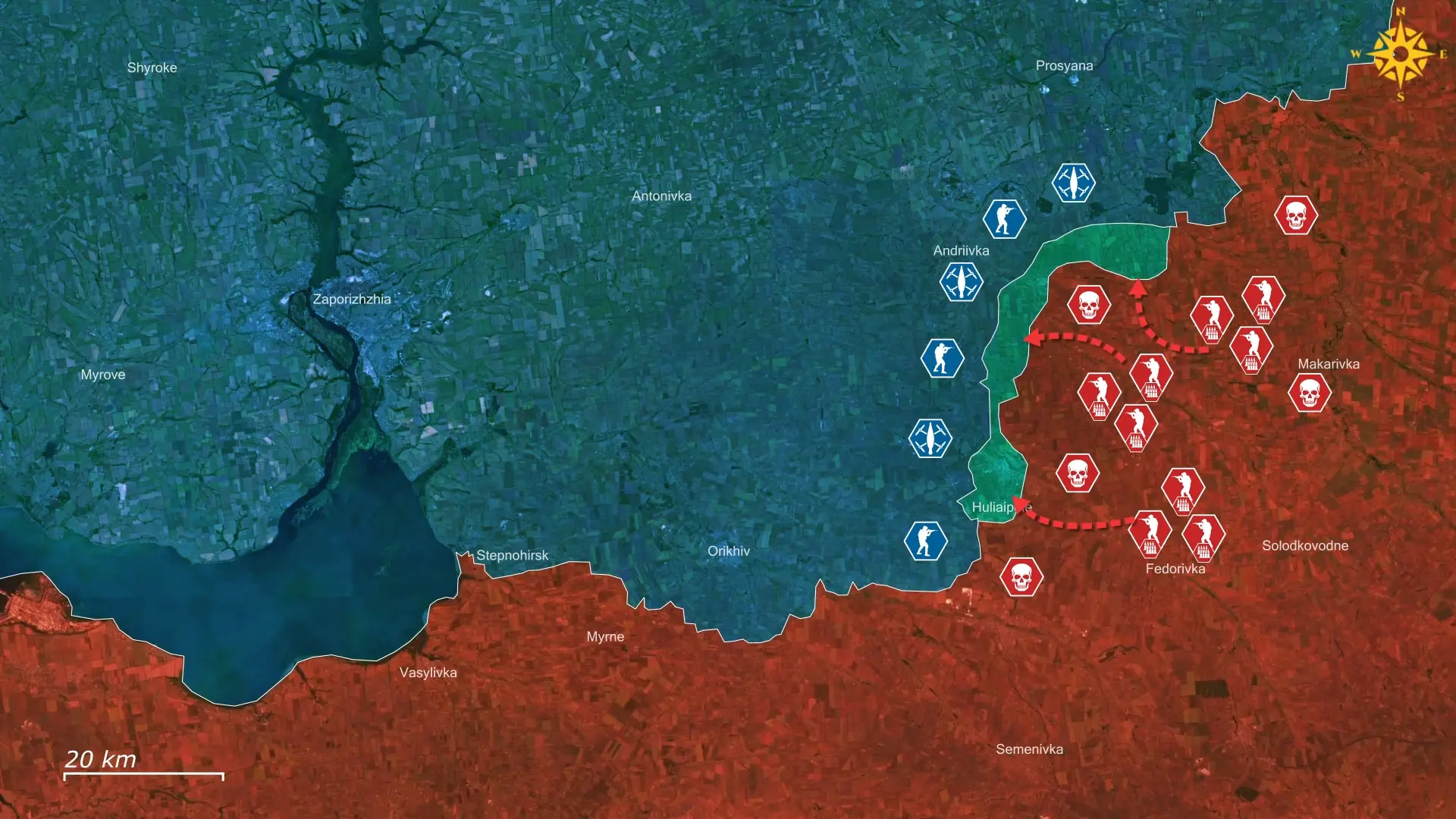
Recently, Russia has been conducting probing attacks along the Huliaipole to Orikhiv axis, signaling preparation for a larger offensive. Over the winter, open-source battle tracking and official reports have highlighted Russia’s repeated attempts to concentrate infantry and push both the Huliaipole sector and the Stepnohirsk approach, which are vital to Ukrainian supply routes into Orikhiv.
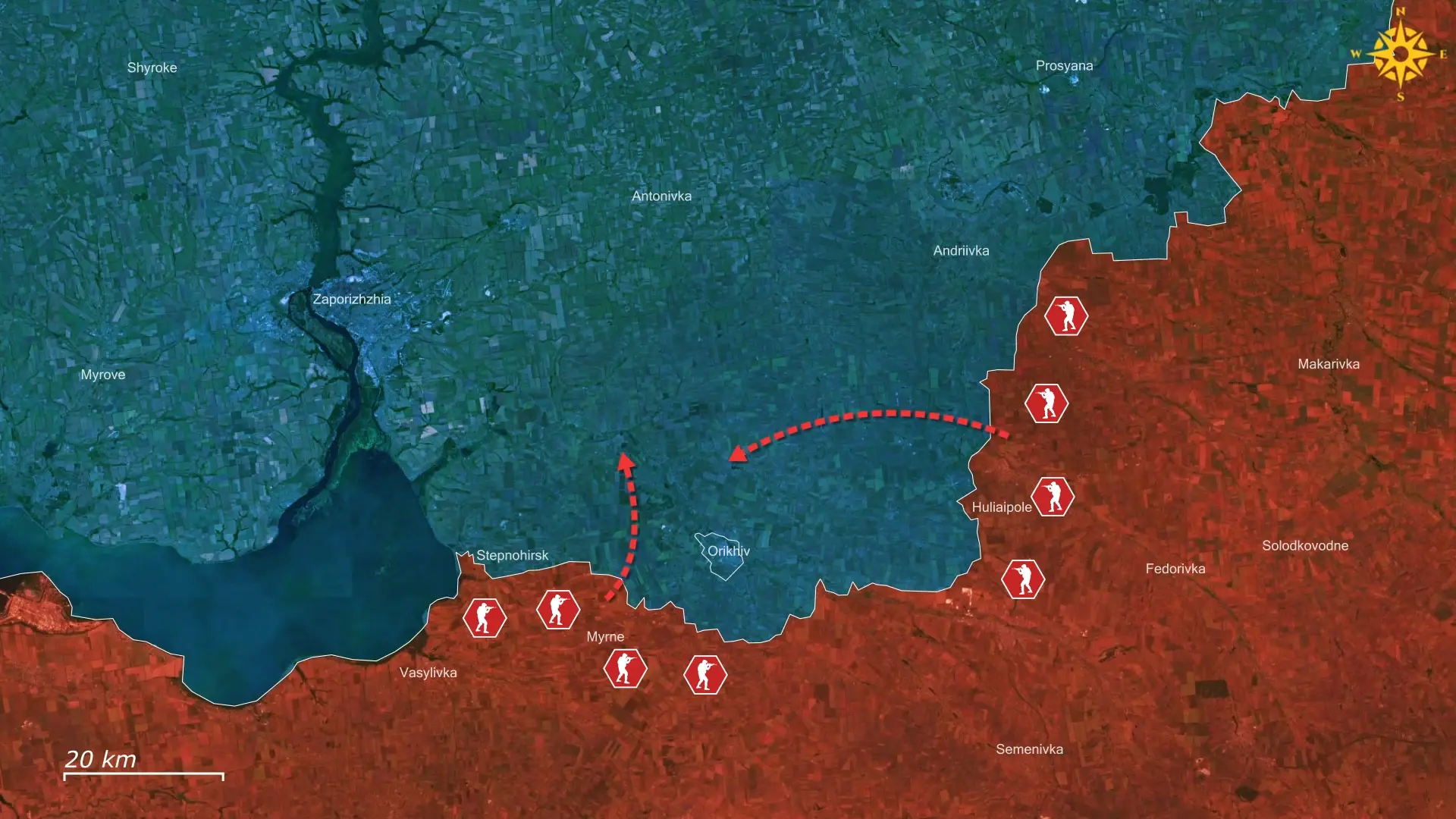
However, these efforts have remained fragmented, stalling under Ukrainian counterattacks and the relentless pressure of drone attrition. These movements are intended to test vulnerabilities, with the aim of setting up reinforcements to exploit any gaps as part of a broader offensive push.
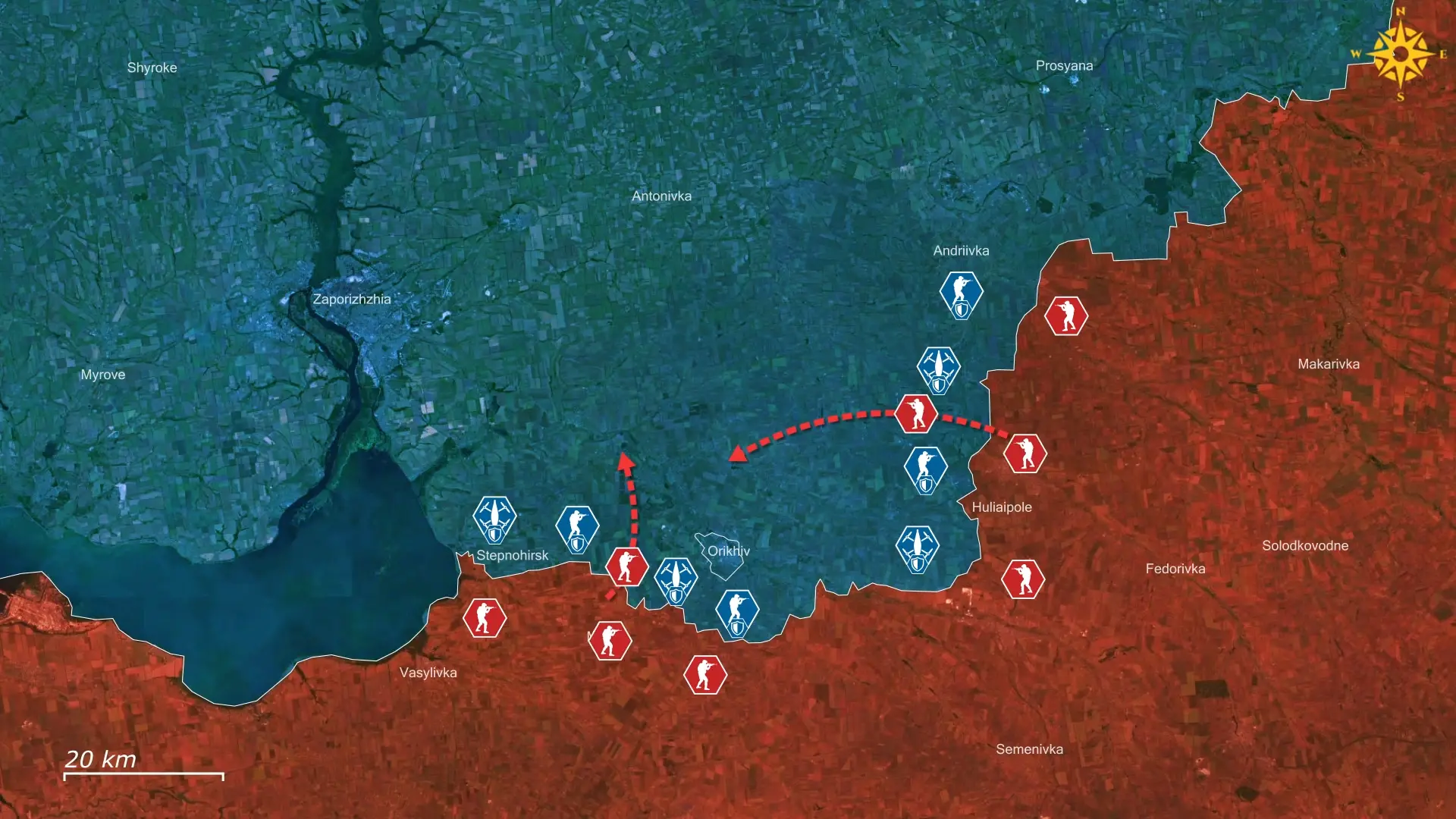
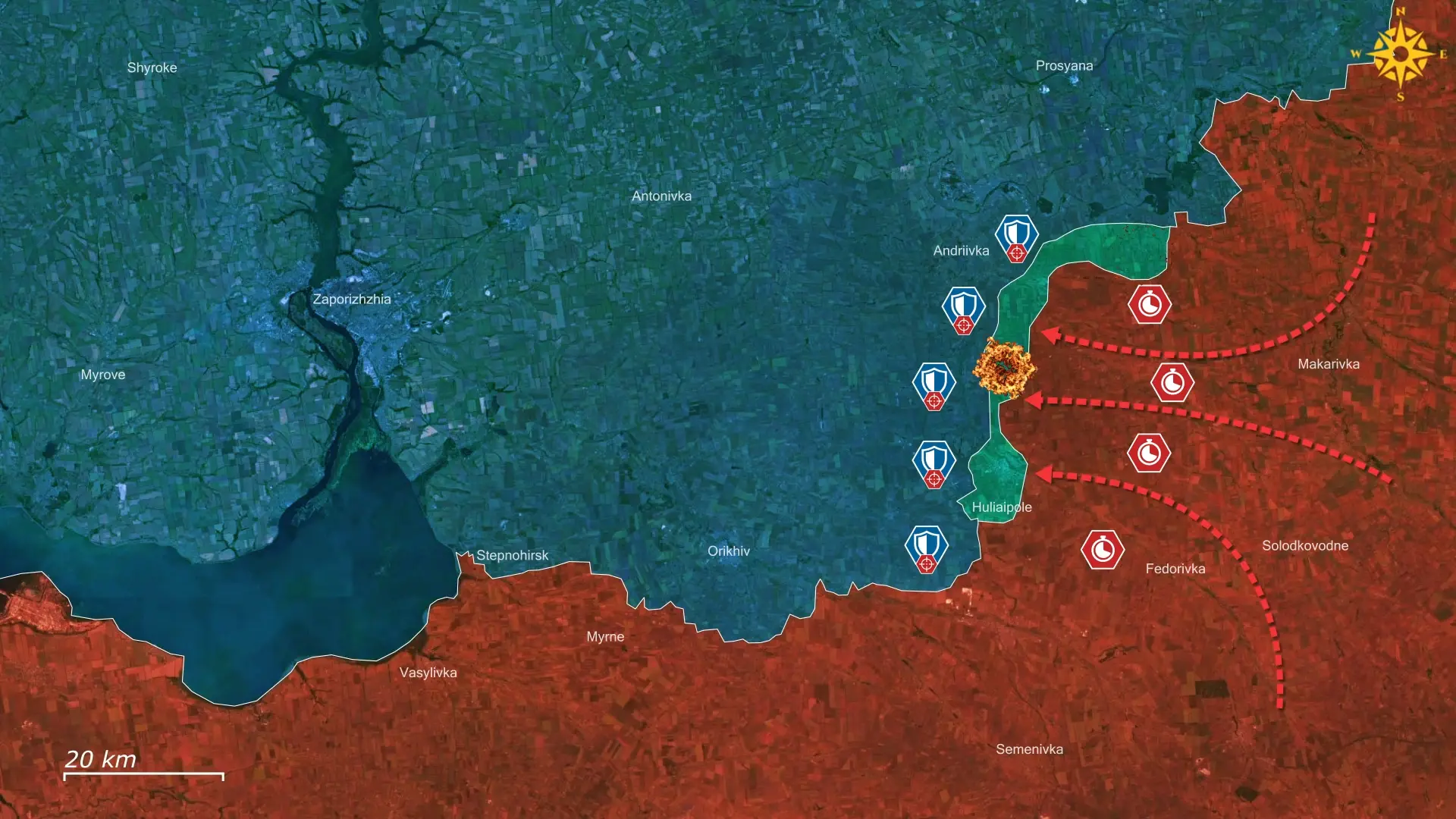
After two years of fighting, Moscow needed to launch a new offensive due to its struggle in creating the momentum necessary for a breakthrough. Despite advances averaging fifteen to seventy meters per day, their slow pace fails to overwhelm a prepared defense. With total gains of just 0.6 percent and 0.8 percent of Ukrainian territory in 2024 and 2025, and casualties surpassing 1.2 million, the cost of this slow attrition is mismatched with Russia’s objectives. To achieve a breakthrough, Russia needs a shift in momentum to disrupt Ukrainian defenses and force them into retreat. The pincer strategy, designed to put pressure on Orikhiv from two directions, aims to create this momentum by threatening supply lines and forcing Ukrainian forces to spread their reserves thin, allowing Russia to exploit weaknesses.
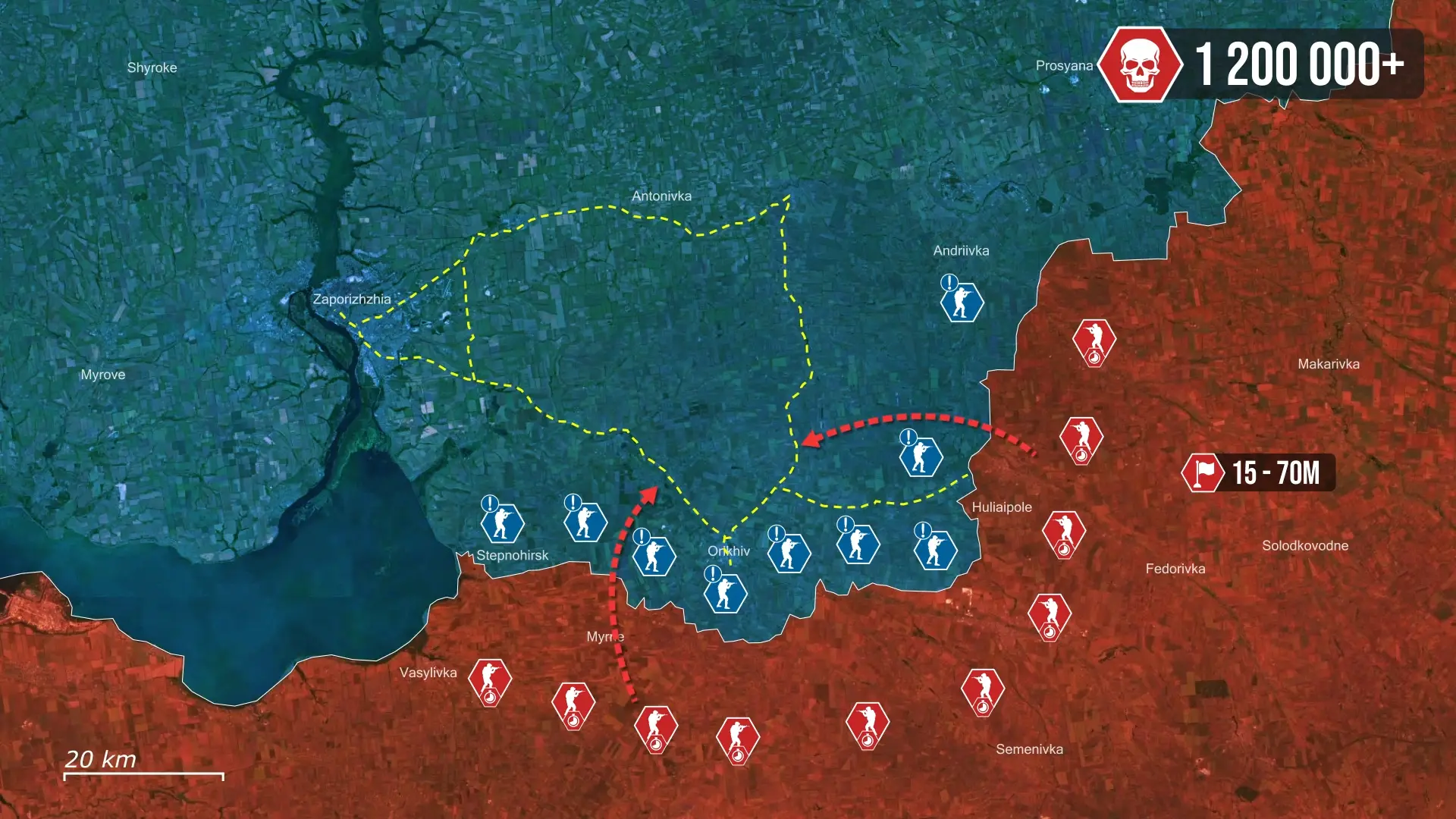
The strategy is simple and effective when it works. By converging from the Huliaipole side in the east and the Stepnohirsk side in the west, Russia could squeeze Orikhiv, threatening lateral roads behind Ukrainian positions and weakening their ability to supply forward strongpoints. The pincer plan forces defenders to split reserves and disrupt supply lines with overlapping fields of fire. Both Russian and Ukrainian sources have highlighted efforts to establish these flanks through gradual movements and persistent shelling.
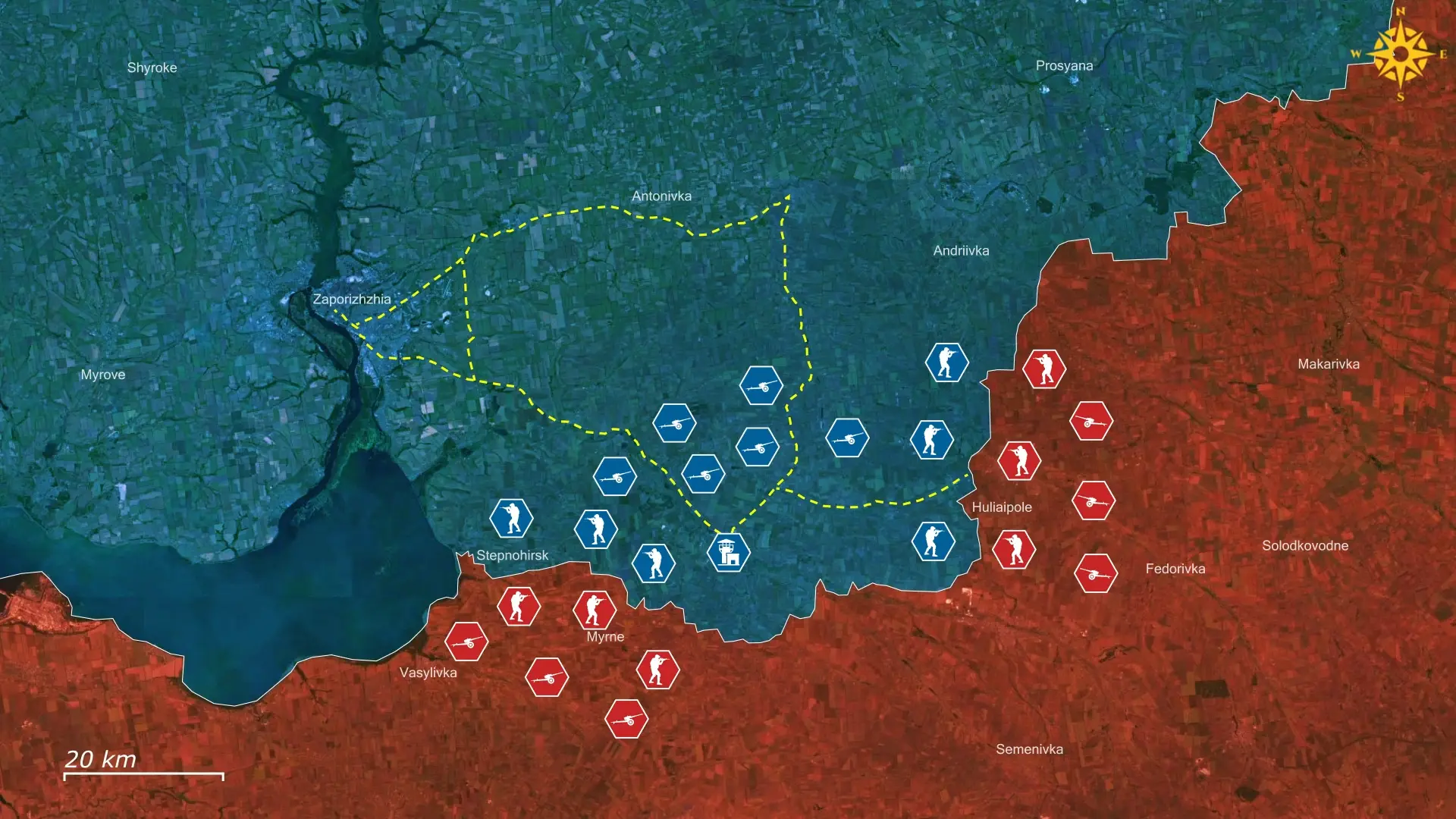
This is Russia's only realistic way to accelerate momentum before summer, as it aims to weaken Ukrainian defenses and create openings for a larger offensive. If both sides advanced simultaneously, Ukrainian defensive preparations for the summer would collapse, as these preparations involve building new defense lines, fortifications, and supply routes to withstand prolonged Russian offensives. Russia aims to break through before these defenses are fully established, seizing critical ground while Ukraine is still preparing.
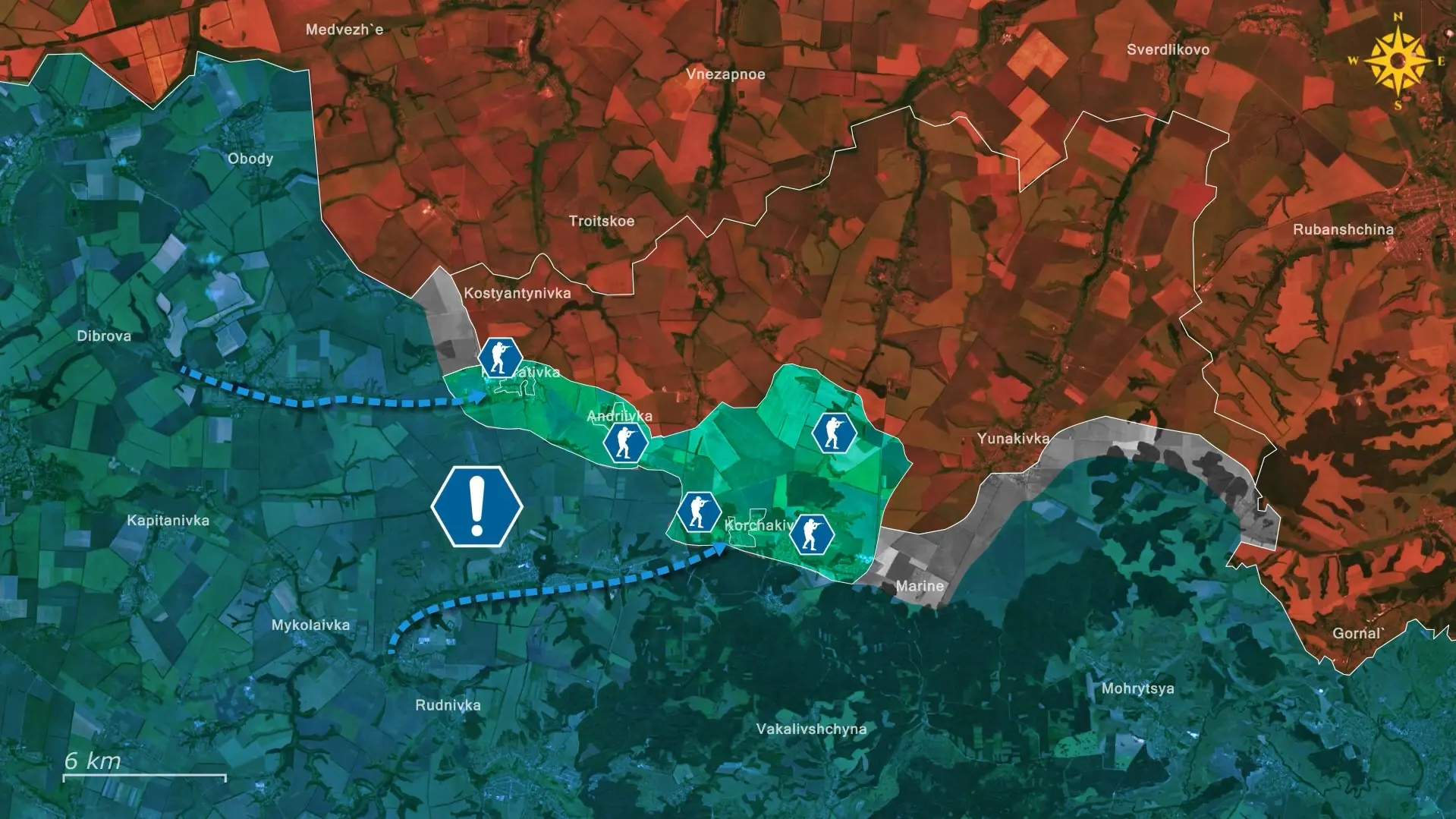
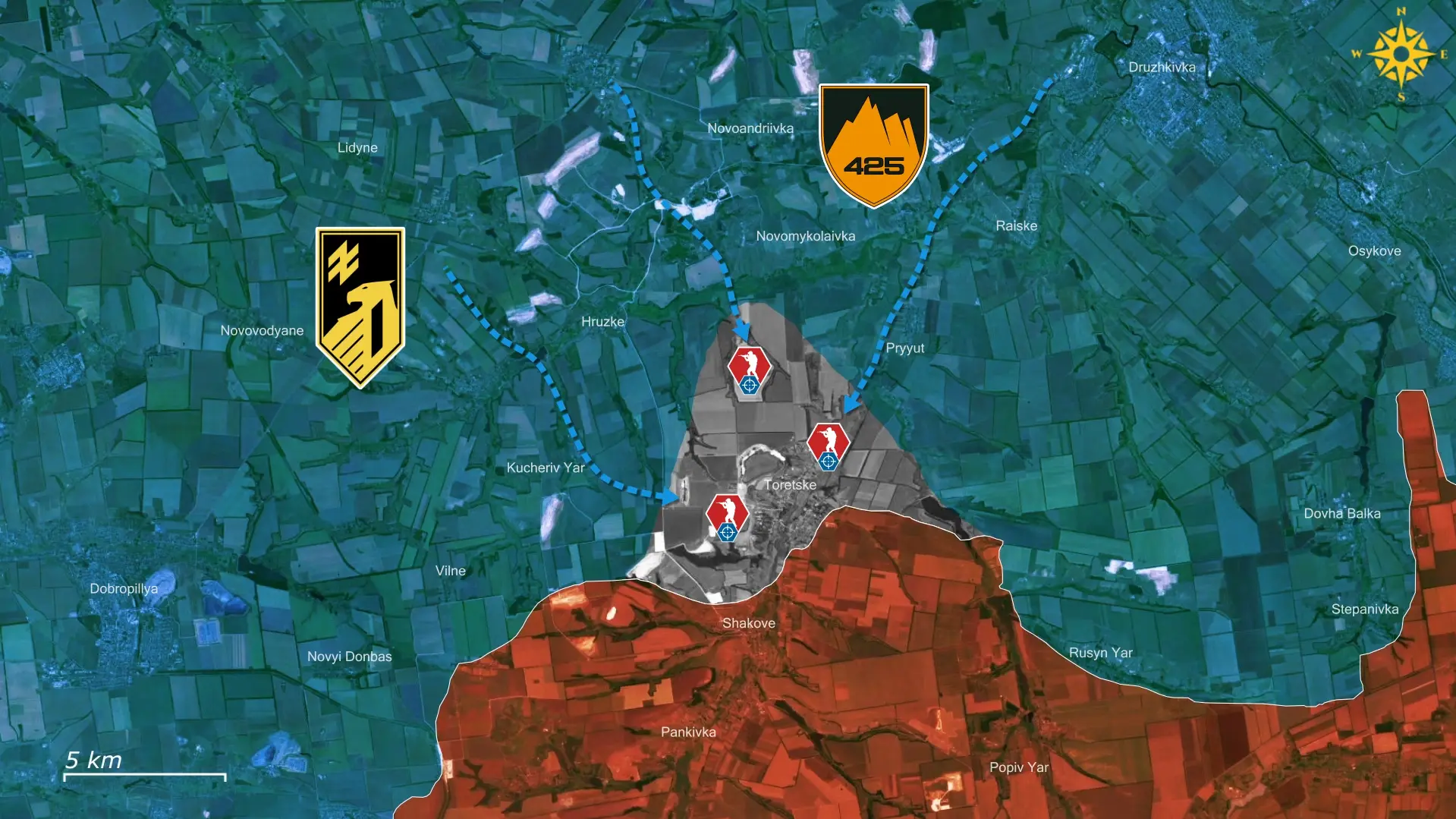
In response to Russian incursions, Ukraine retook 201 square kilometers, mostly east of Zaporizhzhia, where the axes converge. This counteroffensive coincided with reported Russian communications disruptions, which hampered coordination during Ukrainian assaults. In practice, a communications outage prevents artillery support from synchronizing with troop movements, leaving small Russian groups exposed and unable to rely on timely protection while crossing open ground. As a result, counter-pressure forced Russian units to stabilize instead of expanding.
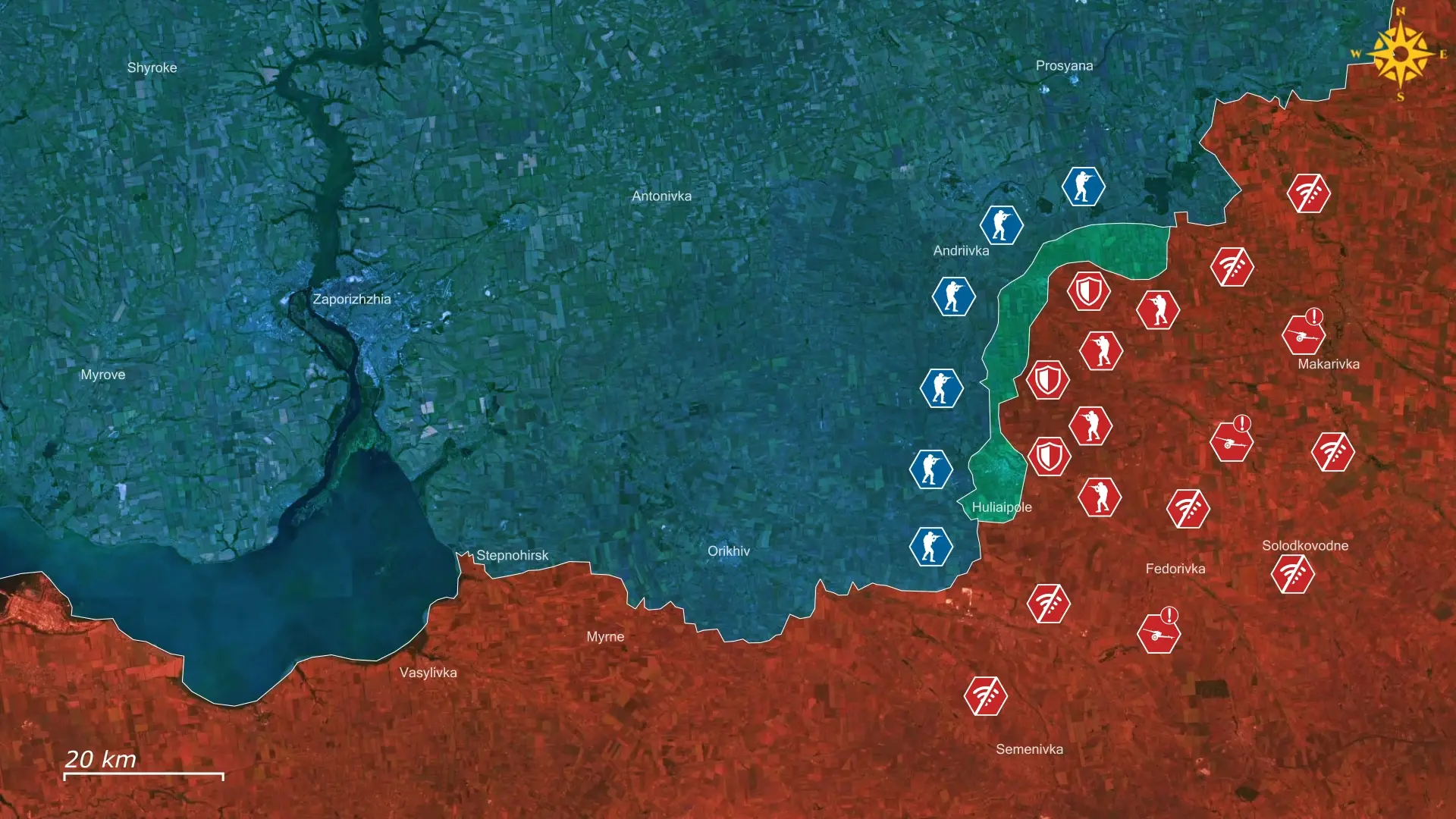
Now, Ukraine has left Russia with only a few options remaining. The first option is to continue the slow grind to retake recently lost terrain, delaying significant action until after summer. This would give Ukraine time to strengthen defenses along logistics routes and set up more drone ambush zones.
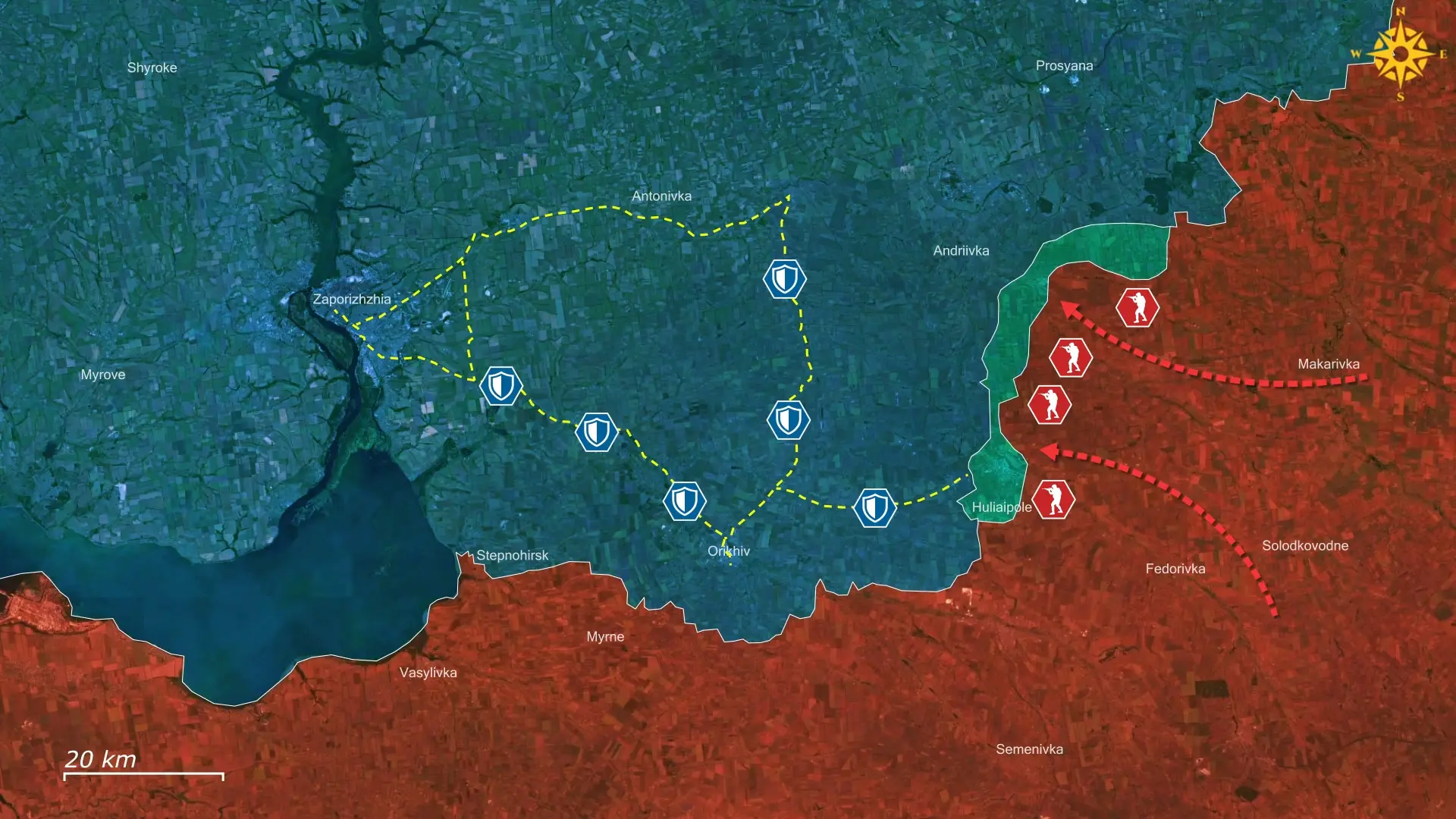
The second option is to escalate sooner by committing reserves and accepting higher casualties for limited gains. This risky move assumes Russian synchronization will improve faster than Ukrainian counter-mobility can adapt.
The third option would be to conserve combat strength, acknowledge the failure of the southern pincer, and wait for a better opportunity later. However, this contradicts the messaging from Russia’s leadership, which emphasizes momentum and portrays success as inevitable, making such a retreat politically impossible. Data from both independent and mainstream sources support these claims, showing that Russia’s daily advances remain slow, at a snail’s pace, with annual gains barely surpassing one percent, while casualties continue to rise without progress improving.
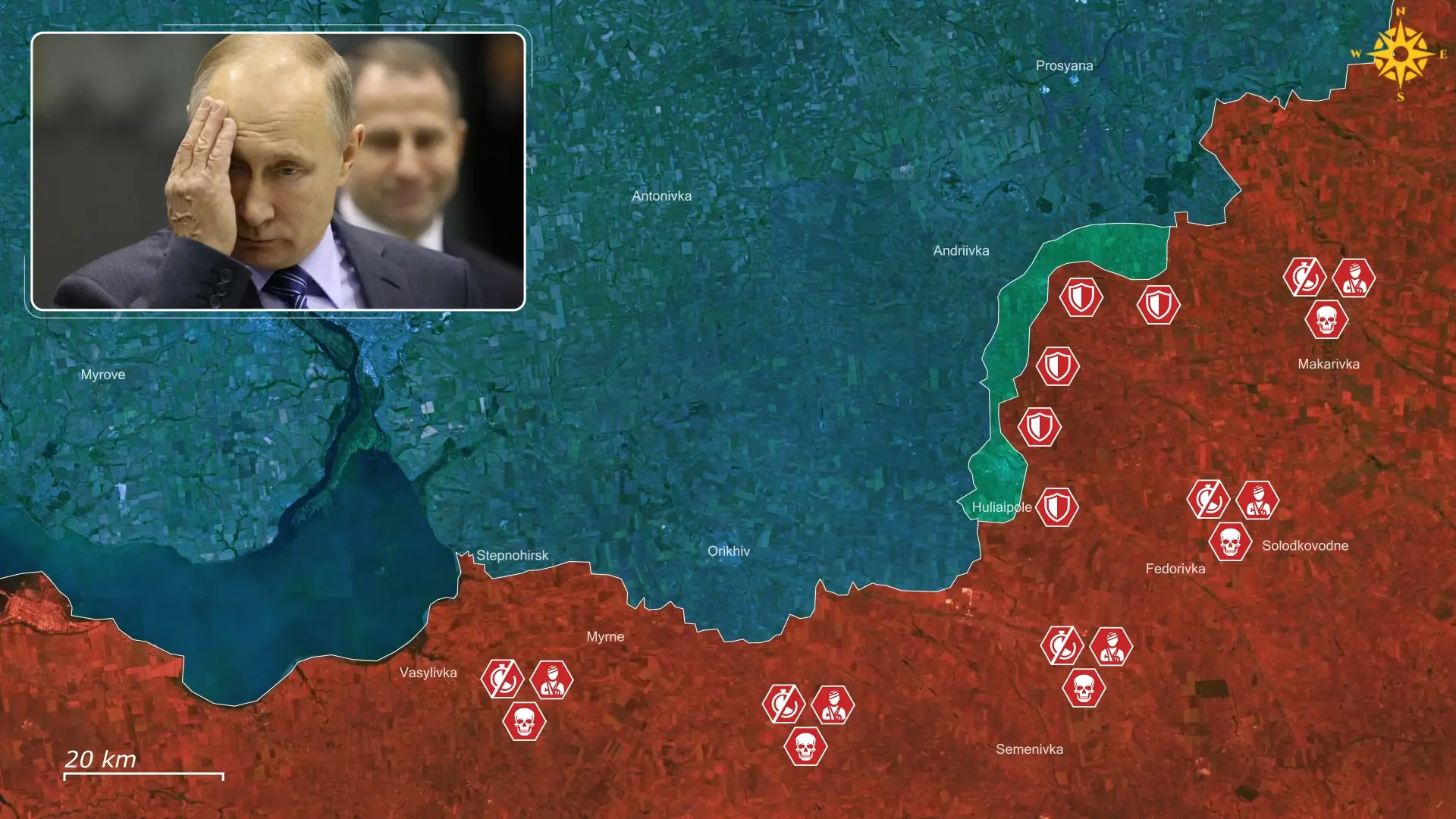
Overall, Russia had been on the brink of gaining momentum in the south, with plans to push forward before summer. However, their slow progress and failure to secure key terrain have forced them to reassess their strategy. While Ukraine has successfully stalled its advances and disrupted the plan to encircle Orikhiv, Russia's broader objectives remain unchanged. Moving forward, Russia is likely to continue its efforts to seize crucial positions, but without a breakthrough, the conflict risks continuing as a drawn-out war of attrition.

.jpg)

Comments