

.svg)
Today, the biggest news comes from Syria.
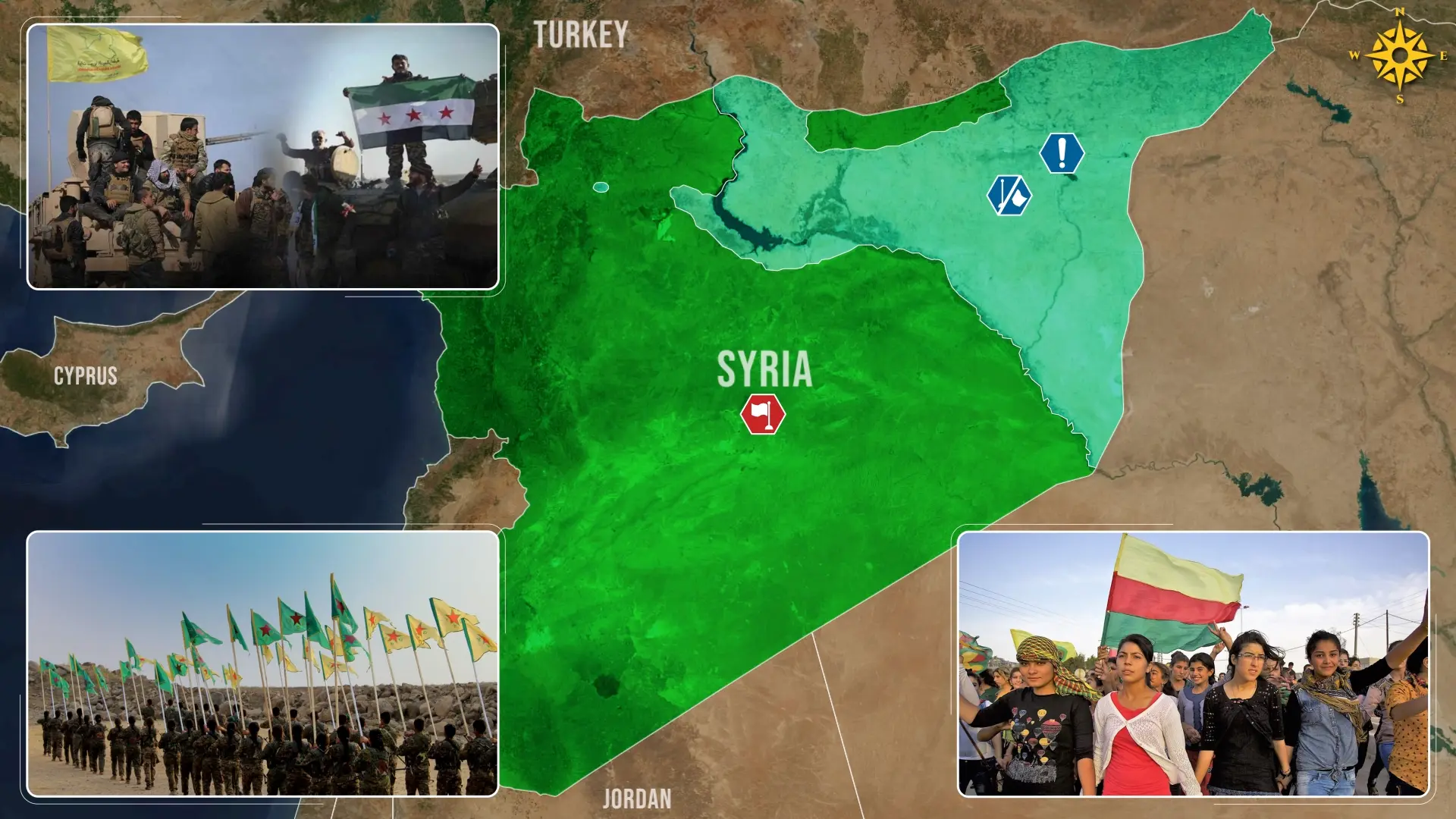
Kurdistan has fallen in a rapid and decisive shift that overturns years of political autonomy and military entrenchment. However, the emergence of a unified Syria creates another volatile landscape in which integration and long-term stability remain deeply uncertain.
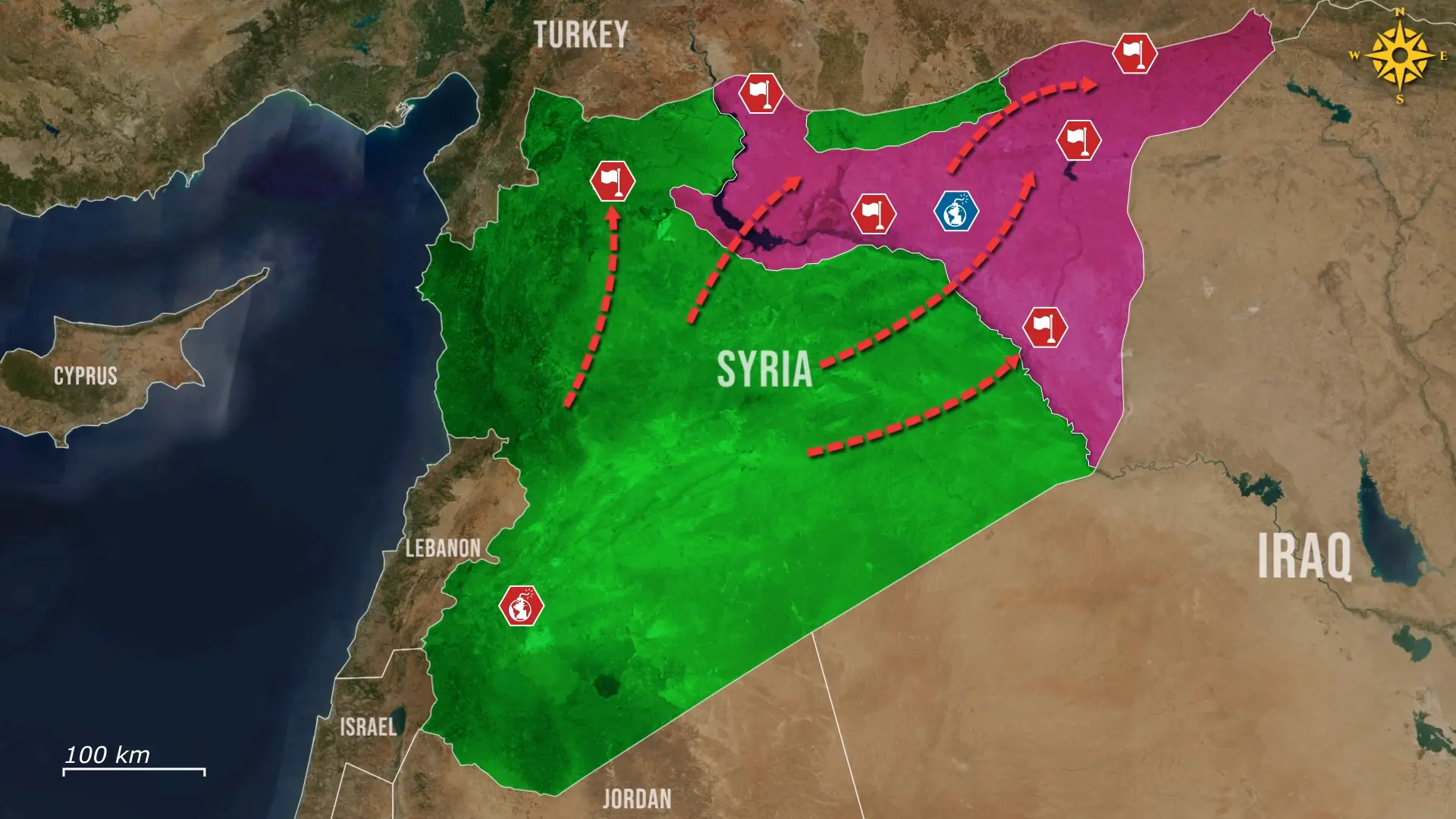
The new Syrian government has taken full control of the formerly Kurdish-administered regions, marking the end of the autonomous Kurdish nation in the northeast. Government forces moved quickly to formalize their authority over the territory they had taken, beginning with replacing Kurdish administrative bodies.
Kurdish military units are also being absorbed into the Syrian army, a process that is officially framed as individual integration rather than the preservation of Kurdish formations.
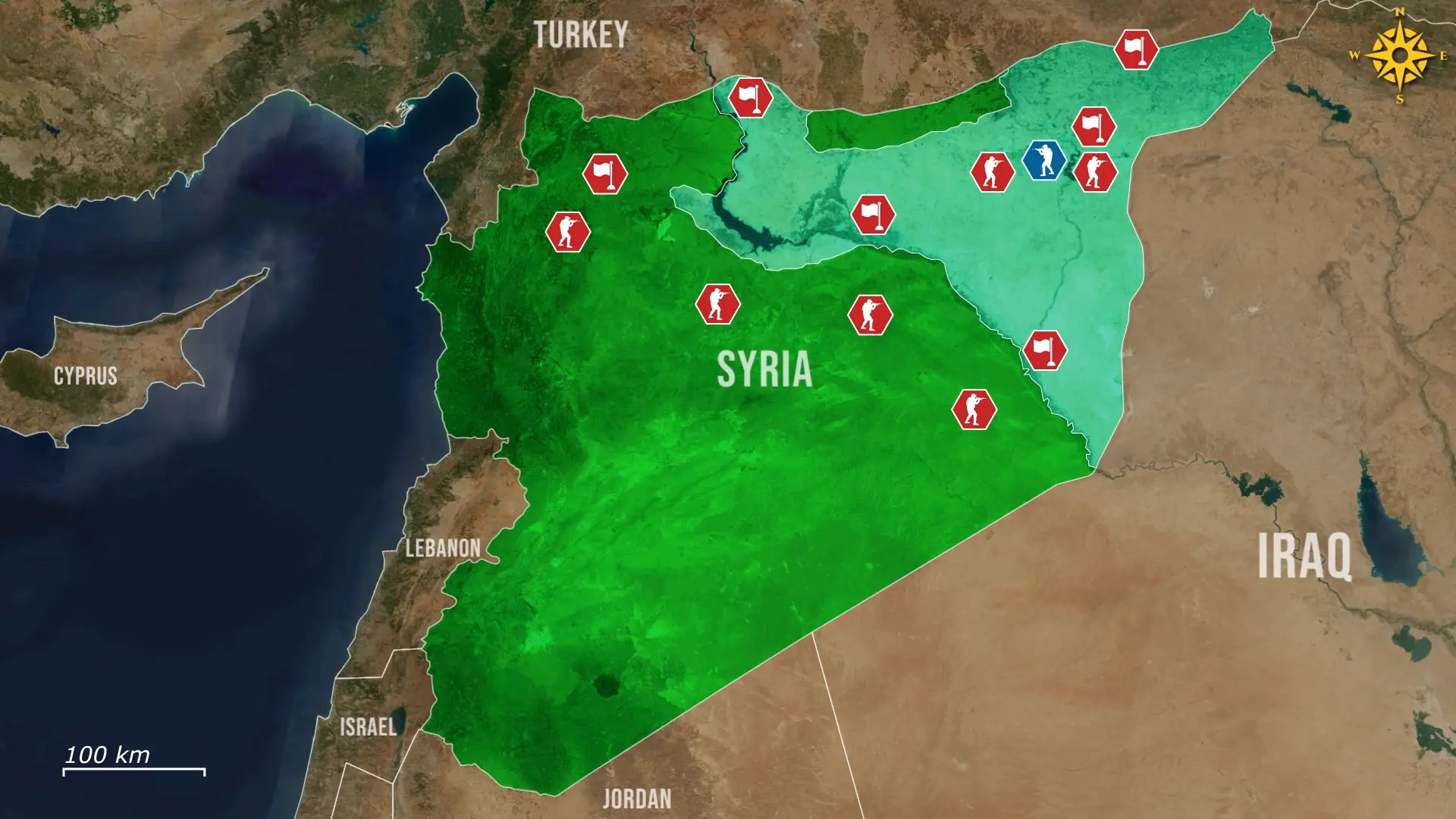
Economic consolidation is one of the government’s most important priorities, as newly captured oil fields are undergoing assessments to determine repair needs and revenue potential. Control over these sites is central to the government’s broader economic strategy, since they provide both immediate leverage and long-term fiscal stability. Infrastructure restoration is being used to reinforce these economic measures, with early work aimed at reestablishing transport links between oil-producing areas and national logistics hubs. Syrian citizenship is being granted to Kurdish citizens, and humanitarian corridors have been reopened under government oversight, supporting the narrative of a unified national system and facilitating the movement of goods and services.
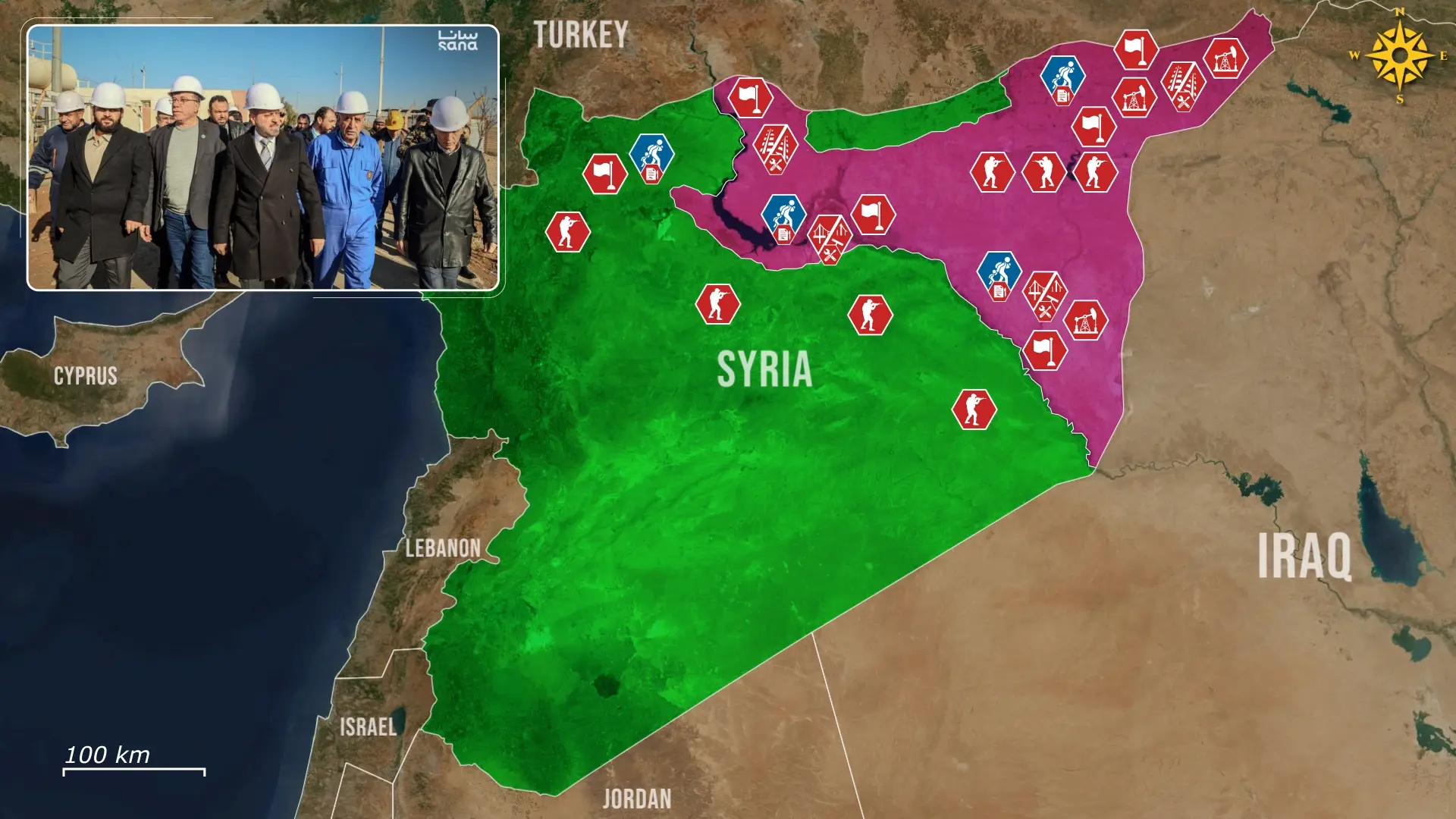
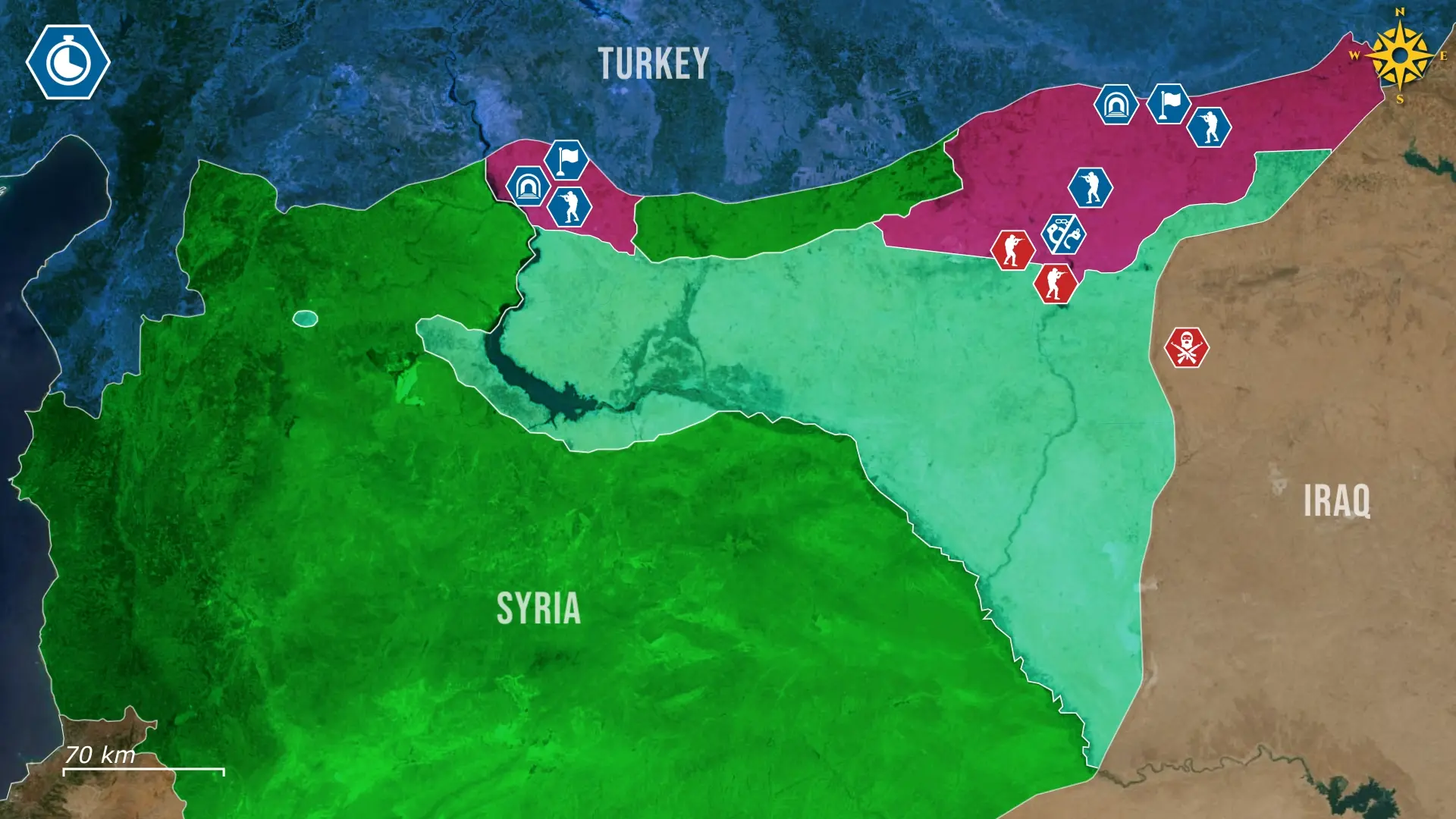
The fall of Kurdistan unfolded through a sequence of military, political, and international developments that began with the deterioration of Kurdish positions around Aleppo and accelerated throughout January 2026. By the 10th of January, some units in the Aleppo enclave had already begun withdrawing under pressure, while isolated elements continued fighting and launching limited drone strikes.
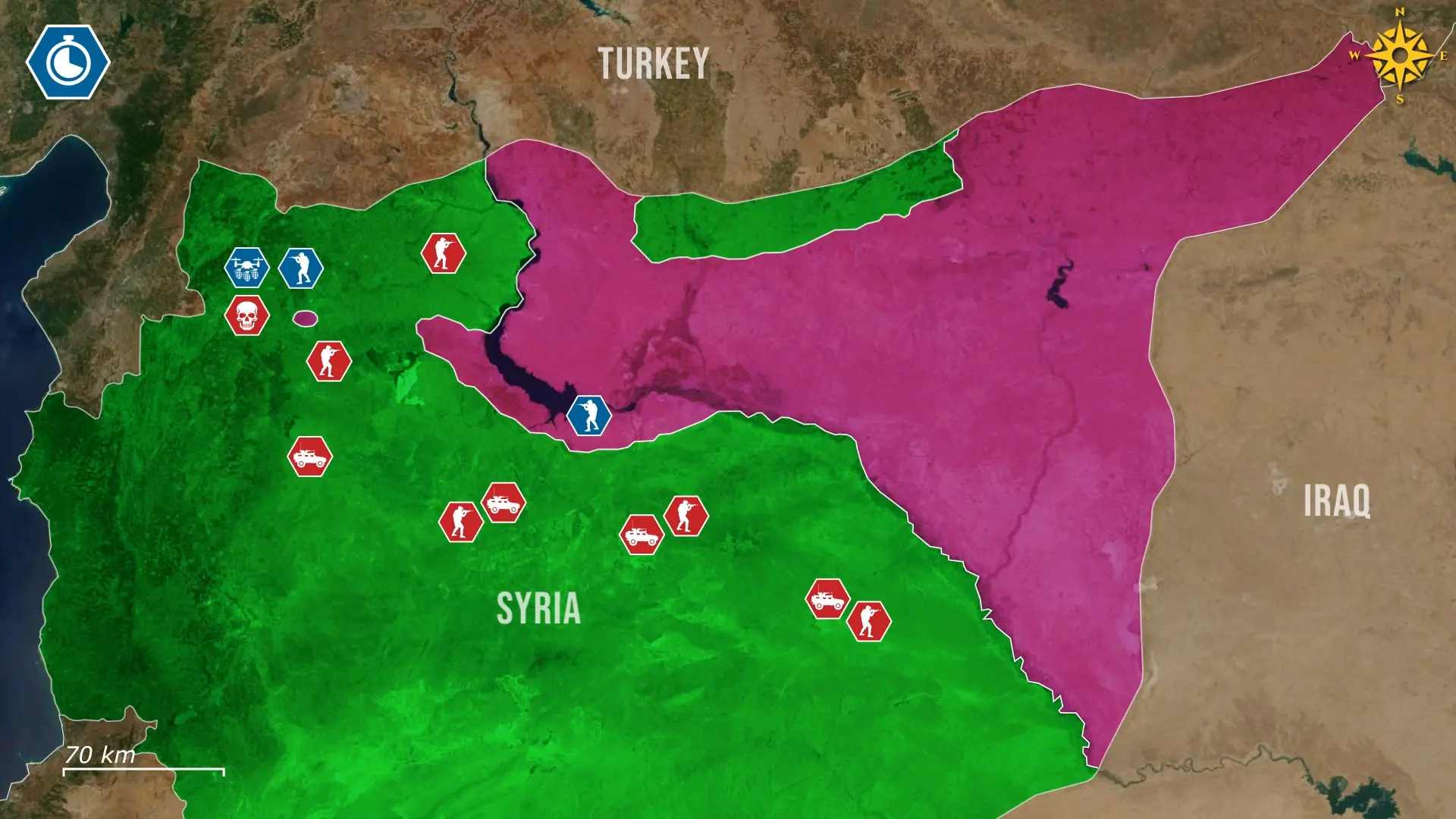
Syrian government forces, supported by large military aid from Turkey, exploited the situation and pushed eastward, and by the 13th, they were advancing toward the Euphrates and tightening pressure on Kurdish lines.
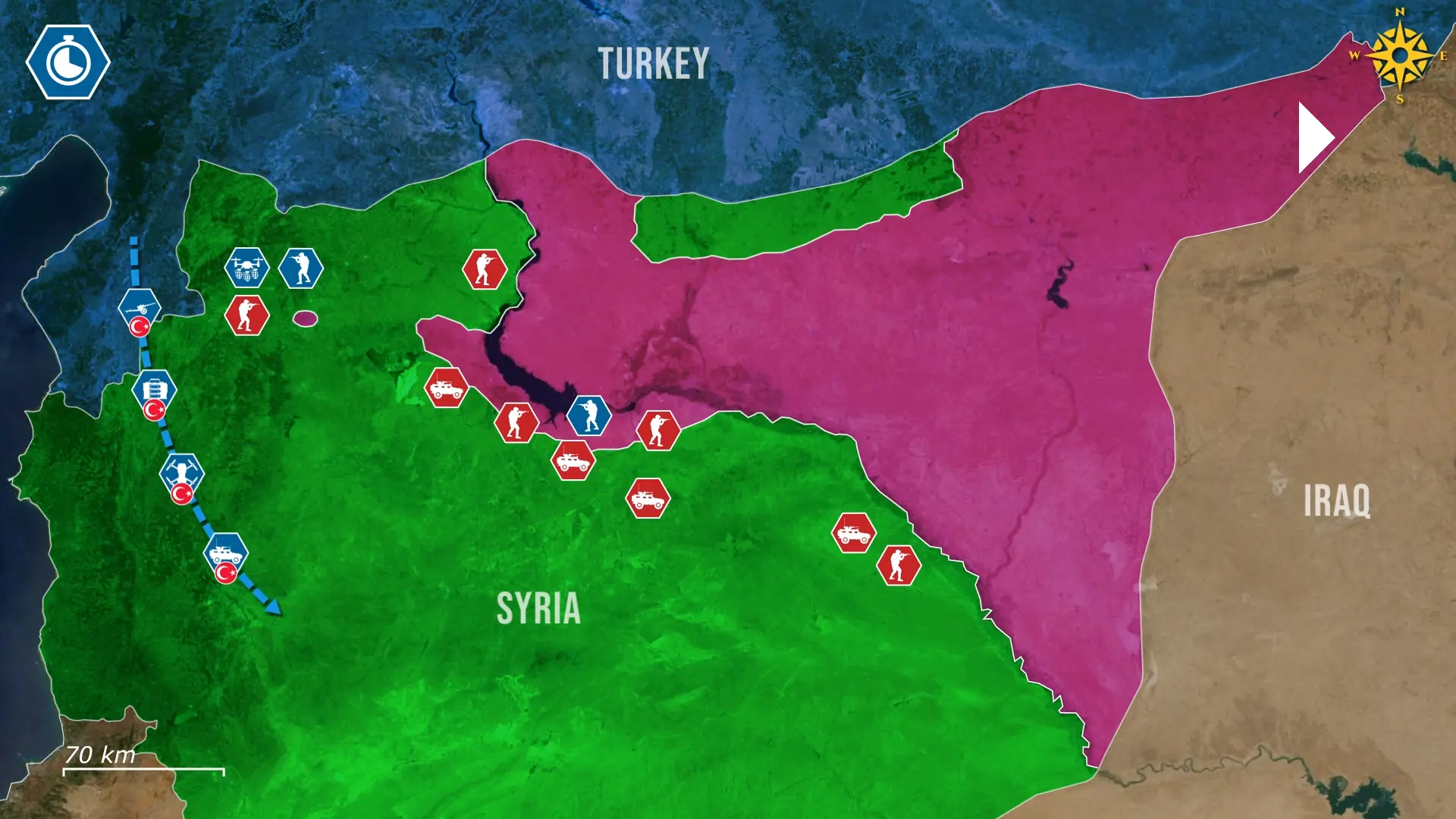
Between 17 and 18 January, the situation deteriorated rapidly. Kurdish forces pulled out of Deir Hafir, Meskena, and nearby military sites after heavy bombardment, aiming to reform a defensive line behind the Euphrates.
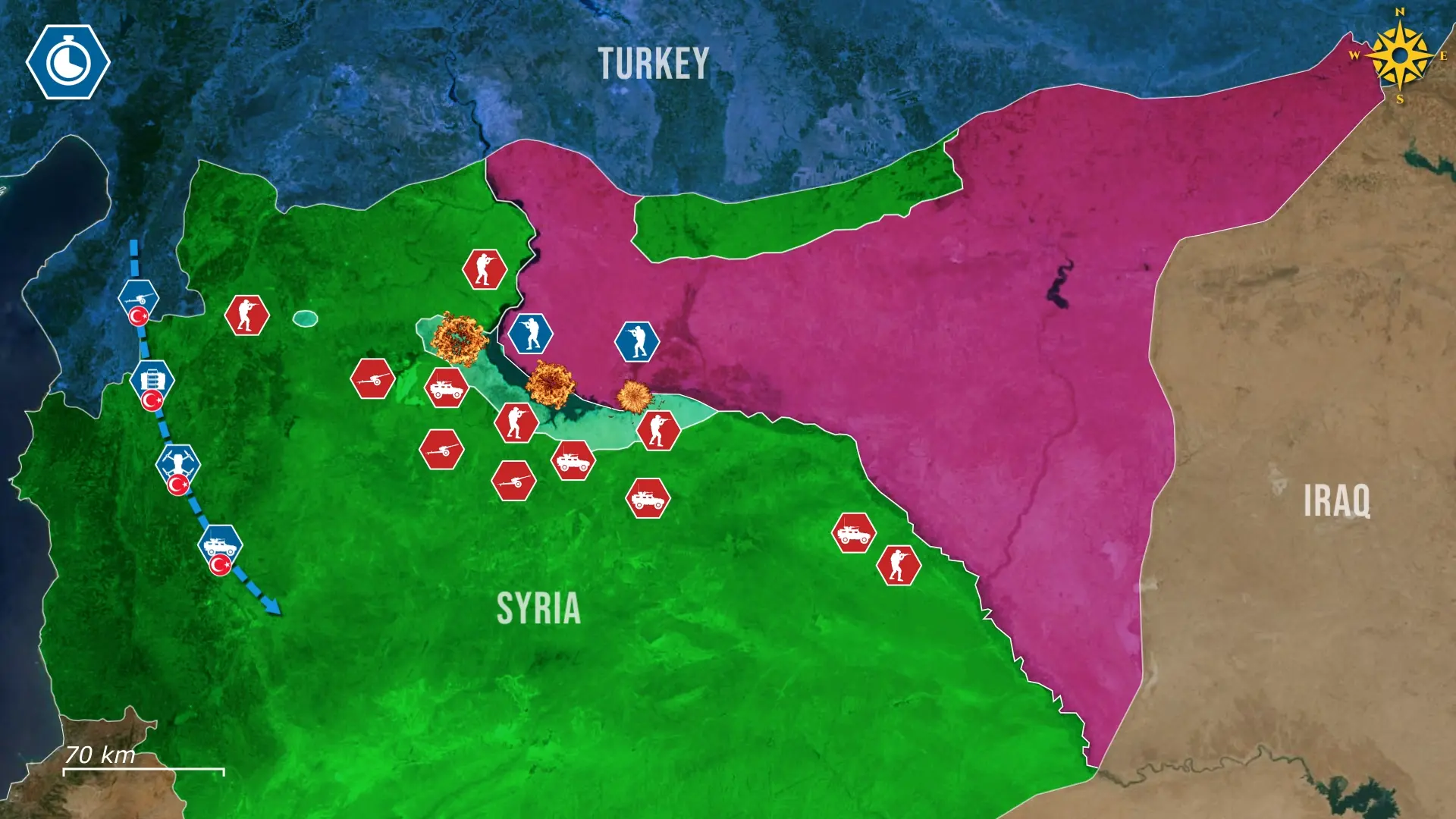
A turning point came however when tribal militias that made up half of the Kurdish forces defected or surrendered to the Syrian government forces. Consequently, Government troops then captured the Tishrin dam and Raqqa almost without resistance, securing a strategic crossing and accelerating their advance. The Tirshin dam also had a large moral significance for the Kurds, as it was the scene of a major Kurdish battle and victory over ISIS.
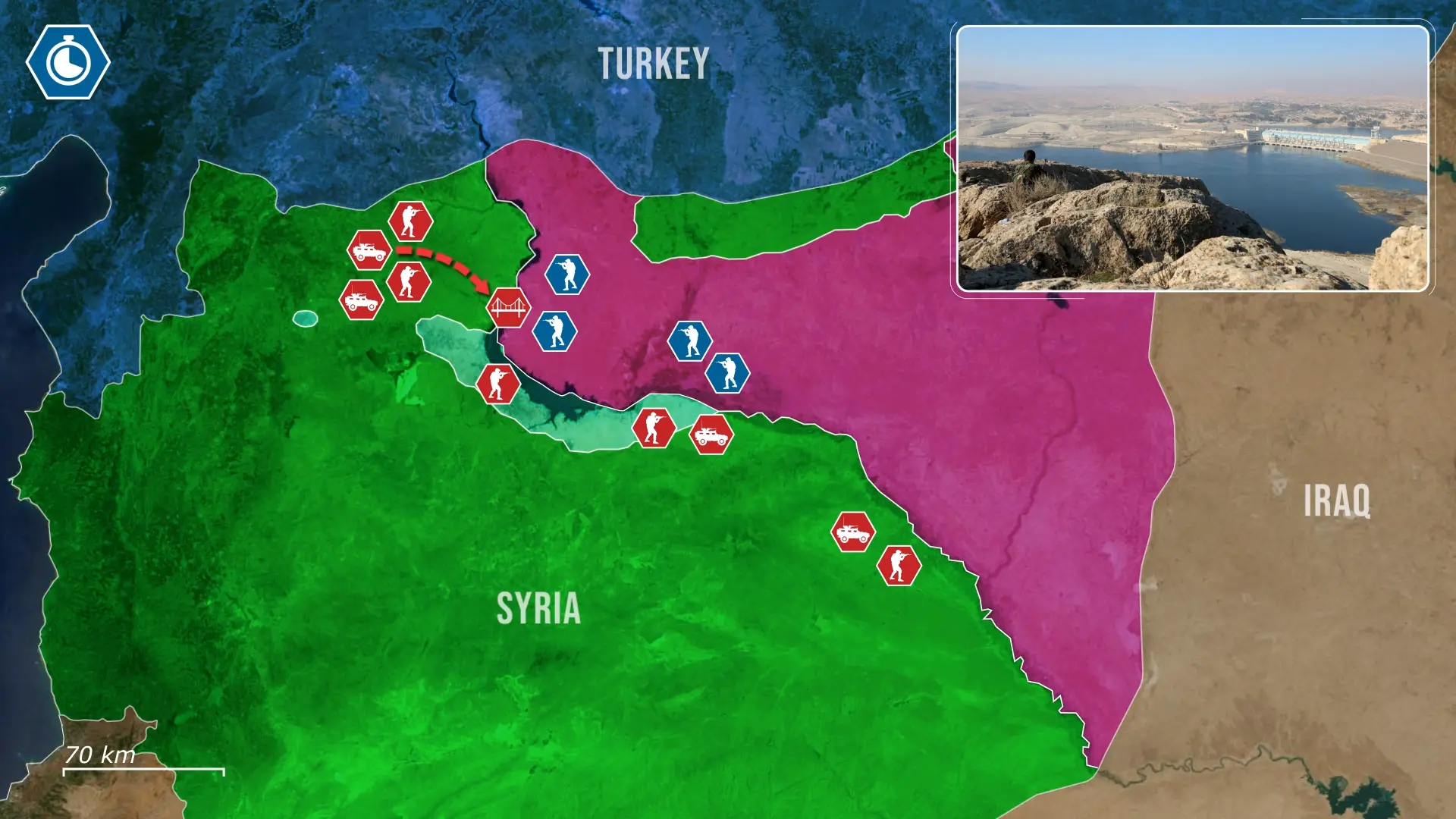
The defection of tribal militia made it impossible to hold a defense line on the Euphrates, forcing a Kurdish withdrawal from the region entirely to core Kurdish cities and strongholds on the Turkish border, losing a major buffer zone, but hoping to make a last stand there. By 20 January, the Kurdish leadership attempted to mobilize reinforcements to compensate for the earlier defection, with nearly 1,000 fighters crossing from Turkey, Iraq, and Iran.
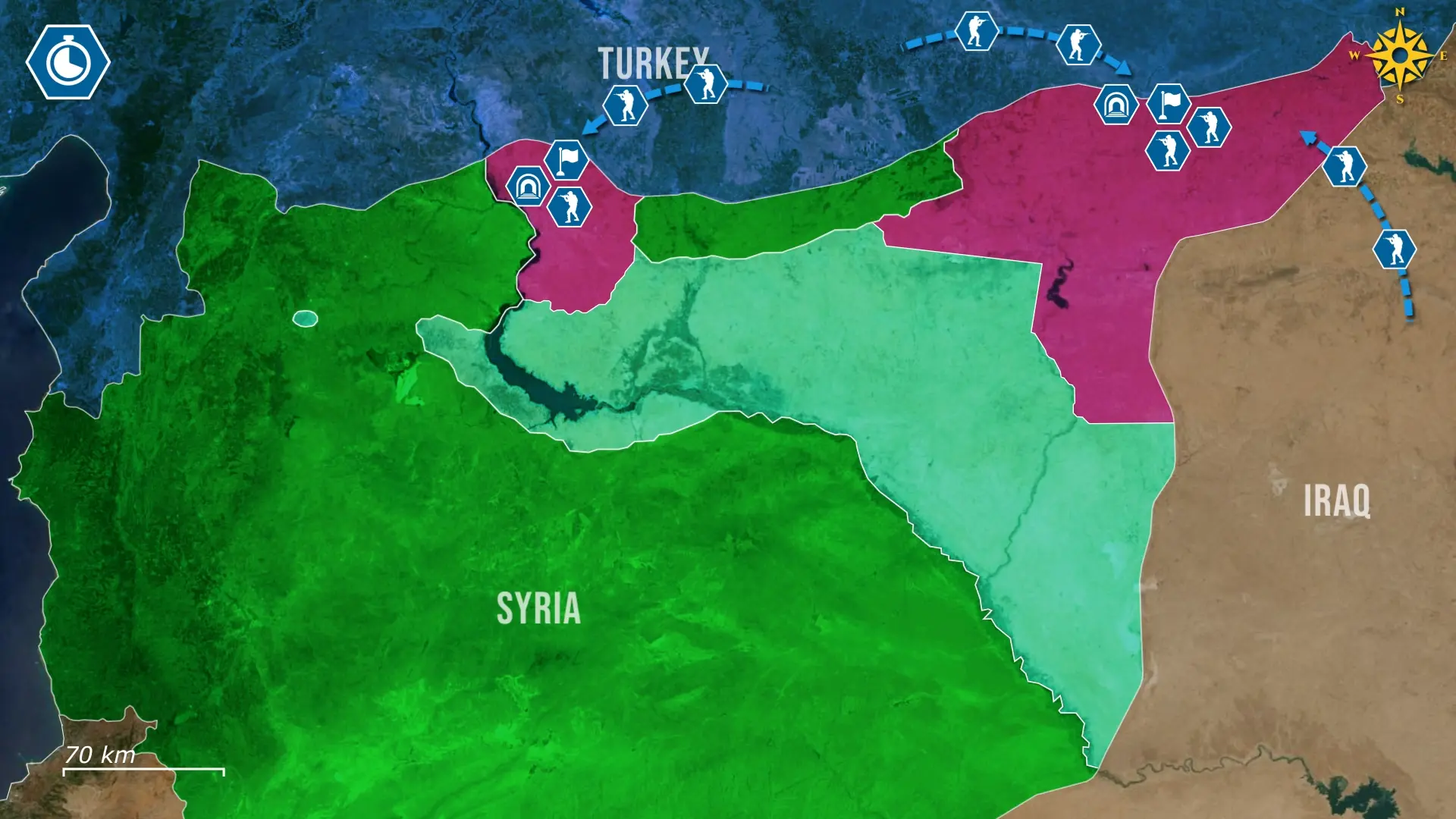
These efforts coincided with growing pressure around Al Hasakah, where government forces moved toward the city and seized the nearby prison complex. The need to secure prison camps holding former ISIS members forced Kurdish units to divert manpower, and several detainees escaped amid the chaos, prompting Iraqi forces to fortify the border to prevent terrorist infiltrators seeking refuge.
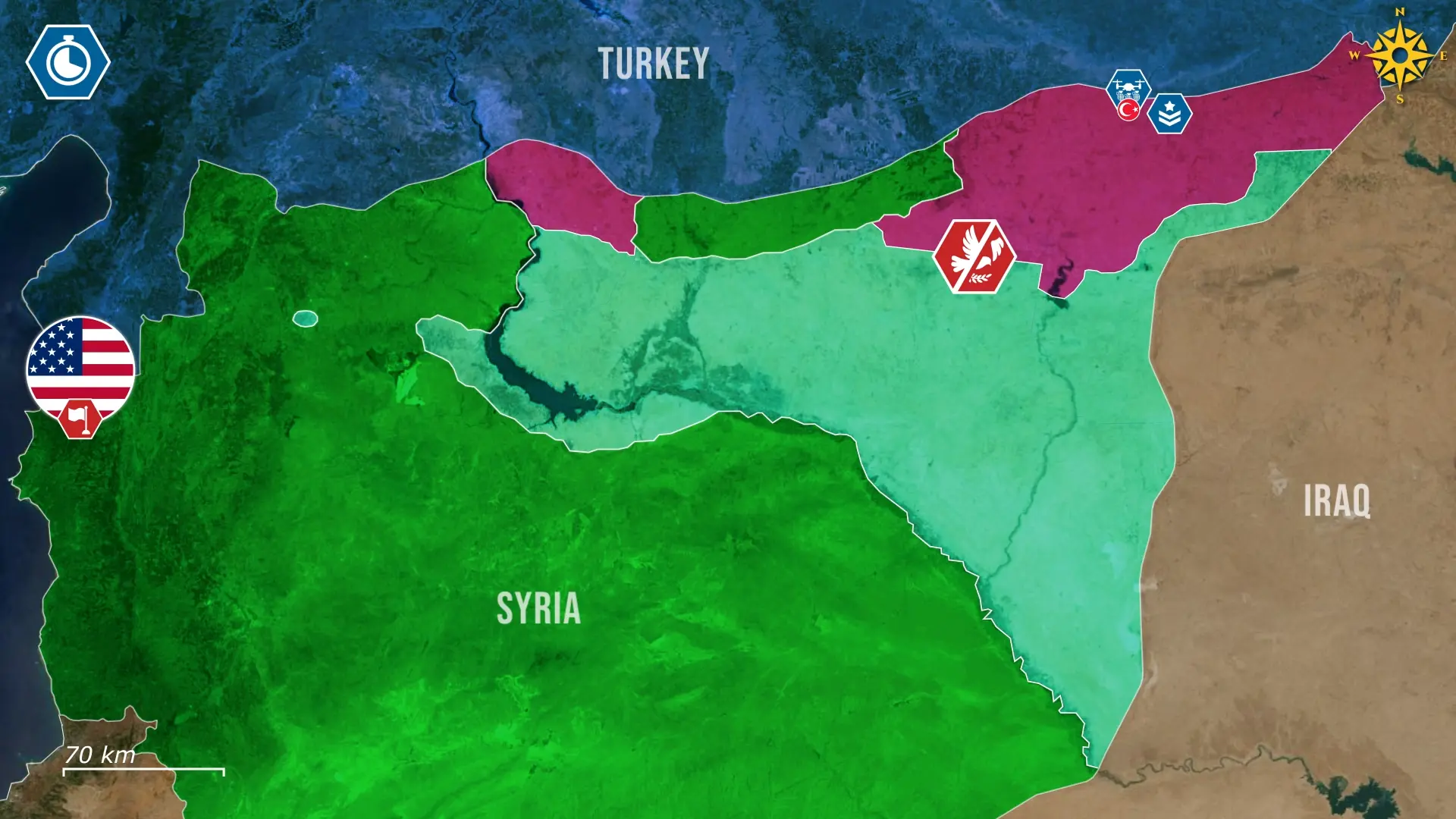
A four‑day ceasefire announced on the 21st of January proved unstable, as some government formations ignored it and opened fire. Turkey began direct military involvement with drone strikes against the Kurds, aimed at decapitating Kurdish leadership as it was organizing the defense. The last hope of the Kurds in the form of an intervention by their US allies never materialized, as the United States formally sided with the Syrian government, removing the last source of external leverage.
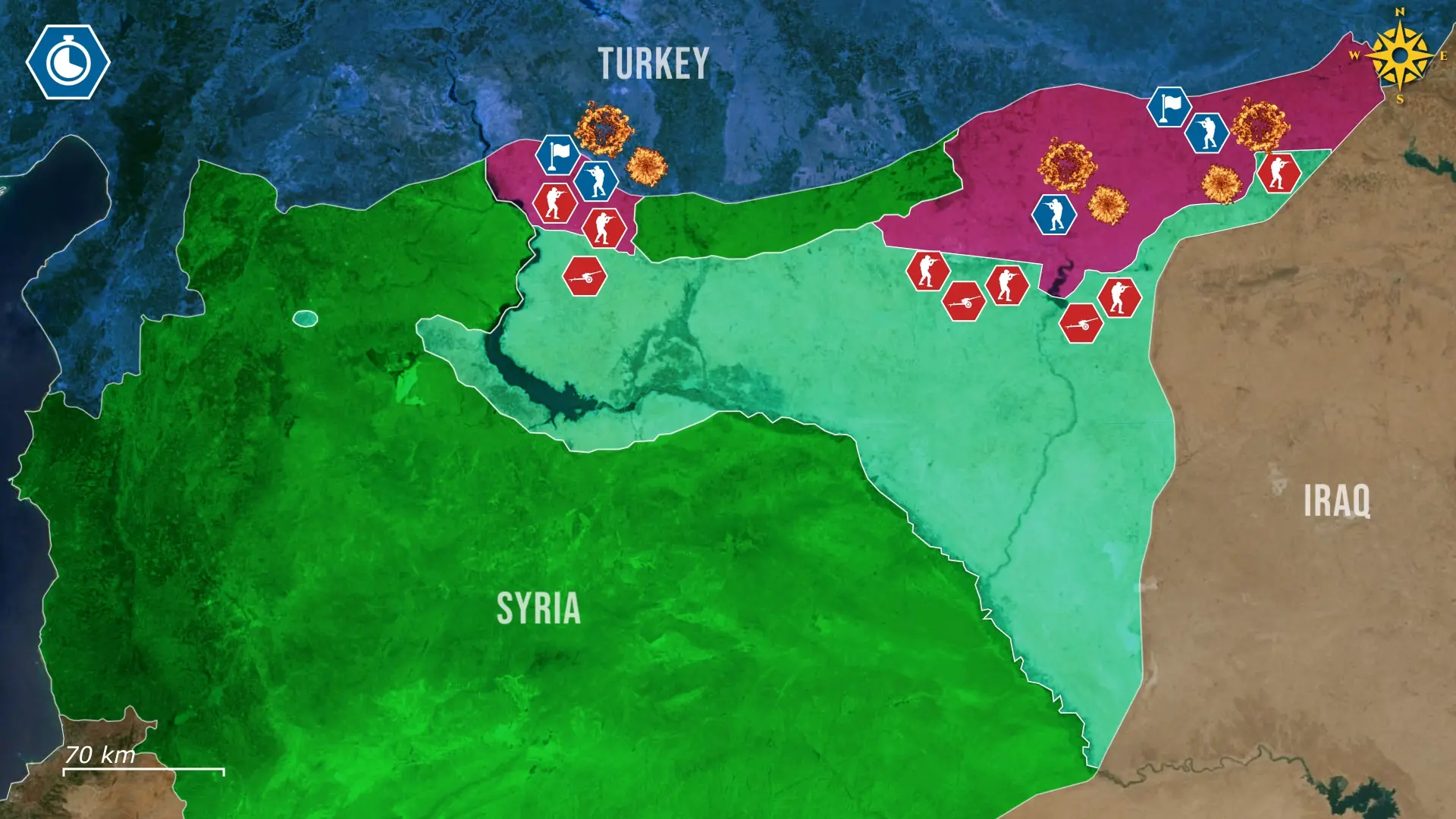
On the 25th, and with new reinforcements of their own, government forces began their siege of Ayn al Arab, launching an intense artillery preparation on Kurdish positions.
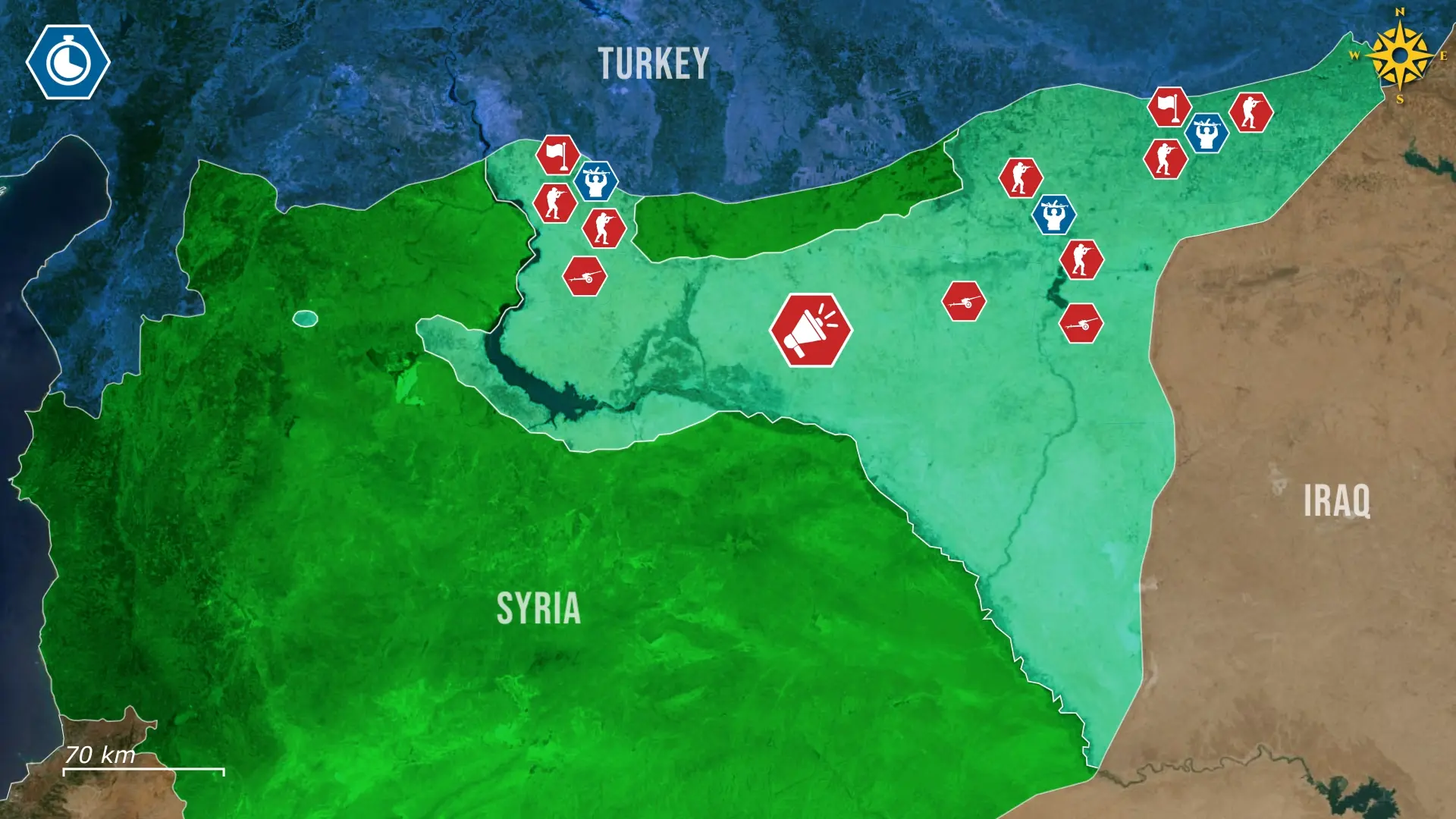
By the 27th of January, the collapse had become irreversible as government forces launched simultaneous ground offensives on the enclaves in the north and northeast, and Kurdish surrenders began shortly afterward. By late January, government forces were advancing directly on Al Hasakah and Ayn al Arab, and by the 2nd of February, both cities had fallen. 2 days later, the Syrian government announced full control over all formerly Kurdish‑administered regions, marking the end of the decade-long autonomous Kurdish nation in northeastern Syria.
With territorial control secured, the government’s priority is consolidation, extending administrative authority into areas that operated autonomously for more than a decade. The official line emphasizes national unification and administrative normalization, aiming to stabilize daily life.
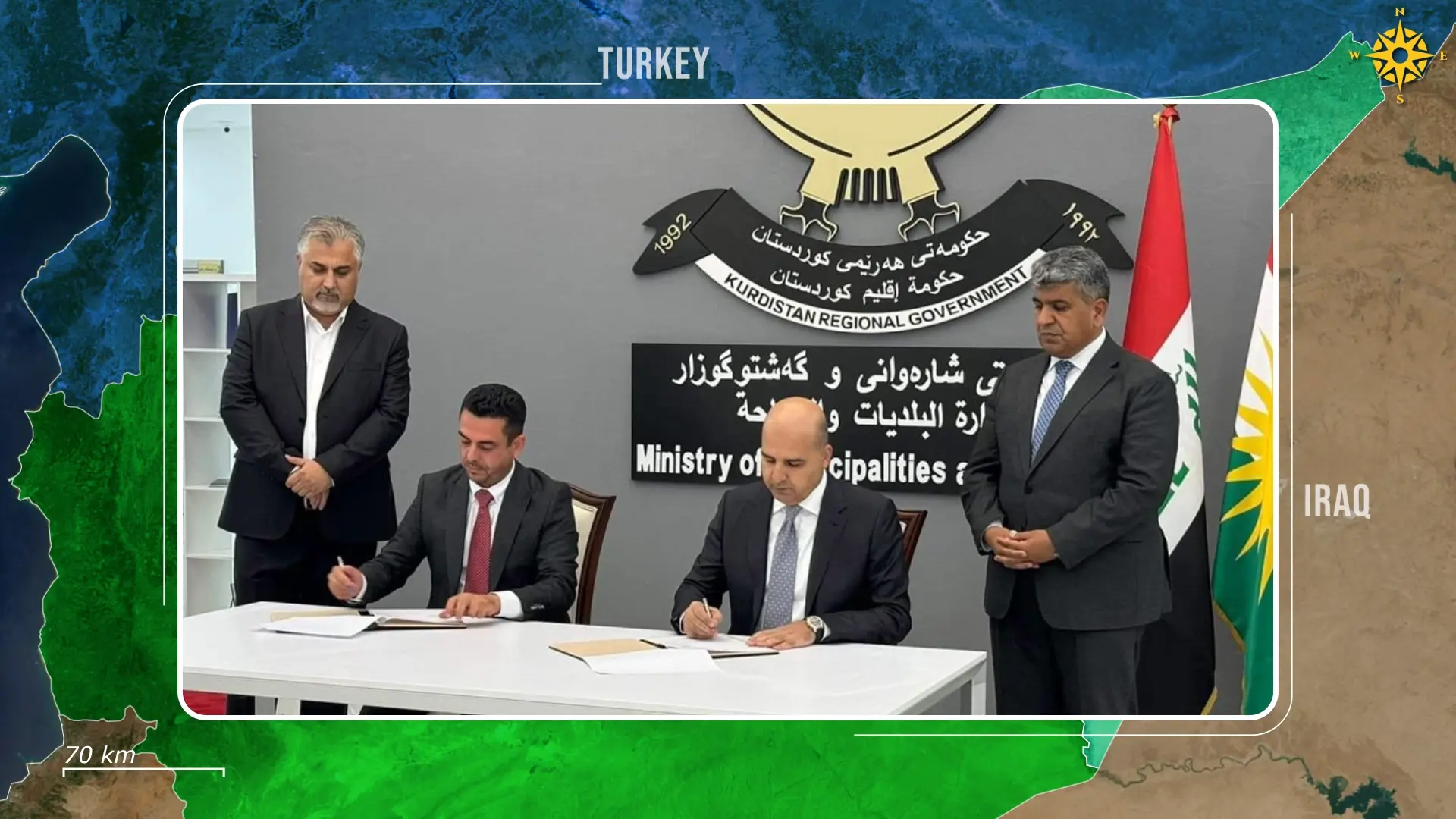
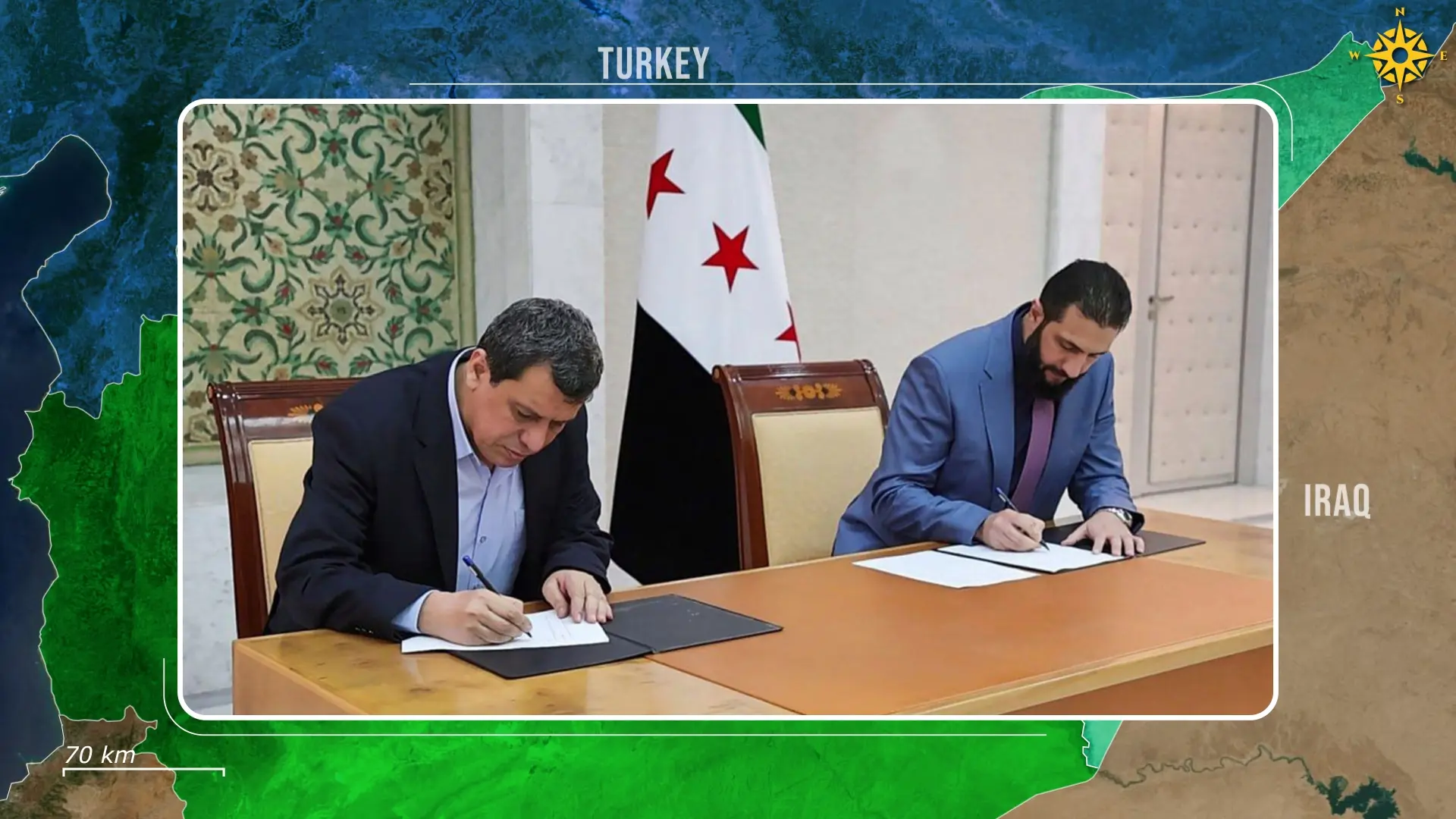
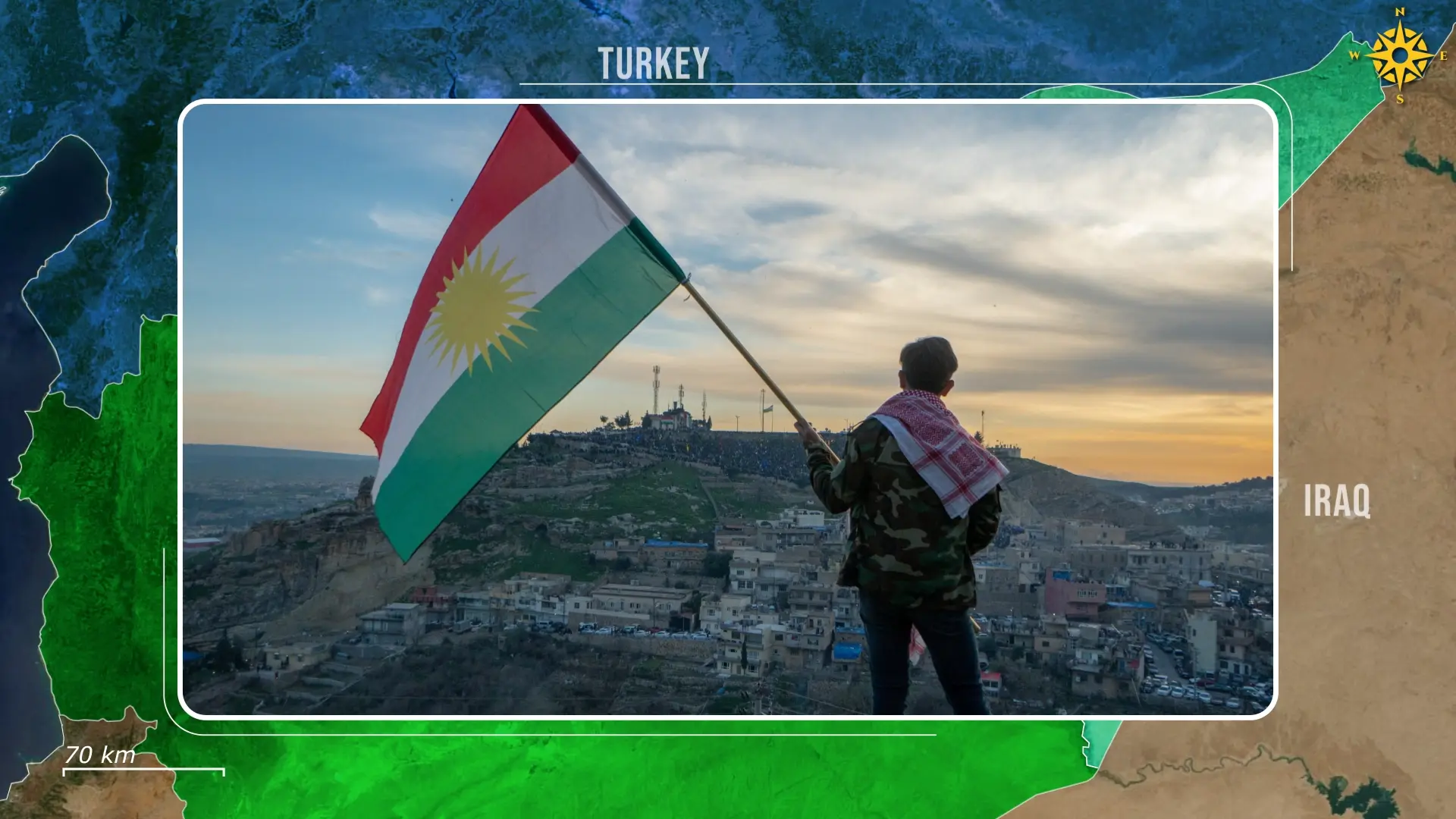
However, Kurdish leaders have expressed concerns that centralized governance could limit space for Kurdish-language education, local administrative autonomy, and community-level decision-making that defined the autonomous period for many. They also note that the integration process has not yet clarified how cultural institutions or local governance practices will be preserved, raising questions about long-term representation within national structures.
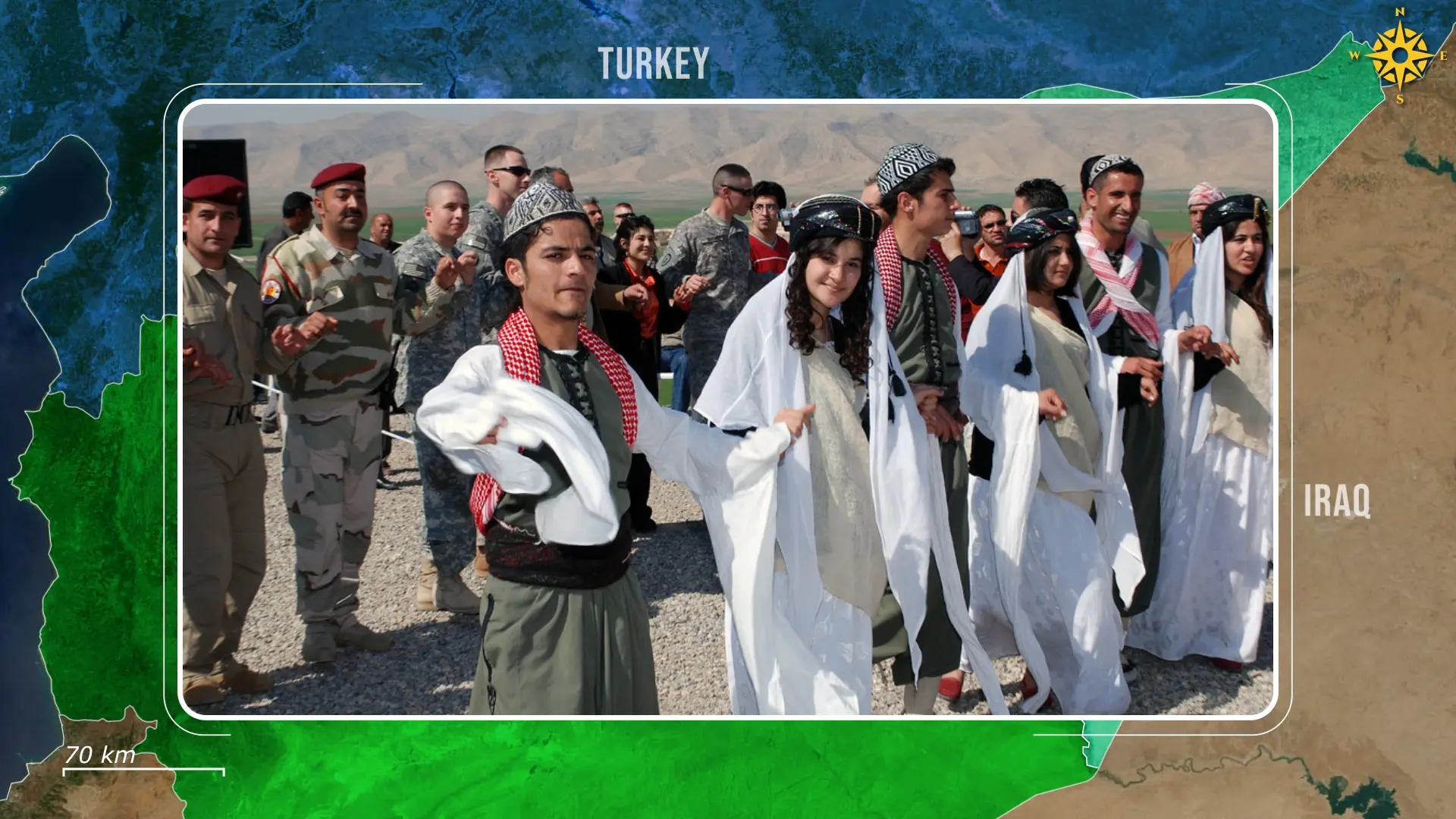
Furthermore, reports indicate friction between Kurdish recruits and established military units, which may affect early stages of integration. Kurdish fighters bring more than a decade of operational experience under their own decentralized command structures and local autonomy, which makes individual integration into the centralized governmental forces more challenging.
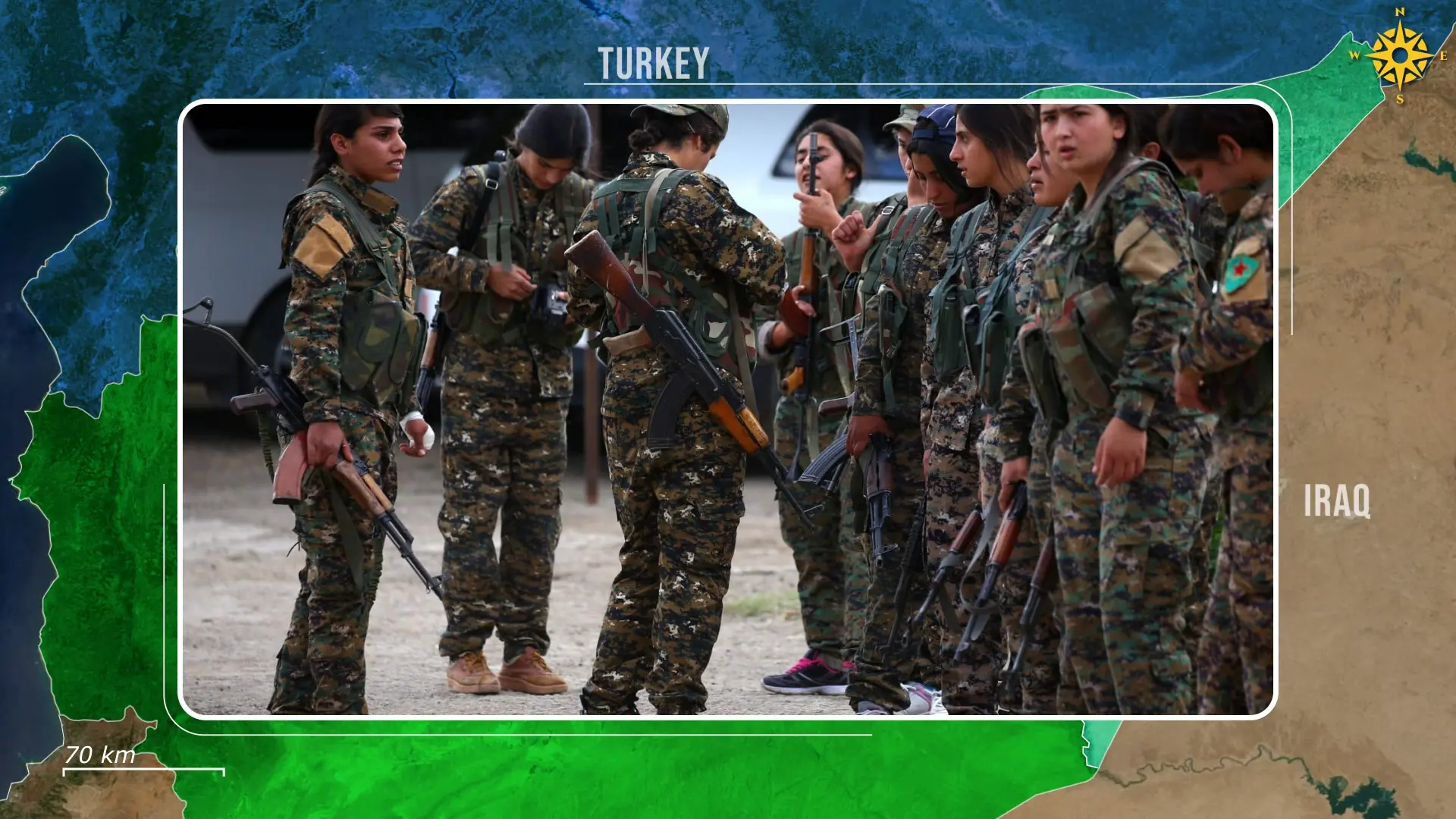
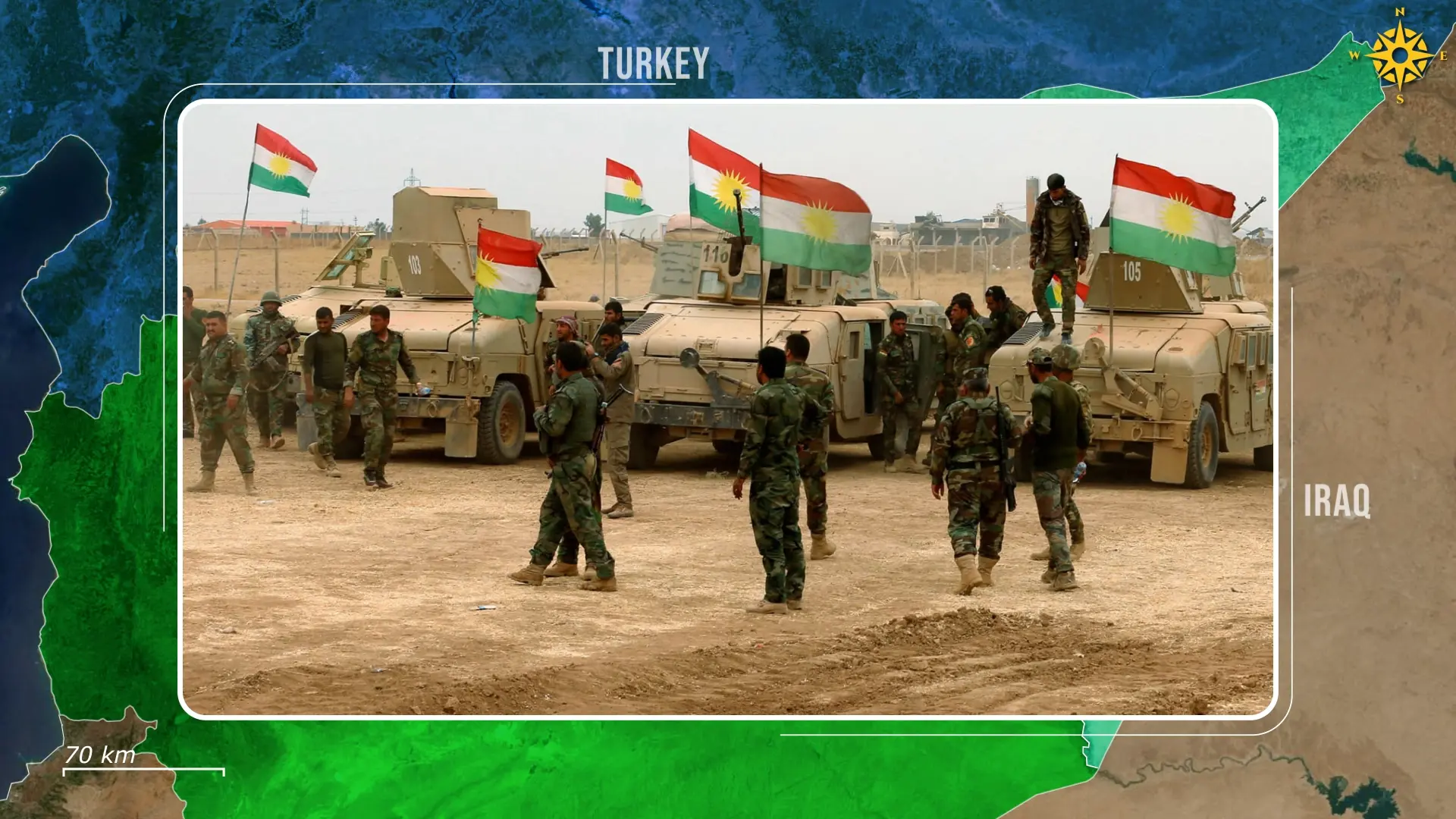
Although an agreement between the Kurds and government forces has been reached to partially safeguard the autonomy of the local Kurdish units and peoples, it is not certain whether the terms will be respected or to what extent. For instance, disagreements have already emerged over checkpoint procedures, command hierarchies, and the replacement of local security posts with new Syrian army units.
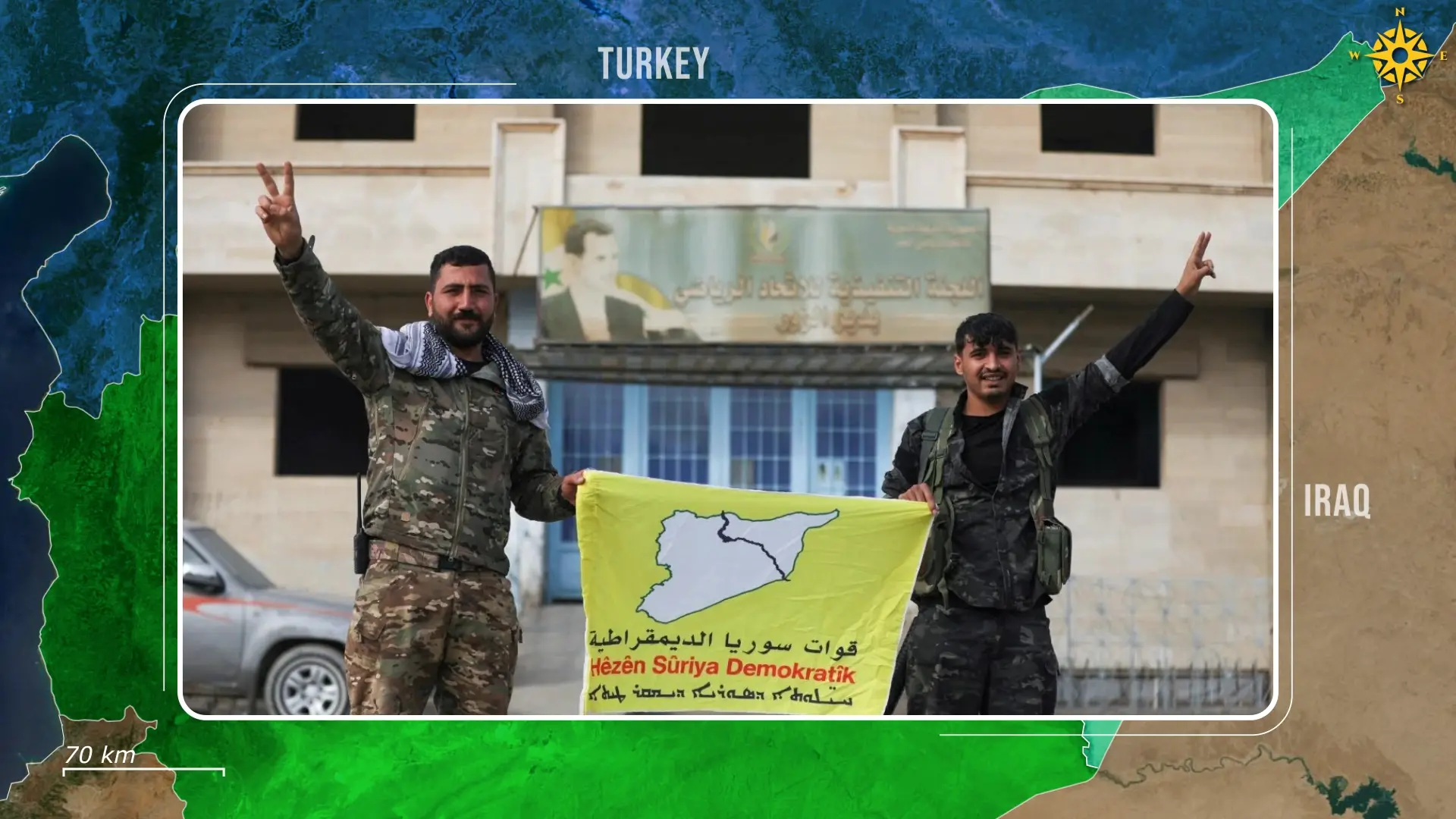
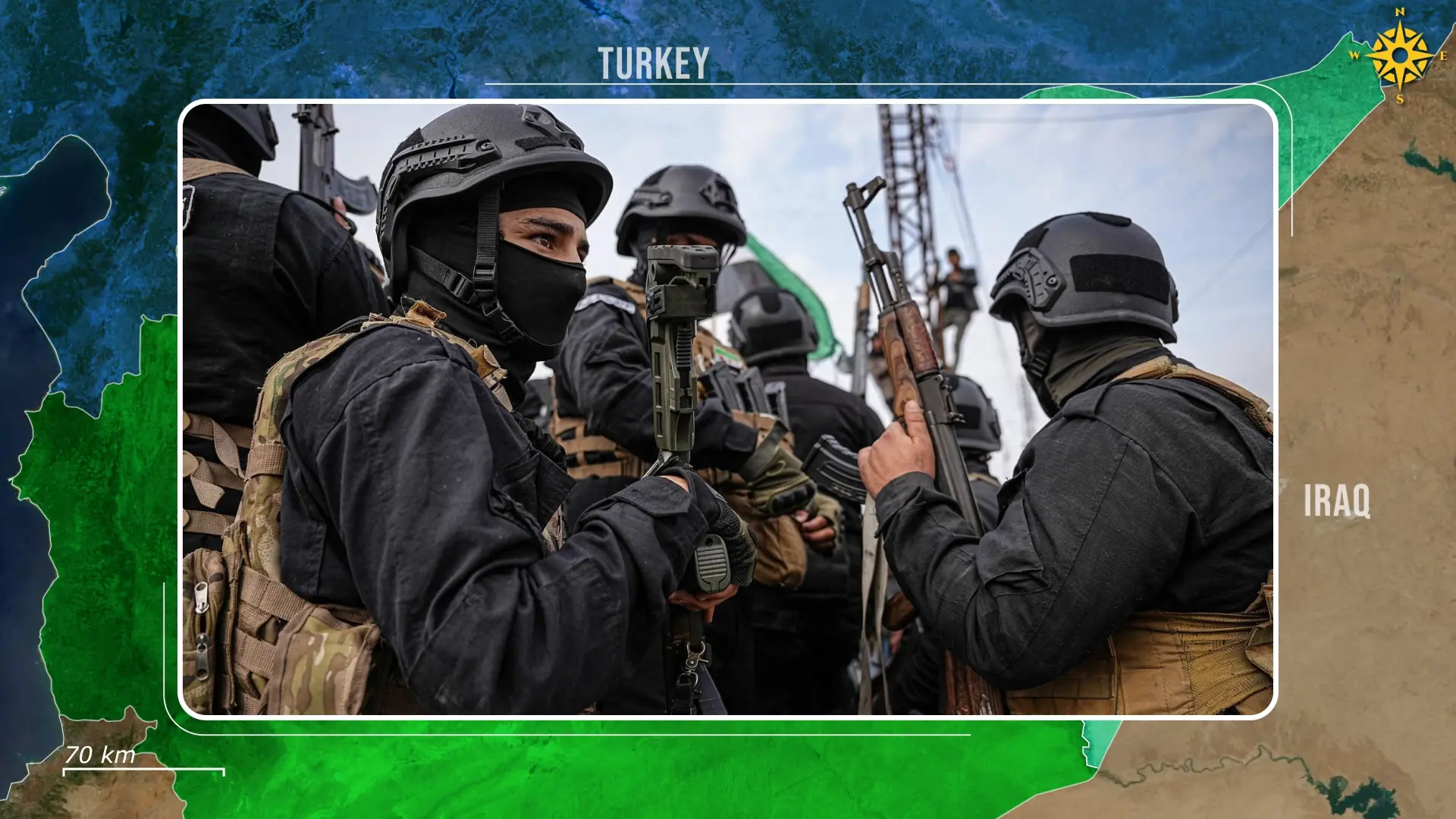
Overall, the fall of Kurdistan and the emergence of a unified Syria reflect a convergence of military pressure, shifting alliances, and rapid political consolidation. The government now faces the challenge of transforming battlefield gains into stable governance across a diverse region. Kurdish communities are entering a period of uncertainty as their institutions are dismantled and their fighters absorbed into national structures. The durability of this new order will depend on whether integration can move beyond formal measures and address deeper questions of representation, security, and trust.

.jpg)

Comments