

.svg)
Today, the biggest news comes from Sudan.
Here, the country is witnessing an escalation in drone warfare that is transforming the conflict into one of the most technologically dense battles in the region. However, the diffusion of these systems across both factions is locking the war into a slower, attritional pattern that begins to mirror the war in Ukraine.
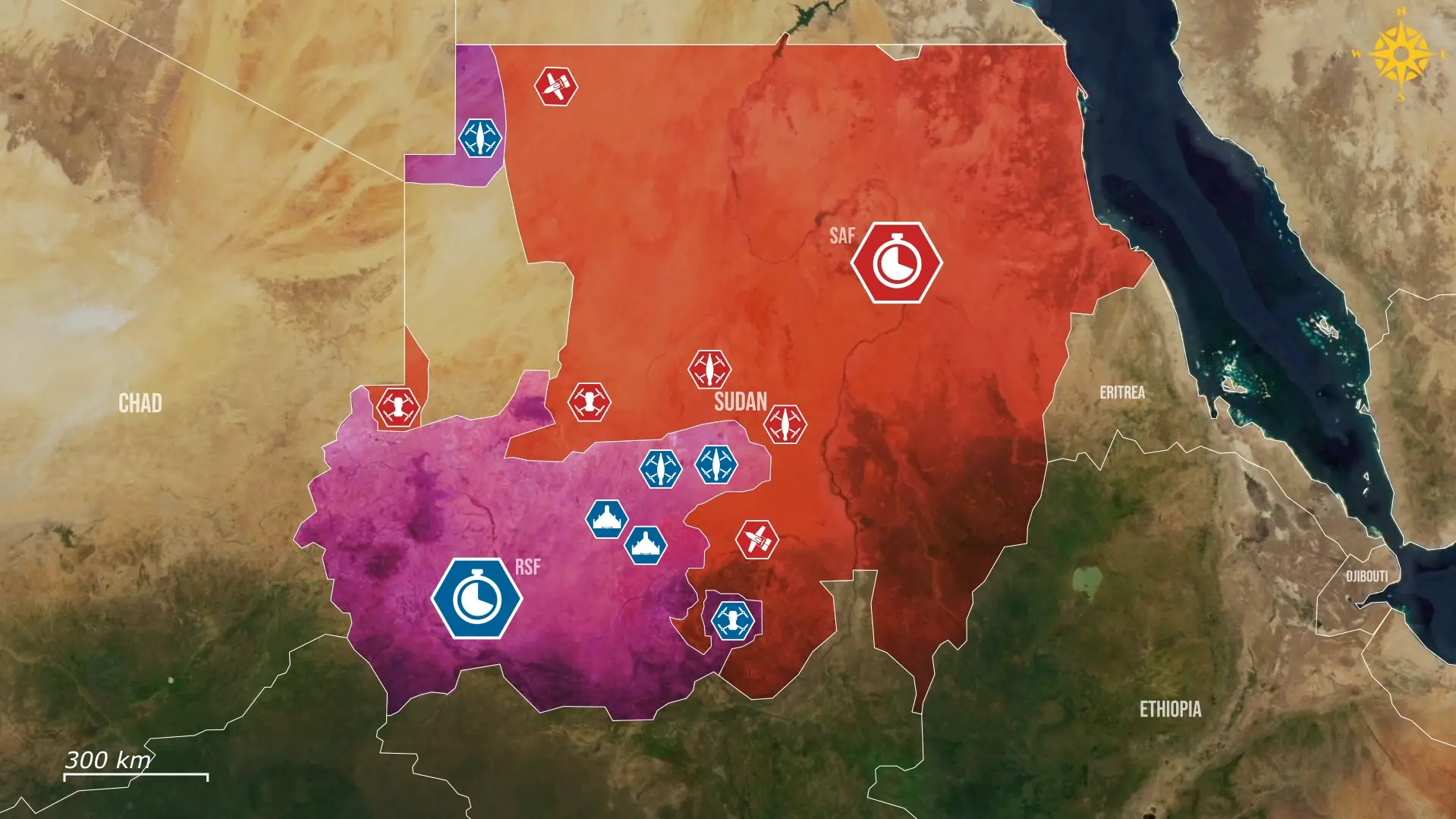
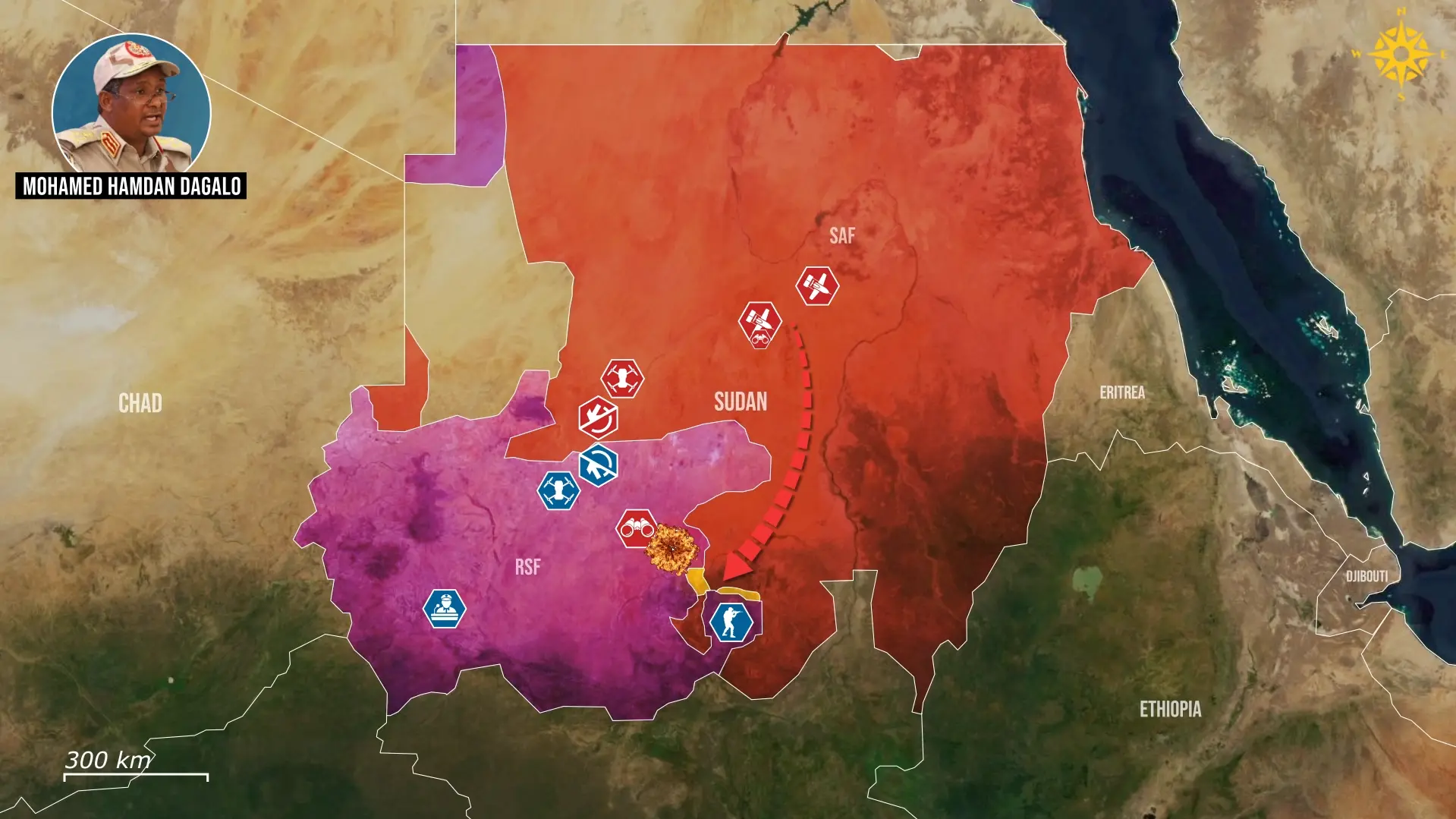
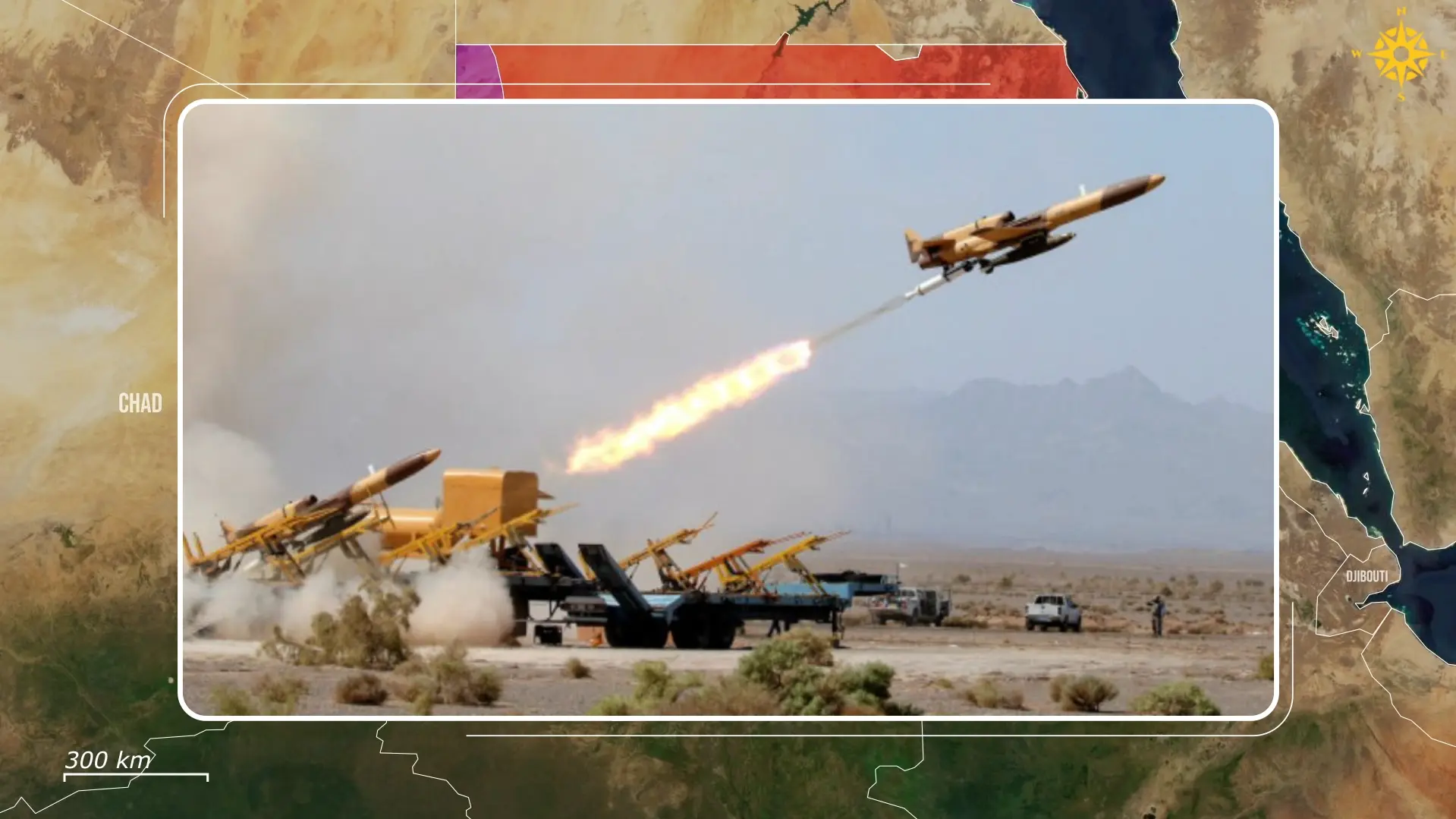
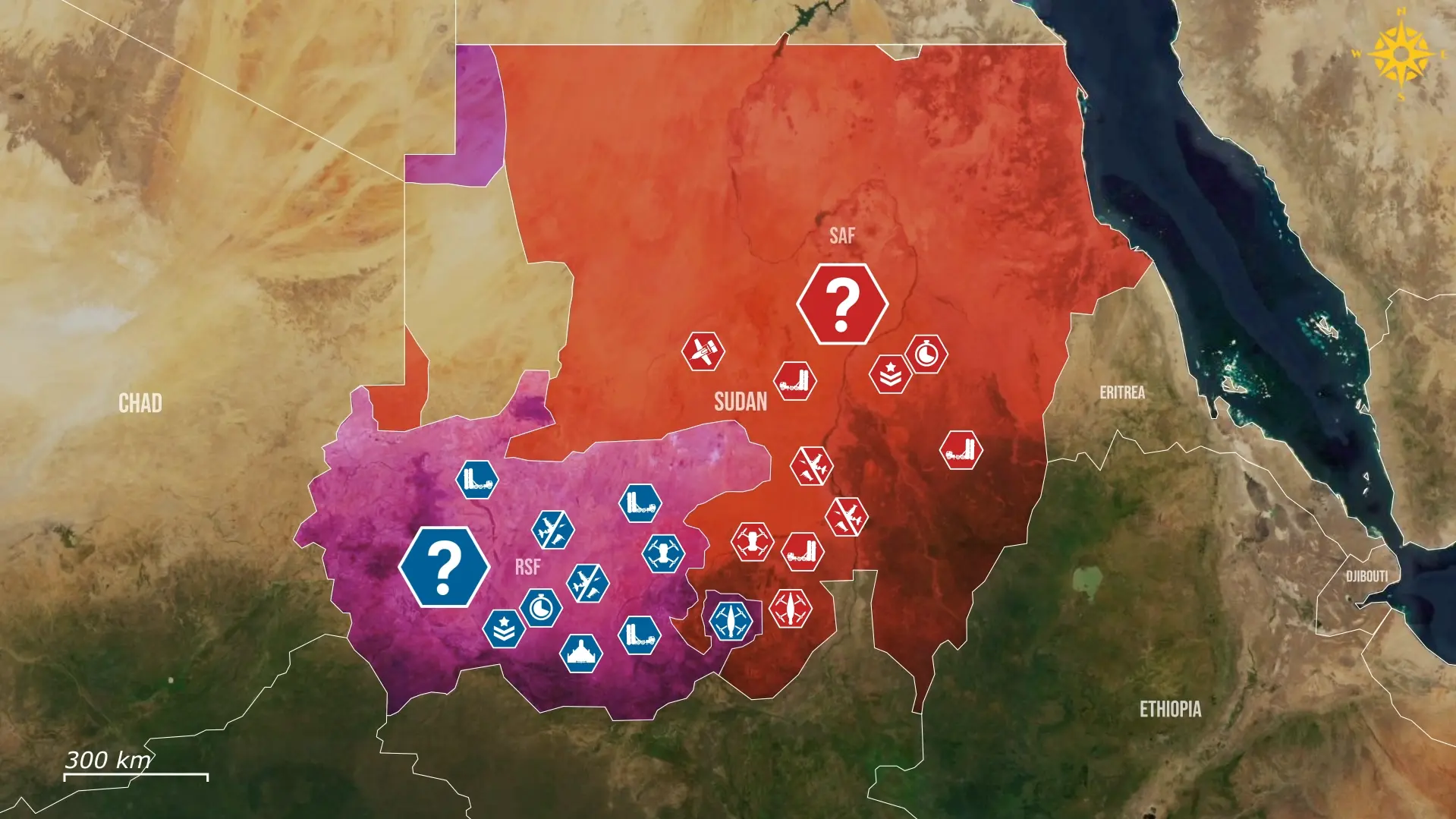
The commander of the Rapid Support Forces recently argued that without drones supplied to the Sudanese Armed Forces, the conflict would already be over. This claim reflects a new reality in which drones have altered the balance of power, preventing either side from achieving a rapid breakthrough. The SAF’s ability to integrate new systems, including the Iranian Mohajer-6 and Turkish Bayraktar models, has enabled it to overcome earlier setbacks, regaining ground on strategic routes and breaking the encirclement of Dillin. In fact, these systems have increased SAF surveillance and strike capacity, which has slowed RSF advances and forced it to rethink its strategy.
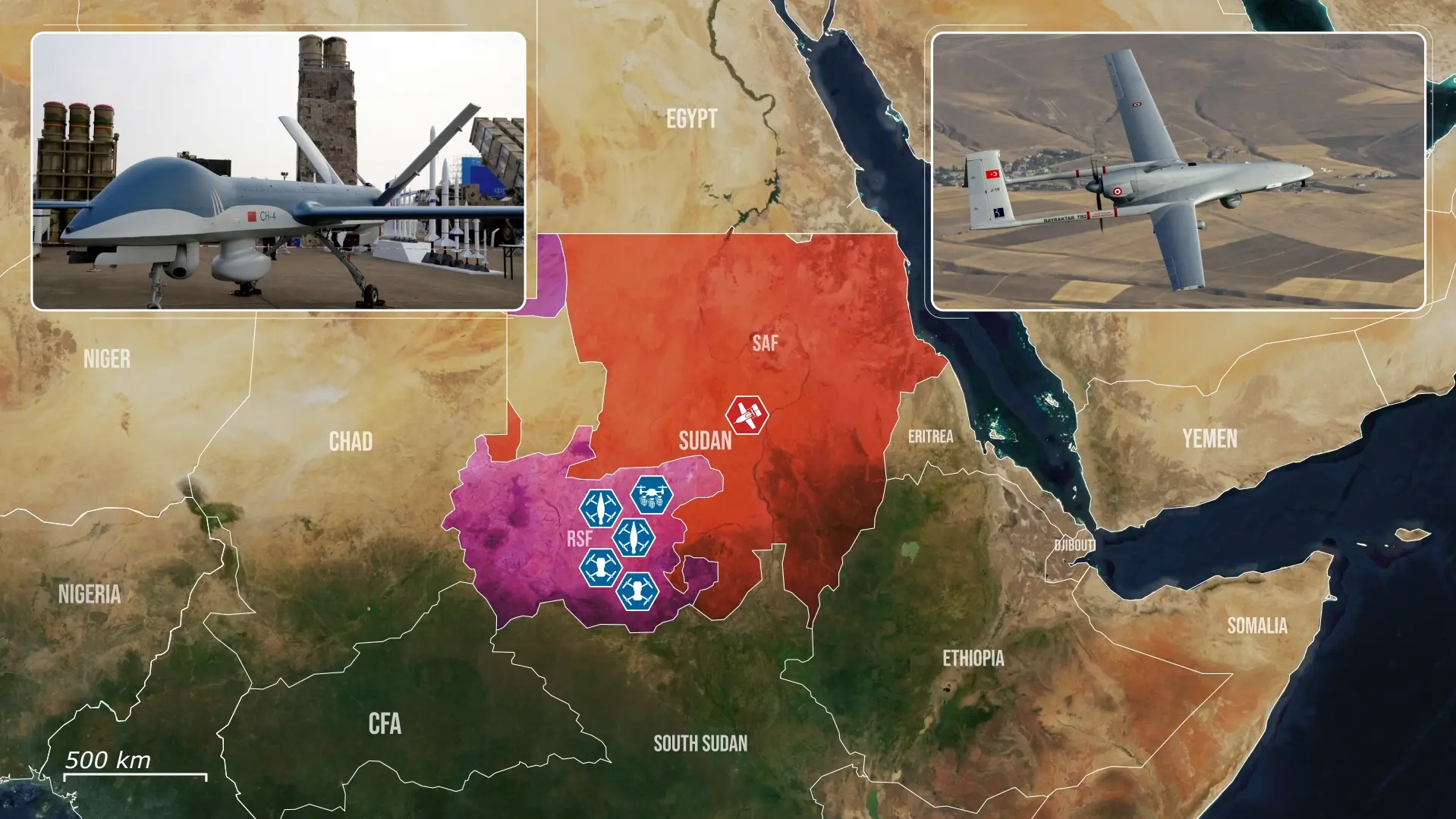
The RSF was the first to deploy drones on the Sudanese battlefield, which initially gave it an edge. The RSF uses CH-95 drones and other modified commercial quadcopters capable of carrying mortar shells. Now, both sides operate a wide range of systems, including long-range drones such as the Bayraktar TB2’s and Iranian-supplied Mohajer 6 in use with the SAF forces.
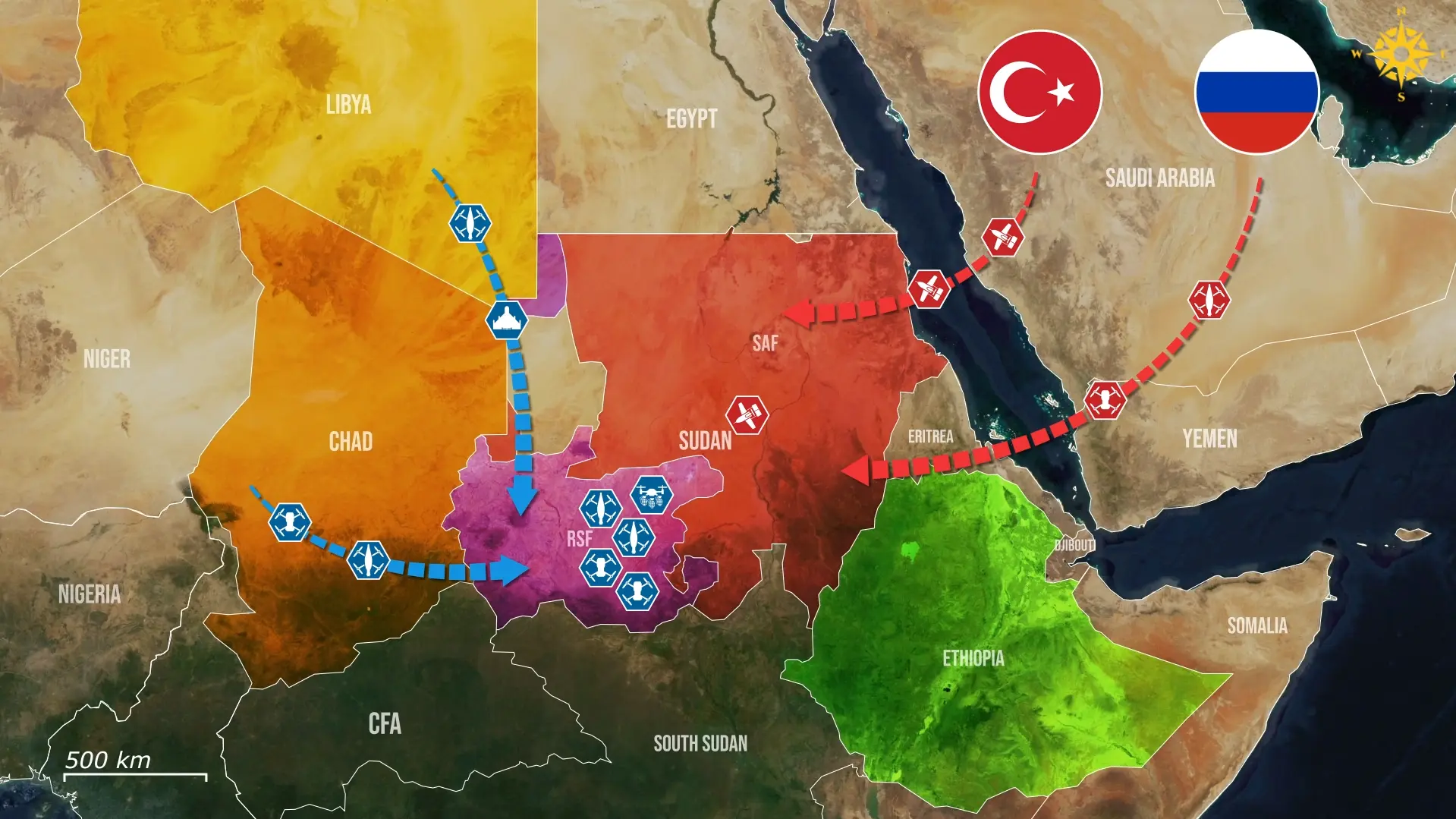
External support networks have made this expansion possible, as Turkey and Russia supply the SAF, while the RSF receives equipment through logistical corridors from bordering Libya and Chad. These deliveries are normalizing drone use across the conflict and are increasing the frequency and geographic spread of strikes.
In fact, both sides now use FPV’s and small bomber drones, expanding their operational range, and preventing infantry concentrations. Troops stationed in trenches without aerial protection are also vulnerable, as drones can spot them and strike from above. Crucially, drones can target armored vehicles and hit them in their vulnerable spots, such as the top and the rear, a criticality that forced an entire redesign of tanks on the Ukrainian battlefield. The cumulative effect is attrition and slow offensive maneuvers which forces units to move cautiously, avoid open terrain, and constantly relocate.
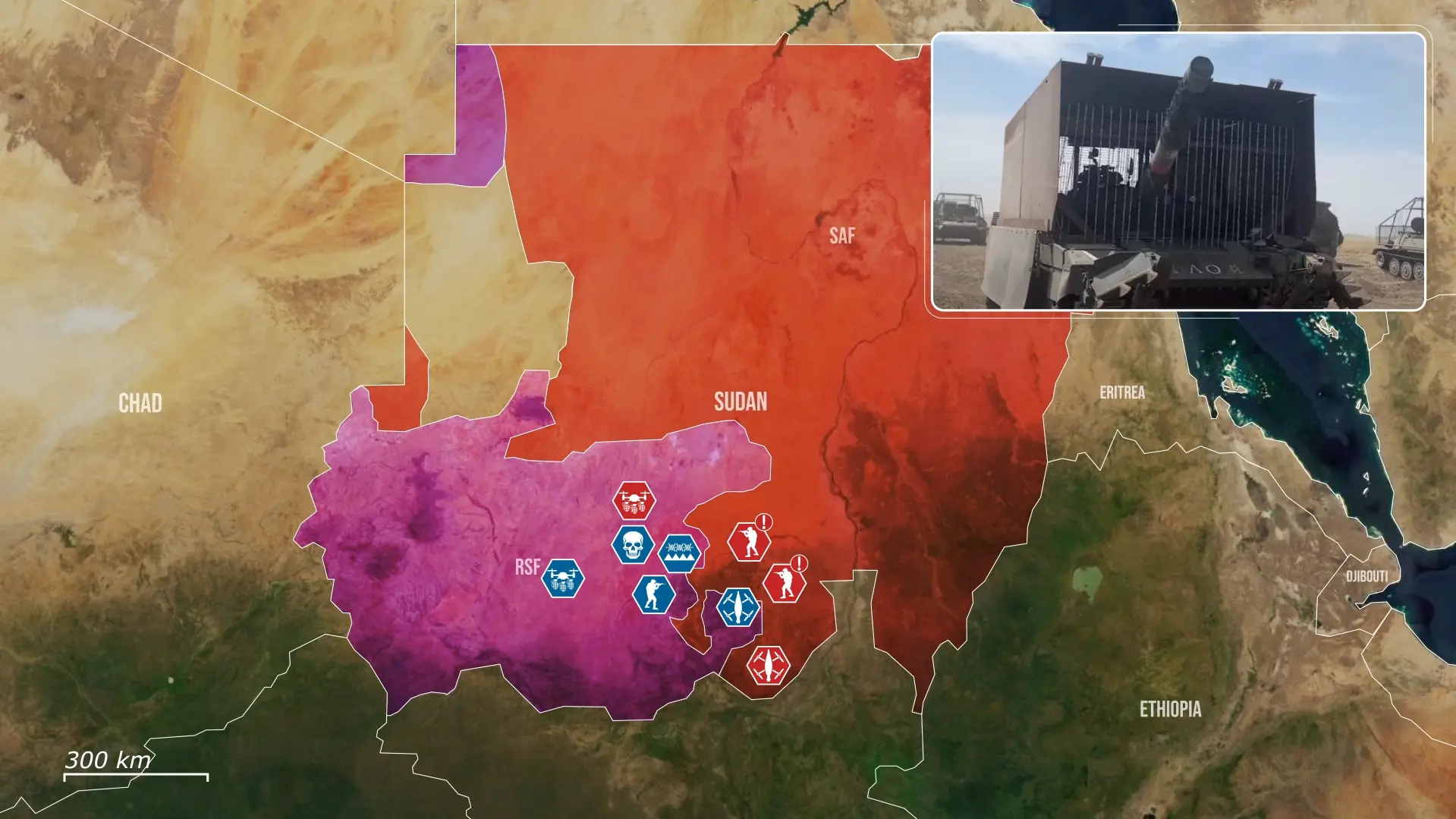
However, Sudan’s drone war now extends far beyond frontline engagements. The Sudanese government has accused Ethiopia of enabling RSF activity by allowing long‑range drones to strike SAF airbases, which adds pressure on already stretched logistics, as visible in Ukraine. Similarly, Egypt has supported the SAF with cross‑border drone strikes against RSF positions. Drones are also being used for high-profile targeting, as seen in earlier SAF strikes that eliminated a senior advisor of the RSF commander.
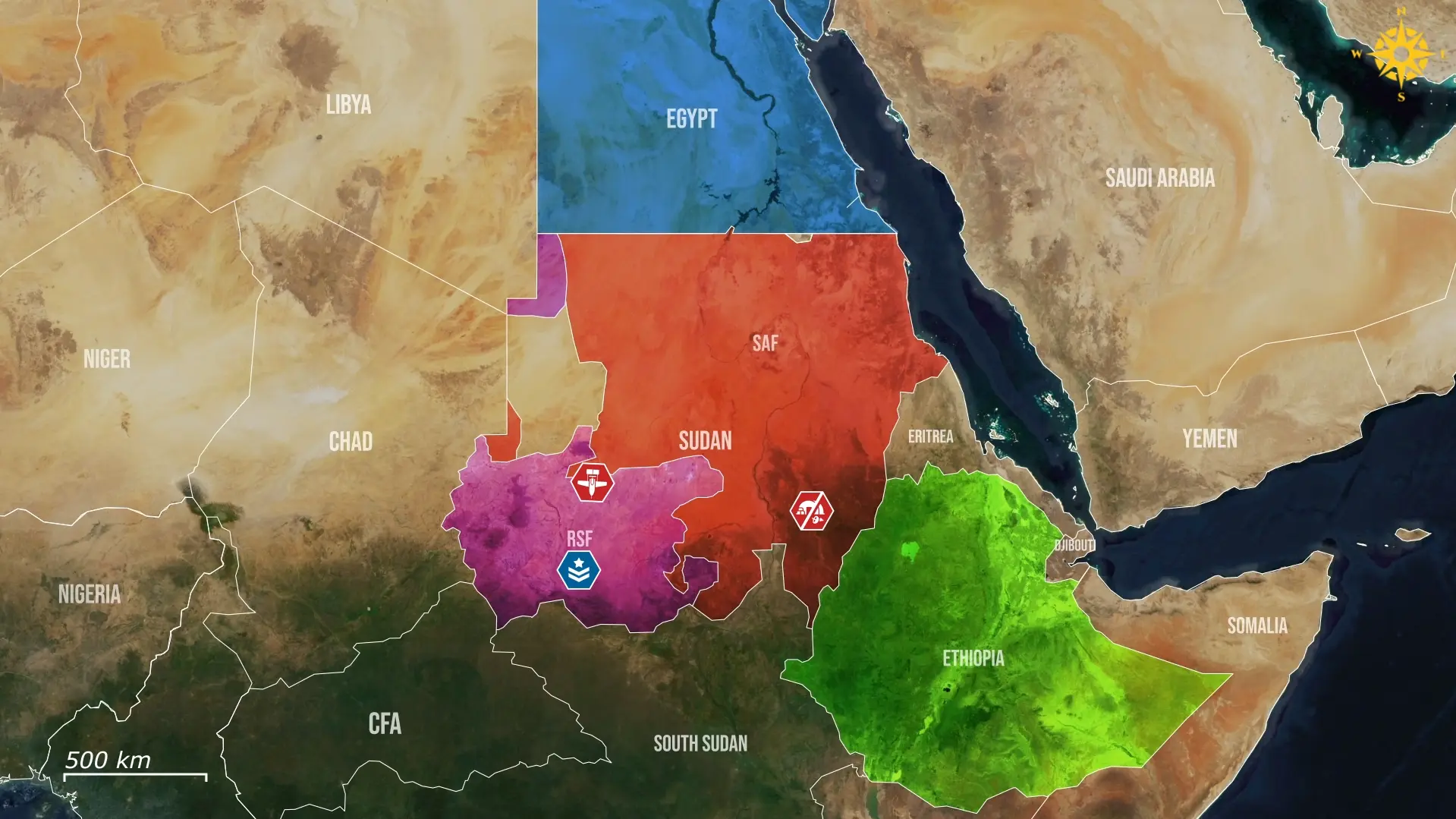
Since neither side has so far managed to secure air superiority, drones have become the viable alternative to the fighting in Sudan. However, the SAF is increasingly focusing on dismantling RSF air defenses, which could reopen the airspace for its air force.
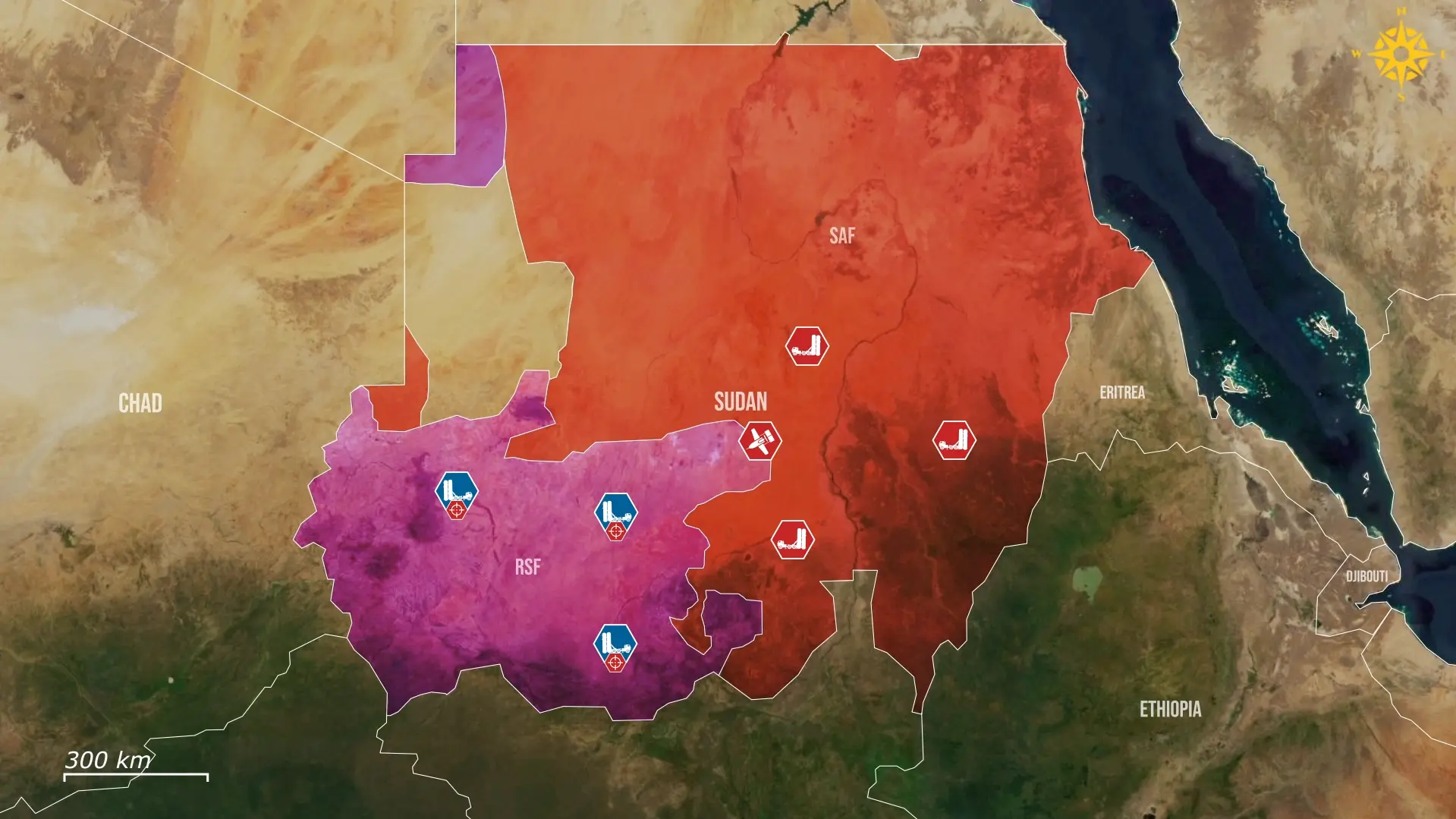
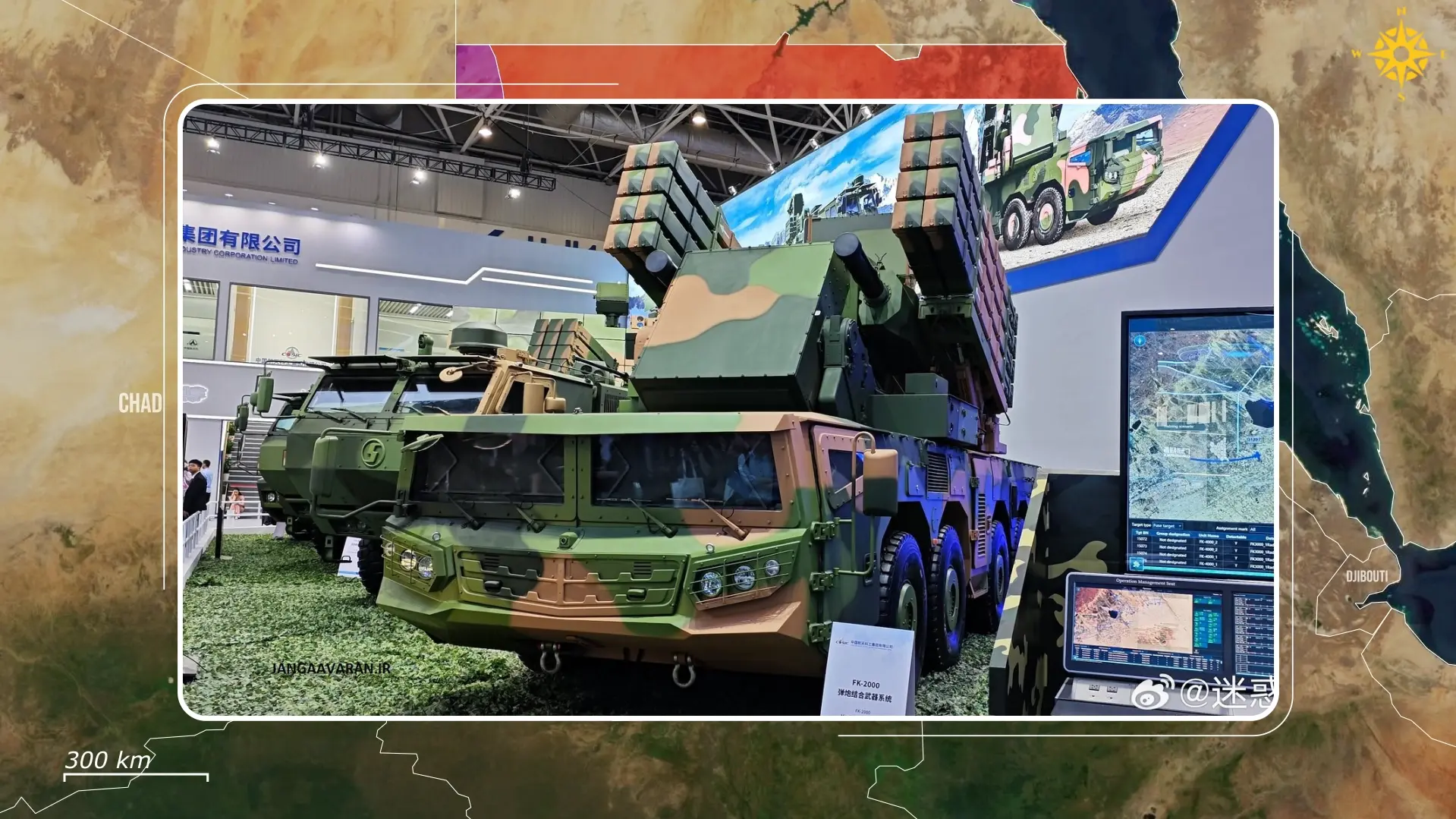
RSF air defenses, including systems such as the FK 2,000 limit the ability of SAF to operate aircraft, reducing the flow of supplies and personnel to towns under siege. Without these air defenses and in an uncontested airspace, the SAF could more easily break city encirclements and perform bomber strikes, causing heavy losses.
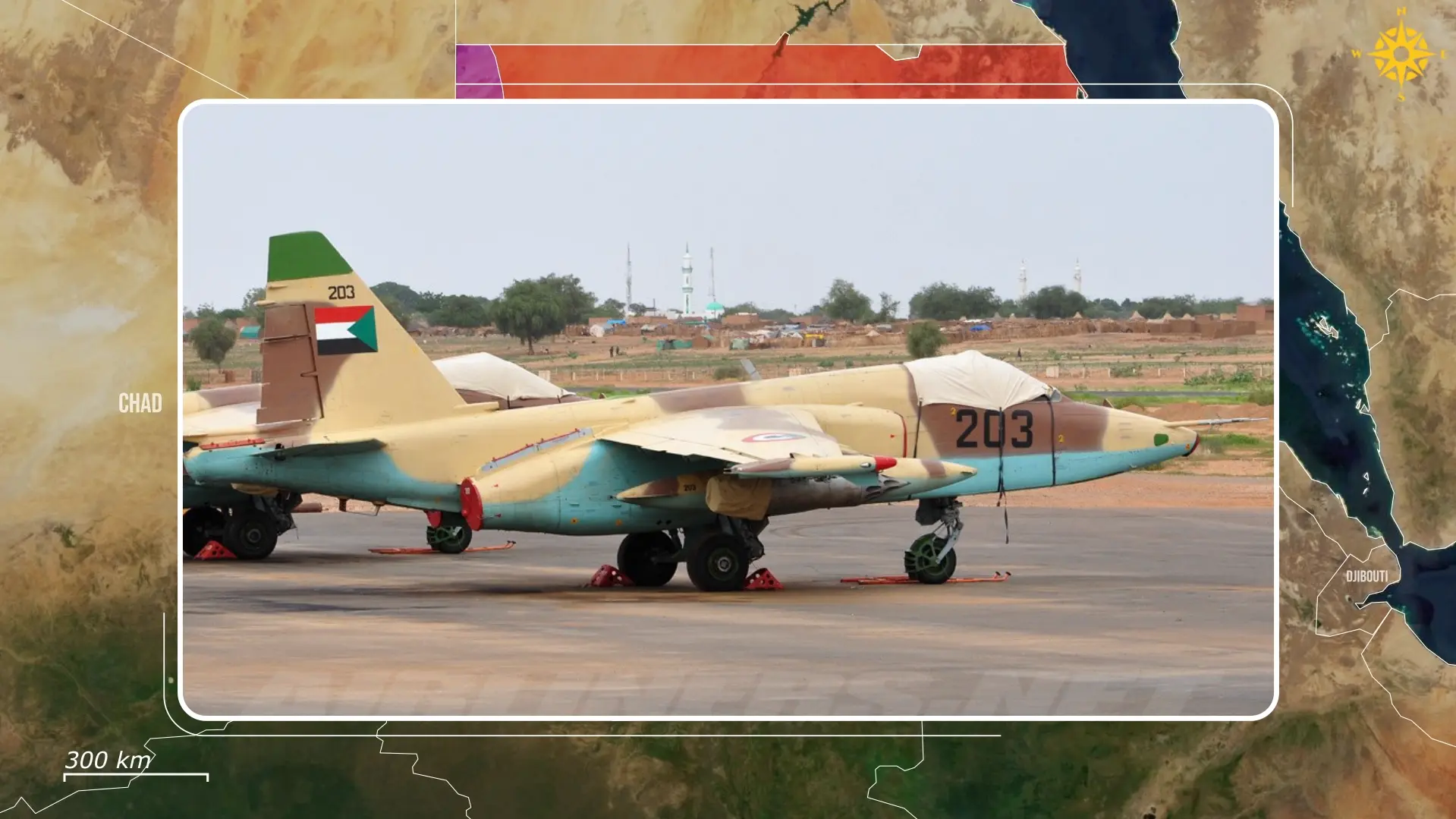
In fact, if one side controlled the skies, drone usage would decline immediately, as air strikes would become extremely effective. Currently, the contested airspace mirrors the situation in Ukraine, pushing both sides toward extensive drone use and producing a battlefield shaped by attrition rather than maneuver.
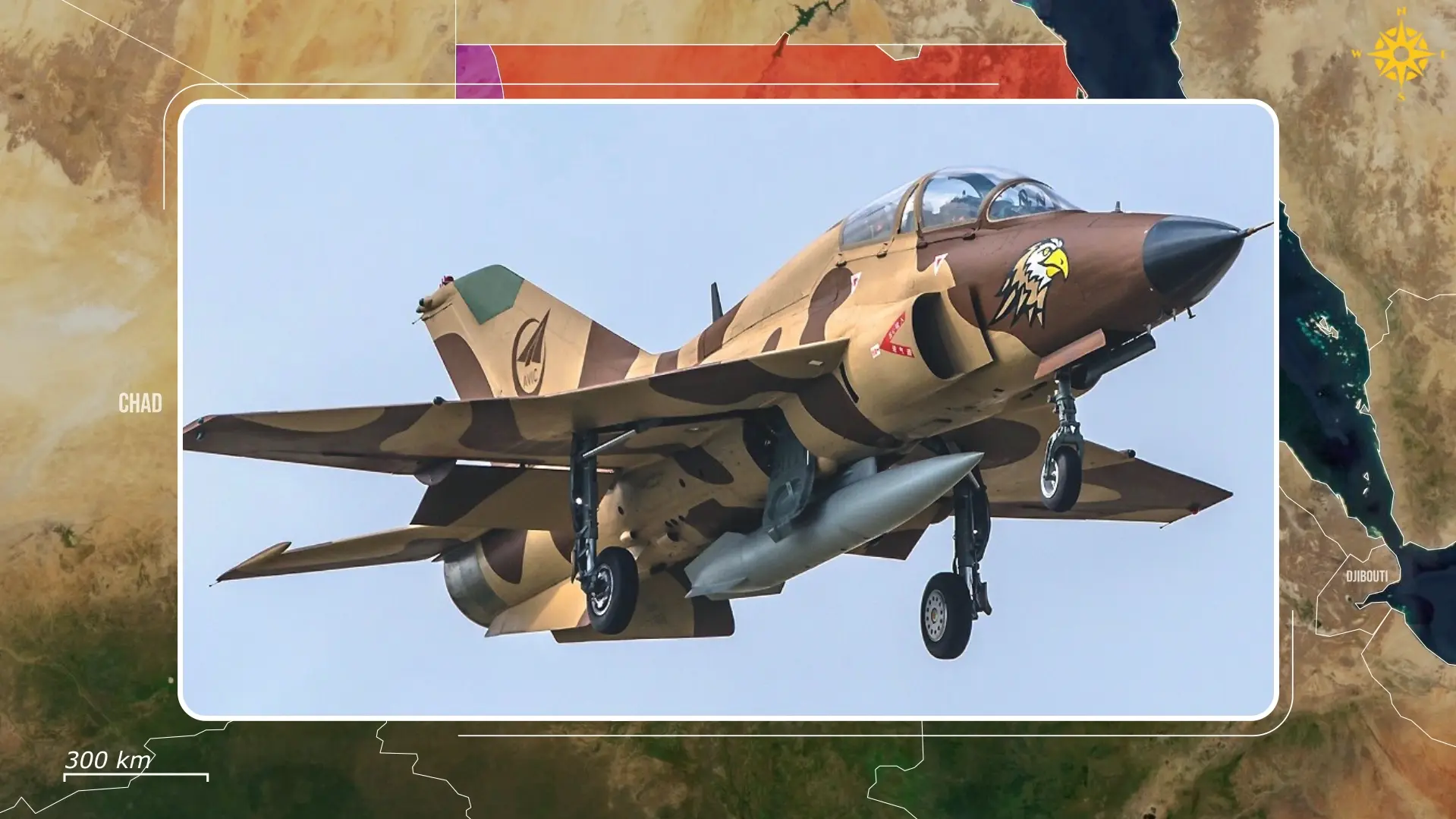

A similar pattern is emerging in Sudan, where continuous drone strikes across the front and the rear prevent either faction from consolidating gains, further expanding the grey zone.
Overall, the spread of drones in Sudan has transformed the conflict into a grinding confrontation, shaped by external suppliers, evolving tactics, and the absence of air superiority. Their use has expanded from frontline strikes to long-range operations that target infrastructure and airbases, reinforcing a pattern of attrition. This shift suggests that the war will continue to resemble other drone-heavy conflicts, where technology slows decision-making rather than accelerating it. The growing reliance on drones also raises questions about how future negotiations or ceasefire arrangements will address this persistent threat.

.jpg)

Comments