

.svg)
In this video, we will analyze Ukraine’s large-scale campaign against Russian ports.
Here, Ukraine unleashed systematic strikes on Russian vessels and maritime infrastructure in order to cut Russia’s internal naval routes. These strikes set the whole Azov coast ablaze, targeting every Russian port and leaving Crimea fully exposed.
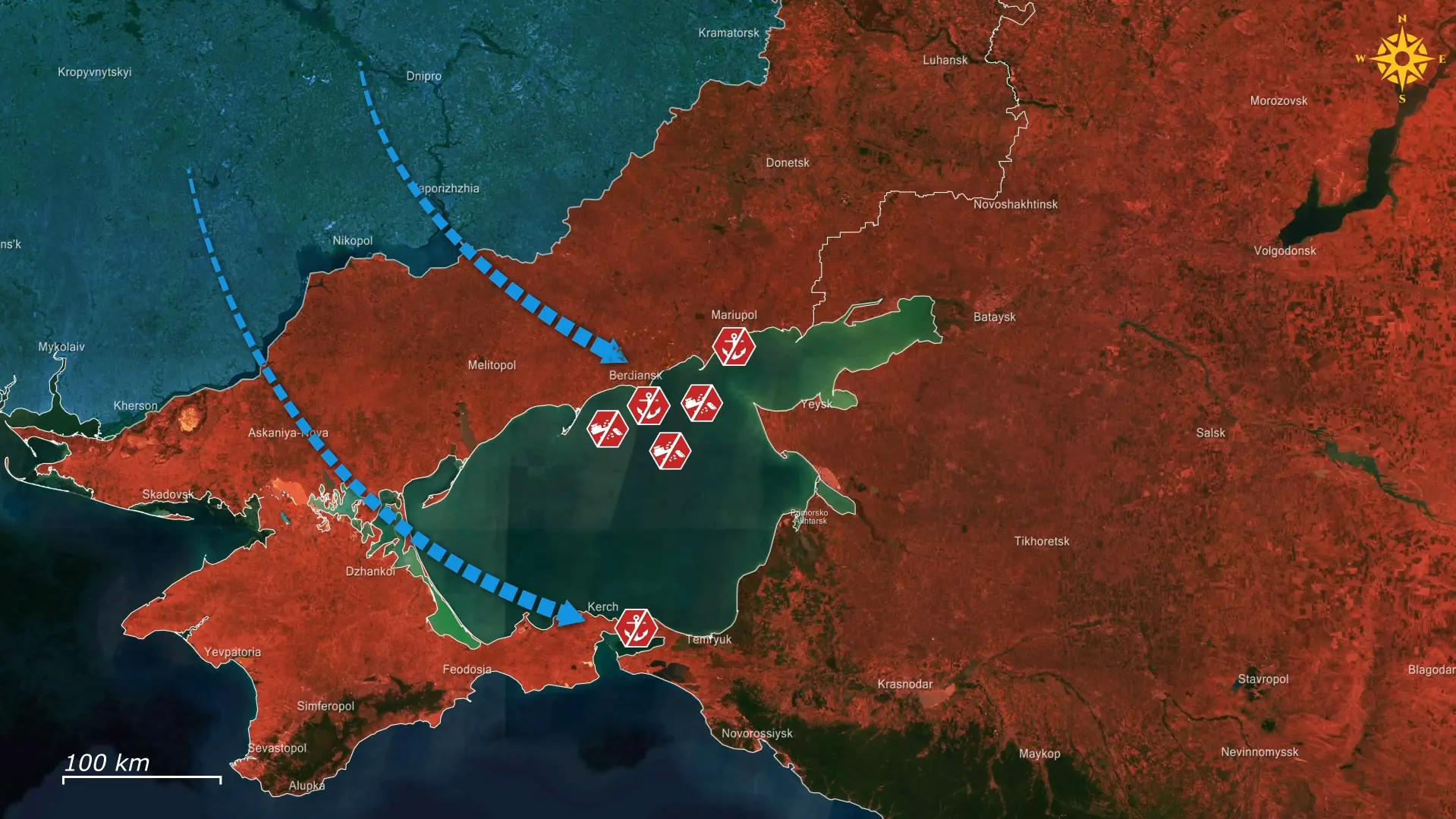
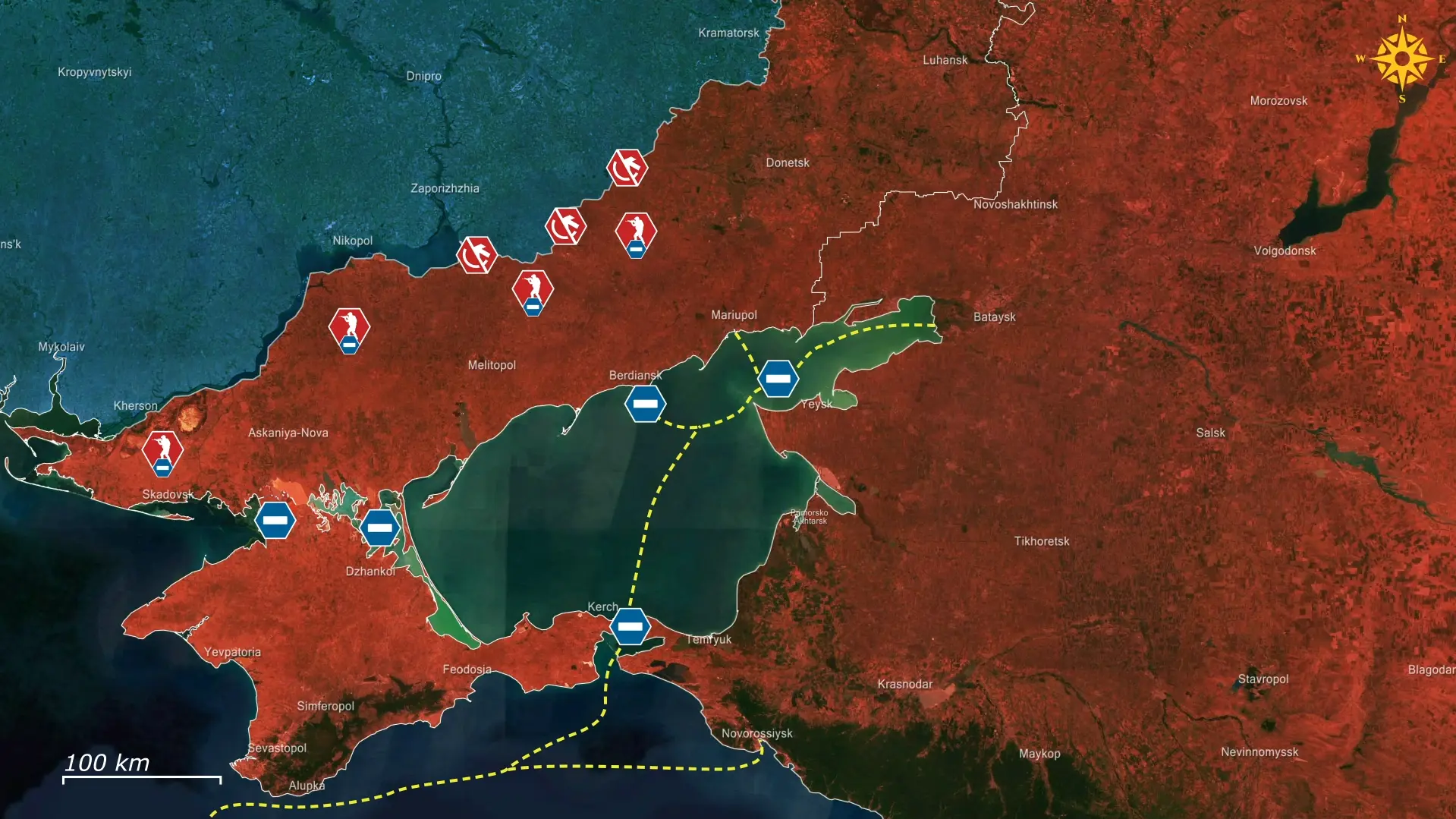
Recently, Ukrainian FP-two drones struck five vessels in the ports of Mariupol and Berdiansk, as well as in the nearby coastal waters. Ukrainian drone operators guided the systems in real time, targeting the ships' bridges to disable their navigation equipment, leaving them unable to operate at all. All the targeted Russian ships had their names painted over, and their transponders switched off to conceal their identities and routes, as they were involved in transporting stolen Ukrainian grain, as well as fuel and military supplies destined for Russian forces in southern Ukraine. These vessels and the maritime corridors they use are strategically important for Russia as land-based routes into Crimea came under Ukrainian fire control.
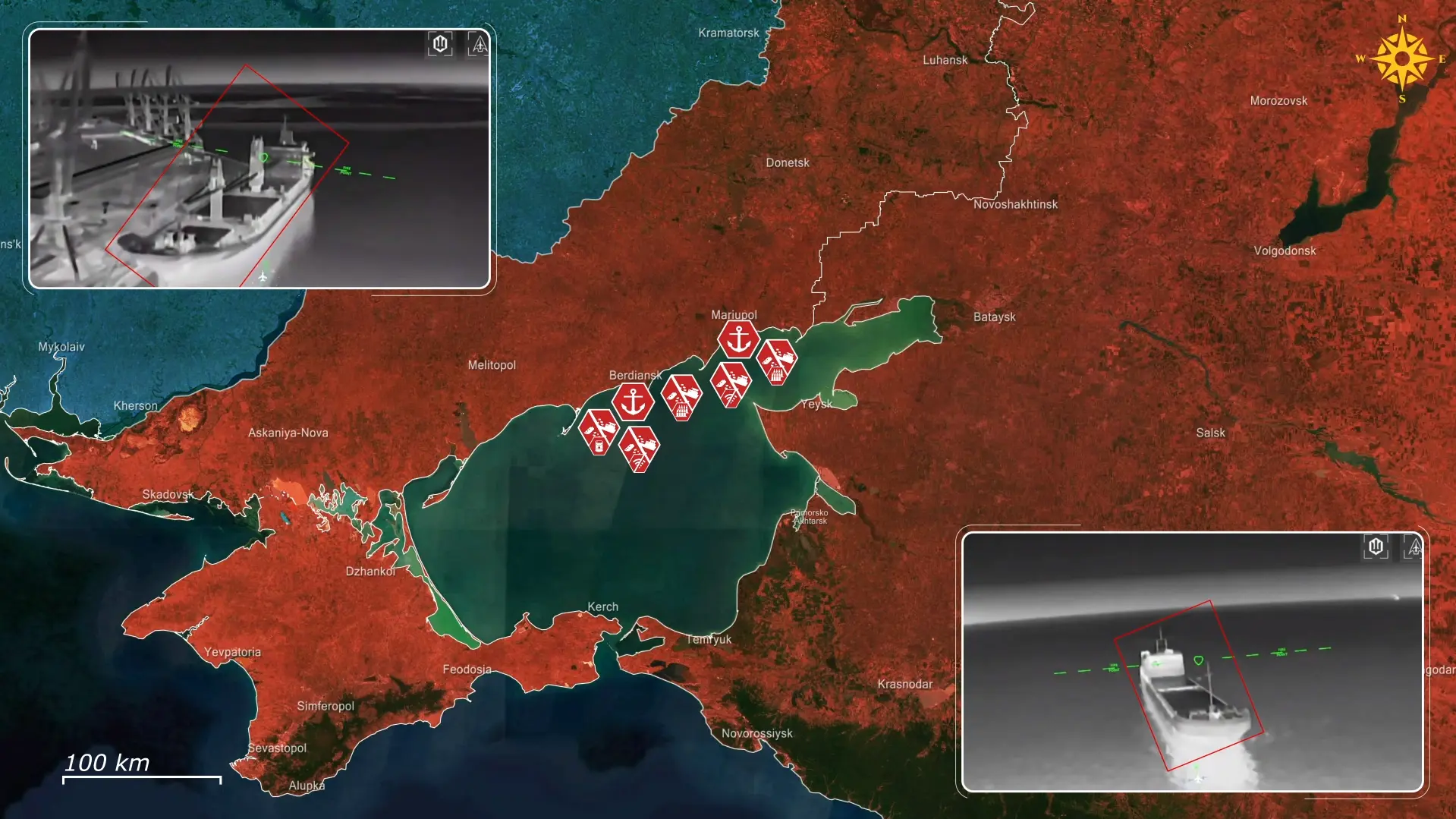
In a follow-up operation, Ukraine struck a Russian dry cargo ship near the port of Berdiansk and damaged four port cranes, disrupting its ability to handle cargo. This indicates how Ukraine shifted its priorities from land-based supply lines towards targeting Russia’s maritime logistics. Simultaneously, Ukraine carried out two separate strikes against a Russian cargo vessel carrying ammunition at the Berdyansk Port. In a separate incident, another cargo ship transporting Russian ammunition was hit shortly after entering the port. In addition to these strikes, in Taganrog Bay, a tanker and two bulk carriers were struck, denying them the opportunity to resupply Crimea. These attacks highlight the Ukrainian effort to disrupt maritime logistics across the Sea of Azov, which serves as an internal corridor for supplies coming from Russia to the Russian-controlled parts of Ukraine. With land routes under fire, Russia relies on the maritime corridor to transport fuel for its forces and civilians in Crimea, ammunition to the frontline, and exporting stolen Ukrainian grain and operating the ships full in both directions to optimize cost.
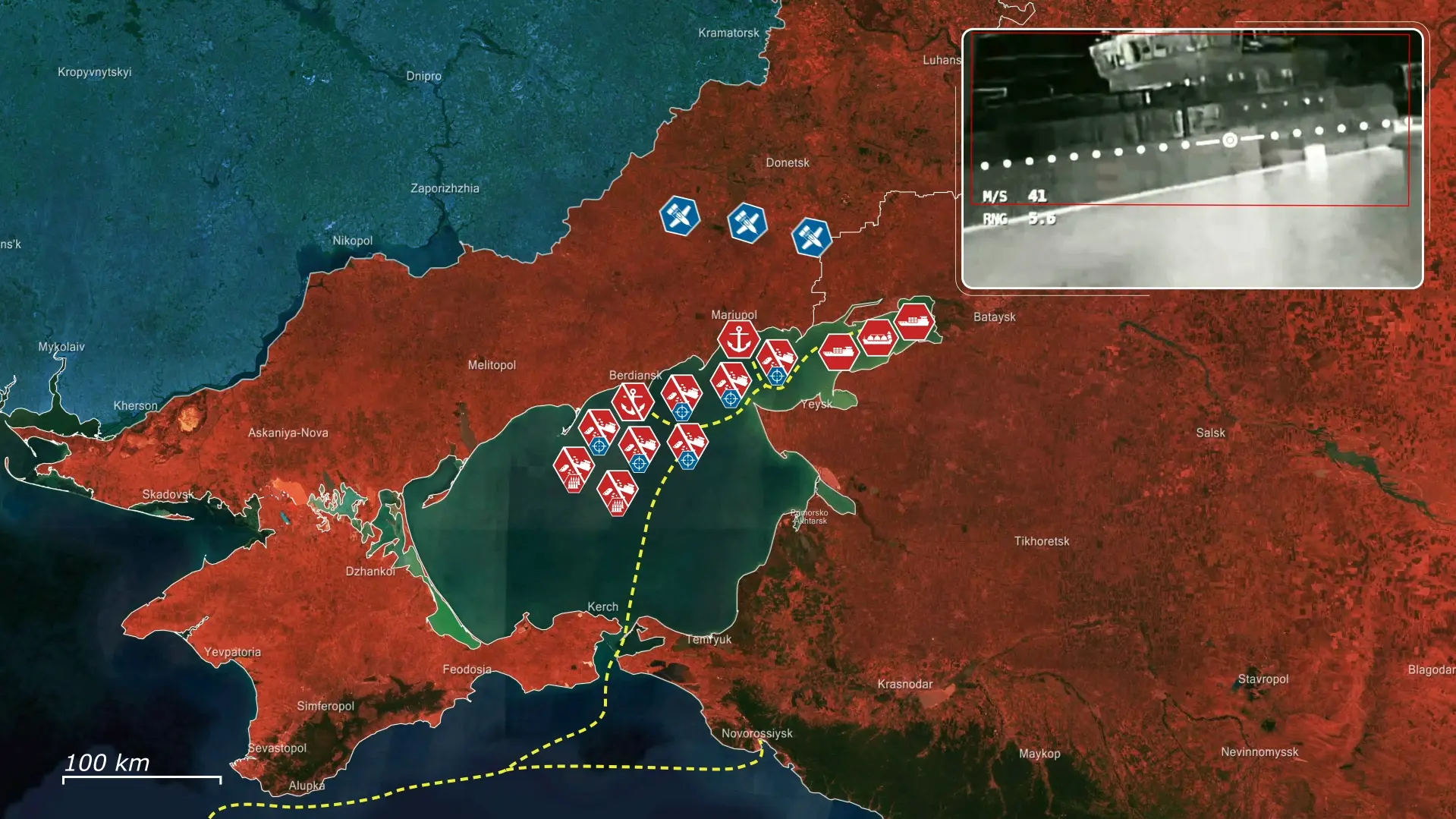
This made the ports in Berdyansk and Mariupol crucial, as tons of heavy cargo can be transported by ships, with relative security up to this moment. Consequently, Ukrainians are now focusing on these remaining naval supply lines to shut down the last viable route for Russia, to isolate the Russian-controlled territories, and create fuel shortages, which slow Russia’s offensive movement by complicating its logistics. The goal of these strikes is to create ammunition and food shortages for Russia on the southern front. By reducing the flow of supplies, Ukraine seeks to degrade Russia’s firepower, deny it the opportunity to build up reserves, and leave frontline units increasingly vulnerable to Ukrainian counterattacks.
By targeting barges, ferries, and cargo vessels, which are difficult to replace, the Ukrainians deal disproportional damage to their maritime logistics at a low cost. Russia lacks the industrial base and shipbuilding capacity to produce new vessels at scale, which makes every Ukrainian strike on a ship significant and leaves Russia with an increasingly shrinking pool of available transport vessels.
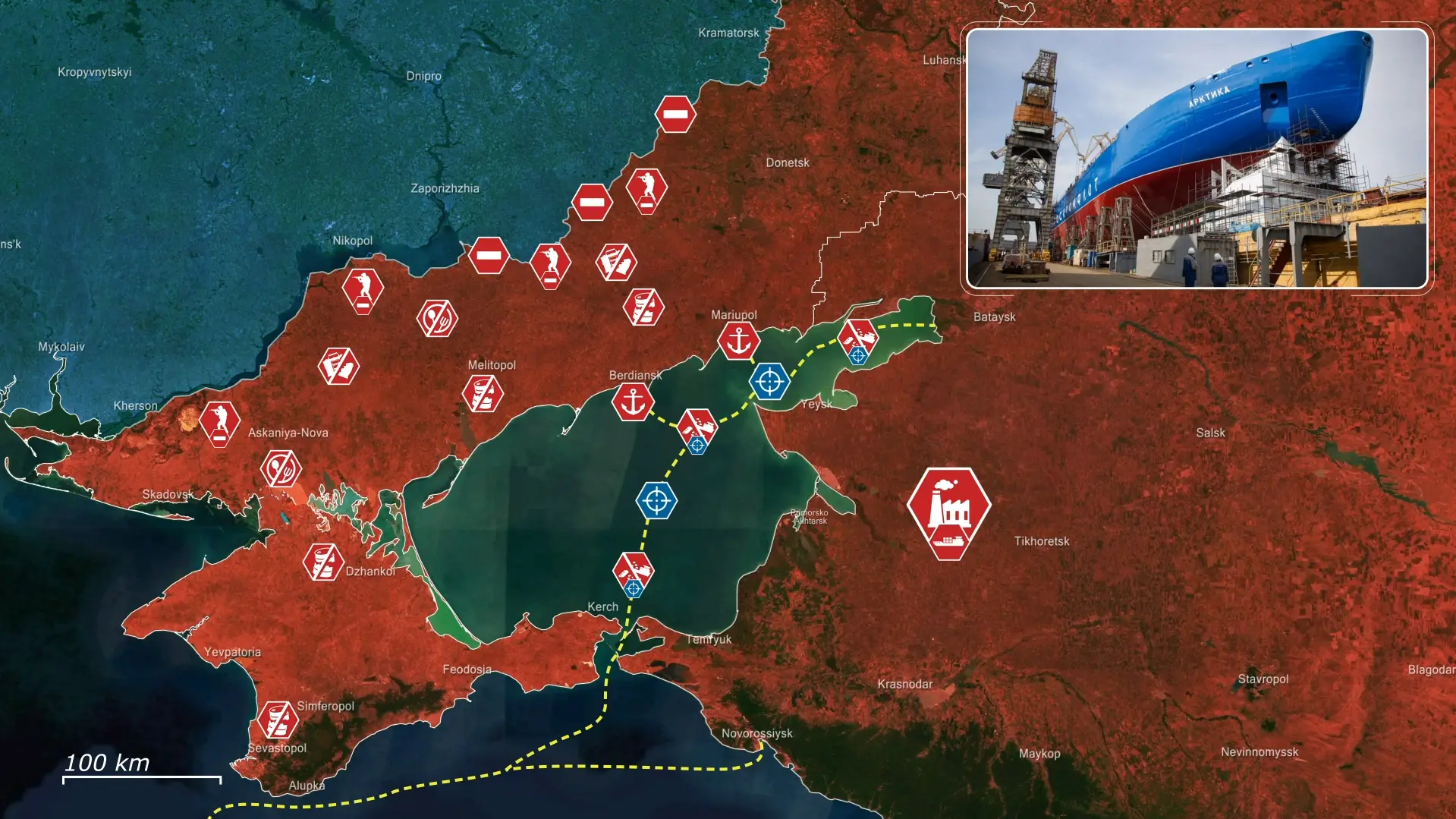
In addition to targeting Russia’s internal maritime routes in the Sea of Azov, Ukraine is also increasing pressure on the external naval routes that also support Crimea and southern Russian operations. Notably, Ukraine targeted Port Kavkaz, which is the second biggest port in the Black Sea based on cargo throughput, reaching fifteen million tons of cargo annually. It serves as the main terminal of the rail and vehicle ferry connection between mainland Russia and Crimea, which became even more important after the repeated attacks on the bridges in northern Crimea. The port’s oil depot was struck, which stores and distributes fuel to Russian-controlled Ukrainian territories. Ukrainian drones also struck the Taman port, where the fuel storage infrastructure was set ablaze. It is one of southern Russia’s largest hydrocarbon transshipment facilities, which is used for military cargo movement and Black Sea Fleet sustainment.
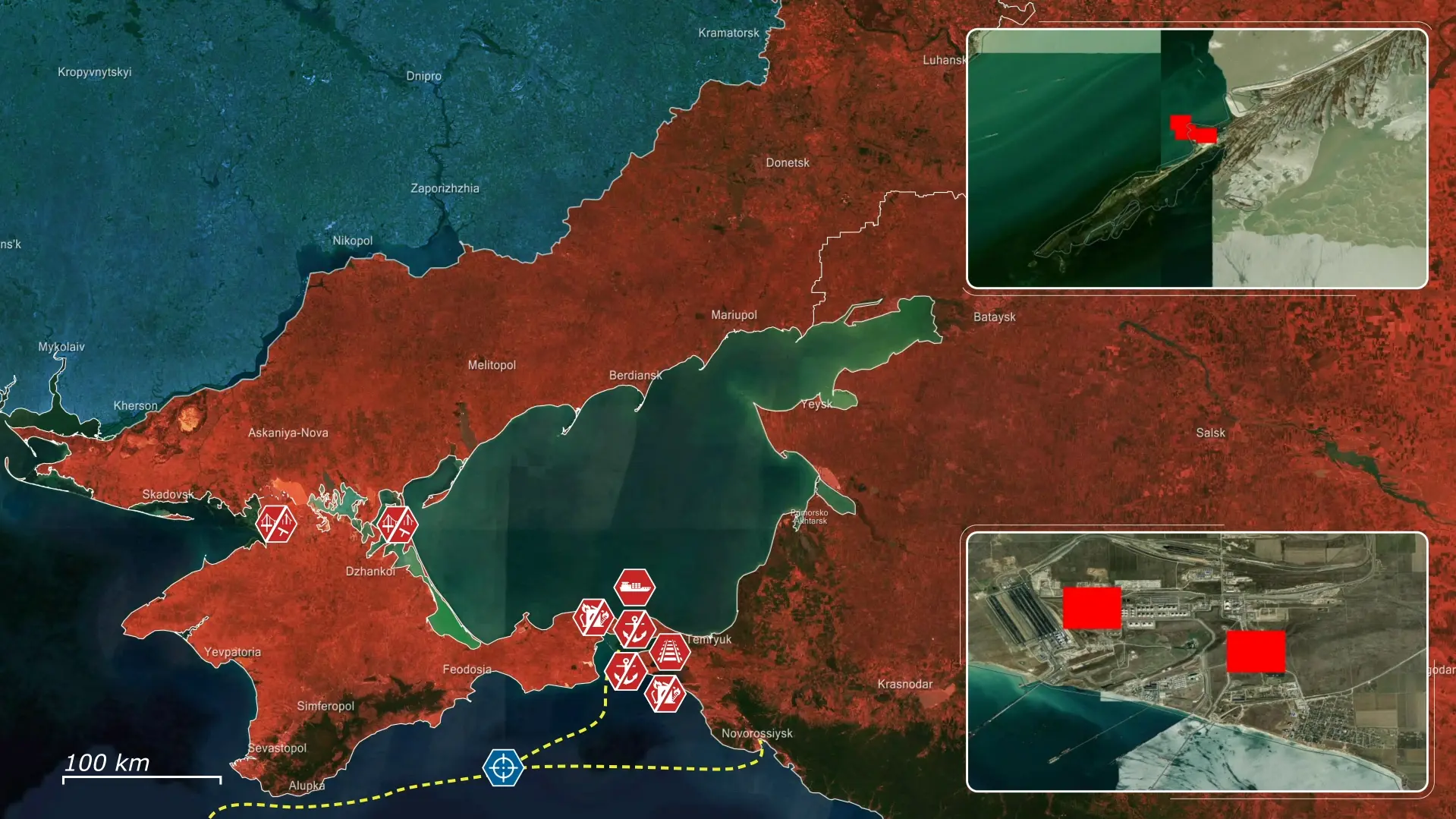
Overall, Ukraine’s strikes across the Sea of Azov and the Kerch Strait now disrupt both internal and external Russian maritime logistics. Targeting both elements creates a cumulative effect, as Russia is left with no alternative to supply its forces without disruptions. With land routes already cut off and maritime logistics in danger, Russia’s efforts in the territories it controls in Southern Ukraine are slowly shifting from trying to go on the offensive to simply being able to support its presence.

.jpg)

Comments